

















Onboarding an agency goes well when the brand is ready before the agency starts. Most slow ramps come down to missing access, unclear approvers and no response times, and all three sit with the client. Use the plan below to sort those out first.
TLDR: Run a 90-day ramp: setup and access in days 1 to 30, supervised publishing in days 31 to 60, independent work with a review in days 61 to 90. Write an SLA table for approvals, replies and reports, and set up access through a scheduler, not shared passwords.
Day-one access: grant the minimum, in one afternoon
Have this ready before the kickoff call, so week one isn't spent chasing logins.
- Channel access through a scheduling tool with roles, not shared passwords.
- Brand pack: logo files, colours, tone guide, banned words, past top posts.
- Asset library: one folder, named clearly, that you keep updated.
- Approver: one name per brand, plus a backup.
- Contact sheet: who answers what, and how fast.
If you have more than one brand, do this for each one. Don't give the agency admin rights to everything.
The 30-60-90 ramp
| Phase | Agency does | Brand does | Exit check |
|---|---|---|---|
| Days 1 to 30 | Audit accounts, propose a calendar, build templates | Provide access and brand pack, answer questions within the SLA | First month's calendar approved |
| Days 31 to 60 | Publish with every post approved | Review each post inside the SLA, give written feedback | Less than one correction round per post |
| Days 61 to 90 | Publish within agreed rules, flag risks | Spot-check, review first full report | Report delivered on the agreed date |
Don't skip the middle phase. Supervised publishing is where the agency learns your voice cheaply.
The SLA table that stops finger-pointing
An SLA that only binds the agency misses half the problem. Put both sides in the table.
| Item | Who | Target |
|---|---|---|
| Review a post in the approval queue | Brand | 1 business day |
| Agency fixes after feedback | Agency | 1 business day |
| Reply to a comment or message | Agency | 4 working hours in office hours |
| Urgent issue (crisis, error) | Both | 1 hour, by phone |
| Monthly report | Agency | By the 5th |
Agree these numbers together, then write them into the contract. For context, Mydrop's data on posts that went through client approval shows a median of 6 hours from submission to approval, so a one-business-day target is realistic.
Make approvals visible
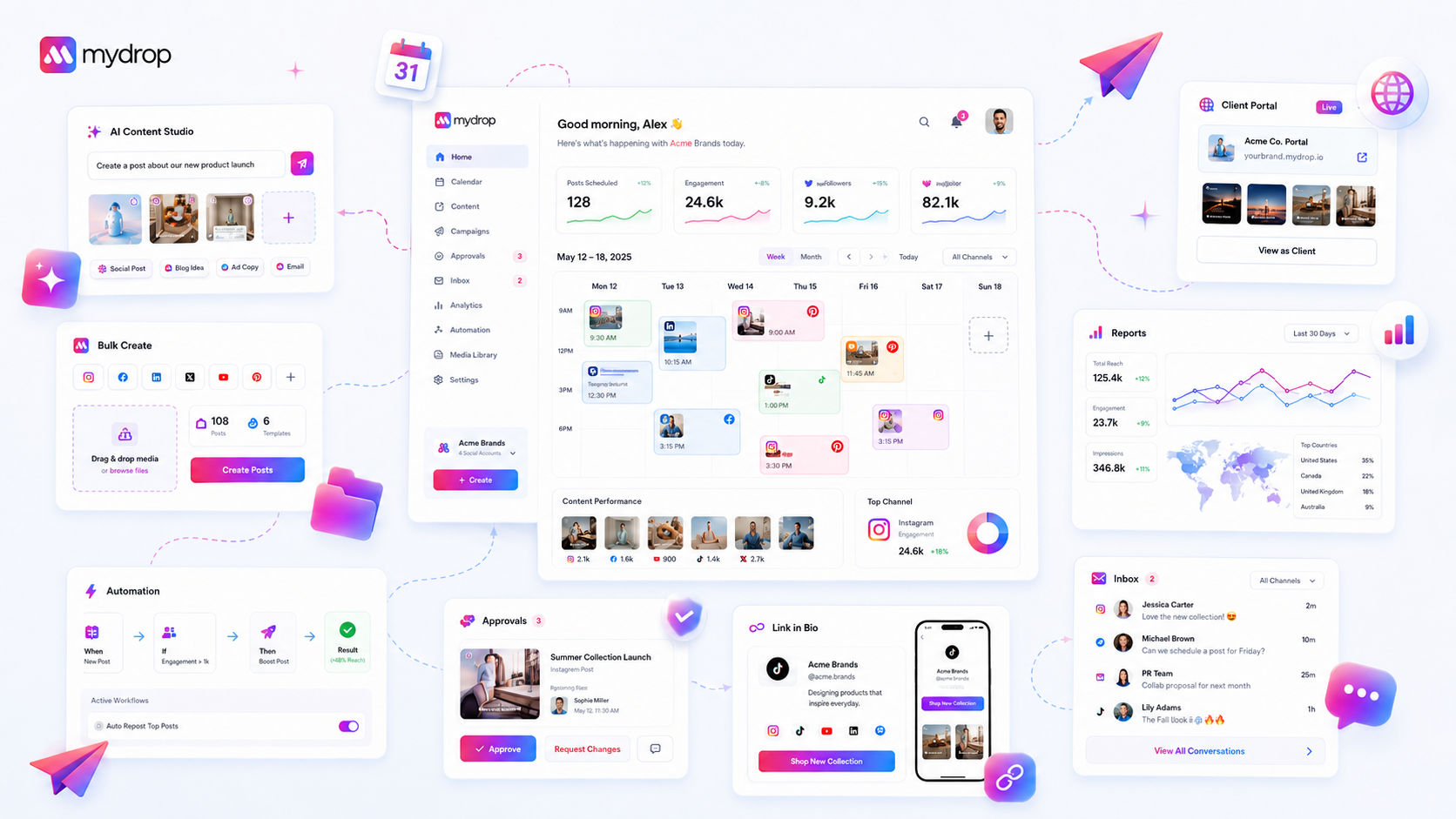
A post waiting in someone's inbox is invisible. Use a queue where each post shows its status and who it's waiting on. Mydrop's approval workflows and no-login client portal let a brand manager approve from a link, with comments on the post itself, so the SLA gets measured rather than argued over.
Check three things at day 30
Before the agency moves to the next phase, answer:
- Did every approval land inside the SLA, on the brand side too?
- Is the agency's voice close to yours in the last five posts?
- Is reporting set up with the agreed metrics?
If any answer is no, extend the phase by two weeks. Don't move on with a known gap.
Agree on the report before the first post
The first report is where trust forms or breaks. Agree on five metrics and the delivery date before any post goes out. Mydrop's social media reports can send a white-label PDF on a schedule, so the agency's monthly report arrives on time. The 30-step Mydrop onboarding checklist is also a useful base for your own list.
Send the access list and SLA draft this week
Write the access list, the approver names and the SLA table, then send them to the agency before kickoff. Set up the brand's workspace in Mydrop free at app.mydropai.com so the agency starts in a working environment on day one.


 Google review
 Trustpilot review
 Product Hunt comment





