If you are currently playing "email detective" or copying assets from Slack to a scheduler more than three times a week, your process is no longer creative-it is administrative. You should automate intake when your client's needs are predictable and repetitive, but keep things manual when the brief requires deep, bespoke strategic interpretation.
We get it. Your team is likely buried under a pile of ad-hoc requests, scattered attachments, and the constant, low-level anxiety that a client's crucial update was buried in a long email thread. You did not sign up for social media operations to become a glorified data entry clerk.
At Mydrop, we see this across hundreds of brands. Teams often wait until they are at a complete breaking point to introduce automation. But here is the awkward truth: if you wait until the volume demands it, you are just automating chaos. Building a clean intake architecture before the pressure hits is the only way to scale your output without sacrificing your sanity.
Where the handoff is actually breaking

Communication gaps in client intake rarely happen because the team lacks tools. They happen because the definition of "done" is mismatched between the client and the agency. When a client sends a request via a messy email thread, you lack a structured schema, which leads to missing file formats, incorrect campaign tags, and the inevitable back-and-forth that kills your momentum.
Here is where teams usually get stuck in the "messy middle":
- The Translation Tax: Your team spends hours manually reformatting client notes into platform-specific captions and asset specifications.
- Approval Drift: Because the intake was manual, there is no clear audit trail of who approved which version, leading to legal or brand stakeholders getting involved far too late.
- Version Amnesia: You have three versions of a social asset in a folder, and because the handoff wasn't systematic, the wrong one ends up scheduled.
This is what we call coordination debt. It accumulates every time a human has to act as a human router for information that could have been handled by a structured form. If you are manually mapping fields from an email to a scheduler, you are essentially paying interest on a debt that will eventually bankrupt your creative capacity.
Common mistake: Treating every intake request as a "special case." While flagship launches require high-touch human handling, your monthly promotional updates or recurring community posts should be standardized via automated intake to protect your team's bandwidth for the high-impact work.
A simple rule helps: If the request requires a specific campaign tag, a defined post state, and a consistent media source, it should be gated through a structured trigger. If it requires a creative strategy session, keep it in the inbox.
The coordination debt checklist

If you feel like your team is constantly putting out fires instead of building strategy, you are paying interest on your communication habits. We have all been there. You get a Slack notification about a revised caption, then an email with a new version of the graphic, and suddenly, the "official" version is anyone's guess.
Run this audit to see if your intake habits are costing you more than you realize. If you answer "yes" to three or more of these, you are carrying significant coordination debt:
- The Folder Scavenger Hunt: Does your team spend more than 20 minutes finding the latest version of a client asset before they can even open the scheduler?
- The Approval Purgatory: Do your stakeholders frequently miss review notifications because they are trapped in a general project thread rather than a dedicated, system-driven alert?
- The Spreadsheet Graveyard: Is your primary source of truth a massive, multi-tabbed file that nobody actually trusts but everyone feels obligated to update?
- The Manual Copy-Paste Cycle: Does someone on your team literally copy text from an email and paste it into a publisher, risking a typo in every single deployment?
- The "Version Check" Tax: Do you have to ask "Is this the final final?" more than once per campaign launch?
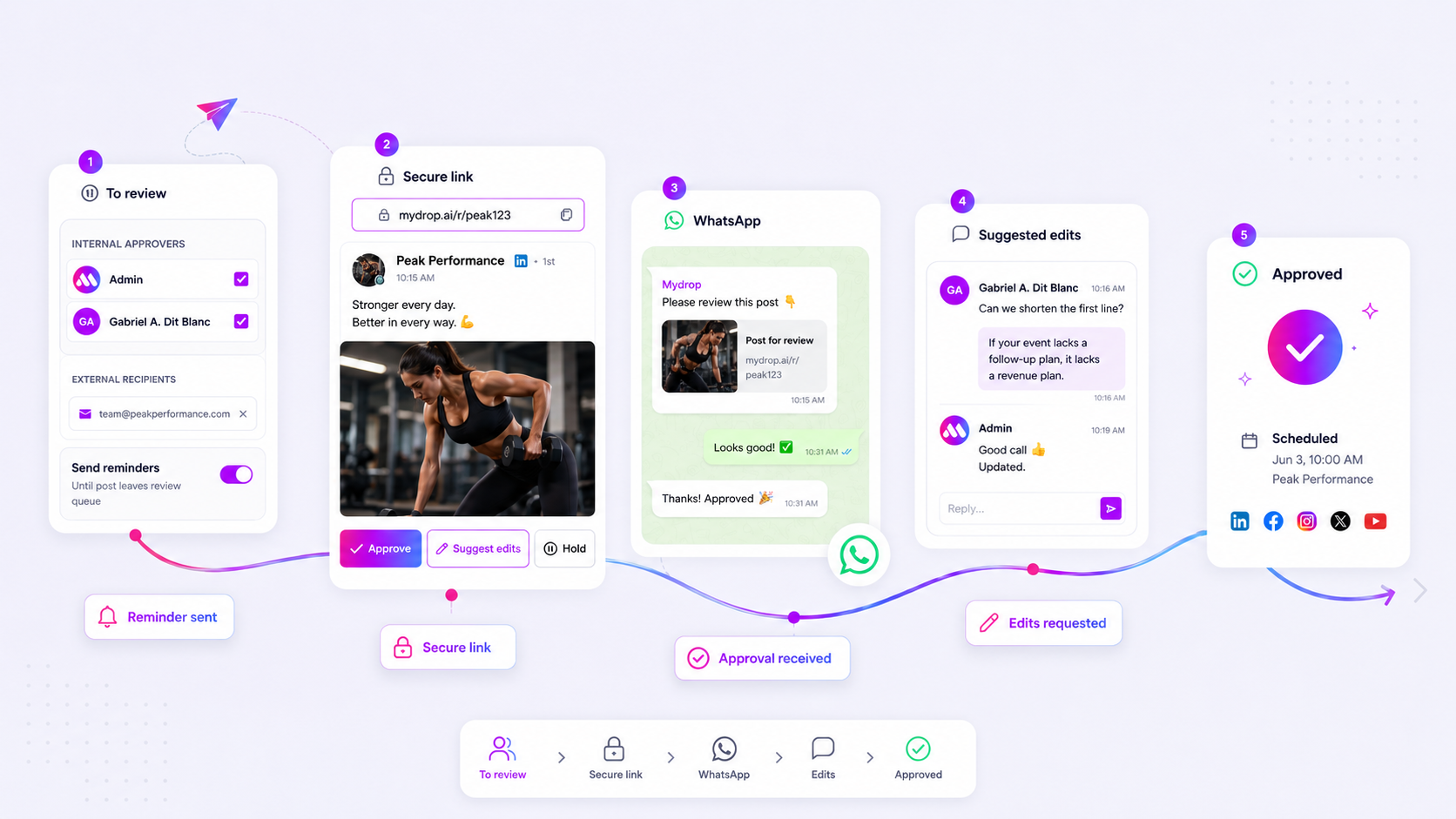
When the cost of manual coordination exceeds the cost of setting up a structured intake system, your process is effectively broken. You are not just losing time; you are losing accuracy. At Mydrop, we see teams that fix this by shifting from ad-hoc email threads to form-driven inputs that map directly into a review cycle. It turns a chaotic conversation into a repeatable data stream.
How to move decisions closer to the work
The secret to scaling without burnout is not just working faster; it is making your workflow "approval-aware." When you automate intake, you aren't just moving files from A to B. You are creating a controlled environment where human judgment happens only when it is actually needed.
Use this decision matrix to determine when to let the machine handle the heavy lifting and when to keep the human in the loop.
| Criterion | Manual Handoff | Automated Intake |
|---|---|---|
| Content Predictability | High variability; unique, bespoke strategy. | Standardized; consistent format/requirements. |
| Media Sourcing | Custom art or sensitive brand shoots. | Asset library, folders, or templated uploads. |
| Approval Threshold | High-stakes; requires legal or senior sign-off. | Low-to-medium; review is a quality check. |
| Scaling Capacity | Limited by headcount/burnout risk. | Virtually unlimited; scales with trigger rules. |
Operator rule: Never automate the thinking. Automate the transport. If the creative intent is static, build a form. If the creative intent changes every time, keep it manual.
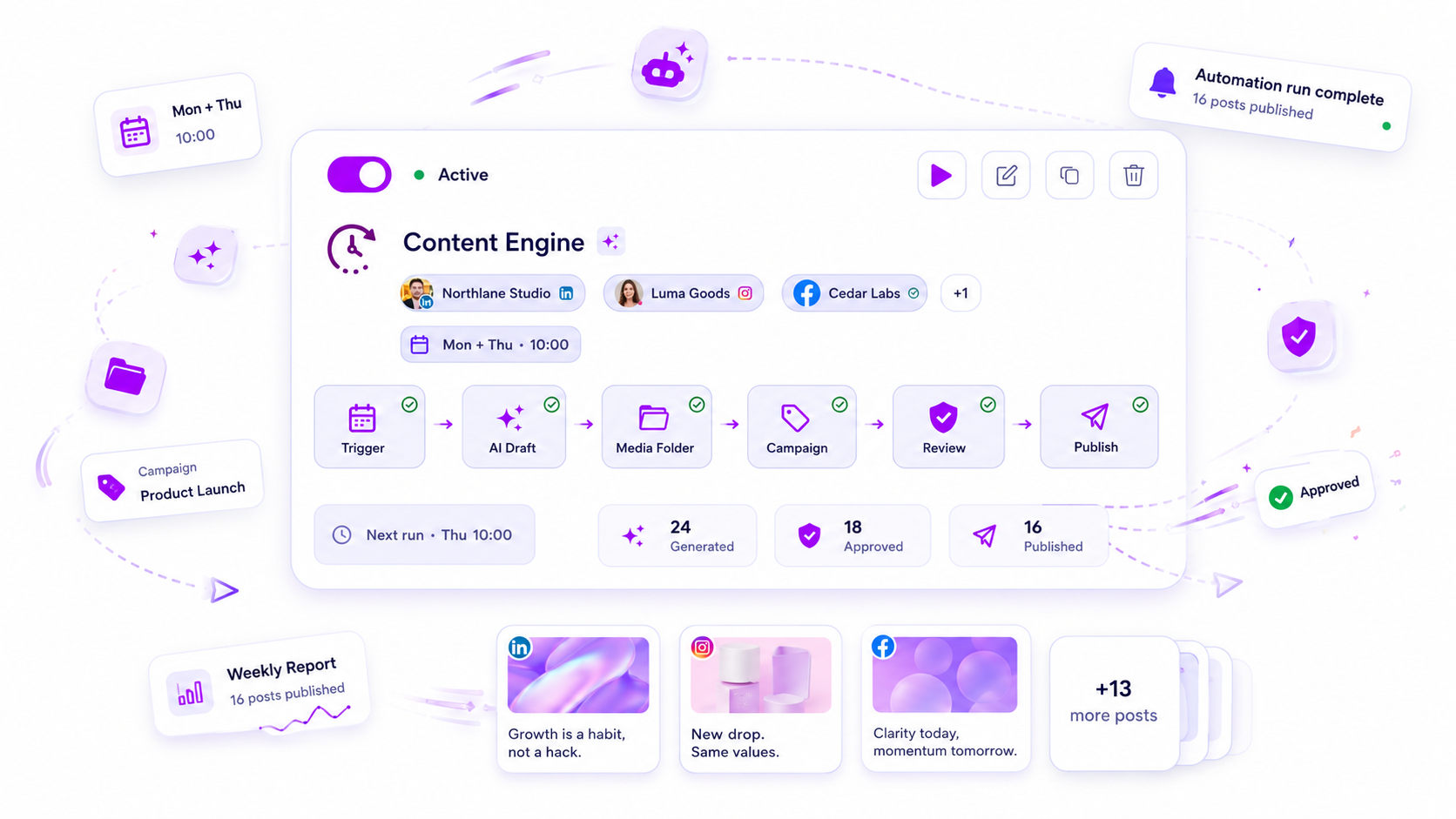
The most successful teams we work with treat their intake system like a gatekeeper, not just a relay. When you configure an automation to land submissions directly into a "Review" or "Draft" state, you preserve human agency. You gain the speed of an automated system while keeping the final, critical decision in the hands of the people who know the brand best.
If you are currently struggling to manage more than five brands, stop trying to patch the holes in your email process. Instead, start mapping your required fields to a repeatable submission form. By standardizing the input, you immediately eliminate the versioning errors that plague even the most talented agencies. Once the data is structured, you can start automating the scheduling, the notification loops, and the approval status, finally giving your team the room to focus on the work that actually moves the needle.
The roles and rules that reduce rework
The reason most intake processes fail is not a lack of tools, but a lack of clearly assigned agency. If the person hitting "submit" on your client form does not know what happens next, they will guess, and you will spend the next hour fixing their guesses.
When you move to an automated setup, you need to treat the form as a legal contract. Every field in the submission needs a corresponding home in your publishing environment. If you do not define who is responsible for the creative direction versus who is responsible for the technical mapping, you are just building a high-speed way to generate errors.
Decision check: Never trigger an automation that requires manual cleanup post-submission. If the output needs a human edit, the automation should deposit that post into a Review state, not a Published state.
We have seen teams save dozens of hours a week by enforcing a simple split: the client owns the Source Data (the core message and raw assets), and your team owns the Transformation Logic (the brand voice, hashtags, and formatting). By using Mydrop to map these specific incoming fields directly into your pre-approved templates, you kill the "copy-paste" tax that turns your team into manual data clerks.
The weekly habit that keeps the system honest
Automation is not a "set it and forget it" play. If you leave a form-triggered workflow unmanaged for three months, it will inevitably drift. Client requirements change, brands refresh their look, and your team's best practices evolve. You need a recurring pulse check to keep the machine aligned with reality.
We recommend a Friday System Sync-a fifteen-minute check-in where you review your automated output alongside your actual engagement metrics. Here is your weekly audit checklist:
- Spot Check: Pull the last three submissions and compare the generated output against the raw client input. Is the mapping still holding up?
- Asset Health: Check if the media being pulled from folders is still relevant. Are you recycling the same five images, or is your media pool staying fresh?
- Approval Velocity: Look at your review queue. Are your stakeholders actually clicking approve, or is the work stalling because the notifications are being ignored?
- Field Validation: Are there new fields or metadata you need to add to your forms to stop the constant back-and-forth emails?
If you treat your automated intake as a living project that requires maintenance, you move from being a victim of your own volume to being an architect of a predictable, high-output engine.
Conclusion
The goal of any intake strategy is to reclaim your team's time for actual strategy. Automation is the most powerful lever you have to strip away the administrative clutter of client management, but it only works if you approach it with the same rigor you apply to your most important creative campaigns.
Stop chasing the "email detective" lifestyle. Define your intake structure, map your fields with intention, and put your high-touch efforts exactly where they provide the most value. Whether you are managing five brands or fifty, the path forward is consistent: automate the noise, humanize the impact, and keep your hands on the steering wheel only where the strategy truly demands it.