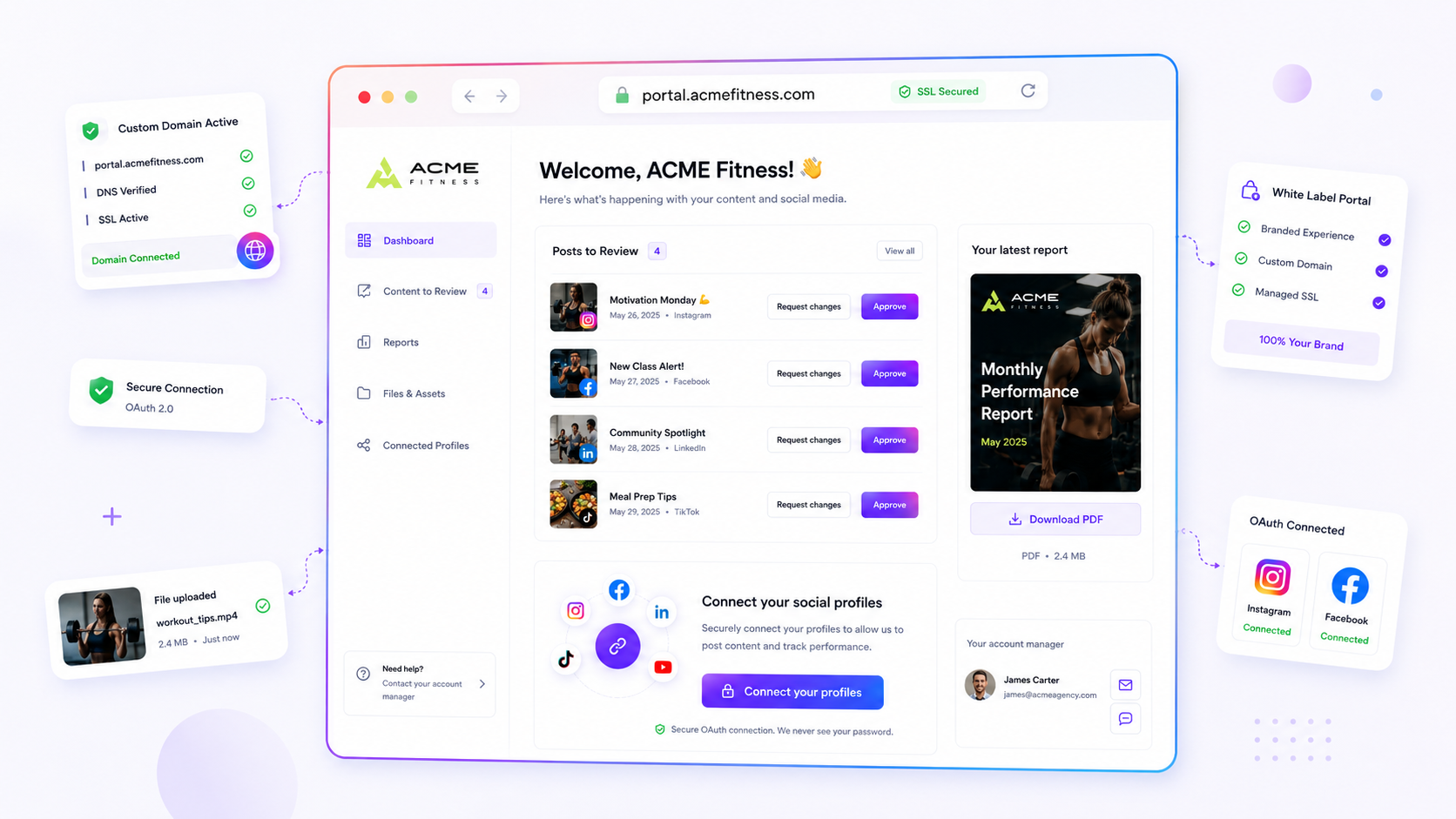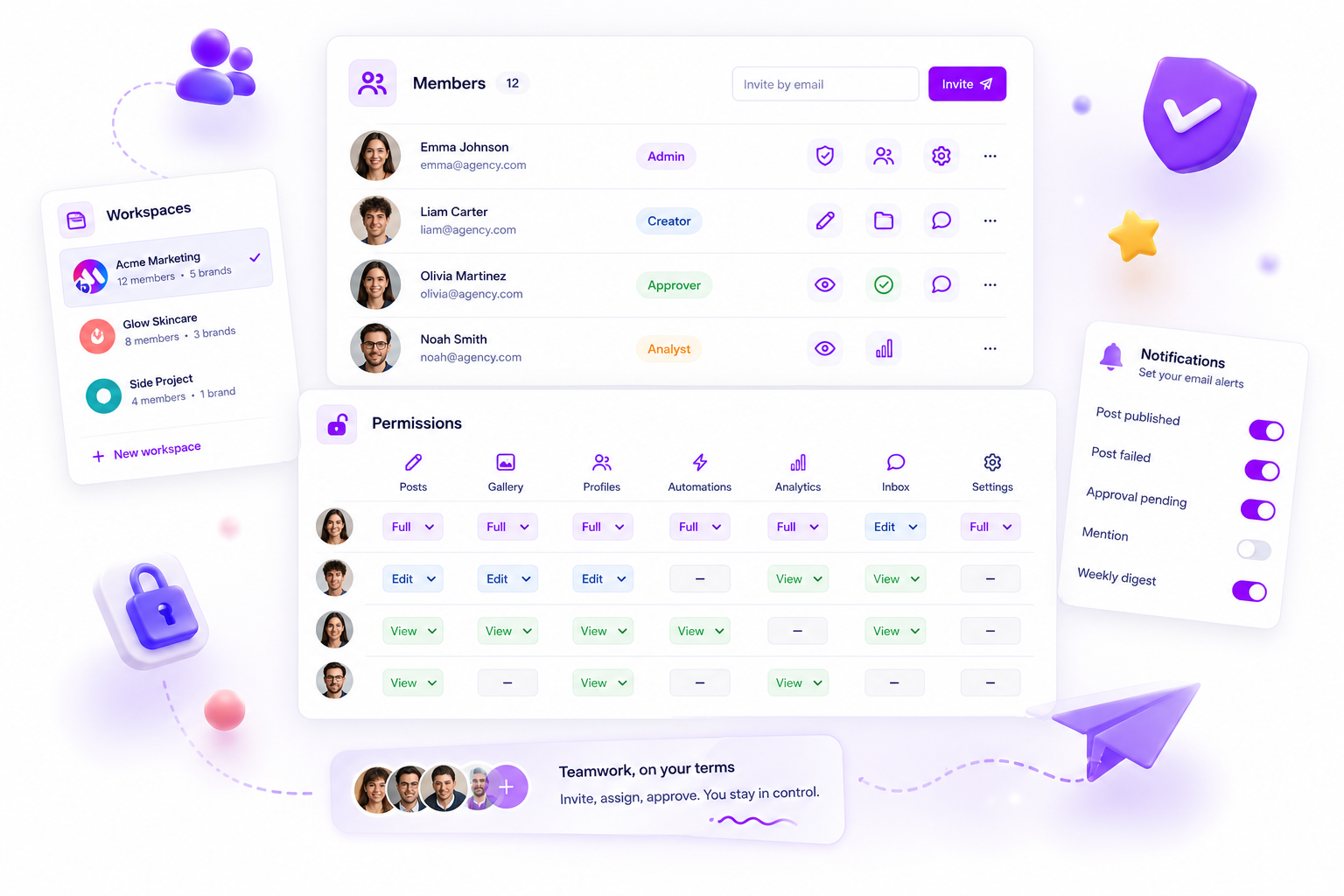
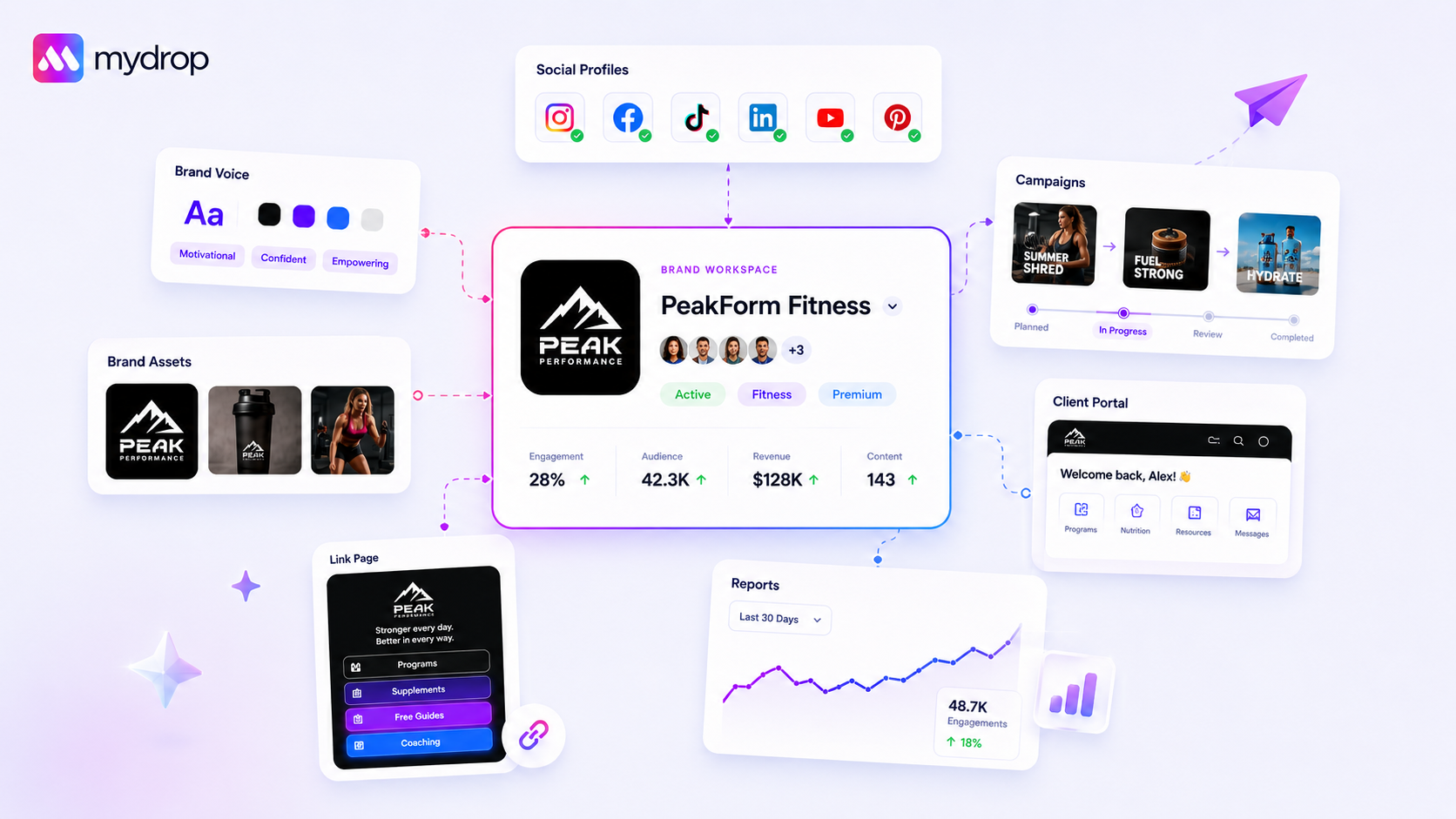
The most effective way to manage multi-brand OAuth imports is to treat the social provider’s response as a pending request rather than an instant connection. By enforcing a manual validation gate, you prevent "account bloat"-where sandboxes, personal profiles, or legacy service connections accidentally clutter your publishing calendar.
We know how chaotic this gets. You are trying to onboard a new retail client with a dozen sub-brand channels, and the OAuth flow dumps every linked asset into your dashboard. Suddenly, your team is playing a frantic game of hide-and-seek to keep private or unauthorized accounts out of the production queue. It is messy, high-risk, and honestly, a massive distraction you do not need at 6:00 p.m.
The secret is simple: if you do not explicitly audit and select which accounts enter your workspace, you are already losing control of your governance.
| Account Type | Should You Import? | Why? |
|---|---|---|
| Official Brand Profile | Yes | Primary vehicle for customer engagement and reporting. |
| Regional/Sub-unit Page | Yes | Needs curated access, but requires specific naming. |
| Testing Sandbox | No | Risk of accidental publishing; creates noise in analytics. |
| Service Connections | No | Connections like Google Drive or Photos are not publishing endpoints. |
At Mydrop, we see teams fail here when they prioritize speed over sanitation. They "connect all," then spend the rest of the week deleting what they should never have imported. Shifting to a pending-first workflow forces you to name, label, and verify every single asset before it touches your production calendar.
The decision each metric should trigger

You should not track everything. In a high-volume social operation, your dashboard metrics are not just numbers-they are triggers for specific operational adjustments. When you view your profile connection health, each status should dictate a binary action rather than a passive observation.
- Token Expiry Warnings: This is a mandatory signal. If a profile indicates a pending expiration, it is not just a UI notification; it is a trigger to initiate a fresh OAuth handshake before your publishing pipeline breaks. Do not wait for the post to fail at 9:00 a.m. Monday.
- Connection Latency: If you notice a high volume of "service-only" records versus "publishable profiles" for a specific provider, it is a signal to adjust your team's intake training. It means someone is blindly clicking through the provider screens instead of filtering for the business pages.
- Pending Approval Count: If this number stays high for more than 48 hours, it is a sign that your coordination debt is growing. You have accounts sitting in the intake buffer that are effectively "ghost assets"-taking up mental space but providing zero value. You either confirm them into the ecosystem or clear them out.
An operational habit to adopt: treat your "Pending Profile" view as an inbox. If an account isn't confirmed and assigned to a specific campaign or brand portal within a business day, it gets archived. A tidy workspace is not just about aesthetics; it is your first line of defense against compliance risks and accidental cross-posting.
The scorecard that keeps reporting useful

Your reports are only as good as the raw data you feed into them. If your dashboard includes inactive test accounts, stale service connections that you forgot to prune, or three different versions of the same brand page, your team is wasting time manually filtering noise before they even get to the insights.
We have found that teams managing hundreds of brand profiles often lose the plot because they treat "importing" as a one-time event rather than a recurring audit process. A simple profile health scorecard can tell you within minutes if your integration layer is actually serving your strategy or just creating maintenance debt.
| Metric | Threshold for Action | Why It Matters |
|---|---|---|
| Profile Freshness | Check tokens every 30 days | Prevents "silent disconnects" during peak campaign launches. |
| Active vs. Sandbox | 100% manual validation | Stops non-production test data from polluting your analytics. |
| Platform Accuracy | Zero service-record drift | Ensures you are measuring engagement on actual posts, not just account links. |
| Permissions Audit | Quarterly review | Minimizes the risk of over-sharing via outdated OAuth scopes. |
If you cannot confidently answer why a specific profile is in your list, delete it. In Mydrop, we see teams that treat their profile list as a high-integrity asset-not a junk drawer-consistently spend less time fixing data errors during month-end reporting.
What to stop measuring by default
Stop tracking "total profile connections" as a success metric. It is a vanity number that hides more coordination debt than it reveals. When you measure the sheer volume of connections, you encourage your team to hit "Connect" on every prompt the social provider throws at them, which is exactly how you end up with a cluttered, unmanageable workspace.
Instead, prioritize verified publishing readiness.
Operator rule: If a profile is connected but has not been explicitly confirmed through a pending-to-active validation gate, it should be invisible to your publishing calendar.
When you allow auto-synced, unvalidated accounts to clutter your dashboard, you are not just creating visual noise. You are inviting human error. An agency team onboarding a new client might accidentally select an internal test account from the OAuth prompt. If that account syncs to your production calendar, someone will eventually post live content to the wrong place.
Do not measure how many accounts you have. Measure how many accounts you have properly governed. A cleaner list is always better than a longer one. Keep your footprint small, your permissions tight, and your validation gate locked until you are ready to publish. That is how you stop chasing your own tail and start actually shipping content at scale.
How to connect metrics to next actions
The data in your dashboard is useless if it does not trigger a decision. We have seen too many teams stare at engagement spikes without knowing whether to double down or revert to the previous strategy. To stop the drift, attach every core metric to a specific operational trigger.
| Metric | Threshold / Signal | Necessary Next Action |
|---|---|---|
| Token Health | Expiry warning < 7 days | Trigger re-authentication via Mydrop portal |
| Profile Coverage | Unmatched brand channels | Audit OAuth scope and re-connect |
| Response Latency | > 4 hours for high-intent | Shift community management to active shift |
| Post-Sync Error | 3+ failures in 24 hours | Pause automated publishing for that account |
If a metric does not have an action associated with it, delete it from your primary view. Clutter is the enemy of fast decision-making. When you are managing dozens of brand profiles, clarity beats completeness every single time.
The review cadence that makes the model stick
A strategy that is not reviewed is just a document that gathers digital dust. We recommend a staggered cadence to keep your social operations from sliding back into chaos.
- Monday Morning (The Audit): Spend 15 minutes reviewing your
Pending Profile Connectionqueue. Are there new accounts from the weekend? Validate them immediately or delete the connection. - Wednesday Afternoon (The Pulse): Check token health across your portfolio. If a major brand profile is nearing expiration, have your team lead request a re-authorization through the Mydrop portal before the token dies.
- Monthly (The Strategic Pivot): Review your profile list. Are there stale service connections or test sandboxes that should be removed to keep your workspace lean? If it is not contributing to your output, prune it.
Decision check: If you cannot explain why an account is connected to your production environment, it is a liability. Remove it.
Conclusion
Standardizing how you import and validate social profiles is not just about security; it is about reclaiming your team’s focus. When you stop treating every OAuth response as a firehose of data and start treating it as a controlled intake gate, you remove the coordination debt that slows down the best agencies and enterprise teams.
Start by auditing your current connections this week. Clear out the sandboxes, verify the active channels, and move to a confirm-before-import habit. Your publishing calendar will thank you, your security team will rest easier, and you might finally stop chasing down password resets at six in the evening. Social media management is complex enough without the self-inflicted chaos of unmanaged accounts; stay organized at the gate, and the rest of your workflow will follow suit.