You should stop waiting for the "token expired" alert to disrupt your campaign launches. If your platform security audit signals a high-risk change or you hit a standard quarterly refresh date, you need to trigger a re-authorization workflow before the current token fails. This keeps your connection layer healthy and avoids that sinking feeling when an automated post dies during peak hours.
We get it. Your dashboard is a labyrinth of connected accounts, and the "if it is working, don't touch it" mentality is a standard survival tactic. But when you manage dozens of channels across multiple brands, treating your social connections as "set it and forget it" turns your operational stability into a ticking time bomb. The real cost isn't the 30 minutes spent reconnecting a profile; it is the broken inbox queues, the missing analytics, and the emergency request sent to a client at 9:00 PM on a Friday.
At Mydrop, we see this all the time: social media scale usually fails from coordination debt, not a lack of creative ideas. You don't have a content problem; you have a maintenance bottleneck.
The decision each metric should trigger

Most teams react to errors. You need to operate by a Risk-to-Refresh Matrix that maps platform volatility to your maintenance schedule. Use this to determine exactly when to push a proactive re-auth.
| Platform Risk | Token Nature | Proactive Trigger | Action |
|---|---|---|---|
| High (e.g., TikTok/X) | Volatile/Short | 14 days pre-expiry | Force refresh |
| Medium (e.g., FB/IG) | Stable/Long | 30 days pre-expiry | Batch check |
| Low (e.g., GMB/LI) | Extended | On app update | Manual trigger |
This framework isn't about busy work. It is about shifting your team's energy away from firefighting. When you identify which profiles carry the highest risk, you can delegate the refresh cycle to the owners before the connection actually goes dark.
Operator rule: If a profile requires a client to manually re-authorize through a portal, start the request one week before the internal risk threshold. Never rely on the person who owns the social password to be available the moment the token expires.
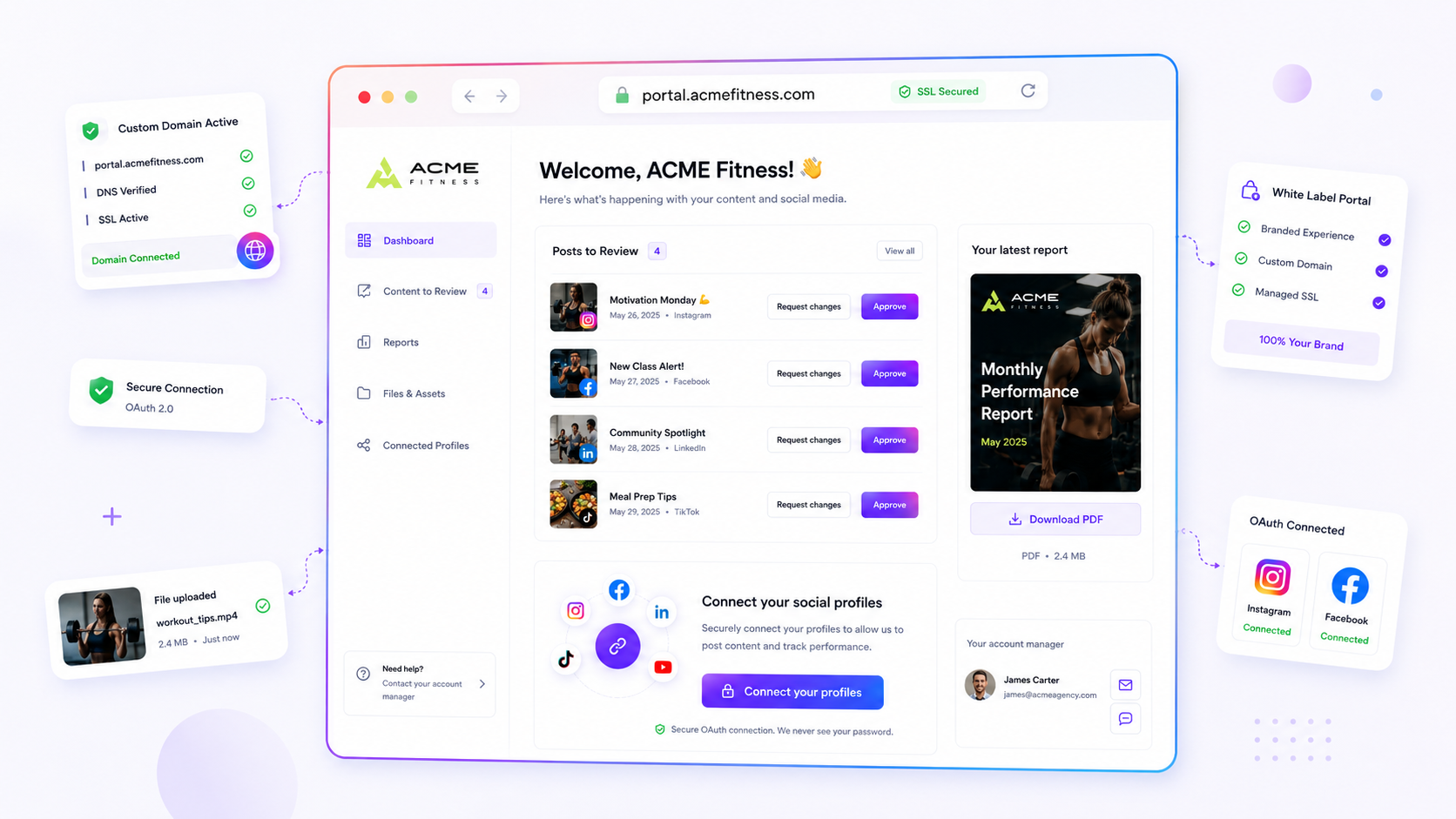
If you are still manually chasing clients for credentials every time a token lapses, you have built a dependency loop that will eventually snap. Shift to a portal-based connection flow where the client re-authorizes directly. This bypasses the need for them to share sensitive passwords or for your team to act as the middleman in a security handshake. Once the OAuth flow finishes, the platform refreshes the system silently in the background, updating your analytics and inbox queues without a single manual intervention.
The scorecard that keeps reporting useful

If your analytics dashboard is reporting zero reach for a high-performing channel, the first place you should look isn't the platform's algorithm-it's your connection status. A broken OAuth token is the ultimate silent killer of data integrity. When you treat profile connections as "set and forget," you are essentially flying blind, assuming the data pouring into your reports is accurate when it might just be the last cached result from three weeks ago.
To keep your reporting honest and your stakeholders informed, you need to turn connection health into a visible KPI. We have seen too many teams present a quarterly social report only to realize during the Q&A that their biggest campaign channel had been disconnected since the second week of the period.
Connection Health Scorecard
Use this simple scoring method to audit your profile status before your next big reporting cycle.
| Health Status | Definition | Operational Impact | Required Action |
|---|---|---|---|
| Verified | Token refreshed < 14 days ago | Data flow is 100% accurate | None |
| At Risk | Token older than 45 days | Potential for silent failure | Schedule proactive re-auth |
| Degraded | Minor scope mismatch/glitch | Analytics partial or missing | Forced re-auth immediately |
| Offline | Token expired or revoked | Zero data flow | Emergency re-auth |
Decision check: If a profile lands in the "At Risk" category, do not wait for the next reporting meeting. Refresh it during a low-traffic window to ensure you have a clean slate before the next performance snapshot.
What to stop measuring by default
The biggest trap teams fall into is obsessively tracking "total connection uptime" as a vanity metric. Knowing your profiles were connected 99% of the time sounds impressive in a vacuum, but it obscures the real operational friction. Stop measuring how many times a human had to manually intervene and start measuring how many times a proactive refresh prevented an outage.
In our experience, teams with the highest "manual reconnection" counts are usually the ones plagued by poorly defined token ownership. When you don't know who the "token owner" is, you end up with a game of hot potato where everyone waits for someone else to re-authorize the account. Stop tracking reconnection counts and start tracking the time between a "token expiration warning" and the "re-auth confirmation."
If your team is taking more than 24 hours to clear a connection warning, you don't have a technical problem-you have a coordination debt problem. You have too many gatekeepers and not enough clear protocols.
When you move your profile management into a portal-based workflow, you bypass the need for a single person to hold the "master password" for the entire brand. At Mydrop, we see teams thrive when they shift away from measuring "uptime" and start focusing on "time to resolution" for connection alerts. The goal isn't to be perfect; the goal is to be fast enough that the audience never notices a hiccup. Stop acting like your tools should never break; start acting like your team is ready to fix them the moment the first signal appears.
How to connect metrics to next actions
The numbers you track in your analytics dashboard should do more than just sit there waiting for a quarterly review. When you connect your performance data directly to your OAuth health status, you stop guessing why a post underperformed. If a high-stakes campaign shows a sudden drop to zero engagement across specific channels, your first move should be to check the token lifecycle, not blame the creative or the platform's feed logic.
At Mydrop, we suggest mapping your connection status to a simple traffic light system to keep your team aligned:
| Status | Signal | Next Action |
|---|---|---|
| Healthy | Valid tokens, no expiry warnings | Business as usual; monitor engagement |
| Warning | Token expiring < 14 days | Queue proactive refresh in next sprint |
| Critical | Sync failure / API error detected | Immediate manual re-auth; pause automated posts |
This prevents the frantic "it was working yesterday" panic. If the signal is yellow, you have agency. You can schedule the re-authorization during a quiet window rather than letting a machine decide for you at 2:00 AM on a Tuesday.
The review cadence that makes the model stick
Most teams fail here because they treat security maintenance as a "sometime" task. To make this operational habit stick, you need a recurring heartbeat that anchors the workflow. We have found that teams managing hundreds of brand profiles thrive when they fold these checks into existing operational rituals.
Instead of creating a new "token meeting"-which no one will attend-integrate these three steps into your existing weekly sync:
- The Monday Pulse: Check the
Profilesdashboard for any platform connections nearing their expiry threshold. If any show up in the "warning" zone, assign the re-auth task to the respective brand lead immediately. - The Platform Pivot: If you see a major platform announcement regarding API scopes or policy changes, consider it a mandatory trigger for a full profile audit, regardless of the token's remaining lifespan.
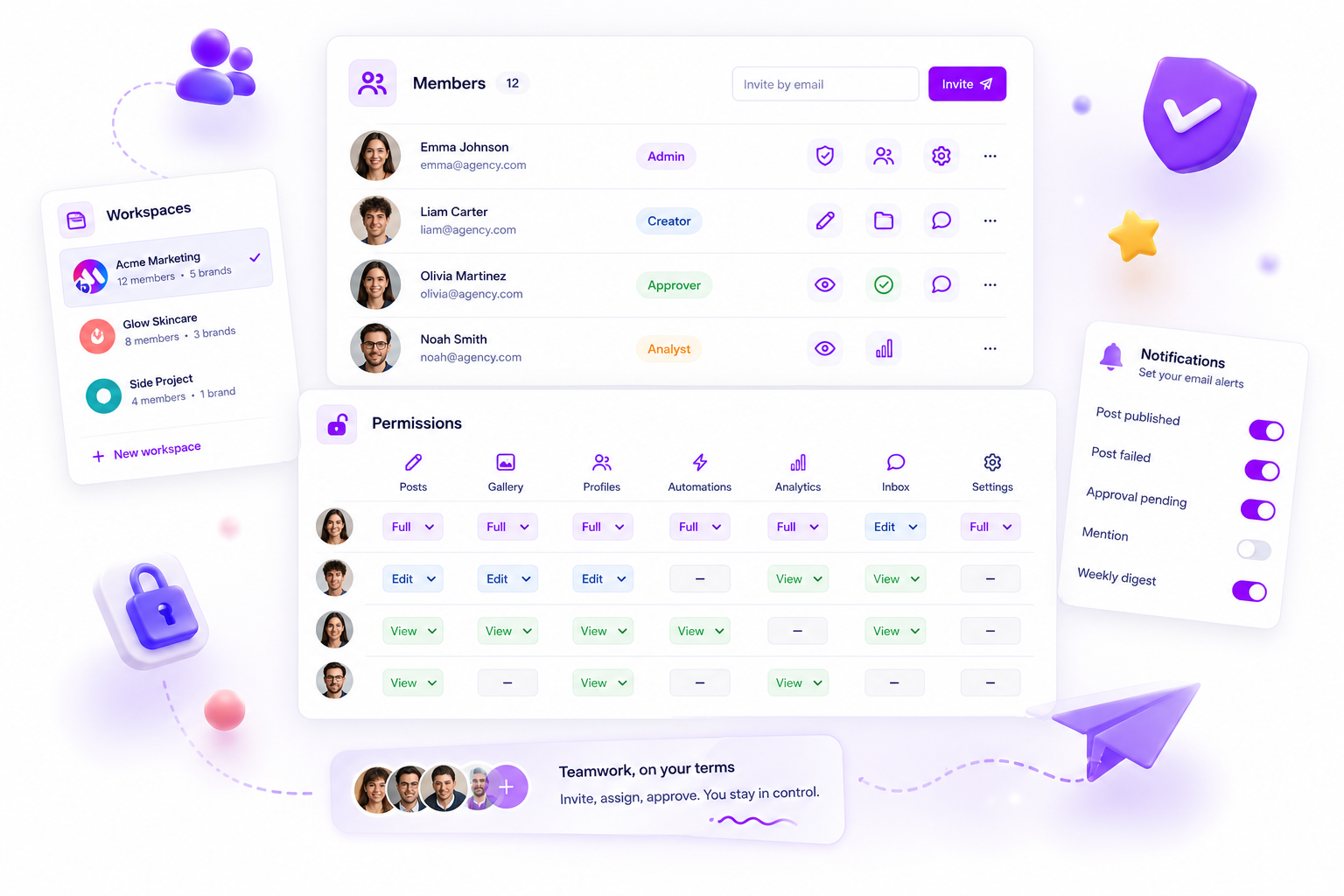
- The "Hand-off" Protocol: Whenever a team member with high-level access moves to a new role, do not wait for their credentials to rotate. Immediately initiate a profile refresh through your portal connection flow to transfer ownership to the current team account, ensuring you never rely on individual user credentials.
Common mistake: Relying on the person who originally connected the profile to "fix it" when it breaks. This creates a hidden dependency that evaporates the moment they go on vacation or leave the team.
Conclusion
The goal is not to eliminate all technical friction-platforms will always update their requirements and tokens will always expire. The goal is to move from being a passenger to being a pilot. When you stop waiting for the red "expired" badge to dictate your day and start using a proactive review cadence, you stop losing velocity to coordination debt.
Your social media engine is built to scale, but that machine is only as reliable as its connections. By building a predictable re-auth habit, you ensure that when you hit publish, your content actually lands. It is time to treat your profile health with the same professional rigor you apply to your campaign budgets and creative approvals. Your team, and your sanity, will thank you.