The moment a client starts copying and pasting social media passwords into emails or chat messages, you have already lost the battle for security and operational scale. Stop asking for credentials. Instead, move your team to a dedicated brand portal that delegates authentication back to the client where it belongs, effectively ending the high-stress, low-security cycle of manual password handovers.
We have all been there. The campaign is prepped, the creative is polished, and the team is ready to launch, but everything grinds to a halt because a client’s profile keeps disconnecting or, worse, their IT department blocks your team’s login attempts from a "new" IP address. It is a messy, high-friction point that turns experienced account managers into glorified IT support. You are not alone; we see this across brands and agencies managing hundreds of profiles, where the real bottleneck to growth is not a lack of content, but simple, avoidable coordination debt.
What changed before the numbers moved

Social platforms were once simple, open squares where a single set of login credentials could be shared among a handful of people. Today, those platforms are high-security environments. When you log in with a client's password, the platform’s security heuristics often detect a login from an unexpected device or location and immediately trigger a challenge-or worse, a silent lockout.
This shift from "trust-based" logins to modern, OAuth-standard security means that traditional password sharing is no longer just inconvenient; it is actively fighting the platform’s security systems.
The most dangerous "connectivity issue" is not a technical bug-it is the organizational debt created when teams treat password sharing as a standard operating procedure. When your team manages dozens of stakeholders across five different markets, that manual friction scales exponentially, leading to missed windows and frantic, last-minute troubleshooting.
To see why the old way is failing, consider the real-world trade-offs in the table below.
| Feature | Manual Password Sharing | Portal-Based OAuth |
|---|---|---|
| Security Risk | High: Passwords exposed in chat/email. | Low: Tokens handled via OAuth handshakes. |
| Access Control | None: Everyone has full account rights. | Granular: Client connects; you manage content. |
| Platform Trust | Low: Often flags logins as "suspicious." | High: Verified, authorized application access. |
| Sustainability | Low: Breaks whenever 2FA or IP changes. | High: Lasts until the client revokes access. |
| Client Experience | Invasive: They must share their "keys." | Empowering: They maintain control of assets. |
In our experience, teams that insist on "the old way" are essentially paying a recurring tax on their time, manually resetting logins and chasing clients for updated 2FA codes. By shifting to a zero-password workflow, you aren't just making a security choice-you are removing the largest single point of failure in your campaign delivery pipeline.
The failure patterns to check first

When connections stall, teams often chase phantom bugs in the API. Before you log a support ticket, look at the human and operational layers. We have seen this across hundreds of brand profiles: the issue is rarely a technical breakdown and almost always a permissions or policy mismatch.
Start your audit by looking for these four friction points:
- The 2FA Loop: The client tries to connect, gets a security challenge on their phone, and abandons the flow because they do not have the credentials for the secondary account.
- Permission Mismatch: The user is an administrator on the Facebook page but not on the Meta Business Suite. They think they have access, but the platform API denies the connection because the necessary "Manage" permissions are missing.
- The "Unknown Device" Flag: Corporate IT security policies often trigger a block when a platform detects a new, unrecognized IP address attempting to authenticate.
- The Shared Password Lockout: If three team members try to log in with one shared password at the same time from three different cities, the platform rightfully assumes the account is compromised.
Most of these are simply "coordination debt" masquerading as a technical outage.
Operator rule: If a connection fails more than twice, stop trying the same password. You are likely hitting an automated security lockout that will only get stricter with each retry.
The proof that separates signal from noise
It is easy to panic when a campaign is ready to go and a profile is offline. To stop the cycle of guessing, use this scorecard to quickly distinguish between a legitimate platform outage and a preventable user-side issue.
Troubleshooting Scorecard: Signal vs. Noise
| Symptom | Likely Cause | Actionable Fix |
|---|---|---|
| "Invalid Credentials" | Incorrect password or 2FA challenge. | Abandon manual entry. Use OAuth via a secure brand portal. |
| "Insufficient Permissions" | User is not an admin on the business asset. | Audit roles. Ensure the client has full admin status on the platform dashboard. |
| "Connection Expired" | Token refresh failed due to platform policy. | Re-authorize. Client needs to re-authenticate via the portal. |
| "No Profiles Found" | Missing connection between personal/page/group. | Check linking. Verify the asset is linked to the correct business manager. |
| "API Rate Limit" | Too many failed attempts in one hour. | Wait. Pause all attempts for 60 minutes to clear the block. |
If you are still asking for passwords, you are not just risking account security; you are trapping your team in a cycle of manual, high-stress troubleshooting.
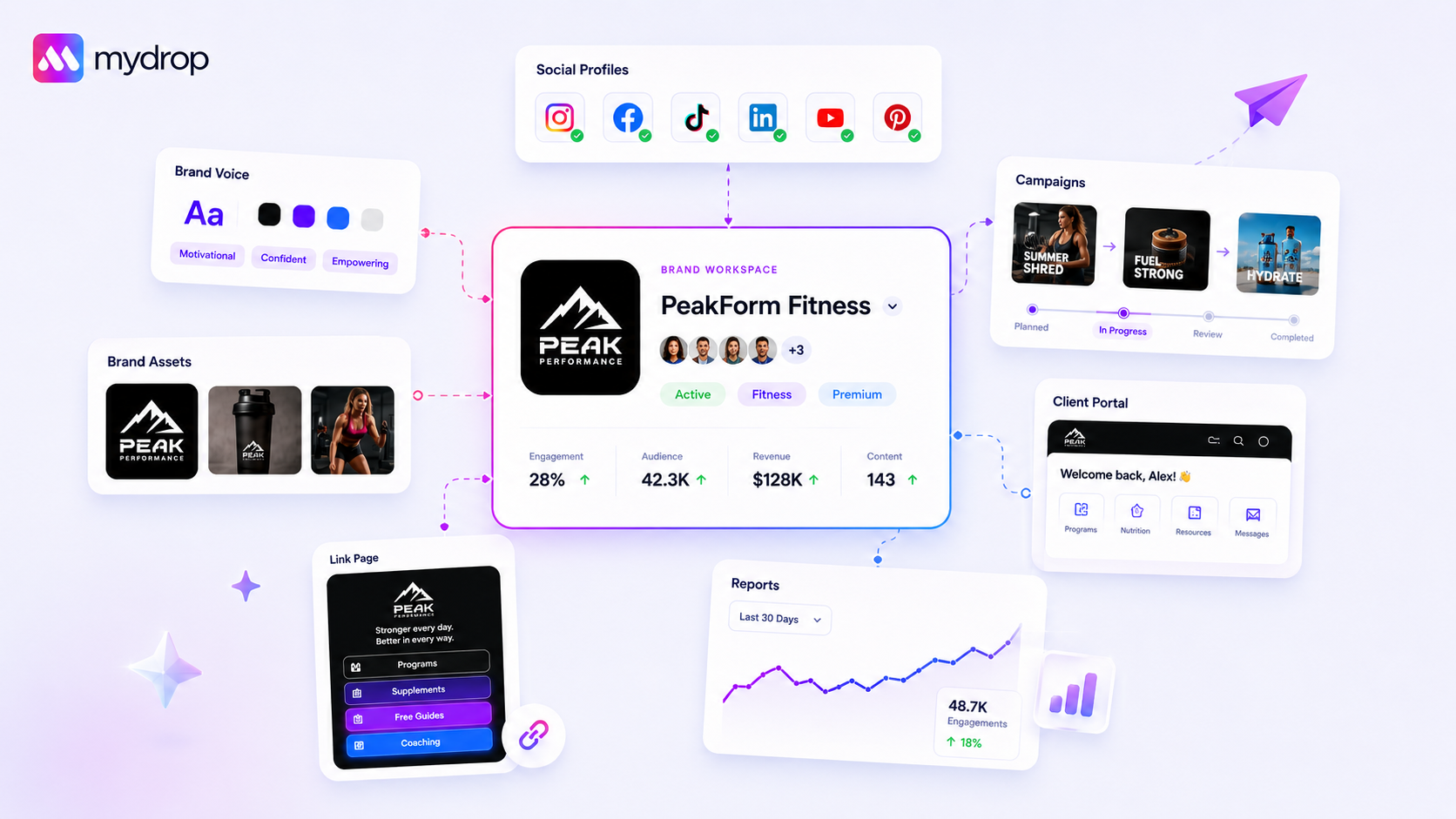
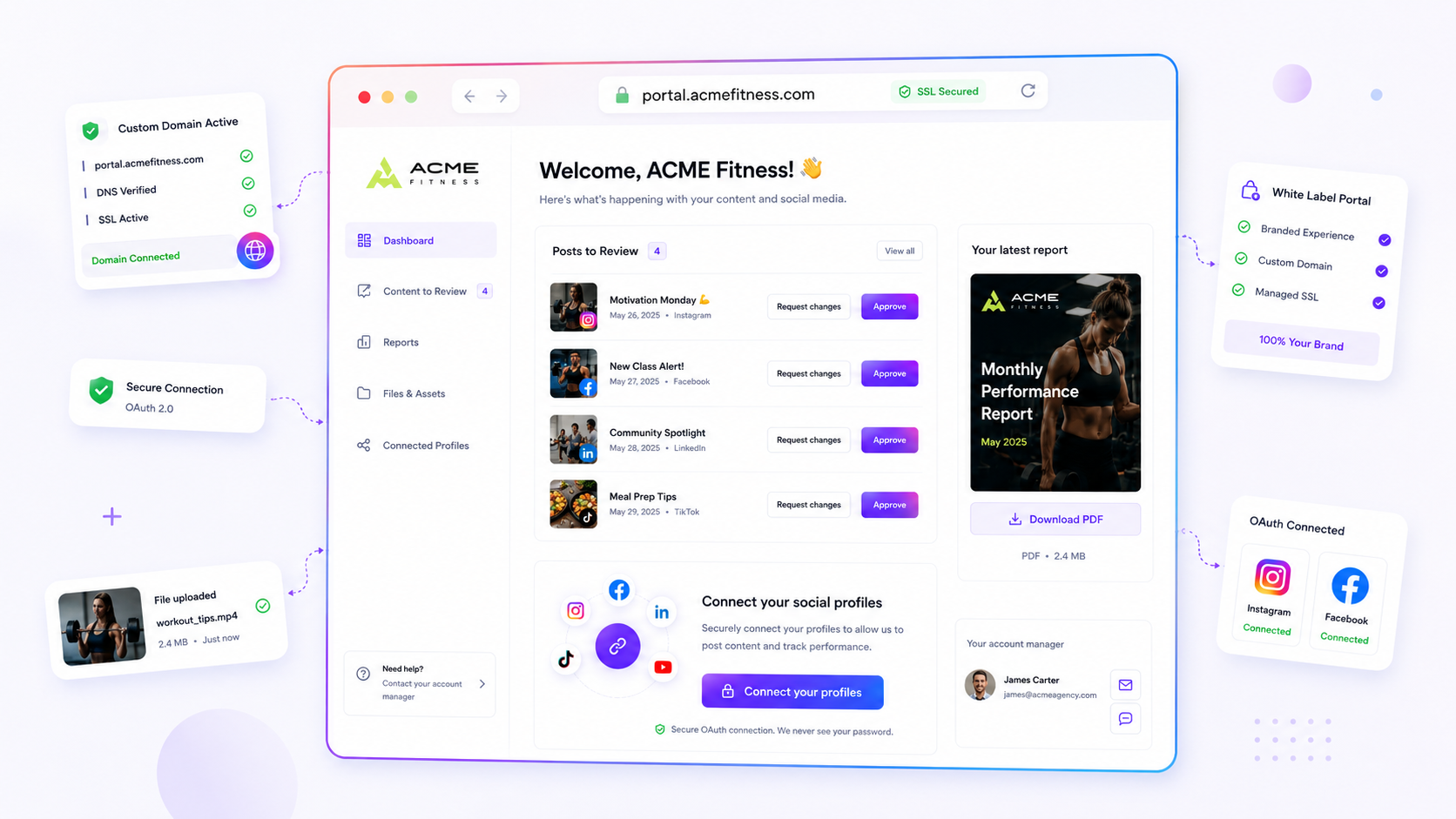
At Mydrop, we see teams move away from this chaos by using a branded portal where clients connect their own profiles via OAuth. This removes the agency from the "credential middleman" role entirely. When the client completes the OAuth flow within their own portal, they are effectively confirming the connection on their own terms. It is faster, it is secure, and it means nobody on your team ever has to know-or handle-a client’s social password.
Most teams do not have a connectivity problem; they have a distribution bottleneck caused by keeping the authentication process inside the agency firewall. Give the keys back to the client, and watch the "outages" disappear.
What to fix this week
If you are currently holding onto a pile of client passwords in a spreadsheet or a secure note app, consider this your official cue to delete them. This week, start by mapping out your highest-friction accounts-the ones that require the most frequent re-authentication or involve the most sensitive stakeholders.
For these accounts, initiate the transition to a portal-based workflow. It is far easier to frame this as a security upgrade during a routine check-in than it is to explain why you lost access during a major campaign launch.
Immediate Transition Checklist
- Identify the top five: Pick the five brands with the most complex reporting or frequent profile disconnects.
- Audit the access: Review who in your agency currently has the actual passwords and revoke that access as soon as the client successfully connects via the portal.
- Draft the "Why": Use a simple message to your client: "We are moving all social profile management to our new client portal. This allows you to maintain full ownership and security of your credentials, while giving us the stable access we need to keep your campaigns running smoothly."
- Send the invite: Trigger your portal invitation and set the necessary permissions for that client to manage their own profile connections.
- Monitor the sync: Check your dashboard to confirm the profile is active, then move on to the next brand.
Decision check: If a process requires an account manager to log in as the client, you are not managing social media; you are managing IT support tickets.
When to stop diagnosing and change the workflow
There is a point where troubleshooting becomes a sunk-cost trap. If you find your team spending more than 30 minutes a week simply re-authenticating accounts or chasing clients for updated credentials, stop looking for "better" ways to manage passwords. There is no better way to manage a vulnerability.
The technical "bugs" often blamed for disconnects are frequently just the platform security layer reacting to multiple, unauthorized IP addresses trying to log into a single account. When you force a login from your agency office after the client already logged in from their phone, the social network flags it.
At Mydrop, we see teams struggle with this until they reach a breaking point. The moment you decide to own the experience of the connection rather than the credentials of the account, the noise drops away. OAuth isn't just a technical preference; it is a communication tool that shifts the responsibility of identity back to the asset owner.
Workflow Stability Scorecard
| Workflow Factor | Manual Password Sharing | Portal-Based OAuth |
|---|---|---|
| Security Risk | High (Credential Exposure) | Zero (Client Retains Auth) |
| Access Stability | Poor (Triggered 2FA/IP Blocks) | High (Token-based Persistence) |
| Admin Burden | Daily Maintenance | Setup Once |
| Compliance | Audit Liability | Zero Exposure |
Evaluation: If your agency scores below a 10 on a 15-point scale (3 per row), your current workflow is likely costing more in labor than it is saving in convenience.
Conclusion
The goal of social media operations isn't to be the best at troubleshooting login errors; it is to maximize the impact of your content strategy. Every hour your team spends wrangling social logins is an hour stripped from campaign planning, audience analysis, or high-level creative work.
Security is not just about avoiding hacks; it is about creating a frictionless environment where your team can do their best work without being blocked by administrative hurdles. By moving to a portal where the client owns the connection, you are not just securing the brand-you are professionalizing the entire agency-client relationship. You don't need a better way to handle passwords; you need a workflow that makes passwords irrelevant.