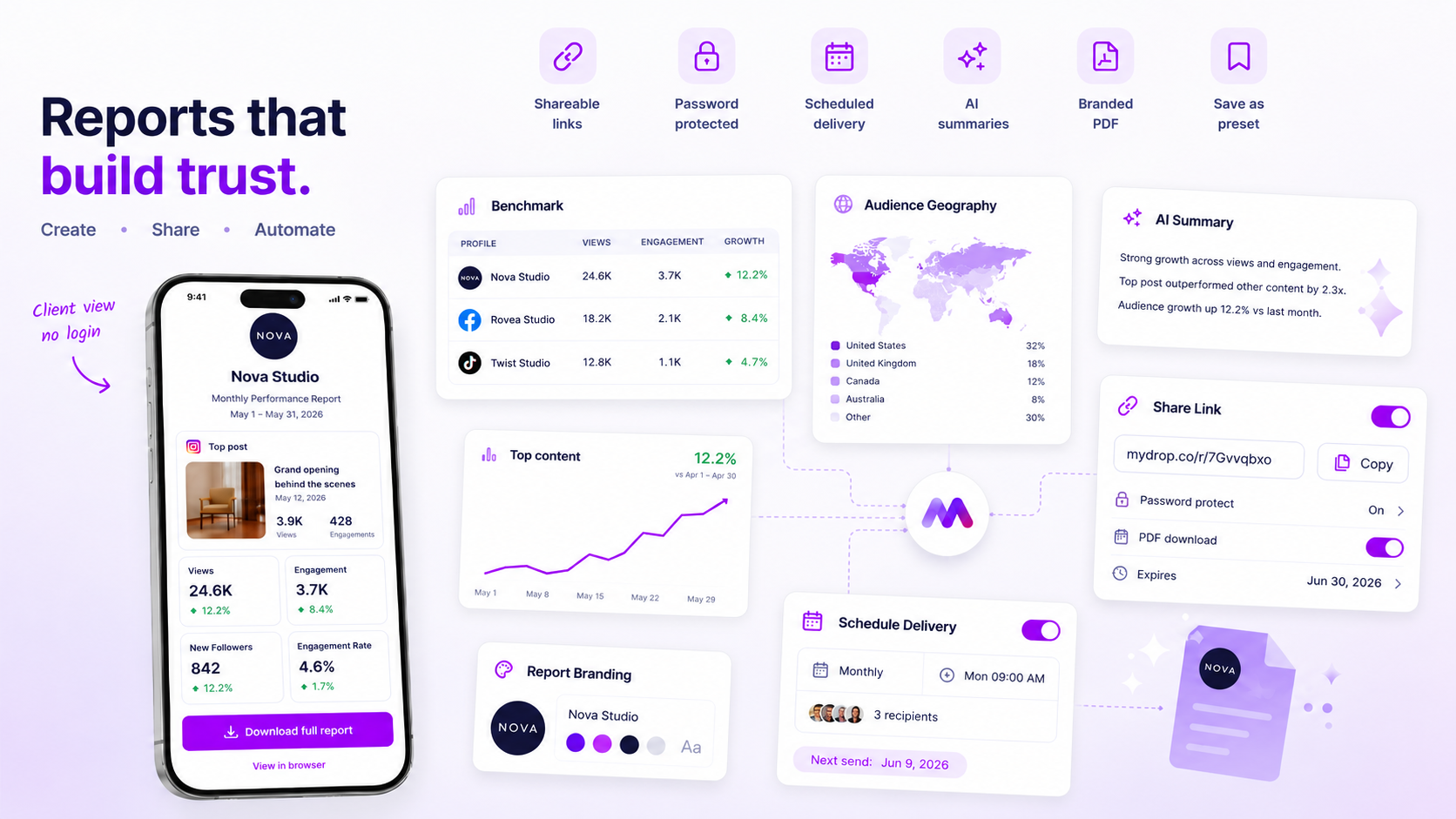
To fix client review bottlenecks, stop treating report delivery as a manual file-sharing task and start viewing it as a frictionless access service. Your reporting software must allow clients to authenticate themselves via tokenized, secure links-ideally with password protection-so they can inspect data and download PDFs on their own terms, without forcing them through the hurdle of a platform login they will never use.
We have all lived the chaos of the "messy middle": your team has crafted brilliant, actionable insights, but those reports sit gathering dust in a draft folder because the client needs a platform seat, or the file is too bloated for a secure email. You end up playing email tag, chasing approvals late on a Friday, and watching your hard-won momentum evaporate. It is frustrating, exhausting, and honestly, entirely avoidable. The work is ready, but your delivery pipeline is essentially a roadblock.
The awkward truth is that your reporting tool should not just analyze data; it must bridge the gap between "done" and "approved." If you are still exporting files, drafting manual emails, and managing access requests, you aren't just sending data-you are actively creating a bottleneck that costs you time, agency performance, and client patience.
What the best tools need to handle

When you manage reports for dozens of stakeholders or multi-brand clients, the delivery mechanism is just as important as the analytics themselves. The goal is to maximize the accessibility of your insights while minimizing the coordination debt required to get them seen.
To break free from the manual export-and-email cycle, your reporting software needs a set of enterprise-grade delivery features that prioritize both security and self-service.
Here is the checklist of what to look for when evaluating your next reporting platform:
- Tokenized Public Access: Can you generate a secure, stable share link for a specific report run? This allows clients to view dashboards without needing a full-seat login.
- Granular Security Controls: Can you slap a password on that link or set an expiration date? If a report contains sensitive quarterly data, you need to be able to revoke access instantly.
- Self-Service PDF Management: Does the client have the option to download a PDF report directly from the public link, and can you toggle this feature off if you prefer they only view the live dashboard?
- Frictionless Email Delivery: Can the platform handle the heavy lifting of emailing a branded, professional summary directly to your external stakeholders, complete with the secure link and optional attachments?
Operator rule: If a client has to jump through more than two authentication hoops to see their own data, they will stop looking at your reports.
When you get these workflows right, the "review" stops being an event and becomes a seamless part of the client's experience. You send the link, they open it, they approve it, and everyone gets to move on to the next campaign without wasting a single hour in an inbox.
Where basic tools start to break

Basic reporting tools view delivery as a post-processing chore. It is often a manual export to PDF or CSV rather than a core feature of the analysis lifecycle. You have spent hours refining the data and perfecting the visualizations, only to have the entire project grind to a halt because the file is too large for an email attachment or the client forgot the password to the cloud drive you dumped it in.
This is where the frustration starts to mount. Your client is managing dozens of priorities. They do not have the time to troubleshoot access permissions or create yet another login for a tool they only visit once a month. When you force friction onto the client, you are implicitly forcing delays onto yourself. If they cannot access the data instantly, they cannot approve your strategy.
Manual vs. Automated Sharing: The Operational Reality
| Workflow Factor | Manual "Send-and-Hope" | Automated Tokenized Sharing |
|---|---|---|
| Access Method | Requires account/login | Unique, secure tokenized link |
| Security | Static file in email/cloud | Password protection, link expiration |
| Client Friction | High (login, download, save) | Near zero (click, view, download) |
| Revocation | Impossible (file is already sent) | Immediate via link disable |
| Visibility | None | Real-time status tracking |
The manual approach feels safe in the moment, as you have "sent" the report. But you have actually lost all control over the data and the timeline.
The buying criteria that matter
When you are evaluating software that actually supports enterprise-level social media operations, stop staring at the dashboard and start inspecting the delivery architecture. A tool is only as good as the client's ability to easily consume the insights it provides.
Look for these three critical criteria:
- Frictionless, Auth-Free Review: Your clients should never need a seat in your workspace just to review a report. If a tool forces a login, it is a dealbreaker. Look for tokenized public links that provide a polished, branded experience directly in their browser.
- Granular Security Controls: You need to treat these shared reports with the same security rigor as any other sensitive document. Can you set an expiration date so the link dies automatically after the review period? Does it allow for optional password protection? These are not "nice-to-have" extras. They are basic requirements for protecting your data.
- Flexible Delivery Formats: A report is often just the beginning of the conversation. Does the software allow the client to download a clean, branded PDF directly from the report view? Does it support direct email delivery for the initial announcement, including a link to the secure portal?
At Mydrop, we built our reporting system because we saw too many teams treating the sharing process as an afterthought. Our approach uses tokenized links that allow for immediate, secure access without forcing the client through an authentication gate. We added granular controls, such as password protection, link expiration, and optional PDF downloading, so you can decide exactly how much access your client needs, and when that access should be revoked.
Decision check: If your reporting software requires a client login for simple review, it is not serving your client; it is demanding work from them.
The goal is not just to generate numbers; it is to create a seamless conduit for decision-making. If your current tool cannot handle these requirements, your coordination debt will only continue to rise.
How Mydrop supports this workflow
At Mydrop, we see the same pattern across hundreds of brand profiles: the reporting effort is rarely the analysis itself, but the sheer effort required to get that analysis into the hands of the right stakeholders without security lapses or access friction. We built our analytics-report-sharing-delivery feature specifically to treat report access as a frictionless service rather than a manual file-transfer task.
Instead of exporting static PDFs that instantly become obsolete, you can generate a tokenized public report link directly within your workspace. You decide the level of security required-add an optional password protection to keep sensitive data behind a second layer of defense, or set an expiration date to ensure stakeholders aren't reviewing data long after it loses relevance.
The experience for your client is intentionally stripped of friction. They receive an email with a clean link, click it, and instantly view the insights in a browser-no Mydrop login required. If your internal governance mandates that they need a physical copy, you retain granular control: toggle PDF download on or off per report, ensuring you maintain the right balance between accessibility and document control. If priorities change or a client relationship ends, you can disable the share link instantly from the dashboard to revoke access globally. It is about giving you control over the conduit, not just the data.
A simple shortlist checklist
Before you commit to a new reporting tool or commit to optimizing your existing stack, run this quick audit against your current process. If you answer "no" to more than two of these, your reporting workflow is a liability.
| Checkpoint | Requirement | Why it matters |
|---|---|---|
| No-Login Access | Can clients view data without an account? | Removes the #1 barrier to review velocity. |
| Granular Security | Can you password-protect and expire links? | Essential for enterprise compliance and data safety. |
| Direct Distribution | Does the tool handle email delivery natively? | Eliminates the need to export and draft new emails. |
| PDF Control | Can you toggle PDF downloads per report? | Prevents unauthorized file circulation. |
| Instant Revocation | Can you disable access in one click? | Crucial when client access needs change rapidly. |
Conclusion
The bottleneck in your reporting process isn't the data density or the complexity of your charts; it is the administrative weight of moving that data from your machine to the client's screen. If you find your team spending more time on manual file management than on strategic analysis, you are managing coordination debt, not social media performance.
The right reporting software should effectively disappear from the process. It should be the quiet infrastructure that facilitates the conversation between you and your client, not an extra seat at the table that they have to learn how to use. When you move to an automated, tokenized access model, you stop being an email attachment provider and start acting as a strategic partner. Stop chasing approvals, fix the delivery mechanism, and watch how much faster your strategy gets the green light.