
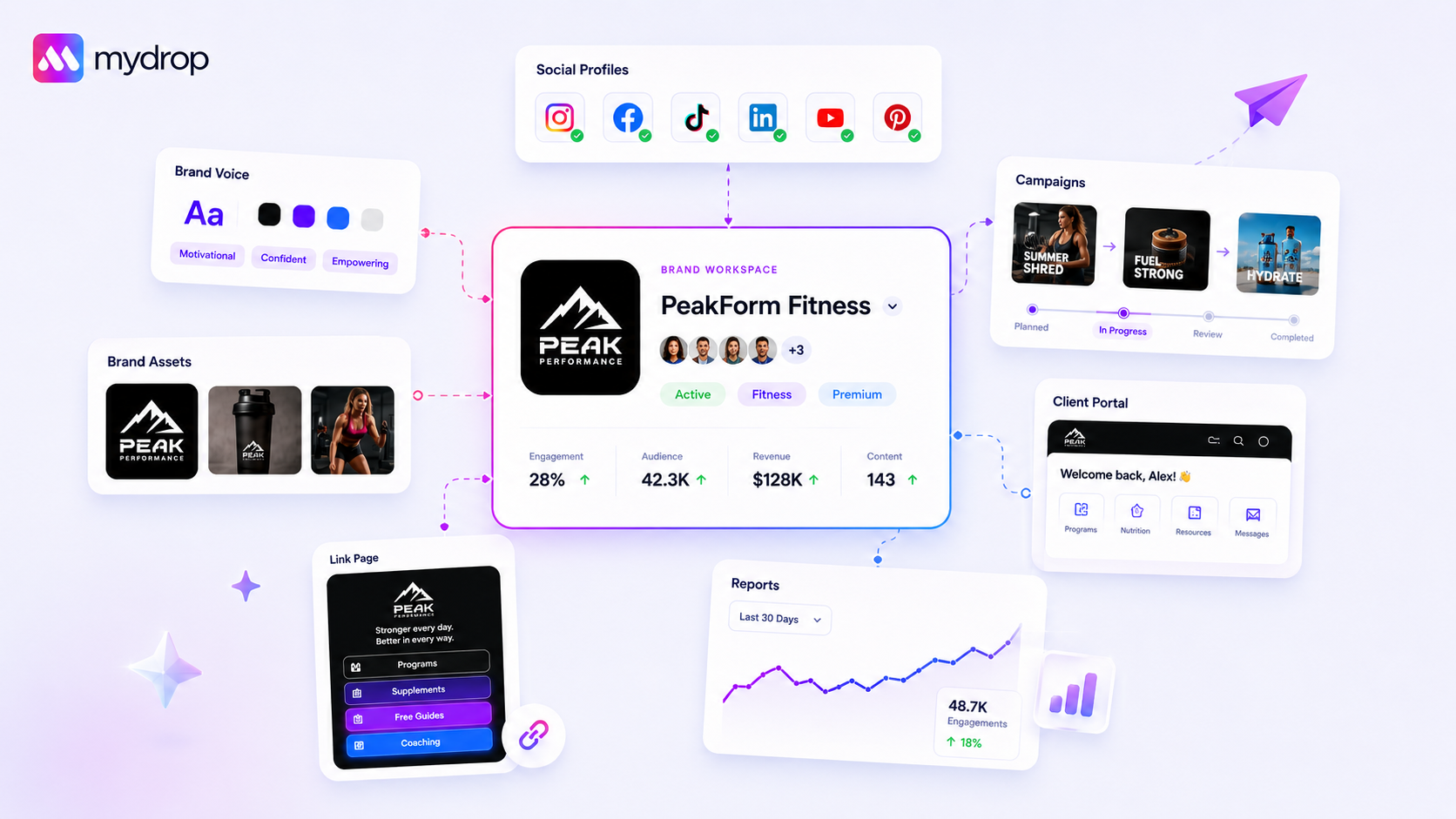
Disconnected profiles are the silent killers of agency workflows. The "re-authenticate" prompt arriving minutes before a high-stakes campaign launch is not a technical hiccup; it is a symptom of a platform failing to manage your OAuth lifecycle. For agencies managing dozens of client channels, connection health is not a one-time setup; it is an active operational metric. If your tool treats tokens like disposable keys rather than critical infrastructure, your team will spend hours babysitting manual refreshes instead of driving strategy. We have seen this across brands and agencies: if your dashboard cannot display the health of a connection without clicking into a native provider, it is a manual process in disguise.
We get it-you are balancing client expectations against fragile, expiring API connections. Nothing kills the momentum of a multi-brand rollout faster than an unexpected disconnect. It is not about the initial login; it is about the silent failures that happen in the background when a token expires, leaving your queue jammed and your dashboard blind. You need proactive visibility that alerts you to a pending expiry before it becomes a fire drill. At Mydrop, we believe the visibility-first connection model is the only way to scale.
What the best tools need to handle

The core of the issue is the lifecycle of the connection itself. You are not just connecting a profile; you are establishing a multi-year handshake that requires continuous verification. Your tool must move beyond basic authentication to handle the nuances of modern OAuth.
| Feature Pillar | Why It Matters for Agencies |
|---|---|
| Proactive Token Refresh | Prevents service interruptions by handling background refreshes automatically. |
| Granular Scope Visibility | Tells you exactly which permission is invalid instead of just "re-connect". |
| Portal-based Auth | Allows clients to connect profiles themselves, removing security friction. |
First, prioritize granular scope visibility. If you have to jump into a native platform like LinkedIn or Meta to see why a connection failed, you are doing manual work. A solid platform should report exactly which scope is missing or expired right in your dashboard.
Second, look for multi-account confirmation. When you connect a parent business account, providers often return dozens of sub-pages. You should not have to guess or import them all manually. You need an interface-like the pending connection state we use in Mydrop-where you can selectively import only the channels you manage for that client.
Finally, the tool must leverage portal-based OAuth. For agencies, asking a client for a platform password is a security risk and a massive friction point. Your tool should allow the client to authorize their own profiles directly through a secure brand portal. Within Mydrop's portal, the client stays in control without sharing credentials or granting you full app-wide access. This approach turns a high-risk security request into a simple, automated workflow.
Where basic tools start to break

Most platforms treat the OAuth flow as a binary switch. Either you have a token or you do not. This is where the foundation cracks for agency workflows. If your tool treats "connect profile" as a one-time configuration task, you are already behind.
The silent failure usually hides in the platform's inability to handle token lifecycle maintenance. When a provider like LinkedIn or Instagram forces a security update, your tool should be handling the background refresh. If your platform only flags a broken connection after a post fails to publish, you have a reactive, not proactive, system.
Then there is the issue of granular scope selection. Many tools just request everything from a social provider. You end up importing ten irrelevant test pages, making the dashboard noisy and creating a security headache when those test pages get deleted or compromised. A solid platform lets you review exactly what you are bringing in through a pending connection flow.
Finally, the most common point of failure is credential management. If your team is still sharing passwords via encrypted notes or spreadsheets to get connections set up, you are creating a compliance nightmare. Modern tools move this into a brand portal where the client authenticates directly. A simple rule helps: If the client has to email you a password to connect their account, you have already lost control of the security loop.
The buying criteria that matter
When evaluating your social media stack, stop asking if it can connect to a specific platform. Ask how it handles the operational lifecycle of that connection. You need to know if the platform is babysitting your tokens for you or if you are still manually troubleshooting API errors on a Saturday morning.
Use this scorecard to pressure-test your current setup.
| Metric | The Basic Trap | The Enterprise Standard |
|---|---|---|
| Token Refresh Rate | Manual reconnection required post-expiry. | Automated, silent background refreshes. |
| Multi-Account Review | Imports all available accounts blindly. | Granular Pending review before final connection. |
| Client Access | Team members handle client credentials. | Secure portal-based OAuth with no password sharing. |
| Alert Logic | Alerts only after a publish failure. | Predictive alerts based on token health status. |
This scorecard helps you see if you are operating a true management platform or just an expensive scheduling queue.
At Mydrop, we built the connection layer to prioritize this lifecycle. When a client needs to connect, they use our portal flow. They never hand over a password, and we never touch their account credentials. They authorize the scopes they want, and we confirm the specific pages returned via an OAuth review step.
The goal is operational invisibility. Your team should focus on content and strategy, not checking the health status of a Twitter connection. If your platform is not keeping your connections stable, it is not serving your agency; it is adding to your coordination debt.
If you cannot see the status of your connections within your dashboard, you are flying blind. The best tool is one that treats the connection as a live, sensitive asset, not just a checkbox in the onboarding process.
How Mydrop supports this workflow
At Mydrop, we built our connection architecture to stop the "babysitting" cycle that plagues agency teams. We believe that if you are managing dozens of client profiles, your tool should act as an operational partner, not just a passive bridge to the social API.
The biggest shift we introduce is the portal-based flow. Instead of chasing down client passwords or managing shared credential sets, you trigger a secure OAuth request directly from the brand portal. Your client logs into their native interface, selects the specific channels they want you to manage, and the token is securely issued to your workspace. They maintain ownership, and you maintain access without ever touching their credentials.
We also tackle the "junk import" problem through our Pending Profile Connections workflow. When you connect a high-level account like a Facebook Business Manager, platforms often return dozens of sub-pages and assets you have no intention of publishing to. Rather than forcing them all into your dashboard, we pause the import. You review the list, select the actual publishing profiles, and discard the rest. It keeps your workspace clean and reduces the noise when you are trying to find the right channel for a time-sensitive campaign.
Finally, we treat connection health as a live metric. If a platform updates its token requirements or a client revokes access, you do not find out when a scheduled post fails. Our Profiles menu monitors the health of every connection in real-time. If a token is expired or expiring soon, we highlight it immediately so your team can refresh the connection before it impacts your publishing cadence.
A simple shortlist checklist
If you are auditing your current social media stack, use this checklist as your litmus test. If your platform fails more than two of these, you are carrying more operational debt than you realize.
- Portal-based OAuth flow: Can clients connect their own profiles via a secure portal without sharing passwords or seeing your full admin dashboard?
- Pre-import review: Does the tool allow you to filter and select specific pages before importing them, or does it dump every available account into your list?
- Granular status visibility: Can you see the
token_expiry_statusfor every connection at a glance, without clicking through to the provider's native interface? - Proactive alerting: Are connection errors and expiration warnings surfaced before a scheduled post fails?
- Audit trail: Is there a clear, per-profile history of when connections were updated or refreshed?
Conclusion
The most dangerous thing in social media management is not a bad content idea; it is a silent technical failure that prevents a team from delivering on a promise. Most agencies treat connection management as a one-time setup task, but that is a mistake that inevitably leads to panic when a high-stakes campaign launch hits a "re-authenticate" wall.
Operational stability in this space comes down to visibility. You need to know the health of your connections as clearly as you know your posting schedule. If your team spends their week chasing password resets or fixing broken API links, they are not managing a brand-they are performing IT support.
Start by looking at the connection layer of your current tools with a critical eye. If you cannot see the status of your tokens, you do not actually own the connection. Move your team toward a model where connection health is an automated background task, not a manual emergency. That is how you reclaim the bandwidth to focus on the work that actually grows a brand, rather than just keeping the lights on.