Social media health is not determined by your post volume, but by the integrity of your underlying OAuth connections. If your tokens are stale, your analytics and publishing workflows are already failing-even if your dashboard looks like it is working fine.
Managing multi-brand social infrastructure often feels like spinning plates made of glass. One expired token can shatter a campaign, yet many teams still rely on high-risk habits like sharing passwords across spreadsheets. We get it: the technical side of agency work is messy, and fixing connections rarely feels like a priority until something breaks. Instead of manually auditing fifty profiles for token expiry, your platform should act as an automated validator for your team’s entire OAuth health.
The silent killer of agency growth isn't creative fatigue-it's the mounting technical debt of legacy, unmanaged connections that block reporting, break synchronization, and turn simple account management into a security liability.
What the best tools need to handle

You need a system that treats connections as first-class infrastructure, not a "set it and forget it" checkbox. When you are managing dozens of brands, you cannot afford to have a human-in-the-loop for every token refresh or profile re-authentication. The best tools in this space do not just store credentials; they actively manage the lifecycle of the connection.
Here is the baseline functionality every enterprise-grade team must require:
| Requirement | Why it matters |
|---|---|
| Portal-based Authorization | Removes the need for password sharing; clients authorize directly through a secure gateway. |
| Automated Expiry Alerts | Triggers proactive notifications before the token expires, preventing reporting gaps. |
| Pending Connection Review | Lets you preview and map multiple channels returned by a single OAuth flow to avoid "ghost" profiles. |
| Sync Propagation | Ensures that once a profile is connected or refreshed, downstream systems like the Inbox or Analytics automatically re-backfill. |
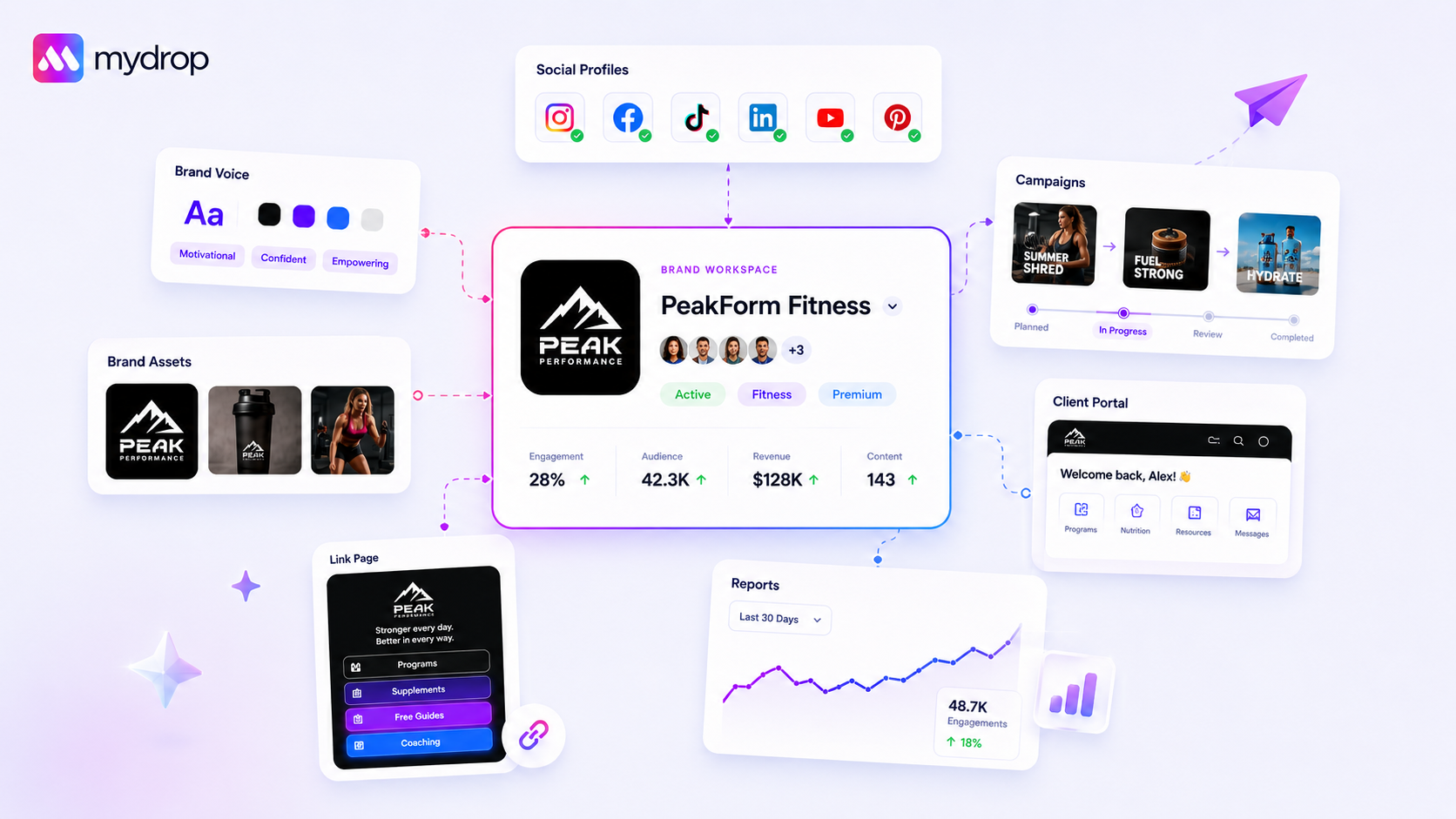
At Mydrop, we see teams bypass this pain by utilizing portal-based OAuth flows that keep the client in control without ever exposing credentials. When these features are missing, you are forced into a "break-fix" cycle where the first indication of a connection issue is an angry client asking why their monthly report is empty.
Operator rule: If your team has to manually export a token or share a password to get a profile working, your connection architecture is fundamentally broken.
The goal is zero-touch maintenance. You want a system where the client manages their own OAuth consent within your portal, and your team only steps in if there is a genuine technical alert. If your current tool forces you to play "IT support" for every new marketing hire or client onboarding, it is actively working against your agency’s ability to scale. You should be spending your time on creative strategy, not untangling credential spaghetti.
Where basic tools start to break

Most teams start with a spreadsheet of passwords, and it inevitably becomes a crime scene. You know the drill: someone changes their password, a junior associate leaves the firm without handing off credentials, or a token expires on a Sunday night right before a high-stakes campaign launch. These are not just minor inconveniences. They are significant operational liabilities that turn your social media team into manual token-refreshers rather than content strategists.
Basic tools often fail because they treat connection as a one-time "set it and forget it" task. They lack the visibility to alert you when a token is about to expire, or they force you to ask clients for their direct login credentials to perform a simple task like connecting a LinkedIn page. When a tool relies on password sharing, you are not just risking a security breach. You are creating a bottleneck where someone on your team has to act as the primary account gatekeeper for every single brand under your umbrella.
Another common failure mode is the "all-or-nothing" import. When you connect a Facebook account to a basic tool, you might unintentionally import a dozen test pages or outdated groups you do not even manage. Without the ability to preview, filter, and confirm exactly which profiles move into your system, your dashboard gets cluttered, your analytics get skewed, and your reporting becomes a massive cleanup job.
The buying criteria that matter
If you are tired of the manual firefighting, the criteria you use to evaluate a tool need to shift from "can it post" to "how does it govern".
You need a platform that treats OAuth as a delegated, secure workflow rather than a shared-password convenience. The best tools provide a way for your clients to authenticate their own channels without ever giving you their direct account password.
At Mydrop, we see the most successful teams prioritize these three maturity pillars: secure delegation, granular profile confirmation, and automated expiry notifications. Here is a simple scorecard to measure your current setup against industry best practices.
Agency Connection Maturity Scorecard
| Maturity Level | Credential Security | Profile Import | Sync Integrity |
|---|---|---|---|
| Level 1: Manual | Shared Passwords | Bulk (All/None) | Manual Refresh |
| Level 2: Basic | Managed User | Manual Selection | Periodic Polling |
| Level 3: Mature | Secure OAuth Portal | Preview & Confirm | Event-Driven Sync |
How to use this scorecard:
- If you are currently at Level 1, your team is spending at least 15% of its time on credential management.
- At Level 2, you have solved the password sharing risk, but your team still deals with frequent manual troubleshooting.
- Level 3 is the operational standard for scale. You utilize client-side authentication via a branded portal and your tooling automatically triggers analytics backfills when a connection is refreshed.
A mature tool should handle the complex handshake for you. Instead of forcing you to guess which accounts are active, look for workflows that include preview-based connection support. This lets your team preview every channel the OAuth flow returns, so you only create publishable profiles for the ones you actually need.
If your current platform does not offer a client-facing authentication portal, you are stuck as the middleman in every single setup. By moving that burden to the client-using secure, scoped tokens-you gain hours back in your week and eliminate the security risk that comes with holding keys to every brand's social kingdom.
Ultimately, the goal is to stop thinking about "connecting" as a chore and start viewing it as the baseline of your data integrity. When your connections are automated, secure, and audited, everything else, from analytics dashboards to inbox management, becomes reliable.
How Mydrop supports this workflow
At Mydrop, we see the same pattern across hundreds of agencies: the bottleneck is rarely a lack of content, but a failure of coordination debt. When you manage dozens of brands, manual profile reconnection is not just tedious-it is a security risk.
We built our Profile Connections system to move your team from "re-authentication firefighting" to a stable, automated foundation.
- Portal-based delegation: You never touch a client password. We use secure OAuth flows where the client authorizes their own accounts through a dedicated brand portal. The credentials stay with the platform provider, not your spreadsheet.
- Intelligent
pendingProfileConnectionsreview: When a provider returns twenty business pages from one OAuth login, our system stops you from importing the wrong ones. You preview and select the exact channels needed before any profile is created, preventing "ghost" profile clutter. - Automatic post-connection hooks: The moment a profile is re-linked, Mydrop automatically triggers a background sync to refresh the analytics dashboard, re-enable the inbox, and propagate token ownership. You do not have to manually kick off these updates; they just happen.
Decision check: A tool that requires manual "re-sync" buttons after you re-authenticate a token is just moving the manual work, not eliminating it. True health is automated.
A simple shortlist checklist
Before you commit to a platform for your agency’s social stack, run this short "go/no-go" audit against their connection workflow. If they fail these, the technical debt will eventually become your problem.
| Requirement | Why it matters |
|---|---|
| Zero-password sharing | Eliminates the biggest security liability in agency operations. |
| Client-side OAuth portal | Moves the burden of authorization to the client, where it belongs. |
| Pending connection review | Prevents "ghost" profiles and ensures accurate multi-brand mapping. |
| Automated sync triggers | Ensures analytics and inbox data resume flow without manual intervention. |
| Token health monitoring | Provides proactive alerts before the token expires and breaks your campaign. |
Conclusion
The stability of your agency’s social operations hinges entirely on how you manage the invisible plumbing between your team and the social platforms. While it is tempting to view "connection health" as a low-level technical detail to be ignored until an error message pops up, this is a dangerous oversight.
When you treat OAuth connections as core infrastructure-using secure, delegated flows and automated validation-you do more than just prevent broken campaigns. You free your team from the constant, low-grade stress of chasing down credentials, letting them focus on actual strategy instead of digital housekeeping.
Choose tools that respect this reality, and you will find your coordination debt shrinks, your reporting becomes consistent, and your team finally stops spinning those fragile glass plates.