Stop asking your clients for their social media passwords. The modern enterprise standard for importing multi-brand profiles is the OAuth pending connection flow, a method that validates account access through secure authorization tokens without ever exposing your organization to the risk of shared credentials.
We get it. You are managing ten brands, twenty stakeholders, and a spreadsheet full of legacy passwords that make your security team nervous. Managing a social presence shouldn't feel like a high-stakes game of password tag. Moving your team to a token-based flow isn't just about security compliance, it is about removing the friction that stalls your creative output.
When you stop treating credentials like a communal asset, you stop being the bottleneck.
The operating problem this solves

Most teams stumble into a recurring mess: a client needs to connect their LinkedIn or Instagram Business accounts, so they send an email with a username and a shared password.
Now, your team has a secret they shouldn't have. If the client changes their password, your systems break, and you have to chase them again. If a team member leaves, you have to rotate those credentials across every brand you manage. This is a massive drain on operational energy, and it creates a single point of failure that keeps your IT lead up at night.
The real issue is that manual credential entry lacks a validation step. You are trusting the human, not the system. This often leads to messy account imports where the wrong pages get linked or, worse, you end up with a mix of service-level connections-like Google Drive or Calendar-when you actually needed a publishable profile for social content.
Here is a quick look at why the old way of handling access usually fails.
| Feature | Password Handover | OAuth Pending Connection |
|---|---|---|
| Security Risk | High; stores raw credentials | Low; uses limited-scope tokens |
| Access Revocation | Manual; requires password reset | Instant; revoke token in portal |
| Scalability | O(n) effort per brand | O(1) standardized flow |
| Validation | None; trust-based | Preview of all imported channels |
| Audit Trail | Obscured by shared login | Explicit token owner tracking |
The goal is to move from Authentication (proving who you are with a password) to Authorization (granting specific permissions via a secure token). When you use a system that supports a pending connection preview, you aren't just logging in. You are inspecting exactly which assets are being surfaced, confirming the scope, and creating a stable, long-term link that doesn't rely on anyone remembering a password.
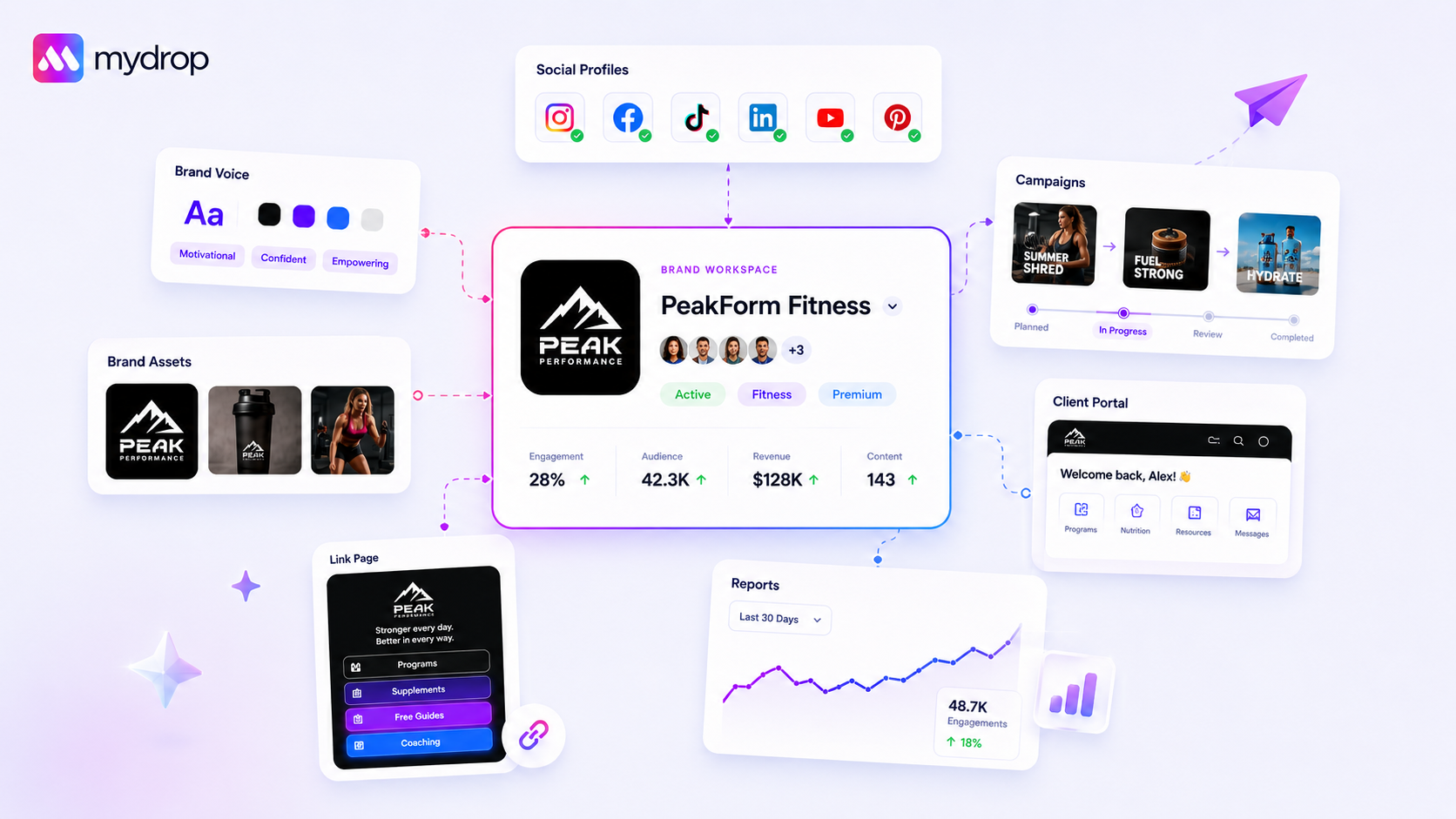
In Mydrop, for instance, this manifests as a review screen that catches platform-specific oddities-like when an OAuth flow returns five different pages, but you only need the one meant for the active campaign. It stops the guessing game at the front door.
The minimum system that works

The secret to a rock-solid import workflow is moving away from the "all-or-nothing" login method. Instead, you need a system that treats each platform connection as a discrete, auditable event.
At the core of a sustainable process is the pending connection preview. When your OAuth flow triggers, it should never force an immediate, blind import. Instead, it must land on a verification screen where a team member or the client themselves can check exactly which pages, groups, or channels were pulled from the provider. If the list is wrong, you hit cancel. If it is right, you confirm. This simple gatekeeper action stops bad data from ever entering your production environment.
| Feature | Credential Handover | Pending Connection Flow |
|---|---|---|
| Security Risk | High (Passwords shared) | Low (Scoped tokens only) |
| Setup Speed | Manual/Slow | Near-instant/Automated |
| Revocation | Difficult/Requires Login | One-click disconnect |
| Validation | None (Blind faith) | Required (Audit preview) |
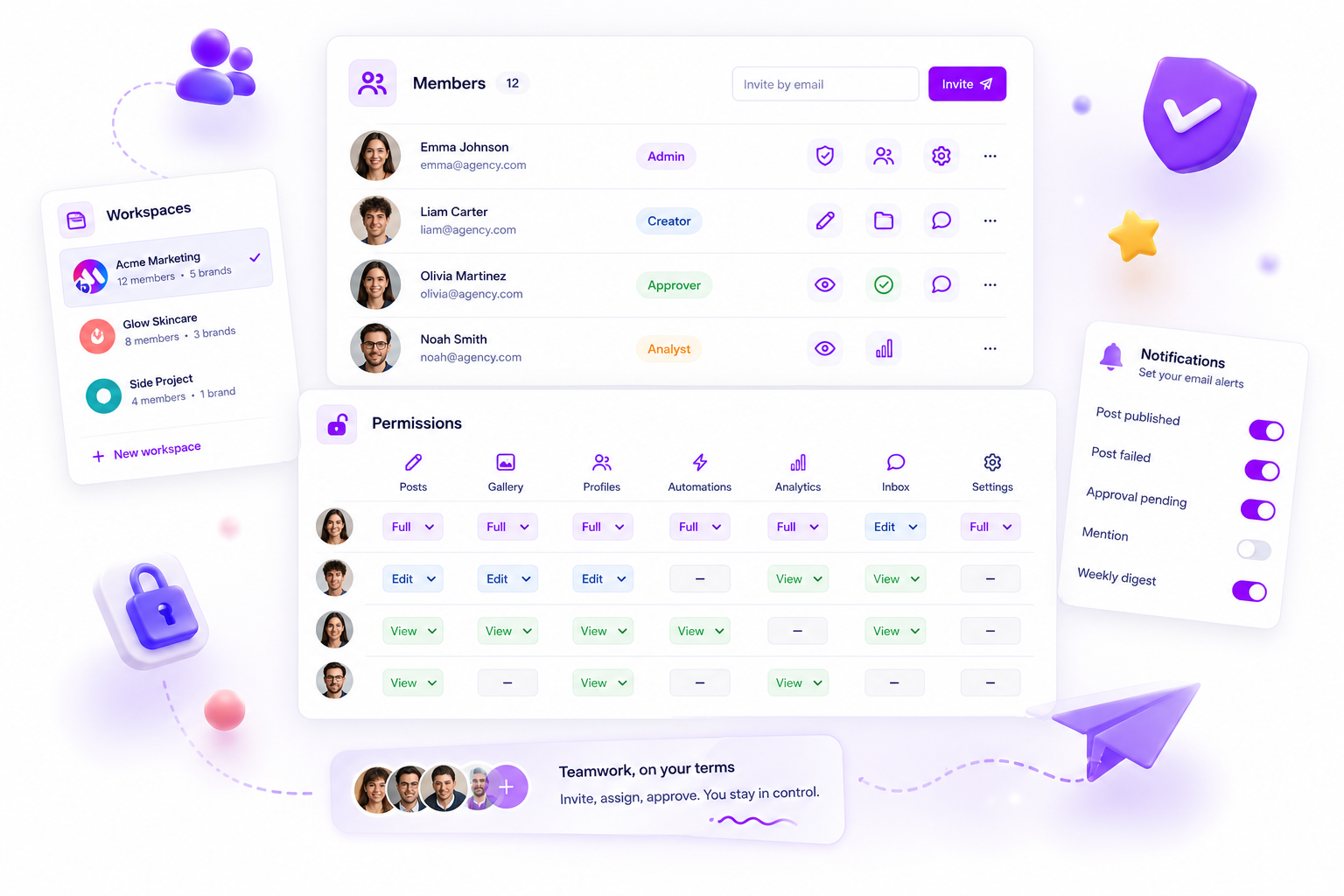
To run this correctly, ensure your setup supports portal-based authorization. This allows you to generate a secure link and send it to a client. They log into their own social account-where they are already trusted-and authorize the specific channels they want you to manage. You never see their password, and they never gain access to your private workspace. It is the cleanest handoff possible.
Operator rule: If a platform connection flow does not offer a "preview and select" screen before finalizing, you are flying blind. Stop the import and verify your permissions.
Where teams overbuild the process
We see many enterprise teams waste hundreds of hours trying to "brute force" social connections because they misunderstand how platform APIs work. The most common trap is building custom, manual sync scripts to "fix" service-level connections-like Google Drive or Calendar folders-that were never meant to be publishable social profiles in the first place.
When an OAuth redirect hands back a service connection, it is often a signal that the account requires a different scope or is an incompatible account type for publishing. You cannot "code" your way out of a platform policy. Instead of writing custom logic to map these, update your documentation to help your team recognize the difference between a Publishing Profile and a Service Connection at the moment of import.
Another common failure mode is ignoring token expiry. Teams often treat a connection as a "set and forget" task. When a token inevitably expires, the entire publishing engine stops, triggering an emergency scramble to find the person who originally connected the account. A professional operating habit requires an active notification system that flags expiry status long before the publishing pipeline goes dark.
Common mistake: Treating a social profile connection as a one-time event rather than a recurring lifecycle. If you do not have a process to refresh tokens, you do not have a working social operation.
If your current dashboard feels like a graveyard of broken profile icons and disconnected tokens, you are likely missing that crucial middle step: lifecycle governance. Don't build more tools to fix the mess; build a better intake filter at the door.
How to run the cadence
Getting your team out of the password-sharing habit requires a shift in how you initiate new client relationships. Instead of an email thread where the client drops a password that then lives in a spreadsheet for three years, you need a standard intake ritual. At Mydrop, we see the most successful teams treat every new profile connection as an onboarding event, not a technical fix.
Here is your weekly checklist to ensure your brand portfolio stays clean and secure:
- The Intake Trigger: When a new brand or regional market is added, send a portal invitation link to the stakeholder, not a request for their credentials.
- The OAuth Handshake: Direct the client to the Mydrop portal where they can trigger the OAuth flow. This keeps the authorization process strictly between them and the social platform.
- The Pending Review: Once the client completes their handshake, check your
Pending Profile Connectionsqueue. This is your safety filter. - Selective Mapping: Use the preview screen to select only the business-relevant accounts. If a client mistakenly authorizes their personal account alongside their brand page, you can simply uncheck it before final import.
- The Cleanup: Once confirmed, delete the pending token state immediately. Your team should only work with the active profile tokens.
Decision check: If you have to ask a client for a password, your intake process is broken. Always default to portal-based handshakes that use platform-native scopes.
This approach turns a high-risk security event into a repeatable administrative task that any team member can handle. It removes the uncertainty of who has access to what, and it forces a clean separation between personal and professional accounts before they ever touch your publishing calendar.
The proof that the habit is working
How do you know if you have successfully moved away from the old, messy way of doing things? You should see a direct impact on your team's operational rhythm within a single quarter.
| Indicator | Old Way (Credential Sharing) | Modern Way (OAuth Handshake) |
|---|---|---|
| Setup Time | 2-3 days of back-and-forth emails. | Under 15 minutes of client self-service. |
| Audit Trail | None; credentials can be reused silently. | Every connection is logged by token and owner. |
| **## How to run the cadence |
Getting your team to stop treating login sharing like a casual office favor is only half the battle. The other half is ensuring that your actual connection process doesn't turn into a recurring manual nightmare. If you find yourself manually refreshing tokens every Monday morning or chasing team members for "just one more password," you are doing it the hard way.
To normalize this, stop treating profile connectivity as a one-off tech task and start running it as a monthly hygiene routine. At Mydrop, we see the most resilient teams running a simple connection cadence that shifts the burden of access away from the person managing the daily calendar and toward the person who owns the brand account.
Your weekly connection checklist:
- Monitor Health: Check your central dashboard for any profile that shows a "Pending" or "Expired" token status. Do not try to re-login yourself.
- Trigger the Portal: Send a secure invitation link from your Mydrop portal group to the client or the local marketing lead. This keeps your team from ever seeing, storing, or touching the actual social credentials.
- Review the Handshake: Once they complete the OAuth flow, use the pending connection preview screen to verify the specific pages or channels they have authorized. If they accidentally authorized a personal Instagram feed instead of the brand account, you can catch it here before it ever hits your primary queue.
- Confirm and Sync: Click confirm. Mydrop then handles the token handshake in the background, refreshing your inbox configs and analytics streams automatically.
Workflow check: If you are ever tempted to store a client's password in a shared document, assume your security posture has already failed. If you cannot automate the handshake through a portal, you are not scaling; you are just accumulating manual friction.
The proof that the habit is working
How do you know if you are actually winning this transition? Most teams think they are doing fine because they have "workarounds," but the real test is in the absence of noise. If your inbox is free of "I need the password to the TikTok account" pings, your system is working.
Look at this scorecard to see where your current workflow lands on the maturity scale.
| Maturity Level | Access Method | Coordination Cost | Security Risk |
|---|---|---|---|
| Manual | Shared password vault | High (manual chasing) | Critical |
| Hybrid | Token refresh with help | Medium (IT bottleneck) | Moderate |
| Enterprise | Portal-based OAuth flow | Minimal (self-service) | Low |
If you are currently in the Manual tier, the goal is not to "try harder." It is to migrate one brand at a time. Pick your most stable, low-risk account, send the portal invitation, and watch how much faster the setup happens when the account owner handles the authorization themselves.
Conclusion
The messy truth about scaling social media across five markets or a dozen brands is that your biggest constraint is rarely your content strategy. It is the invisible friction of getting access to the channels in the first place. When you remove the need for password hand-offs, you stop managing credentials and start managing the actual work of publication.
Stop the password tag. Standardize the OAuth handshake through a portal-based workflow, and move your team’s energy away from administrative housekeeping and back toward the performance metrics that actually move the needle for your clients. Your security team-and your own schedule-will thank you.