The best way to streamline multi-brand asset reviewsStop chasing asset approvals in cluttered cloud folders or relying on email threads that bury your latest versions. The most effective way to streamline multi-brand asset reviews is to shift from generic file sharing to a dedicated, configurable Brand Portal. You need a space where your clients can view assets, approve content, connect social accounts, and chat directly with your team without needing their own complex software logins. If your current workflow involves constant version-control spreadsheets, you are not just losing time; you are creating a systematic vulnerability that will eventually collapse under the weight of your own success.
What the best tools need to handle

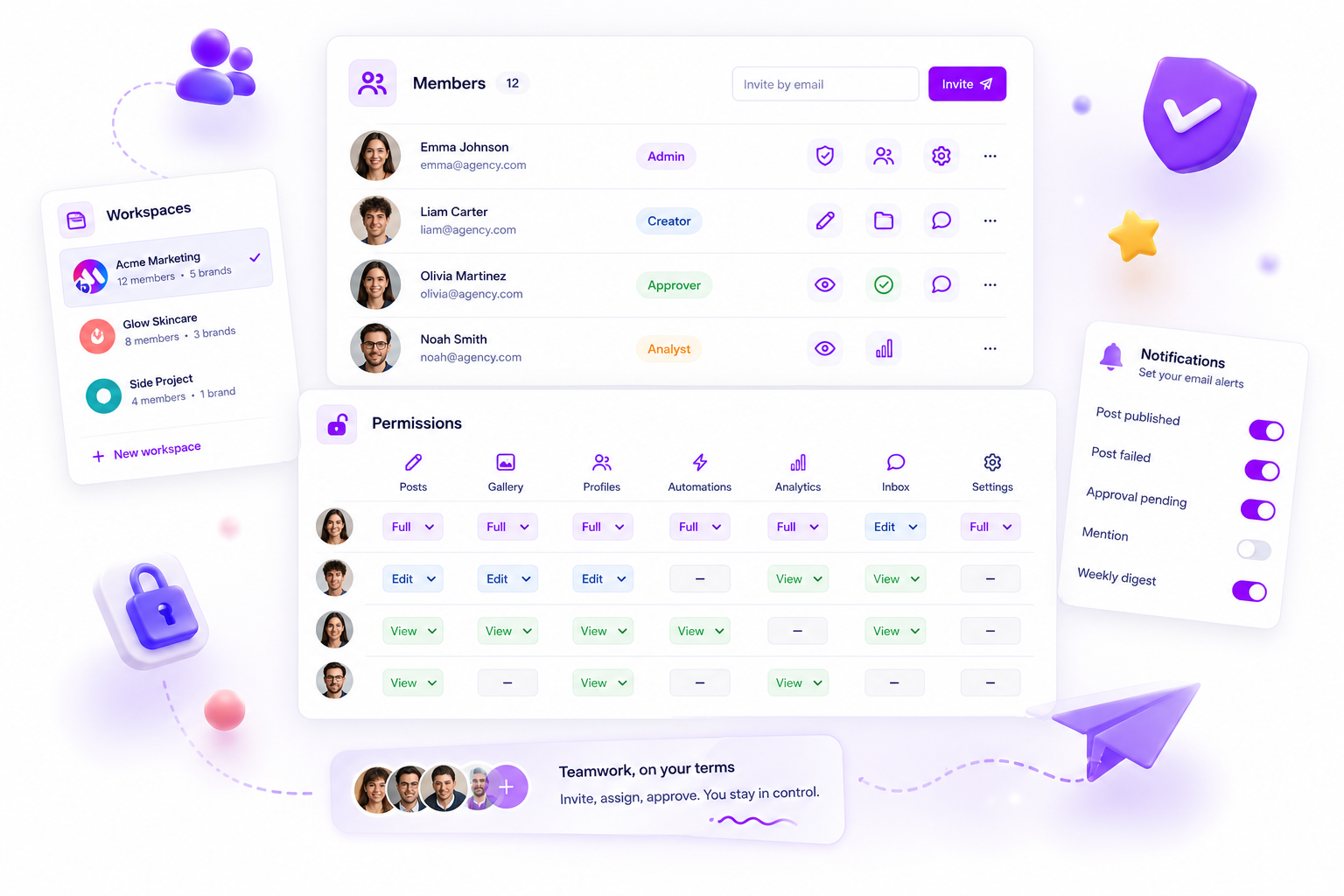
Most tools break when you move beyond a single brand because they treat sharing as a binary: either the whole drive is open or nothing is. For agencies, that is a non-starter. You need granular, modular permissioning.
If you have to create a new folder structure every time a brand adds a stakeholder, you are doing manual labor that should be automated. The best tools act as a consistent conduit, not just a storage bin. They should handle the entire lifecycle of a request: intake, versioned review, approval, and delivery.
Common mistake: Using the same folder for active drafts, internal comments, and final assets. You end up with "Final_v3_updated_FINAL.png" and the inevitable mistake of sending the wrong version to production.
To audit whether your current setup is helping you or burying you, run it through this scorecard.
| Requirement | Why it matters | Agency Impact |
|---|---|---|
| Modular Access | Restricts clients to their own brand workspace. | Prevents cross-brand data leaks. |
| No-Login Approval | Removes friction for the client stakeholder. | Speeds up the sign-off process. |
| OAuth Connection | Allows secure social profile linking. | Eliminates password sharing risks. |
| Unified History | Keeps chat and files in one place. | Reduces version-drift chaos. |
When you look at this, the real goal is centralization without the password. If a tool forces your client to create an account, manage a password, and figure out your internal navigation just to approve one post, you are taxing their time. That friction is exactly why they stop giving feedback or miss your deadlines.
At Mydrop, we have seen that the highest-performing agencies stop treating portals as static file dumps. They treat them as living workspaces. They enable portal sections only when needed - so if a client just needs to review posts and approve them, they do not see the analytics reports or the campaign settings. It is about keeping the UI as lean as the feedback loop itself.
Where basic tools start to break

When you manage a single brand, a shared folder in a cloud drive feels fine. You drop a file, send a link, and everyone is happy. But once your agency starts juggling five, ten, or twenty brand identities, that same folder becomes a crime scene.
We have seen this pattern across hundreds of teams. It usually starts with minor versioning friction--the "v2_final_final.png" nightmare. But it rapidly escalates into a systemic issue when the wrong asset goes to production because a stakeholder couldn't find the latest update in a deeply nested, permission-heavy folder structure.
The tipping point is almost always the same: when file management relies on your team acting as a human router. If your team is spending more time chasing down email approvals or hunting for the right file link than actually creating, your workflow is fundamentally broken. Generic storage tools aren't built for client-agency collaboration; they are built for personal storage. Using them for multi-brand management is like trying to run an enterprise CRM out of a spreadsheet. It works until the stakes get high, and then it becomes your biggest liability.
The buying criteria that matter
Stop looking for "more storage" and start looking for "more structure." When you are evaluating tools for client collaboration, you are really auditing your agency's ability to scale without breaking.
Here is how the best tools stack up against the generic storage you are probably using today.
| Feature | Generic Cloud Storage | Dedicated Brand Portal |
|---|---|---|
| Version Control | Manual (filename hell) | Automated (always latest) |
| Client Friction | Account required | No login / secure link |
| Security | Password sharing risk | OAuth / Permissioned access |
| Feedback Loop | Email/Comment soup | In-context conversation |
| Approvals | Unstructured | Formal sign-off space |
When you are ready to move past the folder-hell, your checklist must include these three non-negotiables:
- OAuth Profile Connection: Never ask a client for their social passwords. Your tool must allow clients to connect their own social profiles via OAuth directly within the portal. If you are still managing spreadsheets of client login credentials, you are already one mistake away from a security catastrophe.
- No-Login Conversations: Your clients are busy. They do not want to manage another set of credentials or jump through hoops just to approve a post or download a report. Look for portals that allow secure, link-based collaboration where they can chat with your team and approve assets without needing to register for an account.
- Dedicated Post-Approval Spaces: A file repository is not an approval workflow. You need a dedicated space where a client can see the scheduled, pending, or posted content in context. They should be able to click a button to approve or request a change, not just upload a file to a folder and hope you see it.
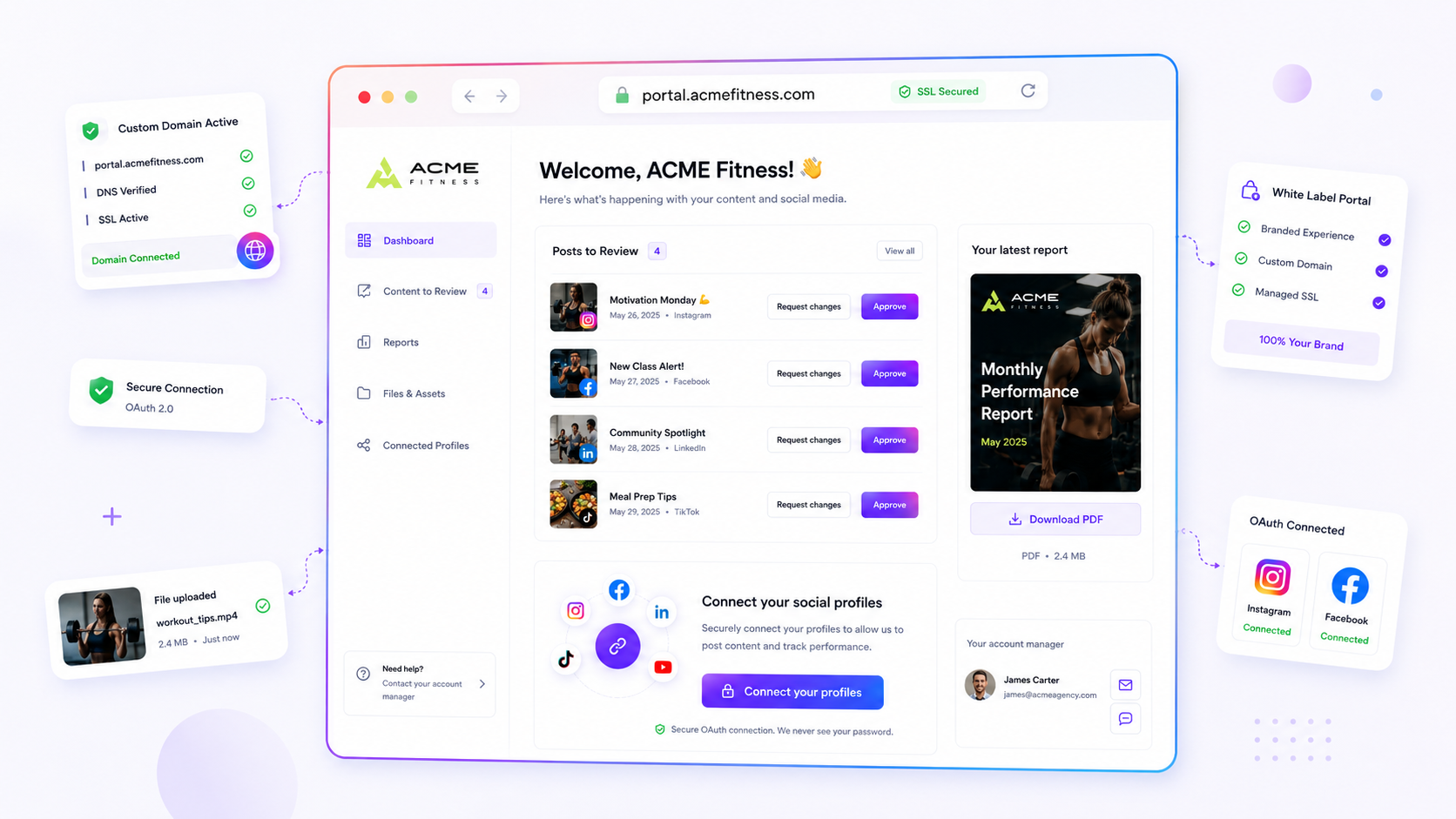
At Mydrop, we designed the Brand Portal specifically to bridge this gap. It replaces those chaotic shared folders with a centralized, branded client dashboard. Instead of hunting through links, your clients get one secure space where they can manage their own profile connections via OAuth, review posts, and chat with your team in real-time--all without needing a Mydrop account.
It is the difference between being a file manager and being a strategic partner. Most teams do not have a creative problem. They have a decision bottleneck. Once you clear that bottleneck, the quality and speed of your output naturally follow.
How Mydrop supports this workflow
At Mydrop, we built the Brand Portal because we saw teams drowning in the same versioning chaos you are likely fighting right now. We realized that forcing clients into the same complex dashboard your team uses was actually slowing them down and creating a new set of security headaches.
The solution was not just "more storage." It was about creating a dedicated, secure space for client-team interaction that lives outside your core management workspace.
When you enable a Brand Portal, you are essentially setting up a secure, branded storefront for that client. They do not need a Mydrop account. They get a simple, password-protected URL where they can view scheduled posts, chat about pending creative, and even connect their social profiles via OAuth without you ever needing to handle their passwords.
Operator rule: Centralize the portal, not the password.
For your team, this means the "final" version is always in one place. No more digging through email threads to find if the client approved the version from Tuesday or Thursday. When they upload a file or click "approve" in the portal, it flows directly into your team's workflow. It is clean, it is governed, and it removes the guesswork that causes those expensive last-minute production errors.
We know that enterprise teams cannot just dump data into a public space. That is why the portal is intentionally designed as a "sanitized" view. You choose exactly what sections they see: posts, files, analytics, or campaigns. The client interacts with the brand assets they need, and your team keeps the full administrative control they require.
A simple shortlist checklist
If you are evaluating tools this week, use this scorecard to separate real collaboration platforms from glorified file storage.
| Requirement | Why it matters |
|---|---|
| No-login Collaboration | Clients should never need an account just to approve a post or drop a file. Friction kills speed. |
| OAuth Profile Connection | Never ask a client for their password. If the tool forces manual login, you are creating a massive security risk. |
| Modular Permissions | Can you show the client their posts while hiding the raw analytics or team-only drafts? If not, the tool is too blunt for multi-brand work. |
| Sanitized Data Views | The portal should show what the client needs to see, not a mirror of your complex internal database. |
If you are looking to fix your process, here is a small checklist you can run through before your next client meeting:
- Audit current access: List every shared folder currently active. How many are owned by someone who has left the team?
- Review password sharing: Ask your team if anyone has ever asked a client for a platform password. If the answer is yes, you have a security gap.
- Map the feedback loop: How many clicks does it take for a client to approve a post? If it is more than two, you are over-complicating it.
- Identify versioning drift: Search your emails for "v2" or "final-final" this week. Every one of those is a symptom that your current tool failed you.
Conclusion
Most teams do not have a content problem; they have a decision bottleneck. When you treat file management as a storage issue, you end up with a cluttered drive and a frustrated team. When you treat it as a coordination problem, you start building a system that actually scales with your brand list.
The goal is not to get "better" at using your current folder structure. The goal is to make the entire process of asset review invisible, so you can spend less time chasing approvals and more time on the strategy that actually grows your brands.
If you find yourself manually checking "which version is final" more than once a day, stop. Your workflow has become a liability. Start moving toward a centralized, client-centric portal now, and save your team the cost of the next big production mistake.