Stalled analytics reviews are rarely a client issue; they are a delivery failure caused by friction-heavy, manual reporting workflows that trap data in email threads. The best client portal software doesn't just display data; it eliminates the "where is it?" bottleneck by creating a persistent, accessible, and self-service environment where review, approval, and feedback happen in one place, without requiring the client to jump through account-creation hoops.
We get it. The reports are ready, the insights are solid, but you are stuck in a loop of email follow-ups, lost attachments, and clients who have moved on to their next crisis before they have even opened your link. It is not just annoying; it kills momentum and makes your high-value work feel like "just another email." Your reporting process has a hidden tax: for every minute you spend chasing a review, you lose three minutes of actual strategy time. Manual report delivery is not professional-it is a bottleneck.
What the best tools need to handle

The goal of your reporting stack should be simple: maximize insight accessibility while driving the effort required by the client to zero. If your clients have to remember a password, navigate a complex dashboard, or dig through a thread just to see their performance, they will stop reviewing.
To break the cycle, any portal software you consider must handle three non-negotiables:
- Zero-Friction Access: Clients should never need to create an account or manage a password just to view a report. If the tool forces an auth wall, you have already lost the battle for their attention.
- Persistent Context: The portal must act as a single source of truth for the campaign, housing historical reports alongside the current one so stakeholders can see performance trends without asking you to re-send last month's PDF.
- Integrated Actionability: Viewing data is the starting line. The portal must allow the client to approve assets, comment on specific data points, or download high-fidelity reports instantly.
Here is where the Friction Gap is widest:
| Metric | Manual Email Delivery | Portal-Based Delivery |
|---|---|---|
| Time-to-View | Hours/Days (Inbox noise) | Seconds (Instant link) |
| Version Control | Nightmare (V2_final.pdf) | Single source of truth |
| Feedback Latency | High (Email ping-pong) | Low (In-context chat) |
| Asset Accessibility | Fragmented/Lost | Centralized/Self-service |
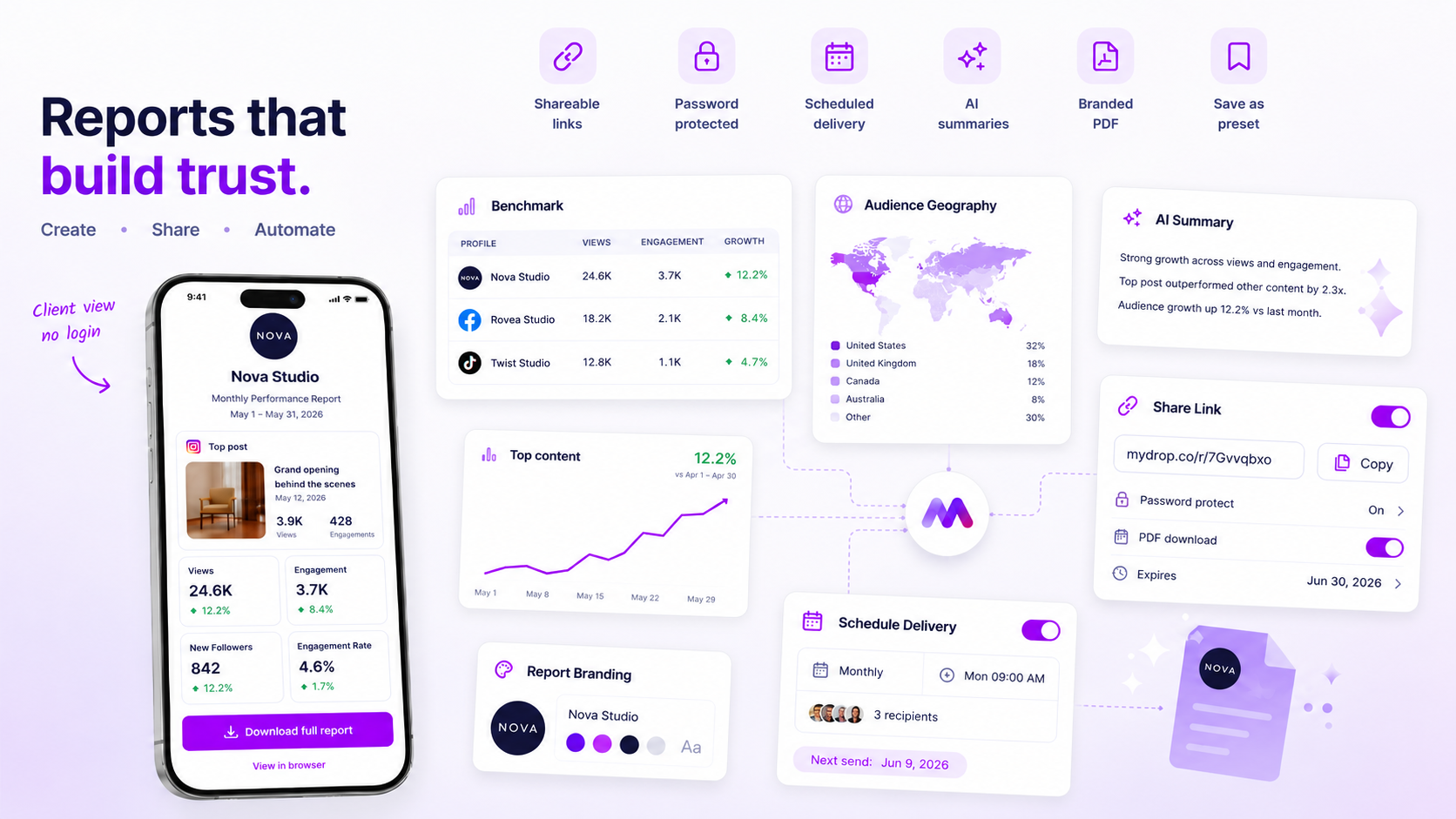
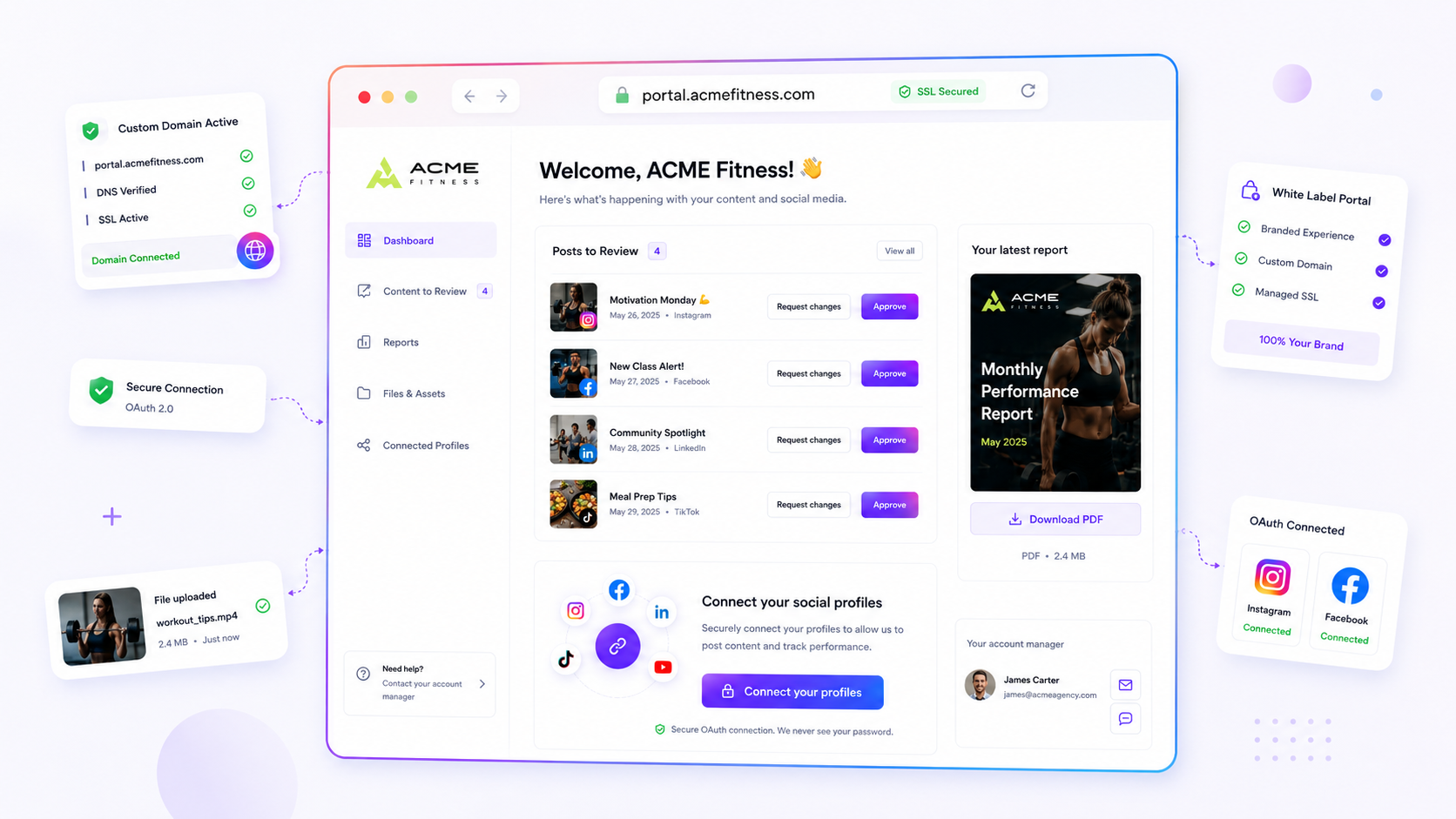
At Mydrop, we built the brand-portal feature to bridge this exact gap. By offering no-login conversations, public report links, and one-click PDF downloads, it turns a passive delivery into an active milestone. The best tools understand that your client's time is as limited as yours, and a portal should respect that by being the shortest distance between a strategy and a "Yes."
Where basic tools start to break

Email is where analytics go to die. We have all seen it: a beautiful, data-rich report attached to a thread with forty-seven replies, three version changes, and two key stakeholders who were accidentally removed from the chain. When you rely on email or standard file-sharing tools, you are essentially asking your client to hunt for their own insights.
Here is the awkward truth: most teams do not have a data problem; they have a distribution bottleneck.
When you send a report as a PDF attachment or a link that forces a new login, you are creating what we call "friction debt." Every second a client spends searching their inbox for that attachment or resetting their password is a second they aren't engaging with your strategy. After seeing thousands of workflows across agencies and large enterprise brands, the pattern is consistent: the harder you make it for a client to access data, the faster that data becomes irrelevant.
Basic tools break because they treat reporting as a single-point-in-time delivery, rather than a living, persistent conversation. They don't provide a central "source of truth." When the client inevitably asks for the same report three days later, you are back in the same loop, manually re-sending it. This isn't just inefficient; it makes your high-value work feel like "just another email" rather than a strategic asset.
The buying criteria that matter
When evaluating client portal software, stop looking for "fancy features" and start looking for "friction killers." The right tool must prioritize self-service and accessibility above all else.
In our experience, the most successful portals are those that allow the client to access, review, and interact with data without jumping through account-creation hoops. If your client has to create a permanent account just to view a monthly performance summary, they won't. They will just wait for you to email it.
Use this scorecard to evaluate whether a platform is actually solving your coordination debt or just moving the mess into a new interface.
Portal Capability Scorecard
| Criteria | Why it Matters | Essential? |
|---|---|---|
| No-Login Access | Eliminates password fatigue and "login walls" for quick reviews. | Must-Have |
| Granular Permissions | Ensures clients see only what is relevant, protecting sensitive internal data. | Must-Have |
| PDF Download | Provides the client with a permanent, offline record of your performance. | Must-Have |
| Persistent Chat | Moves feedback out of fragmented email chains into the context of the report. | Must-Have |
| OAuth Connection | Allows clients to connect their own social profiles securely without sharing passwords. | Nice-to-Have |
Operator rule: If a tool requires a client to create a permanent login for a one-time report review, the platform has failed the first test of enterprise usability.
At Mydrop, we built the brand-portal feature to bridge this exact gap. By focusing on password-protected access rather than full-app authentication, we allow teams to share analytics reports, campaign statuses, and post approvals in a single, branded environment. The client sees exactly what you select for them-nothing more, nothing less.
The goal isn't to force the client into your internal workflow; it's to create a space that meets them where they are. When you provide a persistent, self-service portal, you stop being a manual data delivery person and start being a true partner. You aren't just sending reports; you are providing a destination for strategy.
How Mydrop supports this workflow
At Mydrop, we built our brand portal to bridge the gap between complex social data and client availability. We realized that for teams managing hundreds of brand profiles across multiple markets, the biggest bottleneck wasn't the quality of the insights; it was the sheer amount of friction required for stakeholders to access them.
When we designed the portal, our core intent was to collapse the distance between data delivery and client action. You should not have to chase stakeholders for approvals; they should be able to land in their dedicated, branded space, view the latest performance data, and sign off on it-all without needing a Mydrop account of their own.
Decision check: If your client has to log in just to view a report, they probably won't. Make the data come to them, not the other way around.
By using no-login conversations and public report links, the platform allows you to house everything in one persistent environment. Whether it is a monthly performance overview, a pending post for review, or a link-in-bio update, the client finds exactly what they need in one place. We’ve seen teams shift from frantic email follow-ups to a rhythm of passive updates because the client knows exactly where to look when they need information.
A simple shortlist checklist
When you are evaluating client portal software, ignore the flashy interface demos and focus entirely on how the tool reduces friction for the receiver. If it adds a layer of complexity for them, it will fail.
Use this checklist to score your current or prospective solution:
| Feature | Requirement | Why it matters |
|---|---|---|
| No-Login Access | Must allow view-only access without auth | Eliminates password fatigue and access barriers. |
| Granular Permissions | Control access by section (e.g., Reports only) | Keeps sensitive or unfinished work hidden. |
| Report Export | Direct download for PDF versions | Allows stakeholders to present data in their own internal meetings. |
| Unified Feed | Combines chat, files, and reports | Replaces scattered email chains with one source of truth. |
| Branding | Custom domains/logos | Maintains professional continuity for your agency or team. |
If you are currently evaluating options, take your top three candidates and attempt to share a single report with a colleague who does not have an account. If they have to create a password or verify their email before they can see the data, strike that tool from your list.
Conclusion
The reality of managing social media at scale is that your tools will either act as a bridge or a barrier. Most teams do not have a content problem; they have a decision bottleneck. When you trap your analytics and review processes inside static, password-protected email chains, you are essentially asking your clients to build a bridge themselves just to see the work you already finished.
The best client portal software changes the dynamic completely. It transforms the reporting process from an asynchronous, high-friction chore into a self-service milestone. When you provide an accessible, branded, and intuitive environment for your partners, you stop being a bottleneck and start being a partner.
Stop chasing approvals at 6 p.m. on a Friday. Centralize your delivery, remove the login barriers, and let your insights stand on their own. It is time to treat your reporting workflow with the same level of strategic rigor as the content you are measuring.