The best way to deliver analytics reports to clients is to stop sending files entirely and start sharing tokenized, secure access links. When you force a client to navigate email attachments, you are not delivering insight; you are creating an administrative bottleneck that obscures the very data you worked to surface.
We have all been there. You spend hours refining a high-stakes campaign summary, export a crisp PDF, draft a professional email, and hit send. Then the friction begins: the file is too large, it lands in a spam filter, the client’s legal team cannot open it without a specific plugin, or-worse-they have five different versions of "final_v2_updated.pdf" sitting in their inbox. It is a messy, repetitive loop that drains your team’s energy and turns a moment of demonstrated value into a maintenance headache.
What the best tools need to handle

When you are managing dozens of brand profiles and hundreds of stakeholders, "reporting" is not just about making charts look pretty. It is an access and governance problem. If your delivery mechanism requires a client to authenticate into your specific app portal, you have failed the first test of transparency: reducing friction.
The best delivery workflows prioritize three operational non-negotiables:
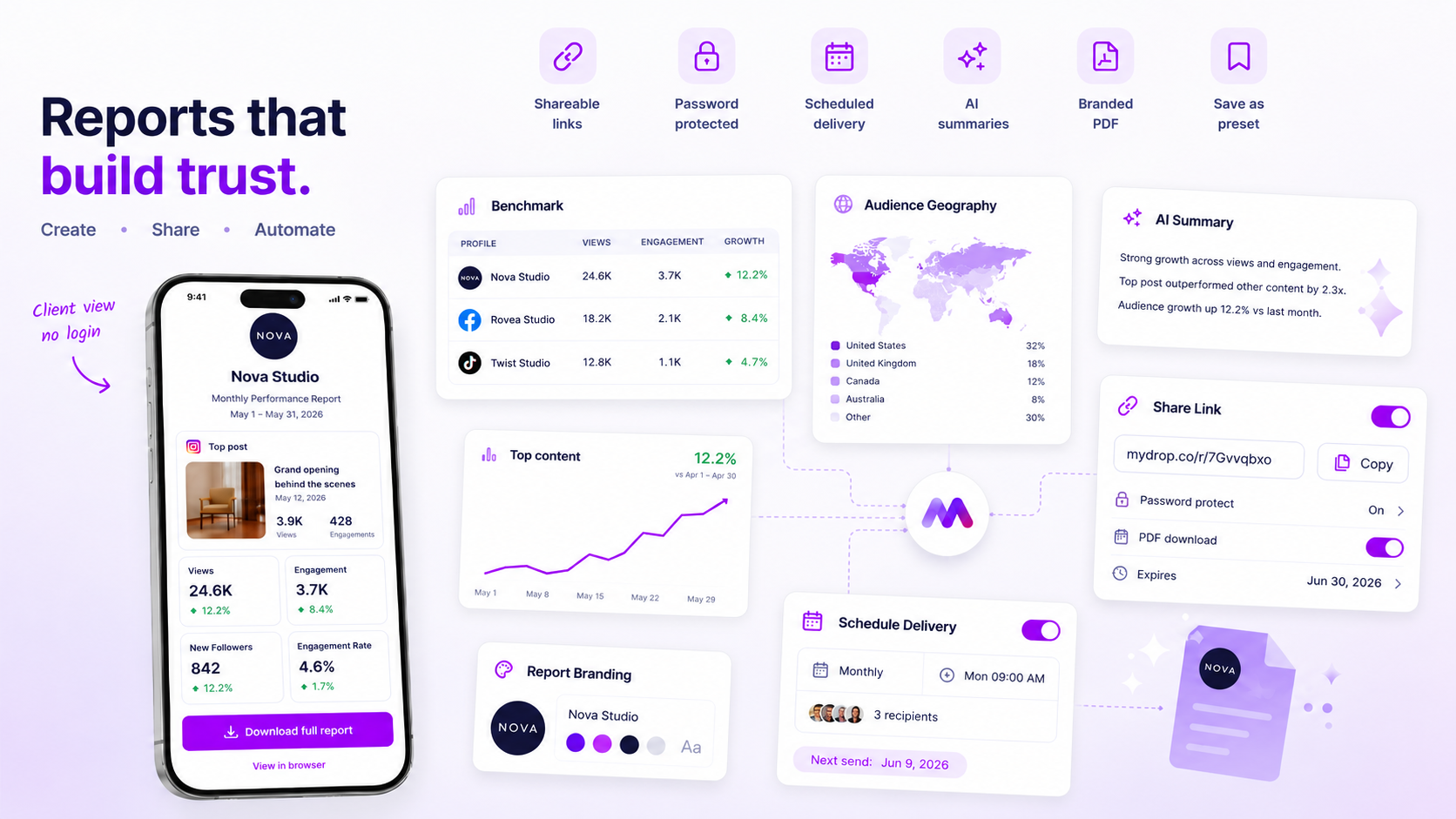
- No-login accessibility: Clients should be able to land on a branded, clean report view via a secure link without needing a password manager or an extra set of credentials.
- Granular PDF control: Analytics are dynamic, but sometimes a physical copy is required for a boardroom meeting. You need the ability to toggle download permissions on or off per link.
- Access lifecycle management: A link should not be a permanent, unmonitored backdoor. The ability to set expiration dates or password-protect a specific share token is mandatory for security compliance.
Operator rule: If your delivery workflow relies on email attachments, you have no version control and zero visibility into whether the report was ever actually opened.
The goal is to reach a near-zero client effort ratio. Every click a client has to make to get from their inbox to the data is a friction point that lowers the perceived value of your work. In our experience at Mydrop, teams that shift to tokenized delivery stop playing "attachment tag" and start using their reporting window as a proactive discussion point.
When you treat reporting as a secure logistics workflow rather than a creative file-transfer exercise, you stop chasing approvals and start driving strategy. The transition from static email to dynamic, tokenized links is the single largest lever for professionalizing your client transparency.
Where basic tools start to break

Let’s be honest: that folder of PDFs you are emailing around is a ticking clock. The moment you hit "send," you lose control. If you realize there was a slight reporting error or a miscalculated KPI, you are stuck in a loop of "re-attaching, re-sending, and hoping the client didn't already download the wrong version."
Beyond the version control headache, email-based reporting is the ultimate coordination debt. It forces your clients to treat your analytics like a library book: they download it, stash it in a sub-folder, and forget where they put it. When they finally need to find that data, they are back in their inbox searching for your name.
Here is the brutal truth about manual reporting:
| Feature | Manual Email Attachments | Tokenized Reporting Links |
|---|---|---|
| Data Integrity | Static (Stale the moment it's sent) | Live (Reflects latest data state) |
| Access Control | None (Sent to everyone in the thread) | Granular (Tokens/Passwords/Expiry) |
| Client Effort | High (Download, Open, Find) | Low (Single click, No auth) |
| Brand Control | Limited (Branding inside PDF) | Total (Branded, unified environment) |
When you send a static file, you are essentially telling the client that the report is a finished task. But in a fast-moving agency environment, the report is rarely a finished task; it is the conversation starter.
The buying criteria that matter
Moving away from the email graveyard requires a shift in how you vet your tech stack. You aren't looking for a "better way to attach files." You are looking for a delivery conduit.
When evaluating tools, stop asking if they can make pretty charts. Start asking if they can manage the distribution logic. If the platform doesn't hit these three pillars, you are just buying a faster way to send the same broken emails.
1. Frictionless Access Without Weakened Security
The biggest friction point for clients is the "login wall." If they have to remember a password to see their own data, they will stop looking at it. Look for platforms that use tokenized links-where a unique, secure URL acts as the credential. But, pair this with expiration policies. A link that stays live forever is a liability. You want the ability to set a "self-destruct" date for every share, ensuring that old data doesn't sit out there indefinitely.
2. Granular Client Autonomy
Does the tool allow your client to help themselves? A professional delivery workflow should offer the client the choice to download a PDF for their internal deck, while still being able to pop back to the live link for the interactive drill-down. If you have to "enable" PDF downloads manually every single time, you have not solved the problem; you have just moved the bottleneck to your own desk.
3. Immediate "Kill-Switch" Capabilities
You will eventually share a report with the wrong person or need to revoke access to sensitive data after a project ends. A mature reporting tool must allow you to disable a link at the click of a button. If the only way to "un-share" is to email the client and ask them to delete your previous email, you don't have a secure reporting tool; you have a wish and a prayer.
Decision check: If your reporting workflow requires you to "manage access" by sending new emails, you are not managing access-you are managing damage control.
The goal isn't just to look professional; it’s to build a system where the data is always where the client expects it, perfectly secure, and ready for their next big decision. Don't settle for tools that treat reporting like a one-off document dump. Look for systems that treat reporting as a continuous, managed distribution pipeline.
How Mydrop supports this workflow
At Mydrop, we have spent years watching teams drown in the email-attachment graveyard. The fundamental shift we built into our analytics delivery is simple: remove the friction entirely by treating the report as a living, secure web destination rather than a static document.
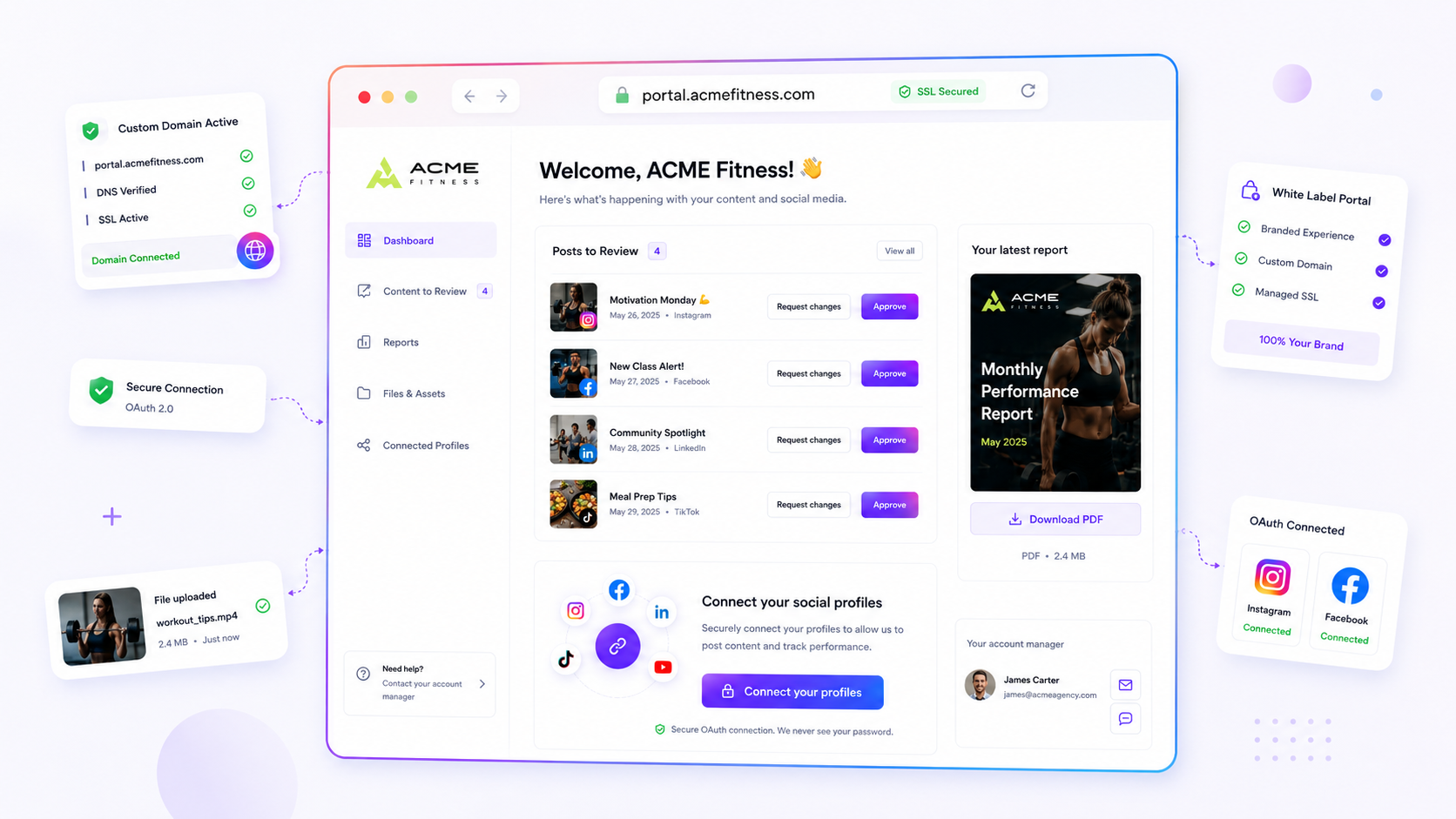
When you use Mydrop to deliver insights, you stop managing file permissions and start managing access policies. Inside the platform, you can generate a shareable, tokenized link for any report run. Instead of exporting a PDF and hoping it doesn't get lost in a cluttered inbox, you simply enable the public share setting. Your client gets a clean, professional view that doesn't require them to remember yet another password or go through your workspace authentication.
It is about control without the administrative overhead. You can set an expiration date on a report, ensuring that old data doesn't linger indefinitely in a client's browser. If you need an extra layer of privacy for sensitive performance reviews, you can toggle password protection with one click. If a client is the type who prefers an offline copy for their own internal records, you can choose to enable PDF download controls on a per-report basis.
Because the data is rendered through a secure, sanitized public endpoint, you never worry about accidentally exposing internal workspace details or team notes. If a campaign shifts or you need to pull the plug, you just disable the share link from your dashboard, and the report becomes instantly unavailable. No manual follow-up emails, no "oops, sorry, please delete the last one" messages. You manage the visibility; they get the transparency.
A simple shortlist checklist
If you are evaluating your current stack, use this scorecard to see if your reporting workflow is built for scale or if it is just waiting to become a bottleneck.
| Criteria | The "Stuck" Workflow | The "Professional" Standard |
|---|---|---|
| Data Access | Requires email/download | Secure, no-login browser view |
| Security | Attached file (uncontrolled) | Tokenized, expiring public link |
| Version Control | Manual resend required | Real-time link updates |
| Access Control | None once sent | Password & expiry enabled |
| Auditability | Unknown "read" status | Granular share state management |
Workflow check: If you are still emailing raw attachments to clients, you are not delivering reporting; you are managing a logistics chain. Your goal for this quarter should be to move to a zero-attachment reporting policy.
Conclusion
The shift from manual delivery to tokenized, secure access is less about the technology and more about reclaiming your team's time. Every hour spent chasing approvals, re-sending "correct" versions, or troubleshooting file access is an hour that could have been spent on the next strategy. Stop viewing the delivery as a chore to be cleared from your plate and start viewing it as a product you deliver to your clients. A transparent, friction-free reporting experience isn't just a "nice-to-have" feature; it is the quietest, most effective way to build long-term trust with your stakeholders. Start by picking one major client account and migrating their next monthly review to a secure, tokenized link. You will likely never look back at your "Sent" folder the same way again.