Stop chasing transparency through status updates and start living in your client's calendar. If your content planning remains locked inside a siloed scheduling tool, you are creating a communication bottleneck that is costing you time, billable hours, and client trust.
We get it. The gap between your internal strategy and final client approval feels like a constant scramble. You are juggling spreadsheets, native platform tools, and endless email chains, while your client wonders why their feed looks quiet until the very moment a post goes live. It is exhausting to defend the value of your agency when the actual work remains invisible to the people who need to see it most. You don't have a content problem; you have a coordination debt that is slowly eroding your reputation.
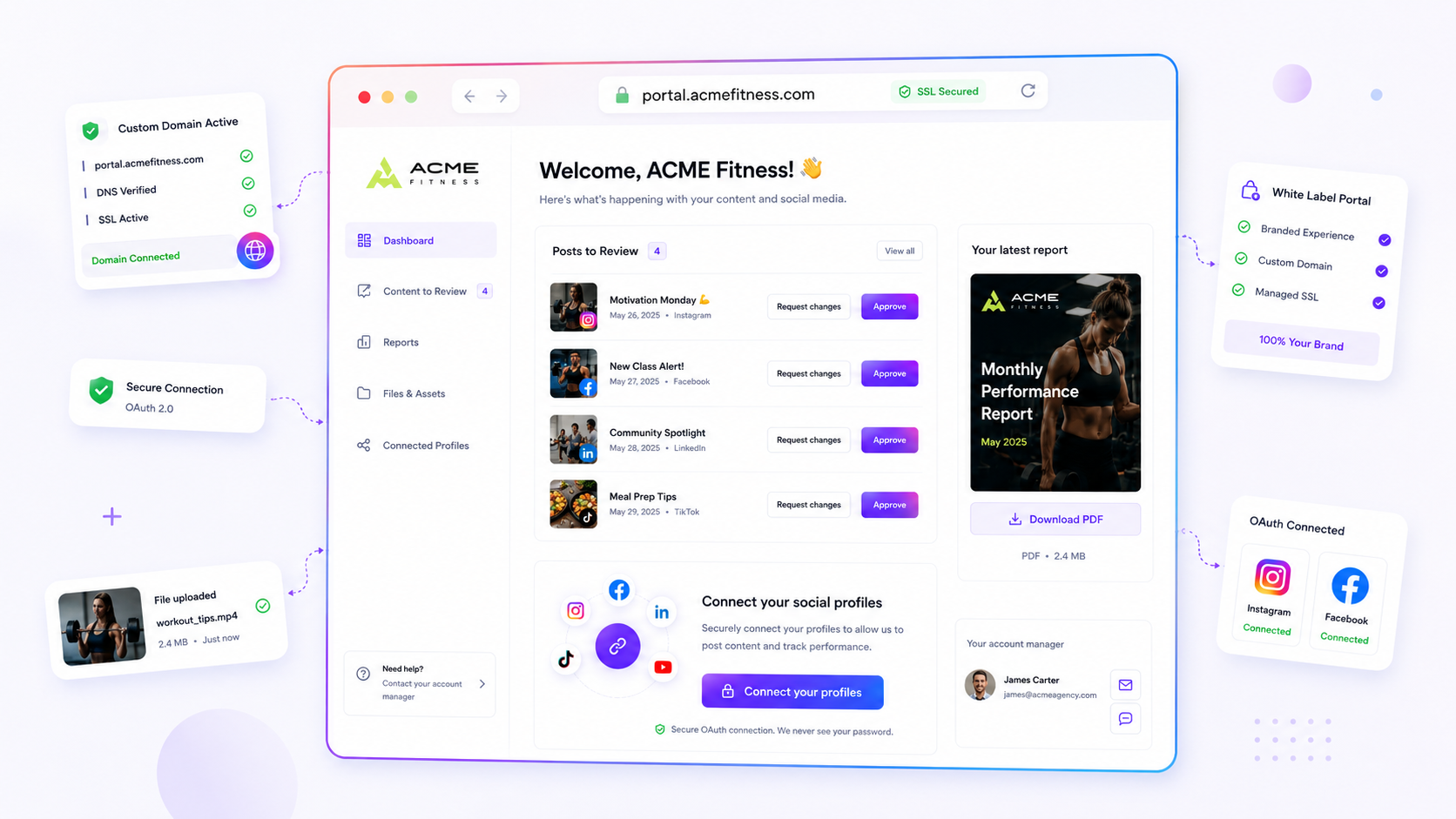
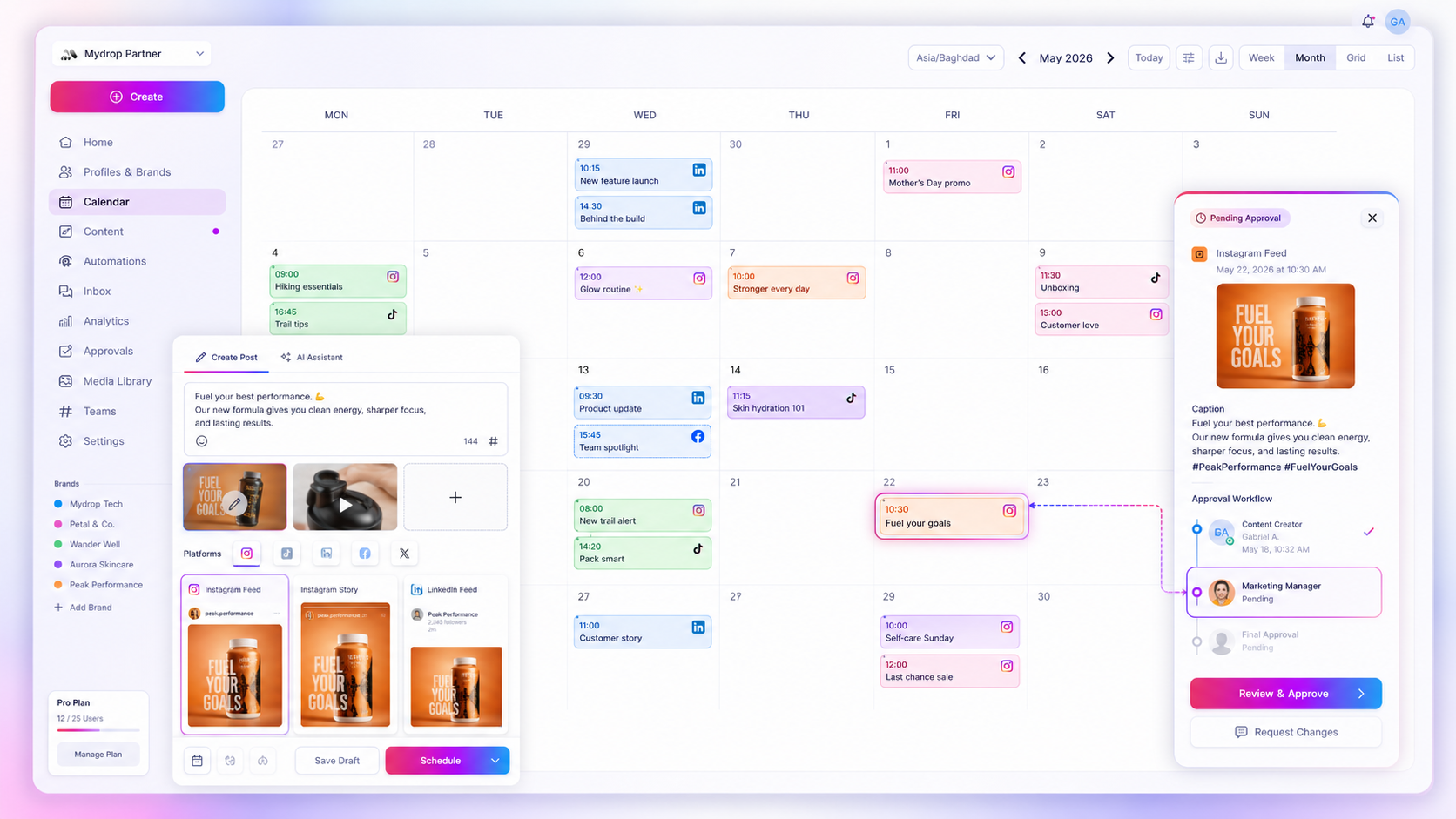
The solution is moving your content plan directly where the client already works: their Google Calendar. When stakeholders can see your strategy in the same place they track their own meetings and deadlines, you shift from being a reactive service provider to an integrated partner.
What the best tools need to handle

Most tools claim they sync, but they rarely survive the reality of an enterprise workload. If you are managing hundreds of profiles or dozens of stakeholders across different brands, you need more than a simple CSV dump or a one-way connection that breaks every time you update a draft.
Your infrastructure must handle these four non-negotiable operational requirements:
| Requirement | Why it matters | The "Sync or Sink" Test |
|---|---|---|
| Granular Visibility | You need to expose only what is approved or relevant. | Can you choose specific profiles for each calendar? |
| Real-time Updates | If you move a post in your tool, it should update in the calendar instantly. | Does the tool use webhooks, or does it rely on a manual "refresh" button? |
| Bi-directional Integrity | Syncing shouldn't just push post titles; it needs to bridge the gap between tasks and deliverables. | Are reminders and post events linked properly? |
| Reliable Token Management | The most common point of failure is an expired sync token. | Does the system alert you before the sync dies? |
At Mydrop, we have seen that transparency usually fails not because of bad content, but because of sync rigidity. Teams often settle for an "all-or-nothing" approach where every single draft gets pushed to the client’s calendar, creating noise and confusion. The best workflows rely on selected-profile modes, allowing you to curate exactly what stakeholders see without exposing your entire internal creative mess.
Operator rule: If a stakeholder has to leave their calendar to verify a status update, you have already lost the battle for seamless coordination.
Your goal is to eliminate the status meeting, not just digitize it. When your planning bridge is truly reactive, the client sees a source of truth that updates itself. They stop emailing to ask "What's the status?" and start commenting directly on the synced event, keeping the conversation where the action is. When the sync is this reliable, you stop being a conduit for updates and start being a partner in the workflow.
Where basic tools start to break

You hit the wall when your team spends more time managing the coordination tool than the actual content. This usually happens around the time you start juggling three different time zones, four agency partners, and a dozen active social profiles.
The first red flag is the manual CSV export. If you have to download a file from your scheduler, scrub it, and then import it into a Google Calendar to show a client what is coming up, you have already created a data death trap. The moment that calendar is shared, it is stale. By Friday, when a stakeholder looks at it, the changes you made Wednesday are missing. They ask a question, you hunt for the email, and the cycle of invisible work continues.
Another common point of failure is rigid sync modes. Many entry-level tools offer an "all-or-nothing" approach to calendar integration. They either sync everything in your workspace-exposing rough drafts and internal strategy notes you wanted to keep private-or they sync nothing at all. This forces agencies into an awkward compromise: either risk exposure or keep the client in the dark.
Common mistake: Relying on tools that don't differentiate between internal planning and client-facing events. Your stakeholders need a high-level view, not a look into your messy, unpolished brainstorming phase.
The buying criteria that matter
When you are ready to stop the endless status update loop, you need a tool that treats the calendar as a two-way operational layer, not just a display board. Use this scorecard to pressure-test your current stack before you migrate.
Transparency Maturity Scorecard
| Capability | Maturity Level: Basic | Maturity Level: Partner-Ready |
|---|---|---|
| Sync Granularity | Global "All or Nothing" | Profile-level or Folder-level selection |
| Data Freshness | Manual refresh or daily sync | Real-time webhooks / Instant updates |
| Stability | Periodic token disconnects | Managed authentication & auto-renewals |
| Event Utility | Read-only title block | Deep links back to source assets/tasks |
If you are currently evaluating a purchase, here is the short list of non-negotiable features:
- Selective Profile Mapping: Look for a system that lets you choose exactly which brand or account feeds into a specific client calendar. This keeps your internal drafts safe while providing total clarity on what is actually live.
- Webhook-Driven Refresh: If the tool relies on a "nightly update," walk away. Modern agency work happens in minutes, not days. You need a platform that pushes changes to the client’s calendar the second a post is approved or rescheduled in your system.
- Calendar-Native Integration: The tool should treat Google Calendar as a first-class citizen. This means it handles recurring tasks and reminder states correctly, ensuring that if you mark a task as "done" in your workspace, the client sees that update reflected in their own planning tool.
At Mydrop, we see this maturity shift across hundreds of brand profiles. When teams move from manual spreadsheets to calendar-native planning, the shift in agency-client dynamics is immediate. You aren't just sending a calendar invite; you are providing a window into your operational machine.
Most teams do not have a content problem. They have a decision bottleneck caused by information asymmetry. Fix the sync, and the email chains disappear on their own.
How Mydrop supports this workflow
At Mydrop, we approach calendar-native planning as a foundational layer rather than an afterthought. We have seen firsthand how thousands of social posts become invisible "dead air" the moment they leave a scheduling tool, simply because stakeholders cannot access them.
Our Google Calendar Sync bridge is designed to turn that dead air into actionable visibility. Instead of forcing your clients to learn a new interface or wait for your weekly reports, the system automatically pushes your content schedule-and operational reminders-directly into their existing Google Calendar environment.
You gain granular control through service settings that allow you to sync all posts or just selected profiles. This prevents the "all-or-nothing" anxiety that keeps most teams from connecting their client accounts. If a post moves in Mydrop, the calendar event updates in real-time. If you mark an operational reminder as "done," that status reflects immediately in the shared calendar. By utilizing webhook watch channels, we ensure the data stays current without your team needing to manually trigger a sync or send a "status update" email. It turns your content pipeline into a live, shared source of truth that requires zero extra maintenance from your side.
A simple shortlist checklist
If you are vetting tools to fix your agency coordination, run them through this quick assessment. A tool failing more than two of these points is likely a maintenance burden disguised as a "solution."
| Criteria | Why it matters |
|---|---|
| Granular Visibility | Can you sync specific profiles without exposing your entire production schedule? |
| Bidirectional Sync | Do status updates in the tool (e.g., "done") automatically clear the client calendar task? |
| Webhook Reliability | Does the tool update automatically, or does it require you to force a sync after every change? |
| Event Link Logic | Does each calendar event contain a direct, clickable link back to the asset for quick review? |
Decision check: A tool that requires you to manually "export" or "sync" after every small change has failed the transparency test. Transparency must be passive and persistent to be effective.
Conclusion
The "Transparency Tax" is a silent killer of agency morale and client retention. Every hour spent manually aligning calendars is an hour you are not spending on strategy, creative refinement, or high-value client work.
The goal isn't just to make your work visible. It is to move from being an external service provider-who is constantly on trial-to an integrated partner. When your content calendar is woven into the client's daily workflow, you cease to be a "black box" that produces content, and you become a transparent, reliable extension of their team.
Stop waiting for the next "what is the status?" email. Start mapping your strategy where your clients already look every single morning. The shift in client trust is almost immediate, and your team gets their time back to focus on the work that actually moves the needle.