Transparency isn't about more meetings or endless email updates. It is about building a shared environment where your clients can find what they need, approve what you have built, and report on their success without waiting for an agency login or a status update email. If your client has to ask for a file at 10 PM, or if you are chasing them for a password to connect their own social profile, your transparency model is broken. The most effective agencies stop being the middleman for information and start being the architect of a self-serve space that works around the clock.
We get it. You are caught in the middle. Your team wants to move fast, but you are constantly slowed down by the "Where is that draft?" email chains and the security nightmare of managing client passwords across dozens of channels. It turns the professional relationship into a series of frantic check-ins rather than a strategic partnership. You aren't just managing content; you are managing the anxiety of stakeholders who feel out of the loop because they lack a single, reliable source of truth.
What the best tools need to handle

The best client portals act as a permanent bridge between your agency and the client. They remove the friction of constant communication by turning "status updates" into a static, accessible dashboard. To move from a file-transfer bottleneck to a true partnership, a portal must handle three specific categories of activity without forcing the client into the administrative headache of a new app account.
| Capability Category | Essential Workflow |
|---|---|
| Governance & Access | Password-protected entry with granular control over who sees which specific campaigns or brand assets. |
| Operational Flow | Real-time post review, feedback threads, and status visualization for upcoming social calendars. |
| Client Autonomy | Self-serve PDF downloads for analytics and secure OAuth profile connections without password hand-offs. |
A tool is only as useful as the autonomy it gives your client. If the portal only displays finished reports, it is just a digital file cabinet. A high-performing portal must allow your client to take active steps-like approving a post, uploading a new brand asset, or confirming a social profile connection-without them needing to learn your internal workflow or hold an active seat in your management platform.
Operator rule: If a portal requires a client to create a formal account, sign a waiver, or install software just to view a report or approve a post, you haven't built a portal-you have created a new administrative chore for your client.
Most teams struggle here because they choose "simple" tools that are too rigid, or "enterprise" tools that are too complex. The sweet spot is a system that presents your agency's work as a polished, branded destination. It should feel like an extension of your agency's own website, not a third-party login portal where clients get lost in features they don't need. When your client can log in to a custom-branded space to see their social status, campaign files, and performance data at their own pace, the "transparency paradox" disappears. You stop being a source of manual updates and start being a trusted partner.
Where basic tools start to break

When your team grows beyond a handful of accounts, the "default" way of working-emailing files, pinging links in Slack, and spreadsheets for tracking-stops being a workflow and becomes a liability. These tools fail not because they are inherently broken, but because they lack a shared source of truth that doesn't require a constant exchange of credentials.
We have all been there: the Friday afternoon panic when a client needs an urgent report, but the only person with access is away from their desk, and the file is buried in an email thread from three weeks ago. When you rely on fragmented tools, you are essentially asking your clients to act as your administrative assistants.
Here is where the cracks widen into systemic failure:
- The Login Wall: Forcing clients to create yet another account in your project management system is a non-starter. It creates friction, triggers IT security flags, and ensures they will eventually stop logging in altogether.
- The Approval Bottleneck: If your approval process requires a reply-all email thread, you are essentially gambling with your launch timelines. One missed notification or a buried attachment and the entire campaign stalls.
- Password Management Nightmares: Asking clients to share social account passwords so you can link them is a massive compliance risk. It is an outdated practice that should have disappeared years ago.
The Transparency Friction Scorecard
| Workflow Friction | Typical Symptom | Impact on Agency Margin |
|---|---|---|
| Manual Updates | "Can I get an update on...?" emails | High (time-sapping) |
| Asset Hunting | Searching through email chains/DMs | High (lost billable hours) |
| Auth Friction | Clients need an account to see status | Medium (high churn risk) |
| Password Sharing | Manual login sharing via encrypted docs | Critical (security risk) |
If your current process involves more than two of these friction points, you aren't just losing time; you are actively degrading the client's perception of your professional capability.
The buying criteria that matter
When evaluating a client portal, stop looking for "all-in-one" project management features and start looking for context-aware autonomy. You need a tool that bridges the gap between your internal operations and your client's need for instant visibility, all while keeping your team's sanity intact.
The most successful teams prioritize these three criteria when vetting a portal:
- Zero-Auth Accessibility: The best portals allow clients to interact with your workspace via a secured link or password-protected access, without needing a full-platform account. If they have to download an app or manage a seat license to see a report, the transparency is already dead.
- Granular Permission Scopes: You need the ability to control exactly what is exposed. Not every client needs to see every draft post or internal conversation. A robust portal allows you to toggle visibility for analytics reports, campaign schedules, and approval spaces on a per-brand or per-client basis.
- Secure OAuth Identity: Never take ownership of a client's social password. A mature portal must support OAuth connections, allowing the client to authorize their own profiles while you maintain the connection within your platform.
Decision check: If a tool requires you to hold a client's social password to enable a "connection," walk away. It is an operational dead end that adds unnecessary liability to your agency's ledger.
At Mydrop, we see teams fail when they try to build transparency on top of platforms that treat the client like a team member. You don't need your client to have an internal seat; you need them to have a curated, safe view of their own progress. When you provide that, you aren't just being "transparent"-you are reducing the coordination debt that slows down every high-scale campaign.
How Mydrop supports this workflow
At Mydrop, we usually see teams managing dozens of brands and hundreds of channels hit a wall not because they run out of creative ideas, but because they drown## How Mydrop supports this workflow
At Mydrop, we have seen this across thousands of profiles: social media scale usually fails from coordination debt, not a lack of creative ideas. When you have dozens of stakeholders and multiple brands, the sheer friction of "Where is that approval?" becomes the primary blocker to growth.
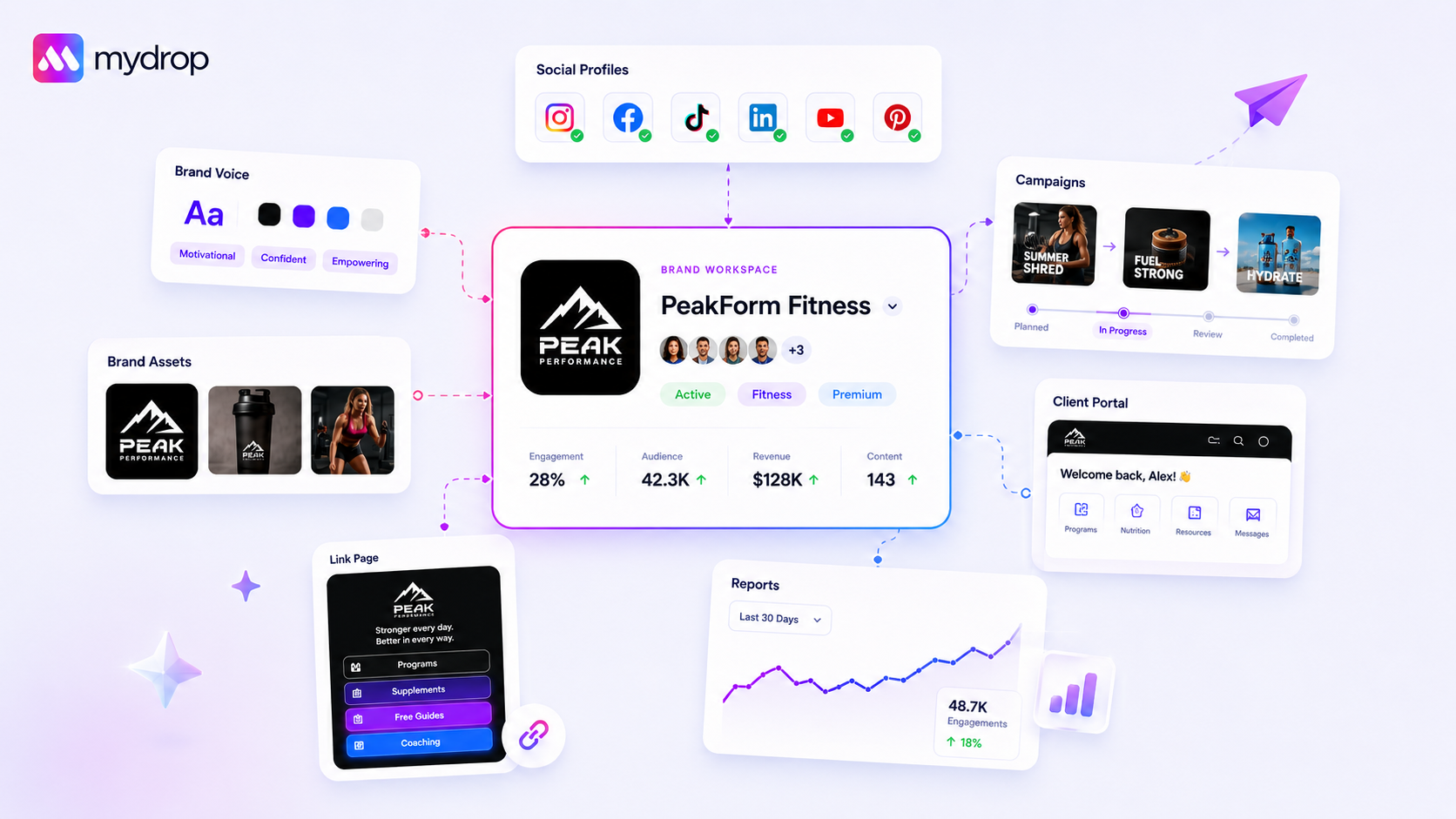
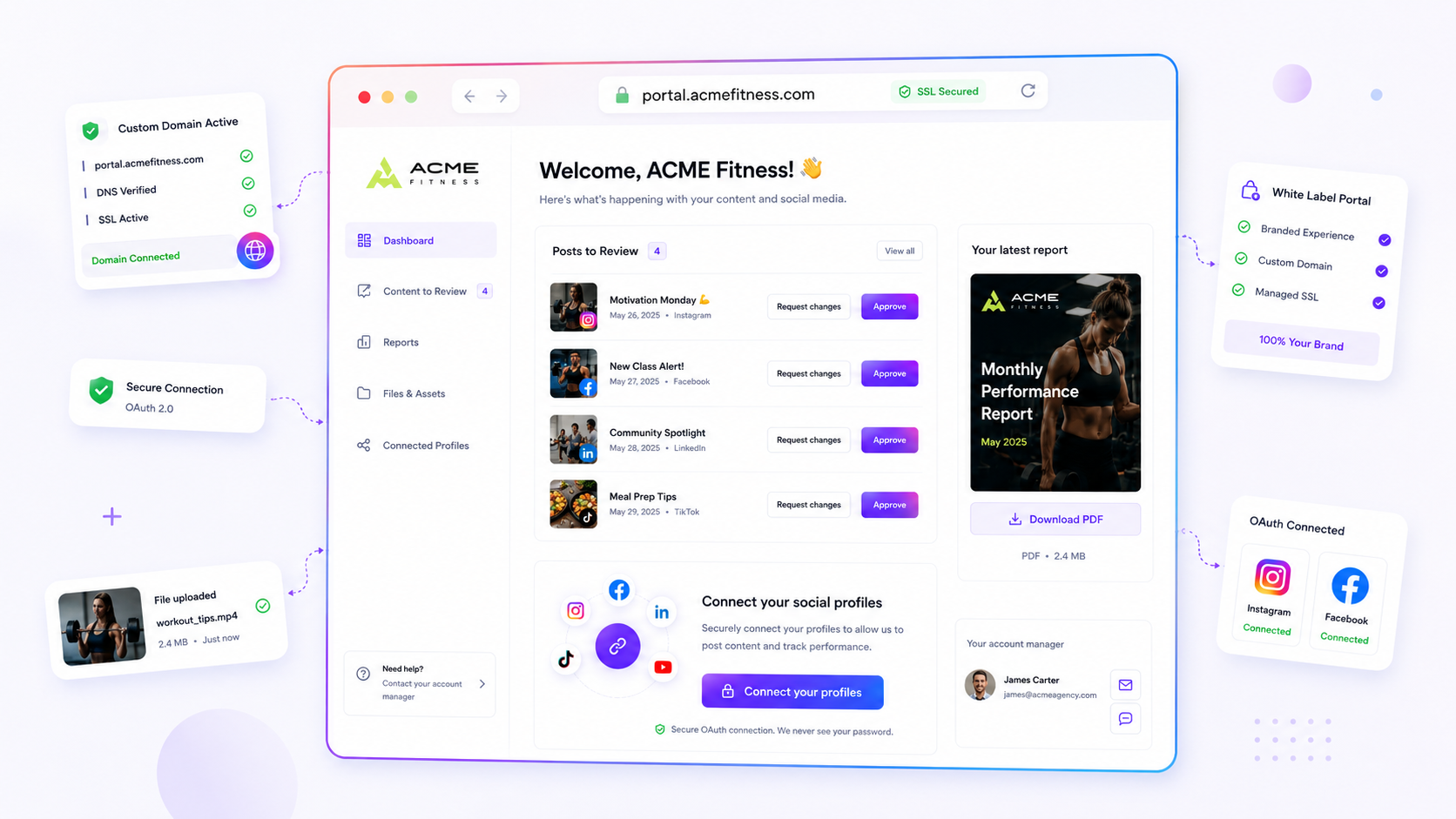
We built our Brand Portal to kill that friction by turning transparency from a chore into a self-service utility. Instead of chasing a client for a password, you send a secure portal link. Instead of emailing spreadsheets, you provide a live, read-only dashboard where clients can see exactly what is live, what is pending, and what is performing.
The workflow is simple:
- Intake: You enable the specific sections the client needs (e.g., Posts, Reports, Files).
- Setup: The client connects their social profiles via OAuth-zero password sharing required.
- Collaboration: They view scheduled posts, leave comments, and approve deliverables directly in the portal without needing a Mydrop login.
- Visibility: They download the latest analytics reports as PDFs whenever they need them, saving your team from the midnight "can I get those numbers?" email.
It is designed to be the "silent partner" in your workflow. The client feels in control because they have 24/7 access to their brand assets and campaign health, and your team stops acting like a manual file-transfer service.
A simple shortlist checklist
Before you commit to a portal tool, run your current process through this benchmark. If you cannot check every box, you are likely still paying the "coordination tax" in manual labor.
| Capability | Requirement | Why it matters |
|---|---|---|
| No-Login Access | Can clients view content without creating an account? | Removes the biggest barrier to adoption. |
| Granular Permissions | Can you toggle reports/files/posts independently? | Protects internal data you don't want exposed. |
| Secure OAuth | Does it support direct social profile connection? | Eliminates the security risk of sharing passwords. |
| Self-Serve Reports | Can clients download their own performance data? | Eliminates the "urgent report" email bottleneck. |
| Asset Centralization | Are files/posts/campaigns in one view? | Stops the "which version is final?" confusion. |
Workflow check: If your client portal requires you to manually generate and email a PDF every week, it is not a portal; it is just a glorified download folder. A real portal must allow the client to pull the data themselves.
Conclusion
True agency transparency isn't just about sharing more data; it’s about creating an environment where the client has permission to be autonomous.
When you remove the friction of login walls, manual approval threads, and password sharing, you stop being a conduit for status updates and start being a strategic partner. The goal is to move your client from asking "Where are we on this?" to saying "I saw the report, it looks great, let's push." That transition is the difference between a high-churn service engagement and a long-term enterprise partnership. You have enough to manage-stop managing the status updates and start managing the strategy.