Your monthly marketing report is only as accurate as the least-active token in your stack. If your social profiles are not actively syncing, your analytics dashboard is drifting from reality-and you likely won't know until you are sitting in a stakeholder meeting looking at a deceptively "flat" performance graph.
We get it. You have a dozen social platforms, hundreds of client accounts, and an endless stream of content. Managing OAuth tokens feels like the least glamorous part of your job, but it is the silent killer of measurement integrity. When you treat social profiles as permanent fixtures, you ignore the reality of platform security. If you are not checking for token expiry, your measurement model is already compromised by ghost data.
The decision each metric should trigger

Most teams treat "connection health" as a binary state: it works, or it doesn't. But in an enterprise environment, that is a dangerous oversimplification. You need to treat token health like a critical infrastructure metric, where specific states trigger immediate, non-negotiable actions.
Here is how to classify your profiles so you stop guessing when to intervene:
| Status | What it actually means | Required Action |
|---|---|---|
| Active | Data is flowing, but session trust is aging. | Verify weekly; rotate credentials quarterly. |
| Pending | Platform API requires a fresh scope grant. | Immediate Re-auth via Portal. |
| Expired | Data gap confirmed; reporting is now corrupt. | Halt reports; force sync in Mydrop; re-verify historical data. |
It is easy to let "Active" status lull you into a false sense of security. The awkward truth is that even an active token can fail if a platform changes its security scope or if a team member rotates a password on the native side.
Operator rule: Never assume a green light means a clean pipeline. If a profile has not shown a data update in your analytics dashboard within the last 24 hours, treat it as "at risk" regardless of what the status badge says.
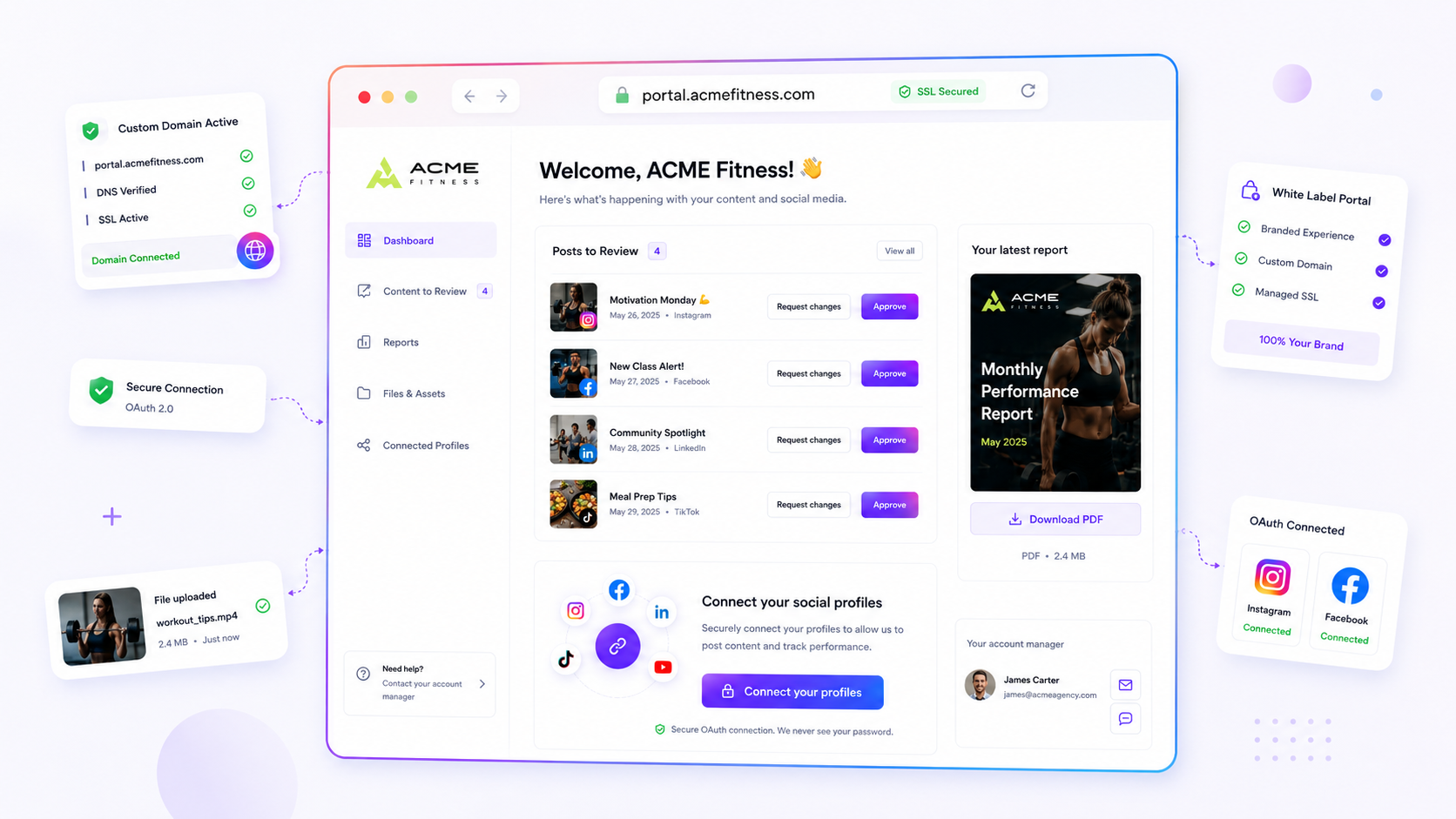
When you see a profile drift into "Pending," do not wait for the next reporting cycle. These gaps are rarely self-healing. By forcing a re-authentication via Mydrop-where clients can handle the OAuth handshake themselves without ever sharing a password-you resolve the coordination debt that causes most of these breaks in the first place.
If you are currently manually chasing down passwords every time a LinkedIn page or Instagram account disconnects, you are not managing social media; you are managing a crisis. The goal is to move the friction away from your reporting process and into a repeatable, automated handshake. If the connection fails, the fix should be faster than it takes to pull the draft report.
The scorecard that keeps reporting useful

The most effective way to stop the "flat performance" panic is to turn token management into a repeatable, 5-minute routine. If you are managing dozens of brand profiles across an agency or a multi-brand team, you cannot rely on manual memory. You need an audit that provides a binary answer: is it currently syncing or is it broken?
At Mydrop, we suggest using this scorecard to catch silent data drops before they land on a client’s desk.
| Category | Metric/Status | Frequency | Threshold/Action |
|---|---|---|---|
| Connectivity | Active / Expired / Pending | Monthly | If Expired, re-auth immediately |
| Sync Status | Latest Data Date | Weekly | If > 48h gap, force manual refresh |
| Access Control | Token Owner | Quarterly | Rotate if owner left team |
Decision check: If your "Latest Data Date" shows a gap longer than 48 hours, consider that channel's report compromised. Do not present the data until you have performed a hard refresh via your platform’s profile connection settings.
This scorecard is designed to be the first thing your team looks at on a Friday morning. It removes the guesswork by focusing on the only two things that matter: are we connected, and is the data fresh? If a profile shows as "Pending" or "Expired" in your portal, you stop the report generation process right there. It is much easier to explain a 24-hour reporting delay to a stakeholder than it is to walk back a dashboard full of inaccurate, "flat" performance numbers.
What to stop measuring by default
Not all social channels are created equal when it comes to token stability. Some platforms, specifically those that rely on frequent security re-authentication or strict scoping, will naturally produce "ghost data" if they are not monitored daily.
If you are a high-volume team, stop assuming every channel is equally reliable.
Some platforms change their API security requirements frequently, meaning a token that worked yesterday might require a fresh hand-shake today. If you do not have the operational capacity to check these daily, you are setting your measurement model up for failure.
We recommend a tiered approach to your reporting stack:
- High-Reliability Tier: Platforms with stable OAuth implementations. Keep these in your primary, automated report.
- Volatile Tier: Platforms with frequent re-authentication requirements or service connection quirks. Only include these if you have a documented owner responsible for daily sync checks.
Common mistake: Including a "Volatile Tier" channel in a monthly report without verifying its sync status 48 hours prior.
If you find that a specific profile requires a re-auth every two weeks, stop treating it as a "set-and-forget" data source. Either move it to a manual quarterly reporting cycle or build the re-authentication into your team's weekly "First Friday" workflow. At Mydrop, we see the most successful teams explicitly tagging volatile profiles within their Profiles dashboard so they know exactly which connections require a bit of extra love before the end-of-month scramble.
The goal isn't to stop tracking performance. It is to stop tracking performance on channels where the data is fundamentally untrustworthy. You are better off reporting on fewer channels with 100% data integrity than reporting on everything with a hidden, high-frequency margin of error.
How to connect metrics to next actions
The moment a dashboard shows stale data, you have two choices: go into manual fix mode or build a system that handles it for you. Manual fixes are where the coordination debt really piles up. You end up chasing down passwords from local market leads, dealing with two-factor authentication loops at 6 p.m., or-worst of all-simply leaving the report broken and "explaining it away" to your boss.
Instead of fighting the platform, bake the fix into your routine. When you see a sync failure, treat it as a trigger for a specific, automated workflow.
- Identify: Check the expiry status in your profile management view.
- Redirect: If a token is expired, send a secure request through your brand portal to the relevant client or local team.
- Confirm: Use a system that allows them to re-authorize their accounts without ever seeing or sharing their actual login credentials.
At Mydrop, we see teams stop the bleeding by moving away from password sharing entirely. By using a portal-based connection flow, the client controls their own OAuth handshake. You get the data, they keep their security, and you never have to be the middleman in a password reset chain again.
The review cadence that makes the model stick
Reliability is boring. If your team is treating token health as a "when we have time" task, you aren't running a social operation; you are running a fire drill. The most successful teams we support have a "First Friday" audit. It takes less than 10 minutes, but it changes your relationship with your data from "guessing if it's right" to "knowing it's accurate."
The First Friday Audit Checklist:
- Sync Check: Open the profile list. Are any showing an
Expiredflag? - Data Verification: Compare the latest post timestamp in the analytics dashboard against your live profile. Is there a gap larger than 24 hours?
- Action: If a profile is down, initiate the re-auth request immediately.
- Governance: Verify that the
token owneris still active in your workspace. If not, reassign ownership to a current admin.
This isn't about being perfect; it's about being predictable. If you know that every first Friday your reporting integrity is locked in, you stop stressing about it for the other 29 days of the month.
Conclusion
The hidden cost of broken social tokens isn't just the few hours you spend fixing them. It is the steady erosion of trust in your reporting. When you feed your stakeholders flat, incorrect, or missing data, you lose the ability to defend your strategy or demonstrate your ROI.
The fix is simple, even if it feels tedious at first. Stop treating your social connections as static bridges that last forever. Treat them like the living, breathing security requirements they are. Audit your stack, hold your team accountable for the health of their assigned channels, and shift the burden of connectivity back to the source.
Most teams do not have a data problem. They have a maintenance problem. Once you clear that hurdle, you can stop auditing your past and start building your future.