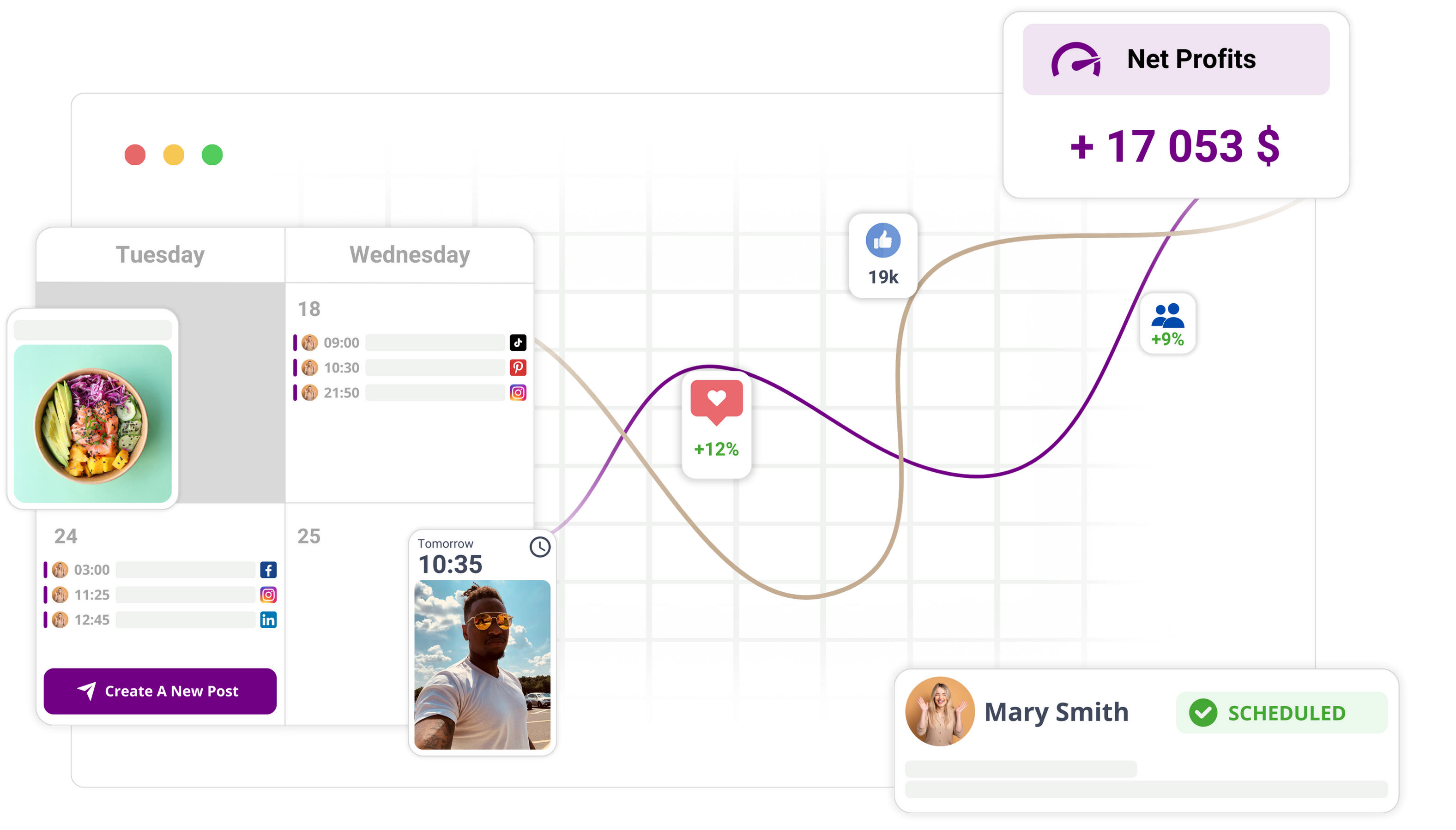
You will learn how to use the Mydrop Calendar to plan and schedule social media posts for automated publishing. By following the instructions in this tutorial, you will finish with a complete understanding of how to organize content across multiple social profiles from one central location. You will also learn how to verify that each post meets platform specific requirements and how to confirm that your content is correctly queued for future delivery. This process ensures that your social media presence remains active without requiring manual input for every individual post. Each step is designed to help you avoid common mistakes during the scheduling workflow.
Before you start
Before you begin the scheduling process, you must verify that your Mydrop workspace is correctly configured for automated publishing. Following this checklist prevents common errors that can lead to failed or delayed posts. This tutorial covers everything from initial setup to final verification.
First, verify that your social media profiles are successfully connected to your current workspace. You can check the status of your connections by navigating to the workspace settings menu and reviewing the profile list. Each account you plan to use must show an active status. If a profile has been disconnected or if the platform requires a password update, you will see a prompt to re-authenticate. The Calendar cannot publish content to accounts that are not actively linked to your workspace.
Second, confirm your workspace timezone settings. All scheduling in Mydrop is based on the timezone defined within your workspace configuration. If your workspace is set to a different timezone than your target audience, your posts will appear at times that do not align with your strategy. You can view or change this setting by using the workspace switcher or opening the workspace settings panel. Ensuring the timezone is accurate is a critical step in coordinating a content calendar across different markets or regions.
Third, prepare your media assets on your local device. Automated scheduling requires that your images and videos are ready for upload. Most social platforms supported by Mydrop accept standard formats such as JPG or PNG for images and MP4 for videos. Before you open the Calendar, ensure your files are saved in these formats and are easily accessible. This preparation allows you to move through the editor more quickly and helps you avoid interruptions during the content creation phase.
Fourth, verify your user permissions within the workspace. Scheduling features are typically available to users with administrator or publisher roles. If you are part of a collaborative team, check that your account has the necessary rights to create and schedule posts for the specific profiles you intend to use. If your permissions are restricted, you may find that the scheduling button is disabled or that your posts are saved as internal drafts rather than being added to the publishing queue.
Fifth, consider your content requirements for each social network. Different platforms have specific rules regarding caption lengths, image dimensions, and video durations. While Mydrop includes internal validation tools to catch errors, knowing these requirements in advance helps you draft better content. For instance, Instagram requires at least one piece of media for every post, while LinkedIn and Facebook are more flexible with text-only updates.
Finally, ensure that your internet connection is stable. The process of uploading high-quality media files and saving complex post configurations to the Mydrop server requires a consistent connection. If your connection is interrupted, you may lose unsaved changes in the post editor. Completing these preliminary checks ensures that the actual scheduling process is efficient and that your content publishes exactly as intended.
You will access the Mydrop scheduling interface and configure the primary settings for your social media post. By following these steps, you will ensure that your content is mapped to the correct workspace, targeted to the right social profiles, and scheduled for the exact time required for your campaign.
Step 1: Open the feature
To begin the scheduling process, you must navigate to the Calendar section of the Mydrop application. This area serves as the central hub for organizing your social media presence and visualizing your publishing timeline.
- Locate the main navigation menu, which is positioned on the left-hand side of the Mydrop interface. This sidebar contains all the primary tools for your workspace.
- Search the menu for the "Calendar" label. It is typically found near the top of the list for easy access.
- Click the "Calendar" link.
- The application will transition to the calendar grid view. This grid displays the days and dates for the current month.
- Look at the top of the screen to identify the active workspace. Use the workspace switcher to confirm you are in the correct environment for the brand or client you are currently managing. If you are in the wrong workspace, the profiles and existing posts shown will not match your intended project.
- Observe the calendar grid layout. Each cell represents one day of the month. You will see the current day highlighted with a specific border or background color to help you orient your planning.
- Use the navigation arrows at the top of the grid to move between months or years. If you need a more detailed view of a specific period, you can toggle between the Month, Week, and Day views using the buttons provided in the header.
Accessing the Calendar is the first step in creating a structured content plan. It allows you to see your existing scheduled posts alongside empty slots, helping you avoid content overlap and ensuring a consistent publishing frequency. Before proceeding, verify that the grid has loaded correctly and that you can see all dates for the period you intend to schedule.
Step 2: Set up the basics
Once you have opened the Calendar, you must initialize the post editor and configure the foundational settings. This involves selecting your target profiles and defining when the post will be published.
- Select a starting point for your post. You can click directly into the cell for the specific date on the grid where you want the post to appear. Alternatively, click the "Create" or "New Publication" button, which is usually found in the upper-right corner of the Calendar interface.
- Either action will open the "board_selector new-publication-option-content". This board is a dedicated editor window that overlays the calendar grid, allowing you to focus entirely on the post configuration.
- Locate the "profile_selector" within the editor board. This section lists every social media account connected to your active workspace, including icons for platforms like Facebook, Instagram, and LinkedIn.
- Click the checkbox or the name of each profile where you want the post to be published. You can select one profile or multiple profiles for a single post. Mydrop will provide a visual indicator, such as a highlight or a checkmark, to show which accounts are selected.
- Pay attention to any "warning limit" messages that might appear. These notifications alert you if you have reached the maximum number of allowed profiles or if you have selected incompatible platform combinations.
- Verify the selected date in the date input field. If you clicked a date cell in the grid, this field will be pre-filled. If you used the "Create" button, use the date picker to choose the correct day.
- Set the exact time for the post to publish. Locate the hour and minute input fields in the editor.
- Use the "fas fa-angle-up" and "fas fa-angle-down" icons next to the time fields to adjust the values. Clicking the "fas fa-angle-up" icon increases the time, while the "fas fa-angle-down" icon decreases it.
- Confirm that the time matches your workspace timezone. Mydrop schedules posts according to the timezone set in your workspace settings. If your audience is in a different region, ensure you have calculated the correct time offset before finalizing these values.
Defining these basics is critical because your profile selections determine which platform-specific options will be available in the next steps of the tutorial. By securing the date and time now, you ensure that the post is correctly placed in your content queue and ready for validation. Confirm that all selected profiles remain active in the "profile_selector" before moving to add your captions and media.
You will now define the substance of your publication by inputting text and uploading files that represent your brand on social media. This part of the process ensures that your media is optimized for performance and your messaging is accurately placed within the post editor.
Step 3: Add the content or settings
Enter your post content in the caption text field located in the center of the post editor. This text will serve as the primary message for your social media update across all selected profiles. Ensure that your text is clear and follows the specific length requirements of the networks you chose in the previous step. Mydrop provides a live preview area where you can see how the text layout will appear once it is published.
Next, you must add media to your post to increase engagement. Click the file selector area or the media upload button to choose images or videos from your local device. Once a file is uploaded, it will appear as a thumbnail in the media section of the editor. You can manage each individual file using the media action buttons found on the thumbnail.
If an image is too large for certain platform requirements, click the compress-image button to reduce the file size without significantly impacting visual quality. If you need to make visual adjustments, use the edit-link button to open the image editor. If you have uploaded the wrong file, use the delete-media-cross button to remove the item from the post. You may also use the download-link button to save a copy of the processed media to your computer for a final manual check before scheduling.
After the content and media are ready, you must define the publication time. Use the date and time selectors to choose exactly when the post should go live. If you are working in a workspace with a specific operating timezone, verify that the time displayed in the editor matches the intended release time for that region. You can use the fas fa-angle-up and fas fa-angle-down icons to adjust the hour and minute values precisely.
Step 4: Review the workflow
Before the post is committed to the calendar, Mydrop performs a series of validation checks to ensure your content meets platform-specific standards. This automated process helps you avoid common publishing failures caused by missing information or incompatible settings.
Review the editor for any warning limit messages. These alerts appear if your caption is too long for a specific profile or if your media format is not supported by one of the selected networks. If a warning is present, you must resolve the issue by editing the text or replacing the media before the scheduling button becomes active. Mydrop also checks that at least one social profile is selected and that a valid future date and time have been set.
You must then configure the platform-specific publication options. Click the section labeled with the board selector for new publication options to reveal additional settings. If you are sharing a Reel or a post that includes audio, you may be required to check the Music Usage Confirmation box to certify that you have the necessary rights to use the background track. Similarly, if the post is a paid partnership, you must enable the Branded Content Policy toggle to remain compliant with social media advertising regulations.
Select the visibility for your post using the visibility selector. You can choose to share the post publicly, which is indicated by the message stating that you are sharing to a public page where anyone on or off the platform can view the content. Alternatively, if you are conducting a test or want to limit the audience, you can choose the Self Only or SELF_ONLY option. This ensures the post remains hidden from the general public after it is published.
Once all validations are clear and the settings are configured, click the button to finalize the scheduling process. You will see a confirmation message indicating that the setup worked. The post will then appear as a colored block on your calendar grid at the designated time slot. This visual entry confirms that Mydrop has successfully queued the content for automated publishing.
Troubleshooting and next steps
You must verify that your post has been successfully added to the Mydrop system after clicking the schedule button. The best way to confirm this is by checking the calendar grid for the specific date and time slot you designated during the setup process. A successful schedule appears as a colored block on the grid. This block displays the icons of the social platforms you selected, such as Facebook or Instagram, and shows a short preview of your caption. If this block is missing from the calendar, the scheduling process did not finish. You should reopen the editor and check for any unresolved validation messages, alerts, or missing required fields that prevented the final submission.
Several common issues can prevent the scheduling button from becoming active. If you find you cannot click the button to finalize your post, verify your profile selection first. You must choose at least one social account from the profile selector at the top of the editor interface. If no accounts are checked, the system cannot determine a destination for your content. Additionally, look for specific labels like "warning limit" if your caption text exceeds the character counts allowed by a specific social network. Mydrop uses these visual cues and warning messages to help you correct errors before you attempt to finalize the post. Ensure the caption field is not empty and all required media files have finished uploading.
Media uploads might trigger notifications if the file size or format does not meet platform requirements. If you receive an error about your media, use the "compress-image" button located within the media action menu. This tool automatically optimizes your file to meet the constraints of the selected social networks without requiring you to use external editing software. You can also click the "edit-link" button to crop or adjust your images directly within the Mydrop interface. These tools are designed to help you resolve media issues quickly so you do not have to delete and re-upload files after making minor changes to your assets.
Check for platform-specific prompts that appear in the editor, such as the Music Usage Confirmation or the Branded Content Policy toggle. You must acknowledge these settings for posts that include commercial music or sponsored content to comply with the rules of the social networks. If you are posting a Reel, you might see a message stating: 🌍 You are sharing to a public page. Anyone on or off Facebook can view this Reel. You must acknowledge this notification before the schedule button becomes available. Also, verify your visibility settings. Selecting "Self Only" (or "SELF_ONLY") prevents the post from being seen by your audience. Set the visibility selector to "Public" unless you specifically intend for the post to remain private.
If your posts appear on the calendar but publish at incorrect times, you must check your workspace timezone settings. Mydrop does not use your computer clock to determine publication times. Instead, it follows the specific timezone defined for your workspace. Open the Workspace switcher in the main navigation and click on the settings icon to access these controls. Within the workspace settings, you can search for the correct region to ensure your calendar accurately reflects when your audience will see your content. Using the arrows in the time selector allows you to adjust the publication hours and minutes precisely to match your intended schedule.
After your content goes live, use Analytics > Posts to review performance metrics. You can search for specific posts or use date presets to check results like reach, likes, and engagement rates. For repeatable tasks, navigate to the Automations menu to build publishing workflows that handle content based on specific triggers. You can also use the Conversations feature to discuss post drafts and share feedback with your team members. This keeps all project communication, attachments, and message threads linked to the relevant calendar entries in one place.
Conclusion
The Mydrop Calendar provides a centralized way to plan and publish social media content across multiple profiles. By following the validation steps and utilizing the built-in media optimization tools, you can ensure your posts are correctly formatted for your target audience. Once your scheduled content is visible on the calendar grid, you can use the analytics and automation features to refine your strategy and improve your overall publishing efficiency. This workflow ensures that your social media presence remains organized and consistent while meeting the technical requirements of every platform you use.