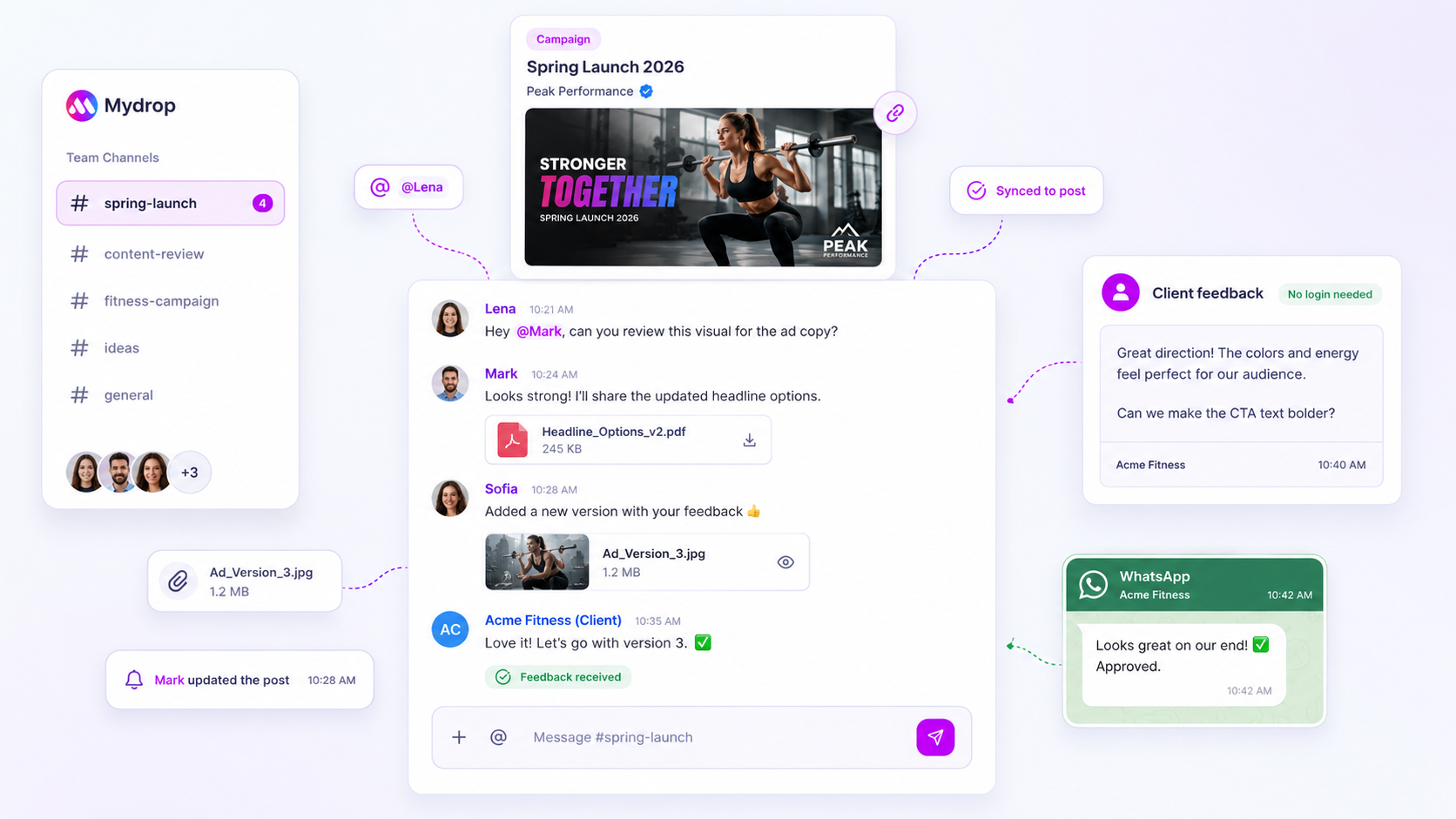
Social media approval delays are not solved by more email reminders; they are solved by meeting your clients where they live: in WhatsApp. If you are still chasing busy stakeholders through crowded inboxes, you are fighting a losing battle against their schedule. The most effective agencies have stopped expecting clients to log into complex portals or navigate cumbersome approval tools. Instead, they bring the approval process directly to the client's phone. This shift does not just save you from 6 p.m. panic sessions; it transforms the approval loop from a heavy administrative burden into a quick, frictionless interaction. Let us look at how to evaluate the tools that make this possible.
What the best tools need to handle

The best approval workflows do not just notify a client; they allow them to act without leaving their preferred environment. When a tool forces a client to switch context-opening a browser, finding login credentials, and learning a new interface-you have already created a bottleneck.
At Mydrop, we have seen thousands of approval cycles fail simply because the path of least resistance was actually the path of most frustration. A true WhatsApp-integrated workflow must treat the chat not as a simple alert, but as an interactive dashboard.
Operator rule: If your client has to log in to approve a post, your tool is the bottleneck, not the client.
Here is how you can score a tool’s ability to handle this, moving beyond basic notifications to real operational integration:
Approval Tool Scorecard
| Feature Category | Basic Email/Portal Tool | Integrated WhatsApp Tool |
|---|---|---|
| Action Speed | Requires login/portal access | Approve/Reject via native buttons |
| Client Context | Low (Needs to view email/open site) | High (Directly in the chat thread) |
| Feedback Loop | Slow (Reply to email, email gets buried) | Fast (Suggested edits captured immediately) |
| Audit Trail | Manually tracked | Automatically logged in the project source |
What you need to demand:
- Native Interaction: The client should be able to approve or suggest edits using interactive buttons within WhatsApp, not just a link to a portal.
- Context Mapping: Every response from the client needs to map automatically back to the specific post draft. If the client types "Needs more blue," that feedback should live with the asset, not in a chat history that nobody else can see.
- Zero-Login Authentication: The tool must handle security on the back end so the client never enters a password to sign off on a post.
- Admin Visibility: Your team must see the status of these requests in real-time within your main management dashboard.
If a tool relies on manual email tracking or forces your client into a secondary app, you are essentially paying for a tool that makes your work harder. The best tools function as a silent partner, keeping the project moving while you stay focused on strategy, not chasing sign-offs. Most teams do not have a content problem. They have a decision bottleneck.
Where basic tools start to break

If your team is managing more than a handful of profiles, you know that email chains become crime scenes within days. Someone forgets to hit "reply all," a vital attachment gets missed, or the legal reviewer gets buried under twenty other threads. Your approval process isn't failing because your clients aren't paying attention; it's failing because it's physically inconvenient for them to say "yes."
Most portal-based tools are arguably worse. They force clients to log in to a system they haven't touched in weeks, triggering a mandatory "forgot password" cycle that takes five minutes. By the time they actually see the post draft, the window for timely publication has already slammed shut.
Here is how the old-school methods compare to modern, direct integration workflows:
| Feature | Email / Portal Tools | Integrated WhatsApp Tools |
|---|---|---|
| Client Effort | High (login, find browser, reload) | Extremely Low (tap, reply) |
| Notification | Buried / Often overlooked | Direct / Immediate / Persistent |
| Approval Speed | Slow (hours/days) | Rapid (minutes) |
| Workflow | Manual / Fragmented | Automated / Centralized |
| Context | Often lost in thread clutter | Always attached to the request |
The awkward truth? If you ask a stakeholder to leave their preferred communication app to do their job, you are creating coordination debt. The best approval tools don't ask the client to work differently; they meet the client exactly where they already spend their day.
The buying criteria that matter
When evaluating tools to solve this, stop looking for "collaboration features" and start looking for frictionless feedback loops. A tool that boasts a beautiful dashboard but lacks a direct-to-WhatsApp approval path is essentially asking you to keep chasing people in circles.
We have seen this across hundreds of brand profiles: the bottleneck is rarely the content quality itself, but the sheer effort required to get that final "approved" stamp.
Before you commit to a platform, ensure it hits these five markers. A tool that lacks these is just adding to your overhead, not reducing it.
Your Agency Approval Checklist:
- Zero-Login Approval: Can the client approve or request changes via a link or a message without creating an account or resetting a password? If not, do not buy it.
- Context-Aware Feedback: Does the tool automatically map the client's WhatsApp reply back to the specific post or draft? You should never have to manually copy-paste comments from WhatsApp into your planner.
- Unified Audit Trail: Does every decision-approve, suggest edit, reject-automatically log in the system? You need to know who approved what and when, especially for compliance.
- Mobile-First Experience: Can the client review the post on their phone, in the format it will eventually live, without zooming or scrolling endlessly?
- Flexible Escalation: If a post remains unapproved within a certain window, can the tool trigger a reminder automatically via the same channel the client prefers, rather than sending yet another generic email?
At Mydrop, we built our WhatsApp approval workflow specifically because we saw agencies wasting thousands of hours annually simply waiting for a green light. When the approval flow is tied directly to the client's phone, the feedback loop closes instantly. The client doesn't need to learn a new tool; they just need to reply to a message.
This is the kind of efficiency that lets you scale your output without scaling your administrative panic. When you remove the friction, you stop being a digital courier and start being a strategic partner. A simple rule helps: if your tool requires an instruction manual for the client, you are using the wrong tool.
How Mydrop supports this workflow
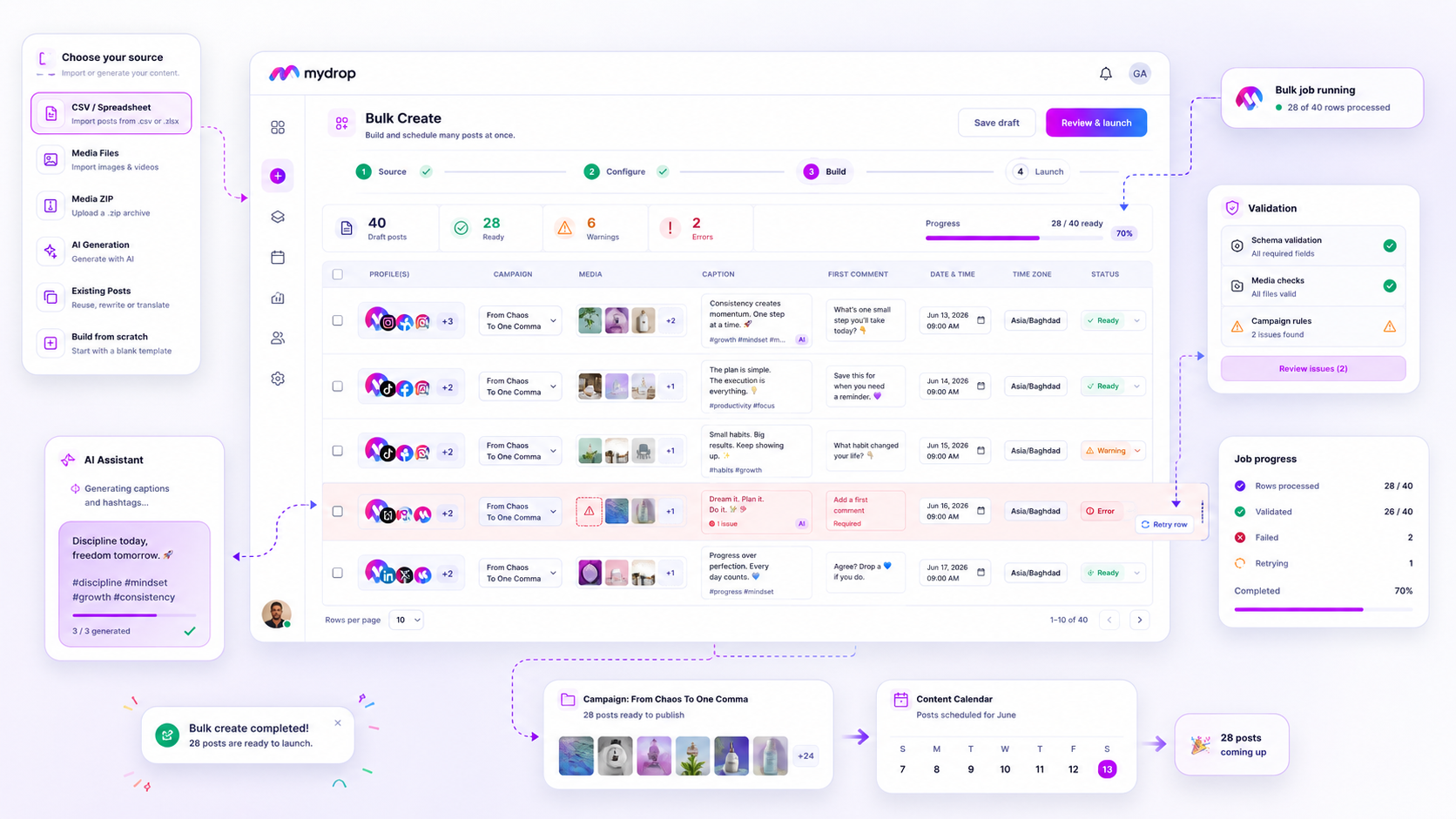
At Mydrop, we see the same pattern across hundreds of brand profiles: the bottleneck is rarely content quality, it is coordination speed. We built our WhatsApp approval workflow to eliminate that "waiting for client reply" black hole by bringing the approval request directly into the app where stakeholders spend their day.
When your team triggers an approval in Mydrop, the system doesn't just fire off an email that gets buried under a pile of newsletters. It maps that request to the client's validated phone number and sends an interactive, mobile-first prompt directly to their WhatsApp.
The client sees the post draft, the caption, and the media. They don't need to log in to anything. They simply tap Approve to push it to the queue, or Suggest Edits to fire back a text message that maps directly to the active approval context in our platform. Your team sees that feedback immediately inside Mydrop, keeping the audit trail perfectly clean without you ever having to manually copy-paste comments from a chat app.
Decision check: If your client has to switch apps, sign in, or open a laptop to review a post, you are setting the project up for a 24-hour delay. Meet them in the chat.
A simple shortlist checklist
Before you commit your team to a new tool, run it against this checklist. If a tool requires your client to do more than tap a button in their preferred chat app, keep looking.
| Feature | Why it matters | Decision check |
|---|---|---|
| Direct WhatsApp Approval | Eliminates email latency and portal friction. | Does it require a login to approve? (It shouldn't) |
| Mobile-First Rendering | Clients review on phones; your tool must display it that way. | Does the preview look exactly like the final post? |
| Contextual Feedback Loop | Edits must link back to the specific draft automatically. | Does the tool keep comments linked to the asset? |
| Role-Based Governance | Ensure only the right people can trigger approvals. | Can you limit who sends prompts to avoid clutter? |
| Audit Trail Logging | Compliance and accountability require a paper trail. | Is the approval timestamp logged automatically? |
Conclusion
The goal of your approval process is not to build a complex bureaucratic machine; it is to get high-quality content live without burning out your team in the process. When you move the approval process out of cluttered inboxes and into WhatsApp, you aren't just adding a new feature-you are shrinking the distance between "idea" and "published."
Stop chasing stakeholders. Stop worrying about whether they saw your email. Choose a tool that meets your clients where they already live, and you will find that your biggest approvals suddenly start arriving in seconds, not days.