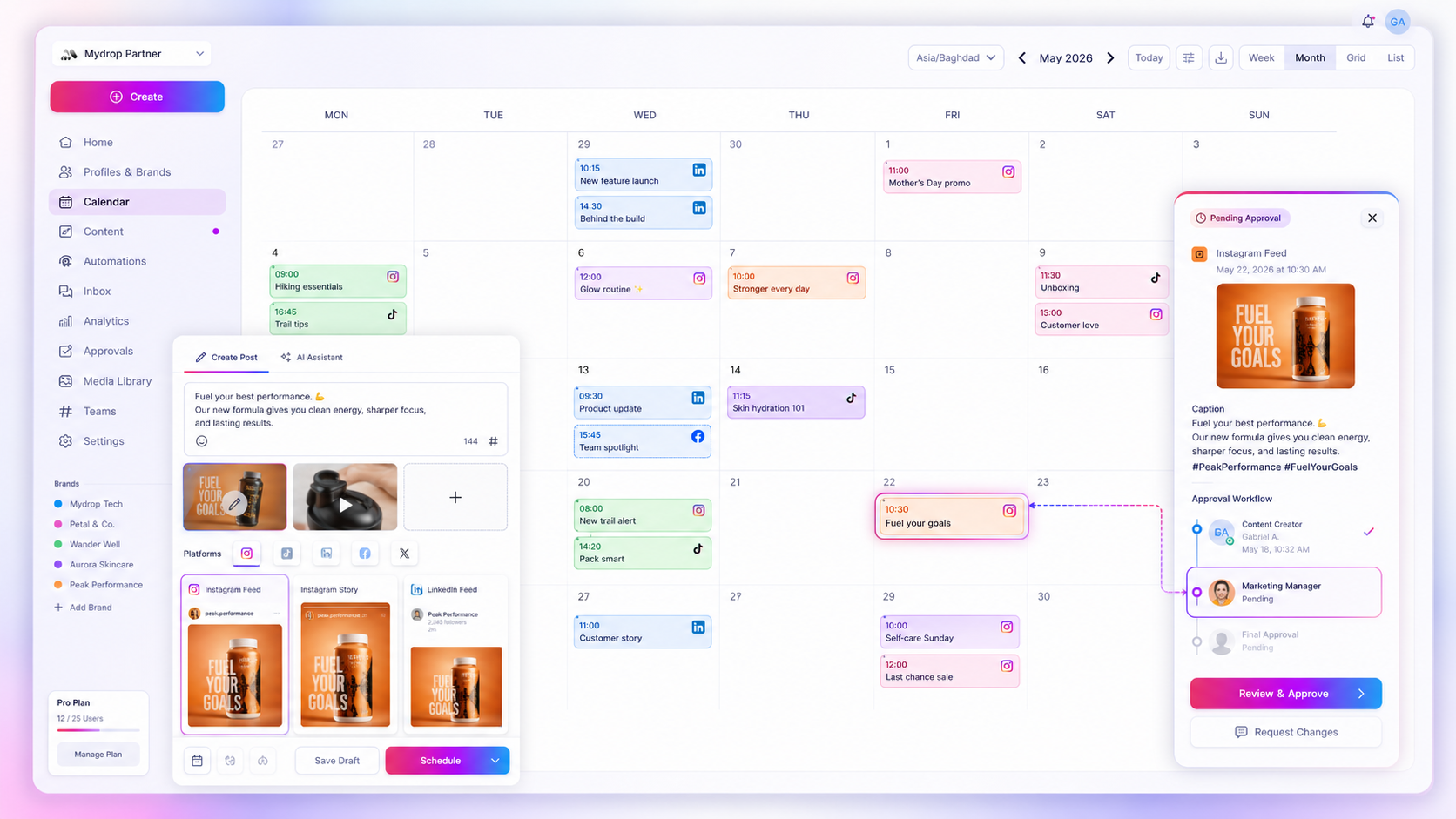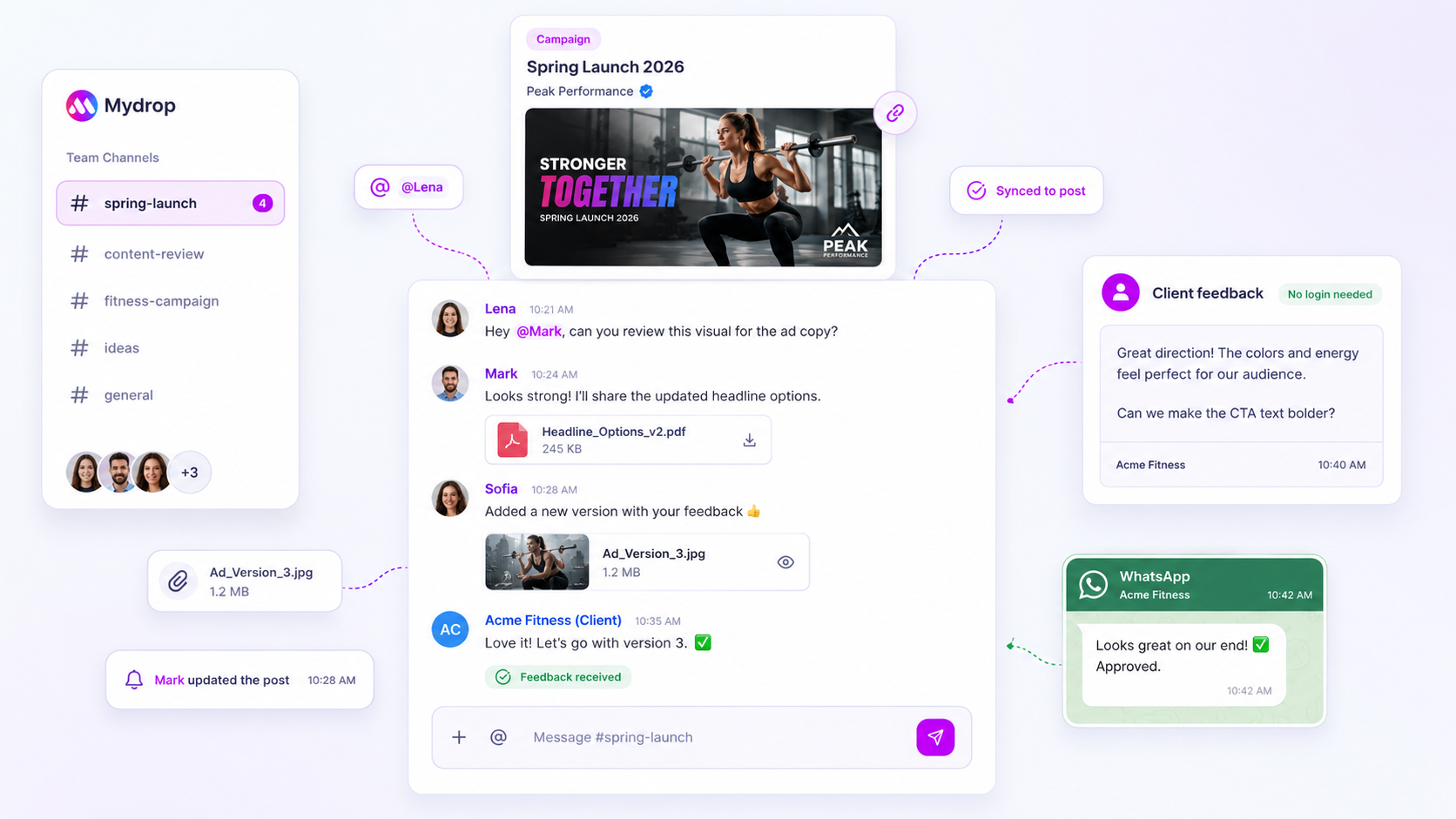
The best social media alert system for enterprise teams isn't one that sends you everything-it is one that filters the noise to deliver critical, actionable intelligence directly into your existing communication flow, whether that is email, WhatsApp, or an in-app dashboard. If you are managing hundreds of profiles, dozens of contributors, and a relentless 24/7 publishing cycle, you already know the sinking feeling of discovering an expired profile token or a missed approval deadline hours after it happened. You deserve better than fighting fires in the dark.
This guide will help you audit your current notification stack to identify where critical failures are being missed and how to centralize your operations into a single, reliable stream.
What the best tools need to handle
The most dangerous assumption in social media operations is that native platform alerts are enough. They aren't. Native apps are designed for individual creators, not for a team of ten, five markets, and two layers of legal review. When you rely on platform-native pings, you lose the ability to differentiate between a viral comment and a system-critical failure, like a stalled automation or a failed post.
At Mydrop, we usually see that enterprise scale fails not because of a lack of features, but because of coordination debt-that quiet accumulation of missed handoffs and invisible bottlenecks that eventually grinds a team to a halt. A robust notification system must distinguish between information you can read later and actions that require your immediate intervention.
To regain control, your stack must support three distinct tiers of alerts:
| Priority | Notification Type | Expected Action | Delivery Channel |
|---|---|---|---|
| Tier 1: Immediate | Approvals, Edits, Urgent Feedback | Review and act within minutes | WhatsApp, In-app |
| Tier 2: Reliability | Post Failures, Profile Expiry, Bulk Errors | Fix and reschedule immediately | Email, In-app |
| Tier 3: Informational | Analytics summaries, Mentions | Batch review weekly |
The failure point for most teams is treating all of these as equal. If a post failure notification and a general engagement ping arrive with the same level of urgency, the human brain eventually stops paying attention to both. This is why you need granular opt-in settings. A legal reviewer should never be bothered with post success notifications, but they must receive an instant alert for suggested edits or pending approval requests.
Common mistake: Relying on a single, shared "alert-all" email address that no one actually monitors. This transforms a notification stream into a black hole.
Ultimately, the best tools provide a "context-aware" notification. It is not enough to be told that a post failed; you need the notification to link directly to the failed post and the specific error diagnostic. If your tool requires you to spend ten minutes clicking through dashboards just to find which of your 200 profiles failed, your alert system is working against you.
Effective enterprise management requires removing the friction between an alert and the resolution. If your team cannot approve a post or submit a change directly from their preferred communication channel-like responding to a notification prompt in WhatsApp-you are adding unnecessary manual steps to a process that should be nearly automated.
Where basic tools start to break

Here is the awkward truth: if you rely on platform-native alerts for your enterprise operations, you are essentially flying blind. Native notifications are designed for solo creators who want to know when someone "likes" their post. They are not built for a team managing thirty brand profiles across five time zones.
When a post fails to publish, native apps often bury that error under a mountain of engagement pings. You might see a red dot on your phone, but it is indistinguishable from a dozen other non-critical alerts. We have seen teams lose an entire morning of reach simply because a profile token expired or a post failed, and the "alert" was just a quiet entry in an inbox they rarely check.
This is where the "firefighting in the dark" scenario takes hold. You only discover the failure when a client emails you asking, "Why didn't this go live?" At that point, you aren't managing social media; you are frantically trying to patch a hole that should have been flagged ten minutes after it happened.
Watch out: Treating all notifications as equal. If your system notifies you about a "New Follower" with the same urgency as a "Critical Post Failure," you will eventually tune everything out. You need a way to filter the noise so the signal actually wakes you up.
The buying criteria that matter
When auditing your notification stack, don't just look for "email alerts." Look for workflow-integrated intelligence. You need a system that understands the difference between a high-priority approval deadline and a routine report delivery.
If you are currently evaluating tools, use this scorecard to see if your potential solution can actually handle enterprise scale.
Enterprise Alert Capability Scorecard
| Capability | What to check | Why it matters |
|---|---|---|
| Channel Flexibility | Does it support WhatsApp/Slack and email? | Email gets buried; WhatsApp ensures urgent approvals move. |
| Granular Opt-in | Can you toggle categories (e.g., "Failure Only")? | Prevents alert fatigue for your most senior team members. |
| Actionable Context | Does the alert include a "Deep Link"? | You shouldn't have to search; you should be one click from the fix. |
| Approval Loops | Can you "Approve" or "Edit" via the alert? | Removes the need to open the full dashboard for simple tasks. |
| Admin Failures | Does it alert on expiration/technical stalls? | Crucial for maintaining 99% uptime across brand profiles. |
How to score: Give your current tool 1 point for every "Yes." If you have 2 or fewer, you are operating with a significant coordination debt that will eventually break your team's rhythm.
The most overlooked feature? The ability to handle suggested edits directly within the notification flow.
At Mydrop, we see teams that struggle because they have to jump between a notification, a spreadsheet, and the platform dashboard just to fix a typo. The best tools recognize that an alert should be a terminal for action, not just a passive message. When your notification system lets you approve a post or submit a suggested edit right from a WhatsApp prompt, you stop chasing your team and start clearing their bottlenecks.
Effective enterprise notification isn't about volume; it's about context. If the tool doesn't know who needs to see the alert-and what they need to do with it immediately-it's just more noise in an already loud digital day.
How Mydrop supports this workflow
At Mydrop, we see the same pattern over and over: teams managing hundreds of social profiles don't fail because they aren't creative. They fail because they are drowning in administrative noise. They are manually checking for post successes, chasing down stakeholders for approvals in random email threads, and frantically searching for why a brand profile token expired.
When we designed our notification architecture, we operated on a simple premise: you should only be interrupted for things you can actually change.
We map your notification flow directly to your team roles and workspace needs. Instead of a firehose of pings, you get a tiered stream. If a post fails, the right operator gets a targeted failure alert. If an approval is pending, the manager gets a nudge. And for those moments when you are away from your desk, our WhatsApp approval workflow lets you approve or suggest edits to a post with a single message, keeping the campaign moving without you needing to log in. It is about closing the loop faster so you can get back to strategy.
A simple shortlist checklist
Use this 5-point audit to test if your current notification stack is actually working for your team or just adding to the daily chaos.
| Check | Objective | Goal |
|---|---|---|
| Failures | Does a post failure trigger an alert outside of the platform? | No missed post, ever. |
| Approvals | Can a stakeholder approve content via email or messaging? | No bottlenecks at 6 p.m. |
| Permissions | Can team members toggle email categories individually? | Zero alert fatigue. |
| Expirations | Is there a proactive alert before a profile token expires? | No sudden publishing dead zones. |
| Context | Does an alert link directly to the relevant, actionable object? | No manual searching for the post. |
Conclusion
The reality of enterprise social media is that it is a coordination challenge masquerading as a creative one. You can build the most brilliant campaign, but if it stays stuck in a draft folder because the right person didn't get the right notification at the right time, the platform doesn't matter.
Stop treating your alerts as background noise. Centralizing your operational health, security updates, and performance pings into one reliable stream is not just a "nice-to-have" productivity tweak-it is the difference between a team that is constantly firefighting and one that is actually executing its strategy.
If your current tools aren't giving you that kind of visibility, it is time to stop settling for the noise and start demanding better signal. Your team’s sanity, and your brand's consistency, depends on it.