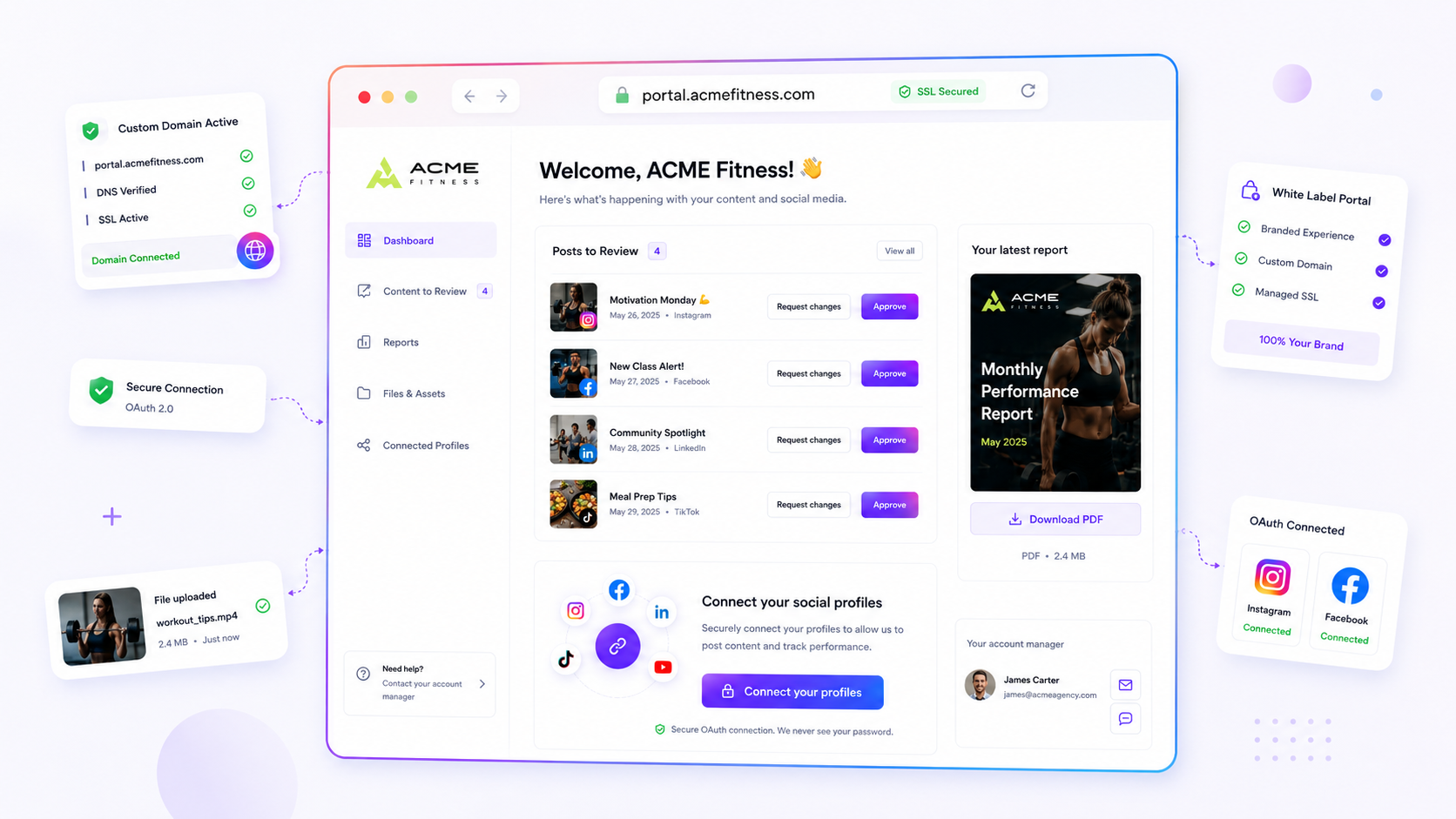
Stop blaming your DNS provider. When a client's branded portal or link-in-bio page fails to go live, it is rarely because propagation is slow. The issue is a broken communication loop between the marketing team initiating the request and the IT team managing the zone files.
We get it. You are caught between a client who wants their branded URL live yesterday and an IT department that views every new request as a security ticket destined for the bottom of their inbox. It feels like you are constantly chasing status updates for something that should just work. The silent loss of brand authority hurts every time a client's professional URL defaults back to a generic mydrop.me link because an SSL check stalled out or a certificate expired.
To fix this, you must shift your mindset: stop treating domain setup as a one-time task and start treating it as a shared, asynchronous service lifecycle.
Where the handoff is actually breaking

The friction usually starts long before anyone touches a terminal. It happens when marketing sends a generic "please point this domain to our new tool" email, and IT responds by pointing an A-record to the right place-but without the context of the platform's specific managed SSL requirements.
Most agencies treat the DNS delegation as the finish line. In reality, that is just the prerequisite.
The breakdown occurs because of a mismatch in expectations:
- The Initiation Gap: Marketing assumes that once the A-record is set, the domain is ready. They do not realize the platform needs an active DNS path to initiate the managed certificate provisioning.
- The Visibility Vacuum: IT often has no way to see why a domain remains "inactive." They check the DNS, see it is correct, and assume the platform is broken. They lack visibility into the specific
sslStateor the error codes that explain the holdup. - The Synchronization Error: Teams often try to assign a target (like a link-in-bio page or portal) before the SSL lifecycle has completed its initial handshake.
Here is how to spot where your internal process is leaking time.
| Stage | Common Handoff Friction | Operational Impact |
|---|---|---|
| Zone Delegation | Marketing fails to provide the required target host to IT. | IT creates the wrong record or mismatched TTL. |
| Domain Claim | The agency attempts to register a domain that is already reserved. | Process stalls while waiting for a platform admin override. |
| SSL Provisioning | IT sets the DNS but does not wait for the platform to verify it. | The system cannot generate the certificate, leading to a "Pending" loop. |
| Target Routing | The agency forgets to assign the active domain to the actual page. | The domain is "verified" but the URL still serves a 404 or default page. |
Operator rule: Never initiate a domain request without a "Verification-as-a-Service" agreement. The agency owns the target assignment, and the client IT team owns the zone configuration. The handoff is only complete once the system returns an "Active" status for the SSL certificate.
The coordination debt checklist

Most of the friction you feel during domain setup stems from treating a technical handshake as a casual favor. When you ask IT to point a domain to a new portal, you are asking them to update a zone file and trust that the platform on the other end will handle the rest correctly. If you do not have a shared way to confirm the state, you end up with "ticket ping-pong" where neither side knows why the link is still showing a default URL.
Audit your current setup process against this checklist to see where your team is losing time. If you cannot answer "yes" to these five points, you are likely burning hours chasing status updates that should be automated.
| Checklist Item | Purpose | Why it matters |
|---|---|---|
| Zone Access Audit | Verify who has push-button control over the DNS. | Prevents requesting changes from people who cannot execute them. |
| Propagation Buffer | Set an expectation of 24 to 48 hours for full global TTL propagation. | Stops the "is it live yet?" Slack messages three minutes after an update. |
| SSL State Visibility | Ensure the marketing lead can view the current certificate status. | Stops the guess-work when a page fails to load over HTTPS. |
| Target Routing Confirmation | Validate that the domain is assigned to the correct surface, not just pointing to an IP. | Ensures traffic lands on the intended portal or link-in-bio page. |
| Failure Response Plan | Have a pre-defined path for when sslError codes appear. |
Stops the panic when a browser throws an "insecure" warning. |
If you are still sending screenshots of DNS records over email, your process is effectively broken. The goal here is not to become a DNS expert but to make the status of the connection transparent to everyone, including the people who do not know what an A-record is.
How to move decisions closer to the work
The most successful teams we see stop waiting for external sign-offs on every minor configuration tweak. They move decision-making authority away from centralized IT tickets and toward the people actually managing the brand surfaces.
When you use platforms like Mydrop, you can shift the workflow from "wait and see" to "verify and assign." By centralizing the domain claim and SSL lifecycle inside the workspace, your team stops asking if the certificate is active and starts looking at the platform dashboard for the source of truth.
Decision check: Never treat a domain connection as live until the system confirms the SSL lifecycle has completed successfully.
When you move to this model, your workflow changes from a series of dependencies into a self-service loop:
- Intake: Marketing identifies the brand domain needed for the new portal.
- Setup: IT updates the DNS records as a one-time configuration task.
- Verification: The team runs the platform’s DNS check to confirm the records are visible.
- Activation: The platform automatically requests and manages the SSL certificate.
- Assignment: Once the certificate status hits
ACTIVE, the team assigns the domain to the specific portal or link-in-bio page.
This approach replaces the constant checking and re-checking with a single, clear handoff point. Once the DNS is pointing to the platform, the platform manages the rest asynchronously. You stop being a DNS project manager and go back to being a marketing leader, which is where your team actually needs you.
Ultimately, the best way to clean up this process is to stop relying on manual coordination. If your tools require you to manually track certificate expiry or email an admin for a status check, you will always be fighting the same technical bottlenecks. Choose infrastructure that lets you treat custom domains as a utility, not a project.
The roles and rules that reduce rework
The fastest way to stop burning hours on custom domain setups is to stop treating the request like a favor. Instead, establish a hard boundary: your team manages the target assignment (where the traffic goes) and the client IT team manages the zone configuration (how the traffic gets there).
Think of it as a formal contract. You do not touch their DNS zone files; they do not touch your link-in-bio or portal configuration. When you clearly separate these buckets, the "who is responsible" debate disappears.
Workflow check: Never initiate a domain request in your dashboard until the client IT lead has explicitly confirmed the CNAME record propagation. If the SSL provisioning state is stuck on
Pending, you are simply watching a race between DNS propagation and your own patience.
To make this stick, try this simple handoff workflow when launching a new branded surface:
- Provisioning Prep: Send the client IT contact the specific CNAME requirements for the domain.
- DNS Validation: Wait for their "Record live" confirmation before entering the domain into your configuration.
- SSL Activation: Trigger the
Verify DNScheck in your platform. Once the system reports anACTIVEcertificate status, the domain is ready to serve. - Target Assignment: Only now, assign the domain to the specific portal or link-in-bio page.
If you jump to step four before step three is green, you are just inviting a support ticket.
The weekly habit that keeps the system honest
Systems rot in silence. If you are managing dozens of brand surfaces, you likely have at least one domain sitting in a weird, half-broken state right now. Maybe the SSL cert expired, or someone updated the DNS and forgot to re-run the validation check.
Schedule a 15-minute "Domain Health Check" every Friday. It is not glamorous, but it prevents the Monday morning fire drill where a client realizes their site is serving a "Not Secure" warning to their entire audience.
| Domain Health Indicator | Action Item | Frequency |
|---|---|---|
sslState == 'FAILED' |
Refresh SSL check; verify DNS records are still active. | Weekly |
sslStartedAt > 24 hours |
Check for DNS propagation lag with IT. | As needed |
Domain activeEmailSentAt == null |
Notify client portal owner. | On launch |
| Orphaned Target | Re-assign domain to current campaign surface. | Monthly |
By keeping this list short and binary, you move from "chasing status" to "managing infrastructure." At Mydrop, we see the most successful agencies use this rhythm to treat their client-facing domains as stable, professional assets rather than volatile, "oops, it’s down again" projects.
Conclusion
The messy truth is that your client's branded link-in-bio is the first thing their customers see. When it defaults back to a generic platform URL because of a failed certificate check, it is not just a technical error-it is a signal that your team isn't fully in control of the brand experience.
Stop trying to force the manual, high-friction path of chasing approvals via email. By formalizing the handoff, keeping DNS and target assignment in their respective lanes, and baking in a simple weekly audit, you turn a persistent headache into a background process. Your IT partners will appreciate the structure, your clients will get their branded surfaces on time, and you will stop wasting your best hours on ticket management.