
Stop treating every social post as an isolated data point. If you aren't grouping your output by specific business initiatives, you aren't measuring performance-you are just watching traffic noise.
We get it. You are juggling cross-channel launches, multiple brand voices, and a constant deluge of reports. When your calendar is already a mess, the thought of manually standardizing tracking feels like just another administrative burden you do not have time for. But that friction is exactly why your team is suffering from coordination debt. You are likely optimizing for vanity metrics-likes and impressions-because your current tracking is too granular to see the big picture.
The shift from post-level tracking to campaign-level UTM management isn't just an administrative preference; it is the difference between reporting on vanity and reporting on revenue.
The decision each metric should trigger

Most teams treat UTM parameters as an afterthought-a quick string tacked onto a URL just before hitting publish. This is where the coordination debt kills your data. When copywriters, designers, and social managers don't have a shared source of truth for what a "campaign" actually represents, you end up with fragmented data. One post uses utm_source=social, another uses utm_source=twitter, and suddenly, your analytics dashboard is a crime scene that no one wants to audit.
To move from "watching traffic" to "measuring impact," you need to map your activity to your actual business calendar.
| Factor | Stick to Post-Level | Move to Campaign-Level |
|---|---|---|
| Volume | Fewer than 10 posts/month | More than 10 posts/month |
| Strategy | Organic, evergreen content | Time-bound launches or promos |
| Team Size | Solo operator | Agencies, multi-brand, large teams |
| Goal | General brand awareness | Conversion or attribution-focused |
Operator rule: If your team manages more than one concurrent strategic objective, you have outgrown manual link tracking. You need a central, automated way to group your assets.
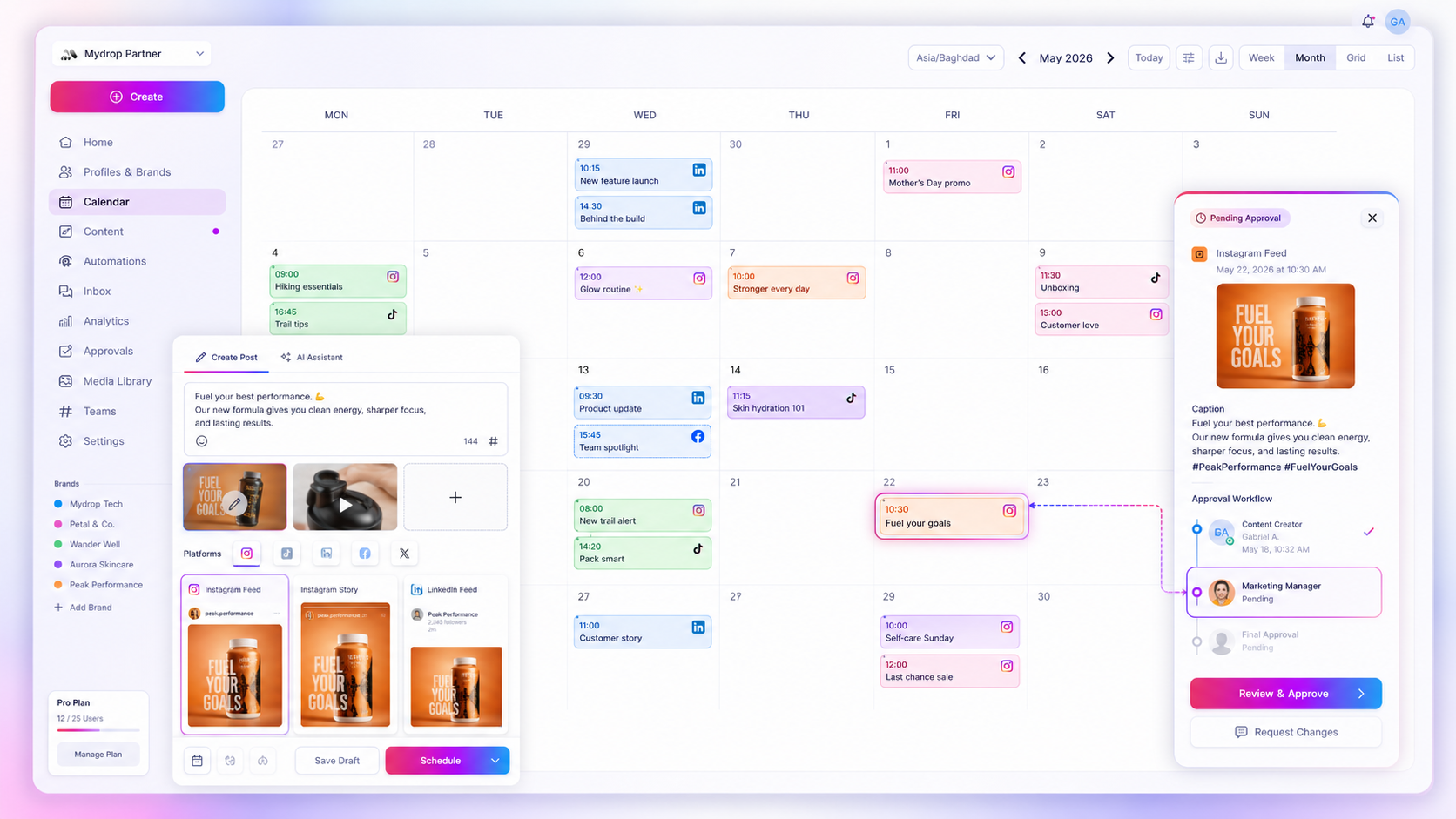
At Mydrop, we see teams struggle because they view a campaign as a "thing" they create after the fact in a report. In reality, a campaign is an operating habit. When you use Mydrop to define a campaign period, the platform takes the UTM heavy lifting off your team’s plate by automatically appending the correct parameters to every link during that active window. It prevents the classic "typo-in-the-URL" disaster that renders an entire month of reporting useless.
If you are currently guessing which posts belong to your "Holiday Sale" initiative, you aren't tracking ROI-you are just doing manual data entry. Stop the guessing game and tie your measurement to the project, not the individual post.
The scorecard that keeps reporting useful

You need a lens that actually correlates output with outcomes, not just noise. If your current reporting relies on aggregate clicks, you are drowning in data that means nothing to leadership. When you move to campaign-level tracking, you shift from reporting on what happened to what we achieved.
Use this scorecard to evaluate if your current setup is helping you or just inflating your inbox:
| Score | Metric Focus | Strategic Clarity |
|---|---|---|
| 1-3 | Vanity (Likes/Views) | Blind to business impact |
| 4-6 | Mid-funnel (Clicks/Referrals) | Inconsistent attribution |
| 7-9 | Bottom-funnel (Conv/ROI) | Clear path to budget justification |
If you are stuck in the 1 to 3 range, you are likely suffering from manual UTM drift. We see this often: teams copy-pasting tracking parameters until utm_medium becomes a graveyard of "social," "post," "ig," and "instagram." Once that data hits your analytics dashboard, it is impossible to clean without spending hours in spreadsheets.
At Mydrop, we usually see that the most effective teams treat the campaign as the container for the truth. By pinning a campaign period-like a three-week product launch window-to your activity, you stop worrying about whether the team remembered to append the right tracking code. The system handles the appending, leaving your data clean and segmented automatically.
What to stop measuring by default
The hardest thing for any social lead to do is turn off a report. We are conditioned to measure everything that moves, but measuring everything means you actually measure nothing.
Stop asking your team to track these three things by default:
- The "Social" Source Tag: If your UTM source is just
social, you have zero visibility into which channel is driving revenue. It is effectively a dead tag. - Post-Level Conversions for Evergreen Content: Trying to attribute a long-term brand awareness post to a specific sales goal creates false negatives. If it is not part of a time-bound objective, stop treating it like a conversion trigger.
- Aggregated Engagement Rate: This is the ultimate vanity trap. An engagement rate of 5% on a post that drives zero traffic is worth less than a 0.5% rate on a post that hits your target revenue goal.
Decision check: If a metric does not support an
If-Thendecision-like shifting budget, changing creative, or pausing a channel-it is not a metric. It is a distraction.
When you switch to campaign-level management, you can finally archive these fragmented reports. Instead, look at the Active Period Attribution-what actually drove behavior during the campaign window-and leave the rest of the noise for the platform's native analytics.
Your goal is to stop being a data janitor. By standardizing your tracking windows through a centralized campaign tool, you move from cleaning up mess to actually interpreting results. The spreadsheet shouldn't be a crime scene; it should be a roadmap for your next launch.
How to connect metrics to next actions
The deadliest mistake we see in large teams is treating a report as a final destination. If you only look at data to justify your budget to a skeptical VP, you have already lost the game. Your data should be a set of levers.
At Mydrop, we usually see the most successful teams treating campaign-level reporting as a diagnostic for the next sprint, not a funeral for the last one. If your campaign shows high clicks but low conversion, stop blaming the creative. That data point is telling you the post-click experience or the landing page isn't matching the promise of the caption.
When you group posts into a campaign, you stop guessing which assets performed best. You can see the whole funnel. To make these insights stick, your team needs to act on them immediately:
- Review by exception: Do not waste energy on the top 10% of posts that perform predictably.
- Close the feedback loop: Take the bottom 20% of posts and ask why they missed. Was the CTA unclear? Was the link destination broken?
- Double down: If a specific
utm_termorutm_contentsegment is driving high intent, inform your creative team immediately so they can produce more of that specific style.
Workflow check: Never leave a campaign review meeting without one "Stop," one "Start," and one "Continue" instruction for your content team. If you cannot extract those three actions, your reporting is too broad.
The review cadence that makes the model stick
Most teams fail here because they try to review everything all at once, leading to a massive, painful monthly dashboard dump that no one actually reads. You need a rhythm that mirrors the speed of your social channels.
We recommend a tiered cadence for your campaigns:
| Frequency | Focus | Actionable Output |
|---|---|---|
| Weekly | Tactical Pulse | Adjust active bids or boost high-intent posts. |
| Mid-Campaign | Strategy Correction | Swap out underperforming creative assets. |
| Post-Mortem | Institutional Knowledge | Document what won, then feed it back into your brand guidelines. |
By using Mydrop to manage your campaign period, you ensure that the data you review is actually representative of the initiative. Because Mydrop handles the UTM appending only when the campaign is active, you don't end up with "zombie traffic"-those random clicks from an evergreen post that accidentally used a stale launch link. It keeps the noise floor low enough that you can actually hear the signal.
Conclusion
Transitioning to campaign-level tracking is less about adding a new tool to your stack and more about maturing your team's relationship with accountability. It is the shift from being a "publisher" who just hopes for views to being an "operator" who knows exactly which levers drive your bottom line.
If you are still manually copy-pasting UTM strings or relying on aggregate monthly reports to guess what worked, you are carrying more coordination debt than your team can afford. Pick your next three initiatives, group them into active campaigns, and watch how quickly the data transforms from a vanity metric into a real business asset. Your leadership-and your sanity-will thank you.