
You should move your shared assets to a dedicated, centralized library the moment your team spends more time searching for files than editing them. When you are a solo creator, a nested folder on your desktop works fine. But as soon as you bring in a second set of hands, that local drive inevitably turns into a graveyard of unlinked files, duplicate versions, and lost brand equity.
We get it. You are juggling a thousand things, and moving assets feels like administrative cleanup you can push to next quarter. But every time your designer has to Slack the marketing manager for the "real" logo file-or worse, picks an outdated version from an old campaign folder-you are paying a hidden tax in team friction and brand inconsistency.
The decision teams usually frame too broadly
The mistake we see across teams managing hundreds of brand profiles is treating file storage as an IT decision. It is not. It is an operational one. You are likely framing this as "Do we need a new tool?" when the real question is "How much coordination debt are we comfortable carrying?"
When assets live in decentralized folders-or worse, fragmented across personal downloads and scattered cloud links-you lose the ability to maintain a single version of the truth. We have seen teams burn entire afternoons just trying to find the right file for a time-sensitive post, only to end up using a low-resolution derivative because they couldn't find the source. This is the silent killer of high-velocity social operations: it is not the lack of creative ideas that slows you down, but the constant, low-level friction of finding your own work.
Operator rule: If an asset is used more than once by more than one person, it has no business living in a campaign-specific folder. It needs a permanent, searchable home.
The threshold is lower than you think. You do not need to be a massive agency to feel this. If you are regularly hitting these pain points, you are already overdue for a shift:
| Diagnostic Indicator | Current State | Future State (Centralized) |
|---|---|---|
| Search Time | > 10 minutes per asset | Seconds via global filter |
| Version Control | "Final_v2_updated.jpg" | Single file with metadata |
| Asset Reuse | Re-uploading to every campaign | Select from library modal |
| Editing | Download, edit locally, re-upload | Edit-in-place with built-in tools |
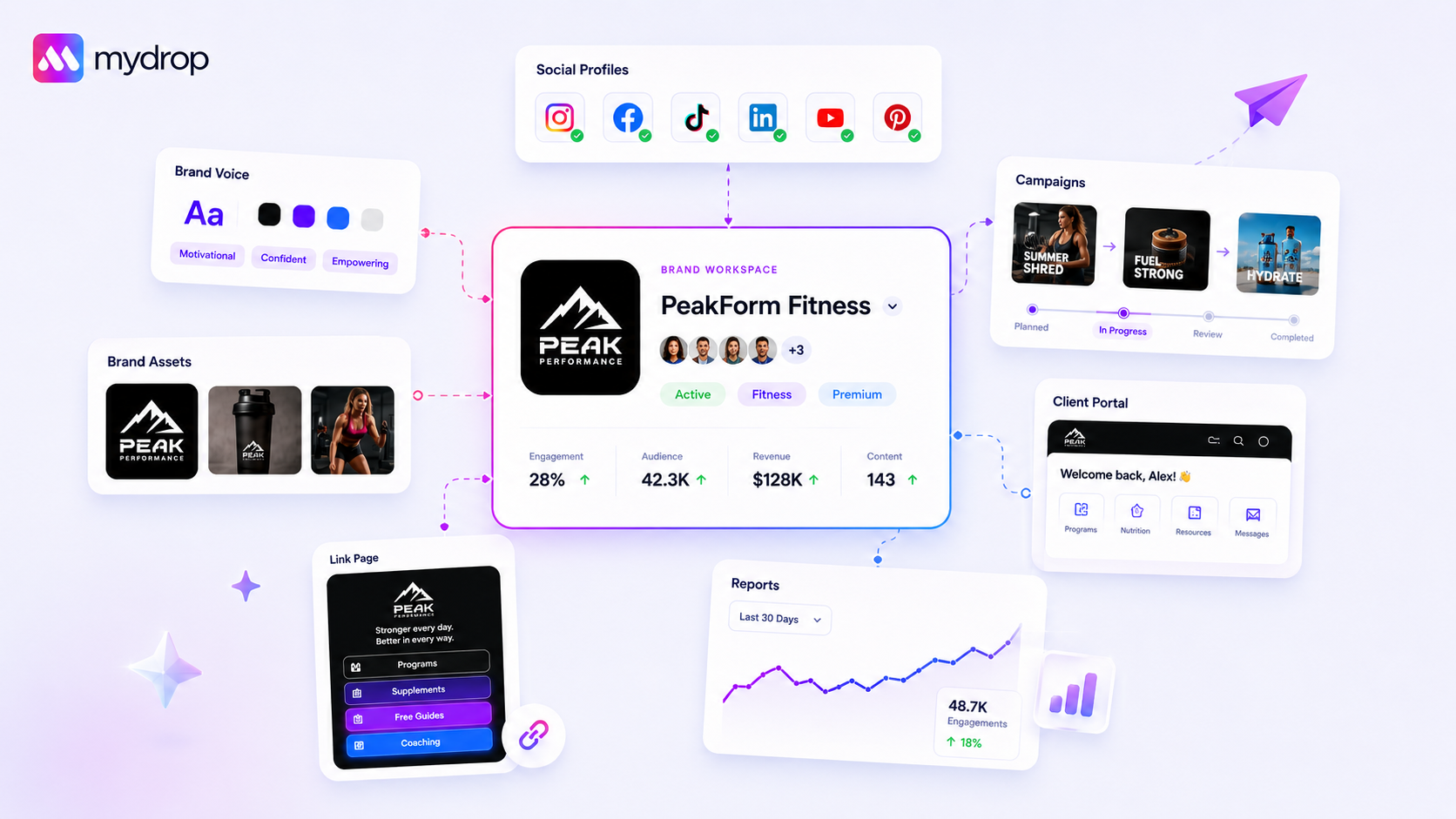
At Mydrop, we designed the Media Library to act as this bridge. It is not just storage; it is the central repository where your brand assets and campaign media actually live, regardless of which post or report they end up in. Shifting to this model means your team stops playing the scavenger hunt and starts actually shipping. It is the difference between a team that is constantly scrambling to find the right piece of the puzzle and one that has the entire kit ready at their fingertips.
What should stay manual and what can move faster

The biggest mistake we see isn't failing to centralize everything; it is trying to centralize the wrong things. Not every asset belongs in your core brand library. Trying to force temporary, one-off project files into a high-governance repository just creates "metadata bloat" that slows your team down.
Keep it simple: high-churn assets stay local, while high-value assets get the upgrade.
If a file is part of a rough creative brainstorm, an experimental edit that might get scrapped, or a single-use background element for an internal presentation, leave it in your current project folder. You don't need a formal library workflow for items that won't see a second day of light.
However, once you are dealing with your "Gold Master" assets-the brand logos, approved campaign graphics, video templates, and reusable social assets that everyone keeps hunting for-it is time to move.
Decision check: If you find yourself asking a teammate, "Where did you save the final version of that?" more than twice a week, that file is a candidate for the central library.
The tradeoff matrix
To decide where an asset lives, use this breakdown. It helps clear up the "we don't know where to put this" friction that kills momentum on busy campaign weeks.
| Asset Type | Current Habitat | Destination | Rationale |
|---|---|---|---|
| Brainstorming/Scraps | Local Project Folders | Stay Local | Low reuse; cluttering the library hurts search quality. |
| Final Brand Assets | Desktop/Cloud Drive | Centralized Library | High value; version control and accessibility are mission-critical. |
| Template Assets | Team Share Drive | Centralized Library | High reuse; requires edit-in-place capability across the team. |
| Campaign Exports | Folder/Sub-folder | Centralized Library | Requires cross-reference tracking to avoid duplicate uploads. |
Moving these assets into a Mydrop-integrated library doesn't just mean "moving folders." It means moving into a state of version certainty. When your brand manager updates a logo in the library, it cascades across the workspace. When your designer uses the integrated media editor to crop a hero image, the reference stays connected to the original, preventing the "which crop is current?" scavenger hunt.
This is the hidden cost of staying decentralized: you are paying a tax on every hour your team spends verifying that they are using the right file. When you centralize, you aren't just cleaning up a folder structure; you are removing the decision bottleneck that keeps your team from hitting their actual publishing goals.
At this scale, governance is speed. If your team knows exactly where to find the "single source of truth," the time between having an idea and shipping the post collapses. You stop being a group of people chasing files and start being a cohesive brand engine.
Before you hit "move" on those thousands of files, take a beat to pilot the transition. Pick one active campaign or brand folder and migrate it as a test. Watch how the team interacts with the library modal versus the old drive. If they stop asking you where the assets are, you have your signal to migrate the rest.
How to pilot the workflow safely
Moving to a centralized library does not mean you have to incinerate your old folders overnight. The most successful teams we have seen treat this as a phased migration, not a "big bang" switch. You want to avoid breaking active campaigns while you build the new repository, so focus on the "new-in, old-as-needed" approach.
Start by designating a "cutover date." Every new asset created from that Monday morning forward must live in the central library. For the legacy files, leave them where they are until you actually need them. If a campaign is currently running, don’t move its assets-just leave that specific folder alone until the campaign wraps.
When you do migrate older assets, don’t just dump them into a generic "archive" folder. Use this as a cleanup cycle:
- Inventory: Audit the last quarter of content. Only keep the high-fidelity master files (PSDs, high-res videos).
- Tagging: Apply meaningful, team-friendly naming conventions before uploading.
- Cross-Check: Ensure that if you are using Mydrop, your team knows how to access the Media Library modal directly from the post composer, rather than hunting for a local file path.
- Verification: Once a batch is uploaded, verify the references in your active posts or brand templates to make sure nothing broke.
Workflow check: If an asset is older than six months and hasn't been referenced in a live report or active campaign, put it in cold storage (an external drive or off-site archive). If no one has searched for it in two quarters, it is clutter, not an asset.
The operating rule to keep
Even with a perfect library, the system eventually dies if you don't enforce a "Source of Truth" discipline. We often see teams build a beautiful, searchable library but fail to maintain the integrity of the assets inside it.
The most effective teams we work with treat the library as a living garden, not a dumpster. When someone uploads a "Final_Final_v3" file, they have a two-minute window to delete the previous versions or properly version them. If you allow duplicate uploads to proliferate, you are just recreating the same search-bar friction you just paid to solve.
Ultimately, your library is only as good as your team's willingness to link, not copy. Whenever possible, reference the central asset via its unique file ID within Mydrop rather than downloading it to your local machine. This keeps your usage tracking accurate and ensures that if a brand color or logo changes, you only have to update it in one central location to cascade the fix across your entire workspace.
Conclusion
The transition from scattered folders to a centralized media library is rarely about technology and almost always about coordination debt. You are not just organizing files; you are choosing to stop the "scavenger hunt" workflow that drains your best creative energy.
Start small. Run the Asset-Cohesion Scorecard we outlined earlier, pick one brand or one active project to pilot the new repository, and watch how much faster your team moves when they aren't questioning which version of the logo is the right one. The goal isn't to be perfectly organized; it is to make the "right" asset the "easiest" asset to find. Stop searching, start building.