The secret to scaling multi-brand social media isn't a bigger hard drive; it is moving your assets from a static folder structure into a live, context-aware brand container. Instead of treating your media as a collection of loose files, you need to map every logo, font, and color hex to a singular brand identity. This transforms your assets into a reliable engine that powers your publishing tools and AI generation, rather than a graveyard of "Final_v2" files that your team hunts for every time a campaign kicks off.
We have all been there. You are ten minutes away from a hard deadline, and someone realizes they used the wrong primary logo for a regional sub-brand. Or worse, the color hex code in the latest social graphic is off by a few shades, and now the entire visual identity feels disjointed across channels. It is not just frustrating; it is a massive drag on your team's velocity that makes every campaign feel like a manual rescue mission.
When you group your assets correctly, you stop re-inventing the wheel for every new client or product line. You create a repeatable operating habit where the brand's intelligence-its audience, goals, and visual rules-stays glued to the media itself.
The operating problem this solves

Most teams stumble because they confuse storage with organization. They treat a shared cloud drive as the primary system, but that drive doesn't know anything about the content inside it. When your media exists in isolation from the brand identity, your team pays a hidden tax on every single post.
Here is where the friction usually builds up:
- Identity Drift: Without a single, locked-in source for colors and fonts, designers and managers inevitably pull the wrong variations, leading to a fragmented brand presence across social platforms.
- Search Waste: If your team spends more than a few minutes searching for the "correct" version of a file, you have a process failure. The time lost is rarely just about the search; it is about the mental context-switching required to re-verify if that asset is still approved for use.
- Approval Bottlenecks: When assets aren't linked to specific brand parameters, every piece of content needs a manual "sanity check" to ensure it aligns with the current goals, audience, or tone. This turns your lead stakeholders into glorified quality assurance checkers.
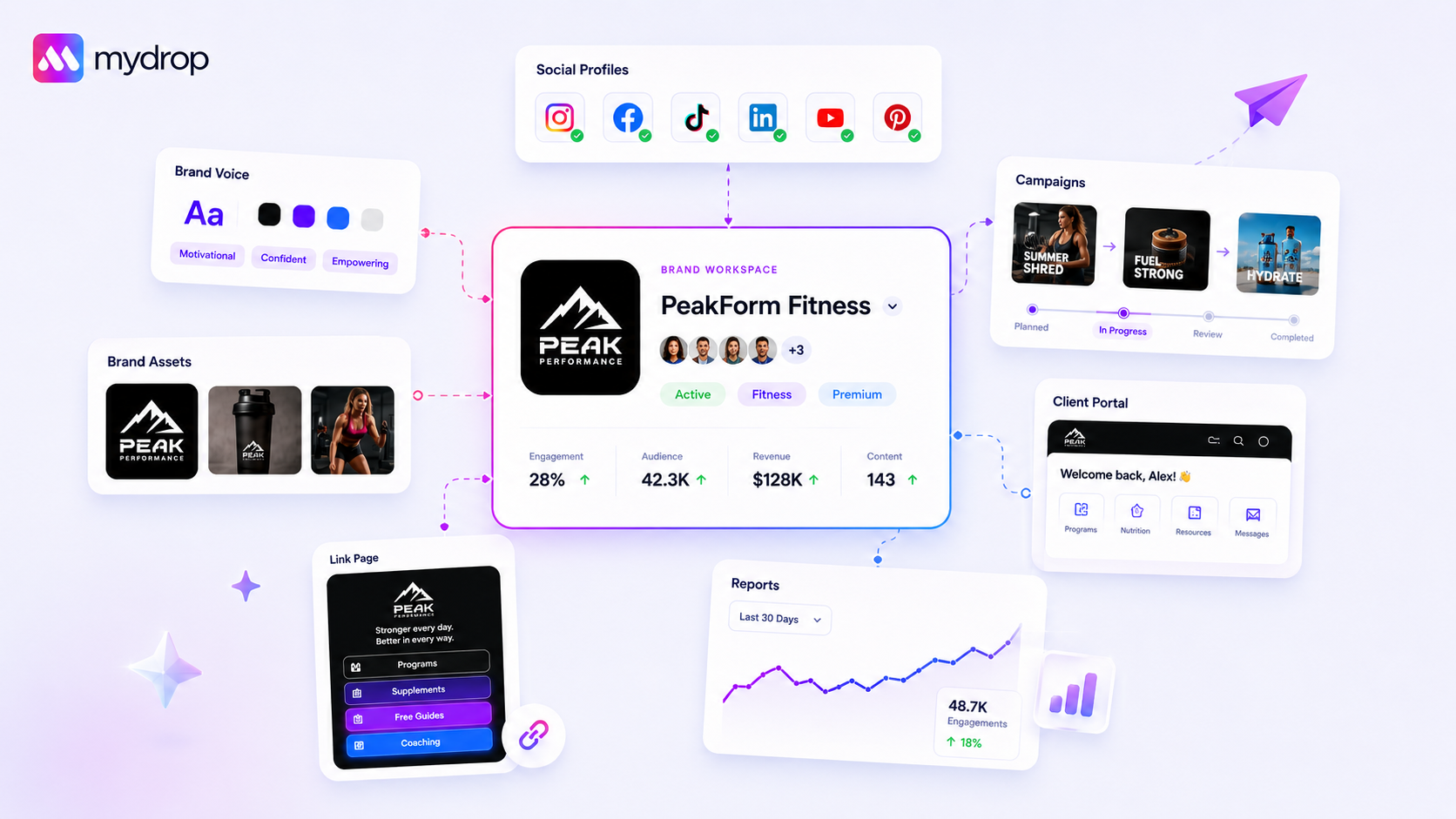
At Mydrop, we often see teams trying to force-fit these needs into static folders, but the real solution is to build a living Brand Group. By grouping your profiles and mapping them to a unified set of identity data, you move the work from "find the right file" to "select the right brand." Once you have that container established, the platform can automatically pull the right colors, logos, and target audience context into your workspace.
Operator rule: If your team has to open more than two different tools to verify if an asset matches the current brand guidelines, your structure is too fragmented. Every campaign asset should be a child of your brand's core identity container.
The minimum system that works

The secret to scaling isn't a bigger hard drive; it is moving your assets from a static folder structure into a live, context-aware brand container. You stop hunting for the right logo because the system already knows which one belongs to which campaign.
At Mydrop, we see teams struggle most when they treat their media as a collection of loose files. A functional setup requires just three connected elements: your social profiles, your brand identity data, and a primary folder linked to that specific group. When these are mapped together, your publishing tools, AI generators, and reporting dashboards finally start speaking the same language.
Think of it as the "One Brand, One Container" rule. If a piece of media or a color palette isn't anchored to a brand record, it does not belong in your campaign workflow.
4-Step Media Audit Scorecard
Use this to gauge if your current process is an engine or an anchor.
| Step | Check | If No |
|---|---|---|
| 1. Source Check | Are assets pulled automatically from your website? | Manually upload via a bulk-import tool to minimize drift. |
| 2. Context Linking | Is media tagged with audience and goal parameters? | Add metadata fields to your asset library immediately. |
| 3. Identity Sync | Do font and color sets match the current brand group? | Reset your brand detail settings to match current style guides. |
| 4. AI Access | Can your AI generate drafts using these brand assets? | Link your primary brand folder to your AI generation settings. |
Decision check: Never connect a social profile to a campaign without first assigning it to a brand record. This prevents the "orphan asset" problem where files sit in a folder with no owner.
Where teams overbuild the process
The most common trap we see is the "folder maze." Teams spend weeks creating complex, nested directory structures-Campaign > Q2 > Social > Instagram > Static > Final-only to find that nobody can actually find anything when the clock is ticking at 6 p.m.
Simplicity beats structure every time. If you need a map to navigate your asset library, you have already lost.
Avoid these three "over-engineering" habits:
- Granular Folder Hierarchies: Deep nesting forces your team to remember exactly where they saved a file. Instead, use search-friendly tags and a single, flat brand-level container.
- Approval Overload: Adding a five-person sign-off for every logo swap doesn't guarantee quality; it just guarantees missed deadlines. Keep approvals at the brand-identity level, not the individual-file level.
- Manual Syncing: If you are still manually copying color codes and hex strings between your design tool and your publishing calendar, you are inviting human error. Let the brand identity record hold the "source of truth" that your other tools reference automatically.
A simple rule helps: If a team member has to ask someone else where an asset is, your system is failing. The goal is to make the right choice the default choice, so your team can focus on the campaign strategy rather than fighting the folder structure.
Most agencies and enterprise teams have everything they need to succeed; they just need to stop hiding their best work inside unmanaged, disconnected silos. By centralizing the identity at the group level, you turn your assets into a force multiplier that actually supports your growth.
How to run the cadence
Establishing this container is the easy part. The real work is how your team interacts with that container every Monday morning. You need a rhythm that forces people to check the brand context before they open the creative suite.
Try this simple Monday Morning Sync rhythm for your creative team:
- The Pulse Check: Open the Brand Detail view. Review the active campaigns for the week. If a new campaign doesn't have an associated brand folder or assigned color palette, it does not get a production start date.
- The Asset Audit: Check the media references linked to the current sprint. Are these files actually mapped to the brand, or are they living in a personal download folder? If they aren't mapped, drag them into the brand container now.
- The Intent Review: Confirm that the target audience and marketing goals are up to date for the week. If the brand's voice guide or AI prompt guidance hasn't been touched in a month, update it to reflect current performance trends.
This is where teams often stumble. They treat this as a "one-time setup" rather than an active, breathing part of the workflow. At Mydrop, we often see that the most successful teams treat their brand container like a shared office space-if you leave your files on the floor, you're responsible for tidying them up before the next person arrives.
The proof that the habit is working
How do you know you have actually solved the mess? It won't be a sudden surge in likes or viral hits. It will be the silence of the things that used to make your day miserable.
Use this Brand Health Scorecard to measure your progress. You should be seeing these shifts in your weekly operations within a month of moving to a container-based workflow.
| Metric | The "Before" Chaos | The "Healthy" State |
|---|---|---|
| Search Time | Team spends 30+ mins hunting for assets. | Assets are retrieved in < 2 mins via brand context. |
| Brand Drift | Incorrect logos/colors used in 1-in-5 posts. | 100% adherence to defined palette and font styles. |
| Onboarding | New hires take a week to learn the file structure. | New hires are productive within 24 hours of portal access. |
| Review Loops | Stakeholders flag visual inconsistency as a major fix. | Visuals are approved on the first pass. |
If you are still getting feedback about "the wrong version of the logo" being used, your problem isn't your creative team's memory-it's your folder logic. When you map your media into a live brand context, the right file becomes the only file that is easy to find.
Conclusion
The messy desktop and the "Final_v2" file naming conventions are just symptoms of a system that treats media as a static commodity rather than a strategic asset. If your team is constantly re-explaining the brand's visual identity to every new person or struggling to maintain consistency across dozens of channels, you don't need a more expensive storage server. You need to stop archiving and start grouping.
Map your profiles, your identity data, and your media into a singular container. Once you link your assets to a specific brand group, the work of staying consistent happens automatically. Your publishing tools start "knowing" which logo to use, and your AI generators stop pulling from the wrong audience persona.
Stop fighting the chaos and start grouping your identity. Your sanity-and your brand’s visual integrity-will thank you by the end of the next campaign.