When your content strategy feels scattered, stop auditing your metrics and start auditing your capture surface. If your campaign insights live in DMs, scattered spreadsheets, or mental models instead of alongside your editorial calendar, you are not losing the plot-you are losing the context.
We have all been there: you are leading a high-stakes campaign, but the actual strategy feels like a ghost. You spend more time hunting for the "why" behind a post than you do actually creating the "what." It is messy, it is frustrating, and it feels like the team is running in different directions despite having a shared calendar.
The awkward truth is that project management tools are often where good ideas go to die under the weight of excessive metadata. The most agile teams do not over-engineer their planning; they build a habit of sticky documentation that remains visible during the creative process.
What changed before the numbers moved

High-performing teams rarely transform their results by switching to a heavier, more complex project management platform. Instead, they shift from static, hidden planning to dynamic, visible note-taking. They treat the strategy as something that breathes alongside the work, not something that sits in a separate document.
At Mydrop, we see this pattern across thousands of workflows. When a team starts winning, they stop treating their campaign context as a static document to be referenced at the start of the quarter. They start using workspace notes as their primary capture surface-pinning ideas, pivots, and stakeholder feedback directly where the calendar lives.
Operator rule: If your strategy note is more than two clicks away from the content it governs, it is effectively invisible.
When you move the strategy out of the deep-storage folder and into the daily workspace, the team’s "insight reach"-the speed at which a strategic realization becomes a calendar action-skyrockets. It is the difference between a team that is constantly guessing what the brand voice should be today and a team that has the "why" sitting right there on their dashboard.
This is the part people underestimate. You don't need another status meeting; you need a visible, persistent place to drop insights the moment they happen. Once you make the strategy visible, you stop chasing your team for updates, and they stop asking you for the same missing context. The friction just disappears.
The failure patterns to check first

When you peel back the layers of a stalled campaign, the culprit is rarely a lack of talent. It is almost always a failure of context retention. Information enters the system through a high-energy brainstorm, but by the time it reaches the editorial calendar, it has been stripped of its nuance.
Here are the three most common ways your strategy is leaking value:
- The "DM Abyss" Pattern: Strategic intent lives in Slack, Teams, or email threads. By the time someone drafts the actual post, they are operating on outdated assumptions or, worse, guessing what the original stakeholder wanted.
- The "Isolated Calendar" Syndrome: Your content calendar is locked in a tool that treats posts as static entries. It lacks a dedicated "capture surface" for evolving campaign notes, so the team stops documenting pivots.
- The "Ghost Strategy" Effect: Leaders talk about goals in meetings, but those goals never "stick" to the daily work. The creative team executes the mechanics of the post, but the strategic soul of the campaign remains hidden in a slide deck nobody opens.
When the strategy isn't visible in the workspace, your team starts managing the calendar instead of the message. We have seen this across hundreds of brands: the moment you stop forcing people to hunt for context, the quality of their creative output spikes.
The proof that separates signal from noise
If you feel like your team is spinning wheels, it is time to measure your Insight Reach. This isn't about metrics or vanity reach; it is about how effectively your team captures a strategic realization and converts it into a tactical asset without it getting buried in a thread.
Use the scorecard below to audit how your team handles shifts in strategy. If you find yourself in the "Fragile" or "Friction-heavy" zones, you have a classic coordination debt problem.
Insight Reach Scorecard
| Stage | Visibility | Capture Method | Strategic Velocity |
|---|---|---|---|
| Fragile | Hidden in DMs | Ad-hoc recall | Stalled; constant re-briefing |
| Friction-heavy | Trapped in docs | Manual spreadsheet updates | Slow; high risk of misinterpretation |
| Flowing | Visible in Calendar | Centralized sticky notes | Fast; context travels with tasks |
| Synchronized | Universal | Real-time workspace updates | Immediate; alignment is the default |
How to calculate your stage:
- Fragile: 70% of campaign pivots require a meeting to explain "why."
- Friction-heavy: It takes more than 15 minutes to find the original intent behind an old creative brief.
- Flowing: You use lightweight tools like Mydrop notes pinned near the calendar to keep campaign themes front-and-center for every creator.
- Synchronized: The strategy is updated by the team as they work, so the "Plan" is always as current as the "Post."
Decision check: If your team has to leave the calendar to understand the "why" of a post, you are not managing a workflow; you are managing a treasure hunt.
The teams that win at scale treat their workspace like a whiteboard, not a filing cabinet. They use notes that live right in the Home dashboard or directly alongside their calendar events. This ensures that when a brand manager drops a quick, "Let's emphasize the sustainability angle for the Friday launch," that insight stays anchored to the work itself.
Stop asking your team to memorize the strategy, and start building a workspace that reflects it. If the insight isn't sticky, it isn't actionable.
What to fix this week
If you are currently drowning in context-switching, stop trying to reorganize your entire content management system. Instead, run a 5-minute "Surface Audit" on your team’s workspace this week. The goal is not perfection, but visibility.
Follow this simple checklist to identify where your most valuable strategic signals are currently being buried.
- The DM Inventory: Ask your three most active collaborators: "What is the one campaign goal you still have to explain or re-state in DMs every week?"
- The Spreadsheet Graveyard: Look at your most used campaign tracker. How many tabs are dedicated to "ideas" or "notes" that no one actually opens during the creation flow?
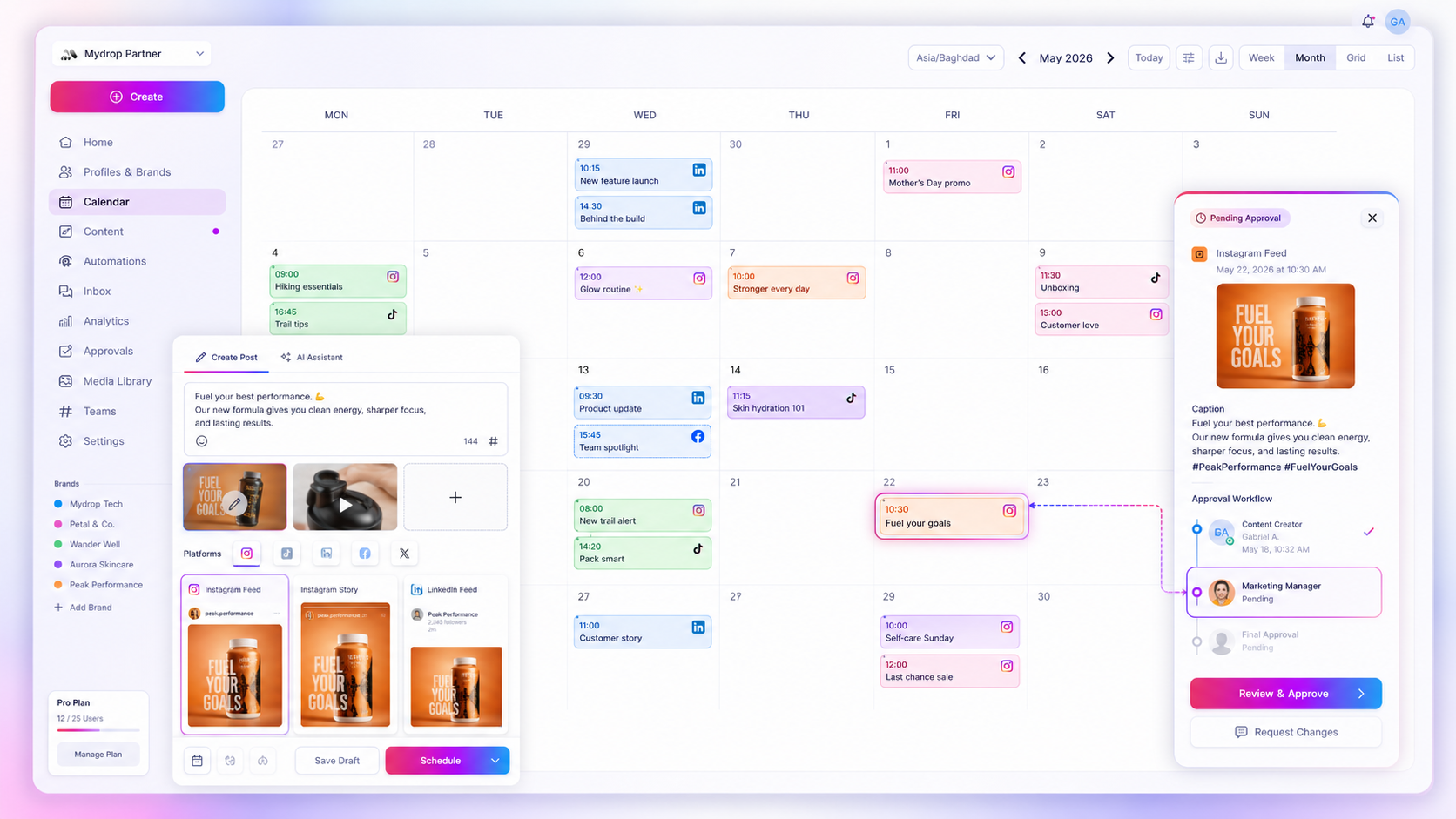
- The Calendar Gap: Open your main editorial calendar. Is there any space to see a high-level strategic note without clicking into a specific post or task?
If you find that vital context is living in separate documents or chat threads, you have a capture surface gap. To fix this immediately, create a "Strategy Anchor" note in your Mydrop workspace. Pin it to your Home dashboard or keep it visible near your Calendar view.
Workflow check: If a strategic insight-like a brand voice shift or a campaign objective-doesn't live within one click of where the work is happening, it doesn't exist.
By centralizing these insights into lightweight sticky notes, you stop treating strategy as a background task and start treating it as the primary interface for your creative work. It’s the difference between hunting for information and having it guide you as you build.
When to stop diagnosing and change the workflow
There is a point where auditing your process becomes a form of procrastination. You know you are at that point when your team starts debating how to track strategy more than they debate the strategy itself.
If you have spent more than two consecutive planning meetings discussing "process optimization" rather than campaign performance, stop diagnosing. You have enough data. The problem isn't your tools or your metrics; it is the friction of transition.
Teams with high coordination debt often confuse "being busy" with "being aligned." We see this across hundreds of brand profiles: the team is working hard, but they are working on slightly different versions of the truth. When you notice that two team members have different assumptions about a post's goal, that is your signal to stop the planning cycle and shift to a note-first culture.
- Move to note-first when: You find yourself re-explaining the "why" of a campaign more than once in a single week.
- Move to note-first when: Approvals stall because the stakeholder lacks the context that the creative team took for granted.
- Move to note-first when: Your "Recent notes" in the Mydrop Home board start looking like a map of your team’s actual focus, not just a list of static reminders.
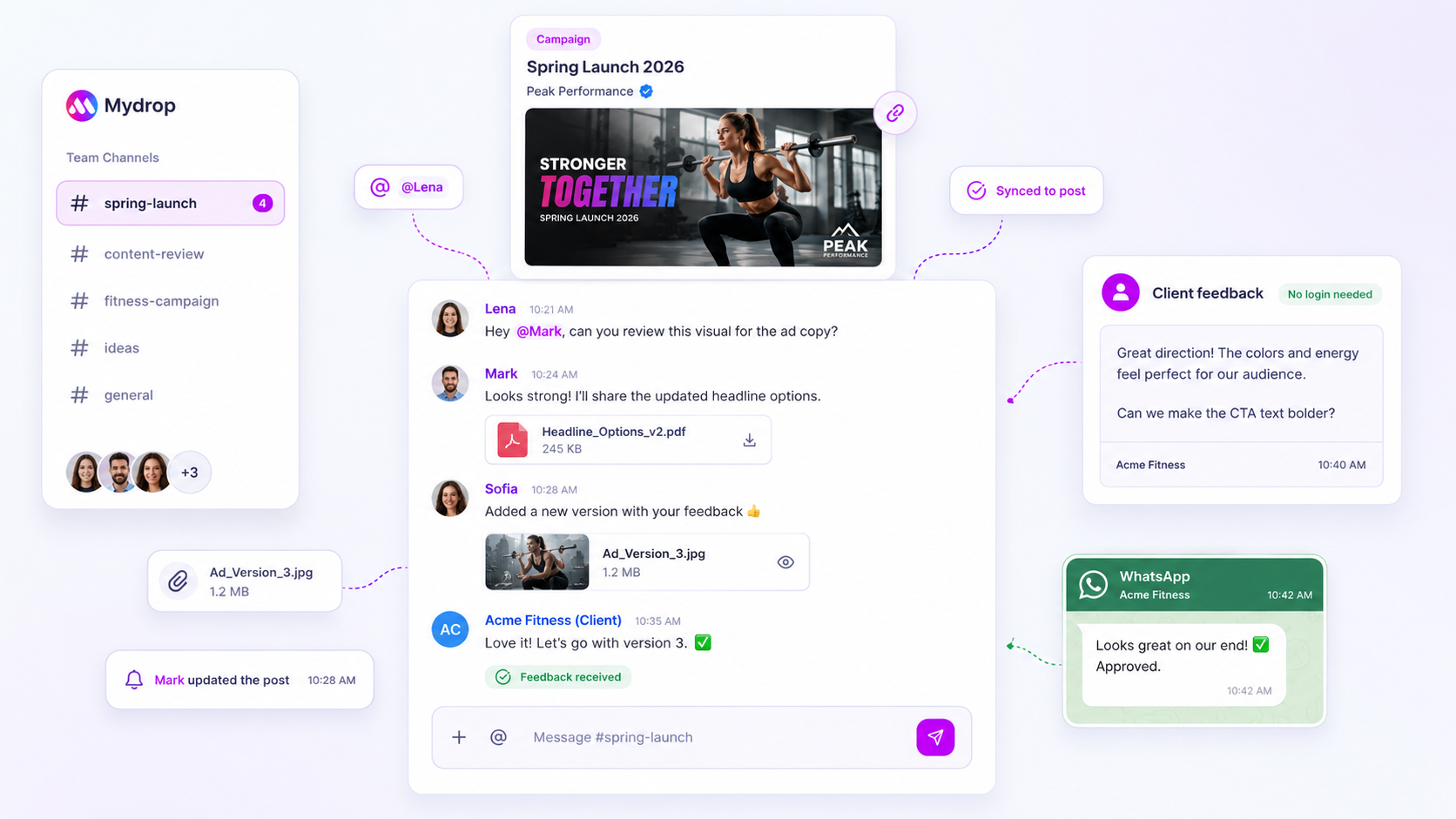
At Mydrop, we believe that the best teams don't just manage posts-they manage the conversation surrounding them. When you make those sticky, lightweight notes the first thing you see when you open your workspace, you are building a habit of continuous context.
Conclusion
Fragmented strategy is a tax you pay for ignoring the small gaps in your workflow. It starts with a forgotten DM, turns into a vague campaign, and eventually results in a team that is running fast but in the wrong direction.
You do not need a massive overhaul or a new, complex project management suite to fix this. You need a better capture surface. By moving your strategic insights out of buried threads and into visible, accessible notes right alongside your calendar, you turn "coordination debt" into coordination speed.
The goal is to reach a state where anyone on your team can open their dashboard, see the strategic anchor notes, and immediately understand the mission for the week. Once that happens, you stop chasing the "why" and start spending your energy on the only thing that matters: creating great work that actually lands.