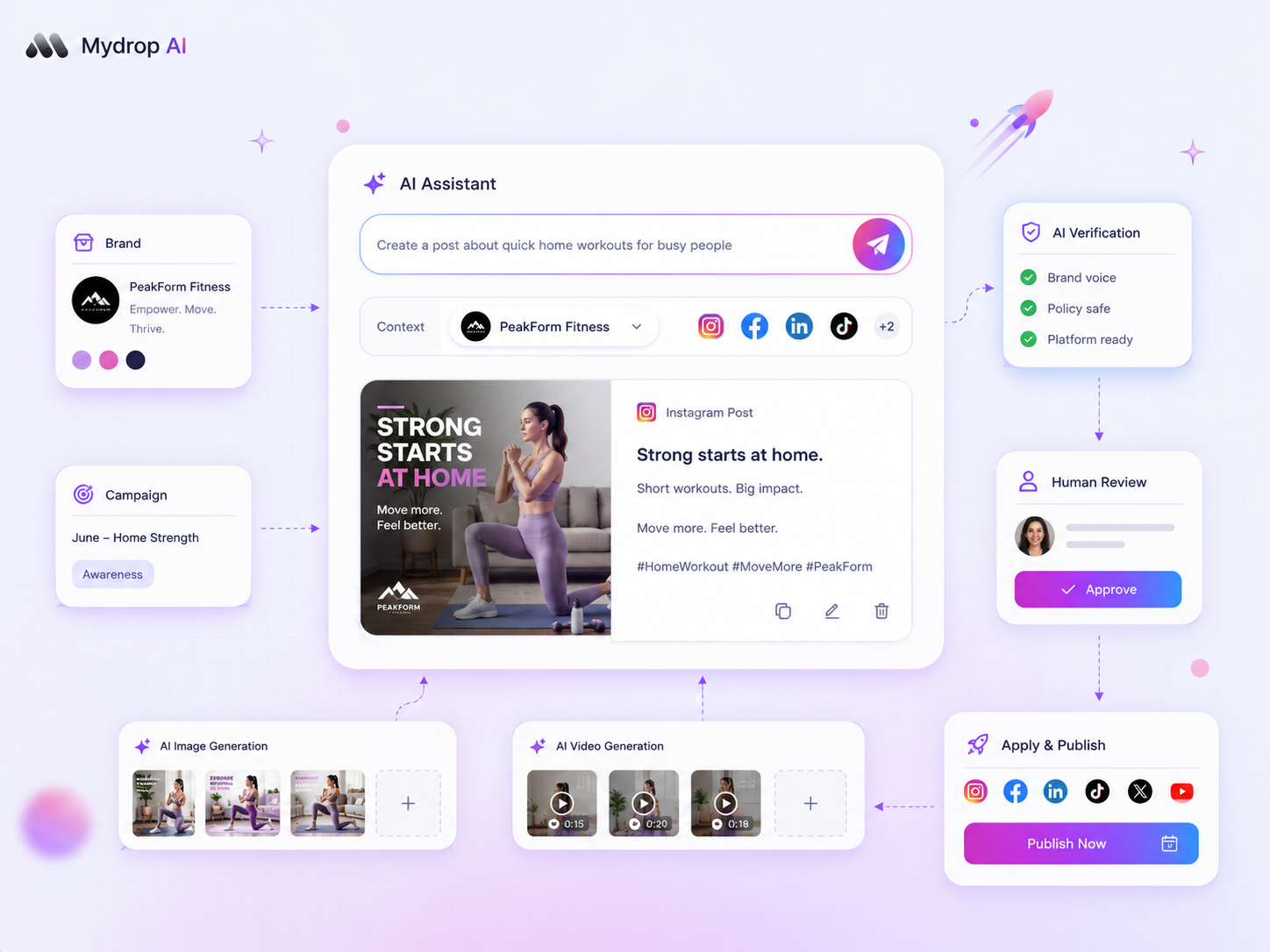
Campaign delays almost always trace back to coordination debt rather than a lack of creative talent. If your social team is burning time hunting for the latest logo, or your AI tools are hallucinating a tone that contradicts the current brief, you aren't suffering from a creative rut. You are fighting a fragmented asset infrastructure where your brand identity is stuck in a static folder while your publishing tools are busy working from stale, disconnected data.
We get it-this work is messy. Between managing agency handoffs, shifting social trends, and the sheer volume of content, keeping every channel aligned can feel like trying to steer a massive cargo ship while you are still welding the hull. It is exhausting, and frankly, no one enjoys chasing down brand approvals at 6:00 p.m. on a Friday. But the good news is that this is a fixable operational problem, not a sign of a failing team.
What changed before the numbers moved

You likely noticed the drift long before it hit your metrics. Maybe it started when a junior designer pulled an outdated logo from a shared drive, or perhaps it was the moment the reporting dashboard began displaying a color palette from a rebrand that officially concluded six months ago. These aren't just minor glitches; they are warning signs that your brand assets have become "orphaned."
In an enterprise environment, assets live in the shadows when they are managed as static files rather than living data. When your brand identity-your colors, fonts, tone, and logos-is decoupled from the tools where the actual work happens, you create an inevitable distribution bottleneck. The design team has the "source of truth," but your AI content generators, publishing schedulers, and reporting suites are left guessing or, worse, pulling from stale local caches.
At Mydrop, we often see this across teams managing dozens of brand profiles. When you have multiple markets and stakeholders, the manual effort required to keep every tool updated creates a massive overhead. The silent drift happens when the "official" brand version updates, but the connection to your execution platform is broken.
Common mistake: Treating a
Brand Folderas a storage unit rather than a live sync service. If your assets require a manual export-and-upload step every time a hex code changes, your system is already broken.
To get ahead of this, audit your infrastructure with this simple diagnostic:
| Failure Mode | Symptoms | Operational Risk |
|---|---|---|
| Asset Orphanage | Multiple versions of the "final" logo in use. | Brand inconsistency across channels. |
| Stale Metadata | AI generates content using a deprecated tone. | High revision loops with stakeholders. |
| Fragmented Access | Agencies constantly asking for color hex codes. | Launch delays during campaign peaks. |
If you find yourself manually resending the same brand guidelines to your agency partners or updating color palettes across five different software logins, your team is paying a "coordination tax" on every single post. Most teams don't have a content problem; they have a decision bottleneck caused by their assets not being where the work is.
The failure patterns to check first

When campaign launch dates slip, start by looking at your brand asset lineage. Most teams treat brand assets like a collection of digital knick-knacks scattered across folders, but in reality, your logo files and color palettes are the fuel for your entire publishing engine. If the fuel is contaminated, the engine misfires every single time.
Check for these three classic bottlenecks before you blame the creative team or a platform update.
- The Versioning Trap: Does your team default to
Logo_Final_V2.png? When assets live in static folders rather than a live, managed repository, teams inevitably grab stale files. If a brand has undergone any visual update in the last year, your old assets are likely still lurking in the cache of your publishing tools, waiting to ruin a high-stakes campaign. - The Metadata Drift: Your website might have a fresh aesthetic, but have you refreshed your brand settings? Many teams skip this, meaning every AI-generated caption or automated color-fill is pulling data from a brand identity that effectively ceased to exist months ago.
- Access Fragmentation: If your designers have the master files but your AI content generators and social managers are working from a "best guess" library, you have an infrastructure gap. You need a setup where the brand identity is a living, single source of truth, not a zip file shared over Slack.
The proof that separates signal from noise
It is easy to assume your brand identity is "live" because you have a folder, but proof lies in the output. The fastest way to verify if your brand setup is working is to conduct a Brand Context Audit against your AI-generated content and platform-specific assets.
Use this scorecard to see if your brand infrastructure is actually integrated or just ignored.
| Audit Point | Red Flag | Healthy State |
|---|---|---|
| Color Accuracy | AI content consistently uses off-brand shades. | Palette matches your core groupInfos definitions. |
| Tone Alignment | AI suggests copy that ignores your brand voice. | AI prompts reflect current tone and keywords. |
| Asset Freshness | Link-in-bio pages use outdated logo or icons. | Assets pull from current mediaDocIds references. |
| Profile Membership | Manual updates needed for every new campaign. | Profiles are grouped, updated, and ready by default. |
Operator rule: If your AI tools are hallucinating a brand voice that contradicts your current style guide, stop editing the AI outputs and start editing your
groupInfos. The issue is almost never the prompt engineering; it is the fact that the tool is reading stale brand data.
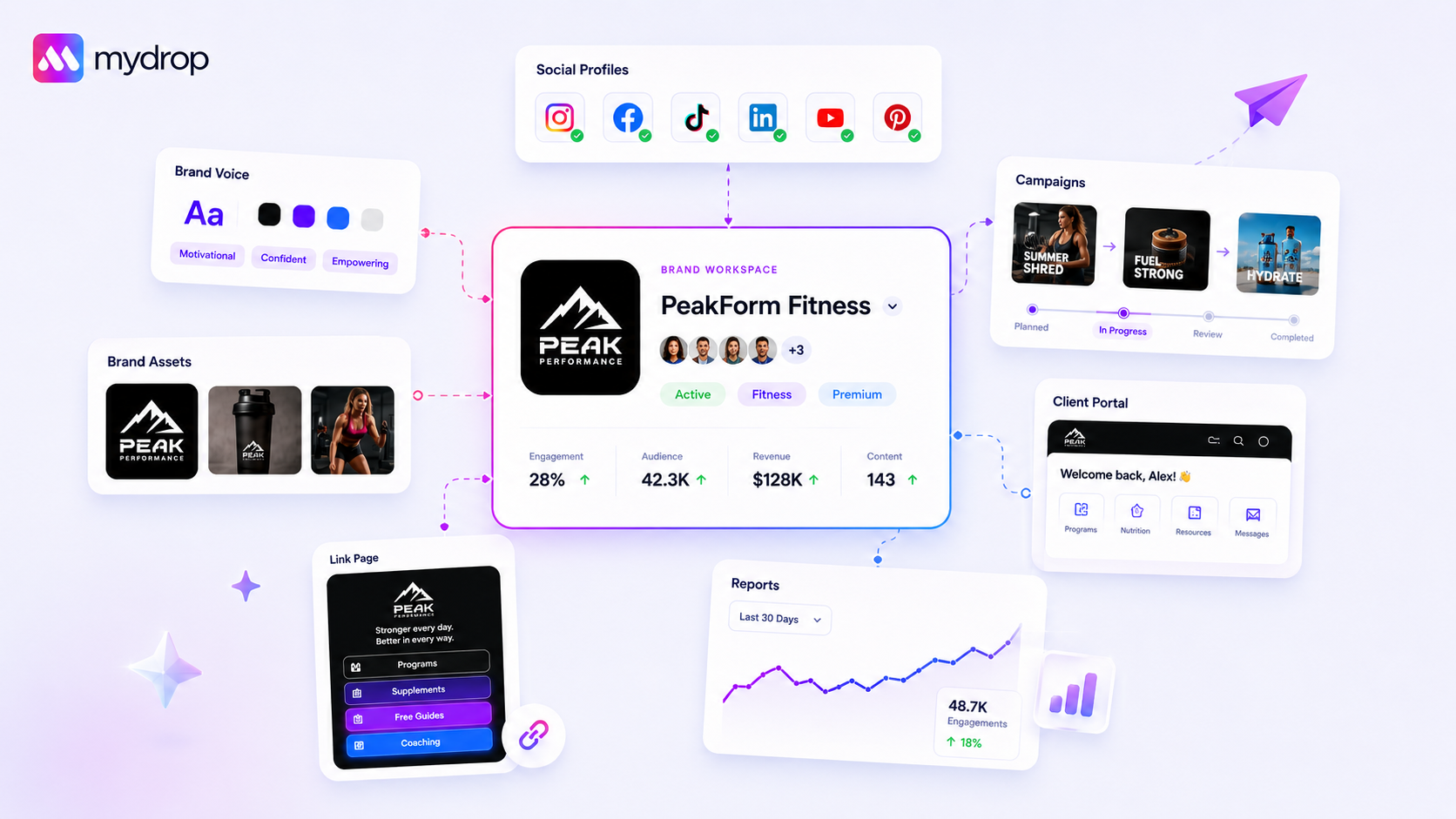
At Mydrop, we see teams struggle when they try to treat "Brand" as a static label. Instead, treat your brand as a dynamic group-a collection of profiles, colors, and intelligence fields that need to be updated in one place to propagate everywhere. If you have to update a hex code in three different tools, you are not managing a brand; you are managing a spreadsheet that has become a crime scene.
Most teams do not have a content problem. They have a coordination debt problem. Fix the source of truth, and the campaign delays usually vanish on their own.
What to fix this week
If you are currently drowning in file-sharing requests, your goal is to transition from Manual Asset Hunting to Centralized Brand Context. Stop treating the brand as a collection of static files living in a shared cloud folder and start treating it as a live repository that your tools can actually read.
Here is a simple 3-step audit to run before Monday.
- Map the Orphans: Identify the three assets you manually attach to every post (like that one specific logo version or a hex code sheet).
- Verify the Source: If an AI tool or a scheduler asked for your brand tone or primary hashtag right now, would it pull the right data, or would it hallucinate based on your last campaign?
- Consolidate: Stop emailing assets. Create a workspace grouping-like Mydrop’s Brand Groups-that anchors your profile IDs to a single source of truth for logos, colors, and media.
Decision check: If a team member has to ask, "Which version of the logo are we using?" you have already lost an hour of work.
When you use a centralized system, you stop being a digital librarian and start being an operator. You want a setup where your AI generation tools, publishing composer, and reporting dashboards all read the same groupInfos and mediaDocIds as your live site. When you update the brand in one place, it should ripple across the entire workflow automatically.
When to stop diagnosing and change the workflow
There is a point where auditing your process becomes a form of procrastination. If you find yourself holding daily syncs just to confirm that everyone is using the correct color palette or that the agency has the current high-res brand folder, you are past the point of diminishing returns.
Most teams do not have a content problem; they have a decision bottleneck.
If you are stuck in a cycle of "fix-and-resend," stop diagnosing. Move to a single source of truth model immediately. A healthy brand setup should feel boring and invisible. If it feels like a high-stakes scavenger hunt, the infrastructure is broken, not the people.
Choosing your path:
| Workflow State | Diagnosis | Action |
|---|---|---|
| Asset Orphanage | Assets live in scattered folders; teams use wrong versions. | Move everything to a unified Brand Group. |
| Manual Sync | You copy-paste hex codes and logos into emails/DMs. | Automate asset delivery via centralized brand metadata. |
| Operational Flow | Tools pull from a live, central source of truth. | Maintain the cadence; audit once a quarter. |
The most dangerous thing you can do is keep trying to "manage better" while using broken, fragmented tools. Trust a system that updates automatically when you change a logo or adjust a tone, rather than relying on human memory or a messy, outdated spreadsheet.
Conclusion
Campaign friction is rarely a failure of creativity; it is a failure of coordination. The teams that launch on time and maintain consistent identities aren't necessarily working harder; they are just working with a stack that treats brand identity as a living piece of data, not a collection of files in a folder.
Audit your asset lineage this week, clean up the orphans, and anchor your profiles to a single, centralized source. Your social team-and your stress levels-will thank you by the time the next campaign hits the wire.