
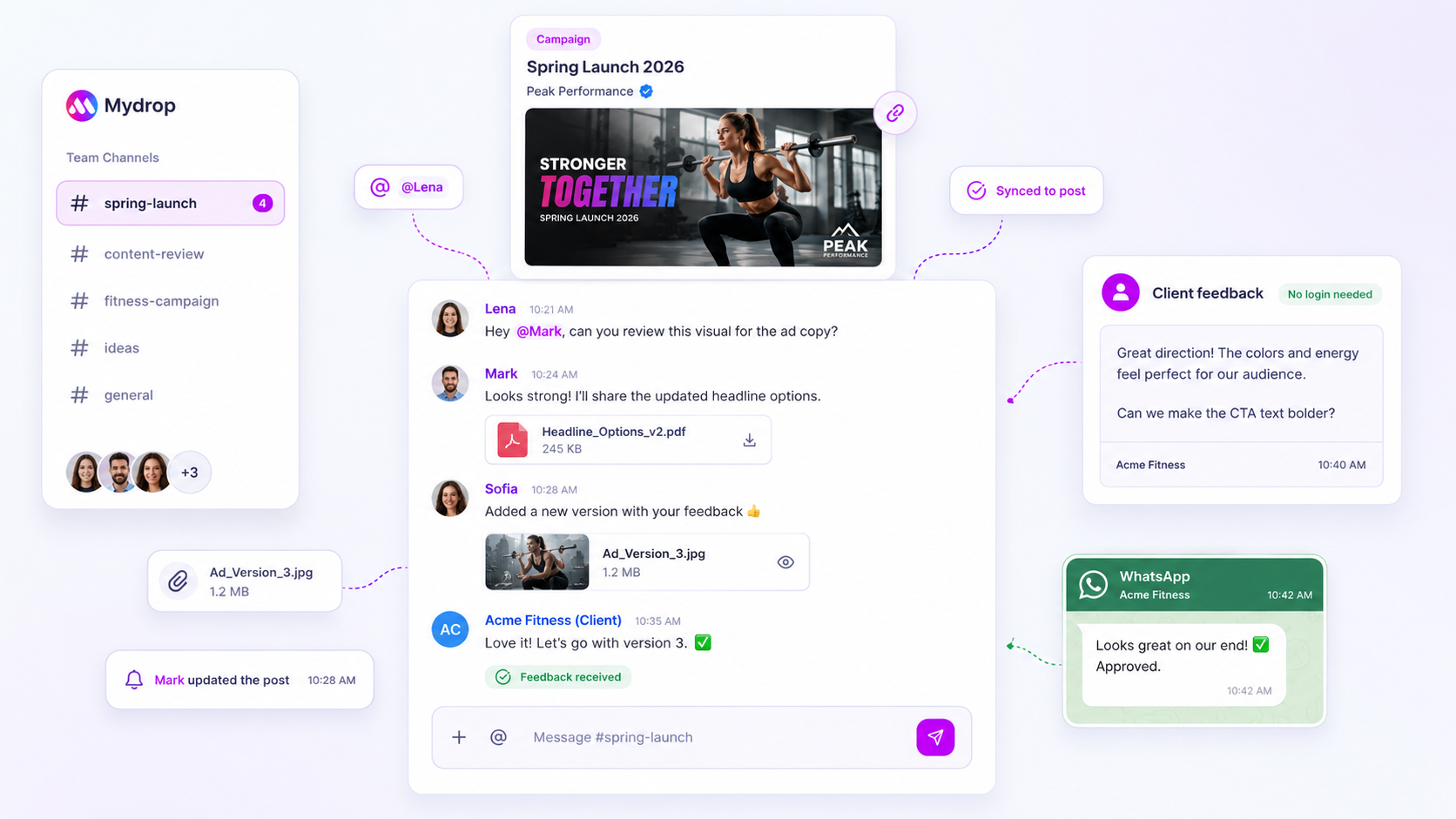
When a client tells you they left a note on a draft but your inbox is empty, the immediate instinct is to blame the technology. But in our experience, the failure is rarely a "glitch"-it is almost always a result of a broken routing architecture where client feedback enters a silo that your team simply isn't plugged into. If you are relying on manual refreshes or "did you see this?" Slack messages to bridge that gap, you are paying a permanent coordination tax that will eventually burn out your best operators. You don't need more focus; you need a more reliable way to ensure that external comments from a portal or approval link automatically fan out to the right internal conversation threads.
It is a uniquely stressful kind of chaos: the deadline is looming, the client thinks they have done their part, and your team is staring at a dashboard that looks perfectly green. We have seen teams lose hours to this mismatch, frantically digging through expired links and missed email alerts.
What changed before the numbers moved

Most teams operating at scale-handling dozens of brands and hundreds of channels-eventually hit a ceiling where manual oversight stops working. When you are moving fast, the difference between a "missed" comment and a "seamless" approval loop isn't just better communication; it is a shift from reactive checking to proactive routing.
In our work at Mydrop, we see this pattern constantly. Teams that manage this well have stopped treating feedback as a destination they have to visit and started treating it as a stream that must be piped into their existing collaboration workflow.
If you are currently diagnosing a feedback gap, start by mapping your infrastructure against this checklist. It separates simple notification settings from more complex structural failures.
| Signal | What it actually means | Action required |
|---|---|---|
| Silent Portal | Client posted a comment, but no one was alerted. | Verify subscription settings for the specific brand portal. |
| Bridging Gap | Comment exists in the portal but not the workspace thread. | Check if the public bridge is correctly linked to your workspace conversation. |
| Ghost Alert | Notification generated, but the recipient never saw it. | Audit notification preferences (email/in-app) for active team members. |
| Stale State | Client used an old link from a previous version of the post. | Ensure token expiration isn't blocking recent feedback entries. |
Operator rule: If a team member has to manually open a draft to check for comments, your routing architecture has failed. Feedback should find the team, not the other way around.
The awkward truth is that most feedback gaps are born when a portal conversation remains trapped in its own isolated state. When that happens, the client feels heard, the team feels ignored, and the project just sits in limbo. The fix isn't more discipline-it is hard-coding the link between your public-facing feedback surfaces and your private, internal workspace conversations.
The failure patterns to check first

When comments go missing, the issue is almost never a "glitch." It is a failure of coordination infrastructure. In our experience, teams dealing with dozens of stakeholders across multiple markets often trip over the same three invisible wires. Before you lose another hour searching your inbox, run these checks to see if your feedback routing is actually connected to the workspace.
1. The Silo Effect Did the client comment in a portal preview that never bridged back to the internal thread? This happens when teams treat the approval surface as a separate document rather than a live conversation relay. If a client posts a message in an external portal but that portal isn't configured to sync into your Mydrop workspace, your team is effectively staring at a blank wall while the client wonders why you haven't responded.
2. The Notification Throttling Trap Is the conversation actually active, but you are just not the one hearing it? Managers often tighten notification settings to avoid inbox fatigue, but they accidentally turn off the "fan-out" alerts for new conversation messages. Check if the conversation has been updated, then verify if your team-level notification settings are inadvertently muting that specific brand's alerts.
3. The Expired Permission Loop Sometimes the "missing" comment is stuck because the client’s session link expired. If they try to leave feedback through a stale approval token, the system might reject the input or, worse, place it in an orphaned state. Always ensure your sharing links are active before diagnosing a routing failure.
The proof that separates signal from noise
Most teams do not have a communication problem; they have a visibility bottleneck. You are likely wasting hours on "checking tax"-manually refreshing screens just to see if a stakeholder finally reacted.
To break this, you need to move from pull-based checking (where you go look for feedback) to push-based alerting (where feedback finds you). Use the scorecard below to audit your current feedback routing and see exactly where you are losing time.
The Feedback Routing Scorecard
| Checkpoint | Signal (Healthy) | Noise (Failure) | Operational Fix |
|---|---|---|---|
| Alert Delivery | Instant in-app/email nudge | Manual refresh of dashboard | Enable conversation fan-out |
| Bridge State | Portal comments link to workspace | Comments trapped in external log | Sync portal to workspace thread |
| Notification Scope | Alerts per conversation | Alerts for every site activity | Pin high-priority brand threads |
| Feedback Loop | Bi-directional chat | Unilateral feedback form | Enable team-client reactions |
Decision check: If your team has to refresh a browser tab to see if a client commented, your workflow has already failed.
If you find yourself in the "Noise" column, stop trying to manage the feedback manually. The goal is to ensure that a comment left on a public preview link lands exactly where your team is already working. At Mydrop, we see teams achieve "closed-loop" status by treating the conversation UI as the single source of truth; when the external portal and the internal workspace share the same conversation state, the checking tax drops to zero.
When feedback is routed correctly, you stop being a manual relay and start being a strategic partner. Stop chasing the "did you see this?" email, and start trusting your routing infrastructure.
What to fix this week
If you are currently chasing feedback in DMs, Slack channels, or buried email threads, start with a clean-slate audit of your routing. It sounds basic, but most missed comments happen because the notification "fan-out" isn't actually reaching the right people in the workspace.
Here is your 15-minute diagnostic checklist to run before the next campaign launch:
- Map the Hand-off: Check if the person responsible for the final polish is actually subscribed to the Conversation thread linked to that specific brand. If they aren't in the loop, the system assumes they don't need to see the update.
- Verify the Bridge: If you use public approval links, test the flow yourself. Submit a fake "suggested edit" from a browser tab where you are not logged in. Does that feedback instantly appear in your workspace conversation? If not, the public-to-private bridge is broken or restricted.
- Audit the "Silent" Users: Review your team's notification settings. If one member has email alerts toggled off for "mention-only," they will never see a comment unless they happen to be staring at the app at the exact right second.
- Clean the Inbox: Ensure no one is using personal email to track feedback. If a client sends feedback to a personal account, it stays trapped there, invisible to the rest of the team.
Workflow check: If a piece of feedback requires a team decision, it is not "real" until it exists inside your shared workspace conversation. Move any external feedback manually into the thread immediately to create an audit trail.
When to stop diagnosing and change the workflow
At some point, you have to admit that the "fix" isn't a new notification setting; it is a change in behavior. If your team is still manually refreshing pages or pinging each other to ask "Did the client see this?", you have a coordination debt problem, not a notification problem.
We often see teams try to patch this by adding more sync meetings or "checkpoint" emails. This is usually the wrong move. Every extra step you add to verify if a comment exists is just another place for that comment to get lost.
Stop the cycle if:
- You spend more than 10 minutes a day just "checking if comments arrived."
- Feedback is coming in through more than three different channels (email, chat, phone, portal).
- Your team members are "owning" specific brands in their heads rather than through the platform.
When you reach this point, you need to force all feedback into a single, automated conduit. In our experience, teams using Mydrop's Conversations bridge avoid this entirely because the portal-to-workspace link means the client's action and the team's notification are mechanically bound together. When the client hits "Submit" in the portal, the notification engine fires by definition. If you can't trust the machine, you'll never trust the process.
Conclusion
The goal of your routing architecture is to make the "chase" unnecessary. You want your team focusing on the quality of the creative work, not playing detective to see if the client dropped a note on slide three.
Build the system so the notifications happen automatically, then spend your energy on the conversation itself. When you stop treating feedback as a scavenger hunt and start treating it as a structured data flow, you get back the one thing every social media leader is desperate for: peace of mind.