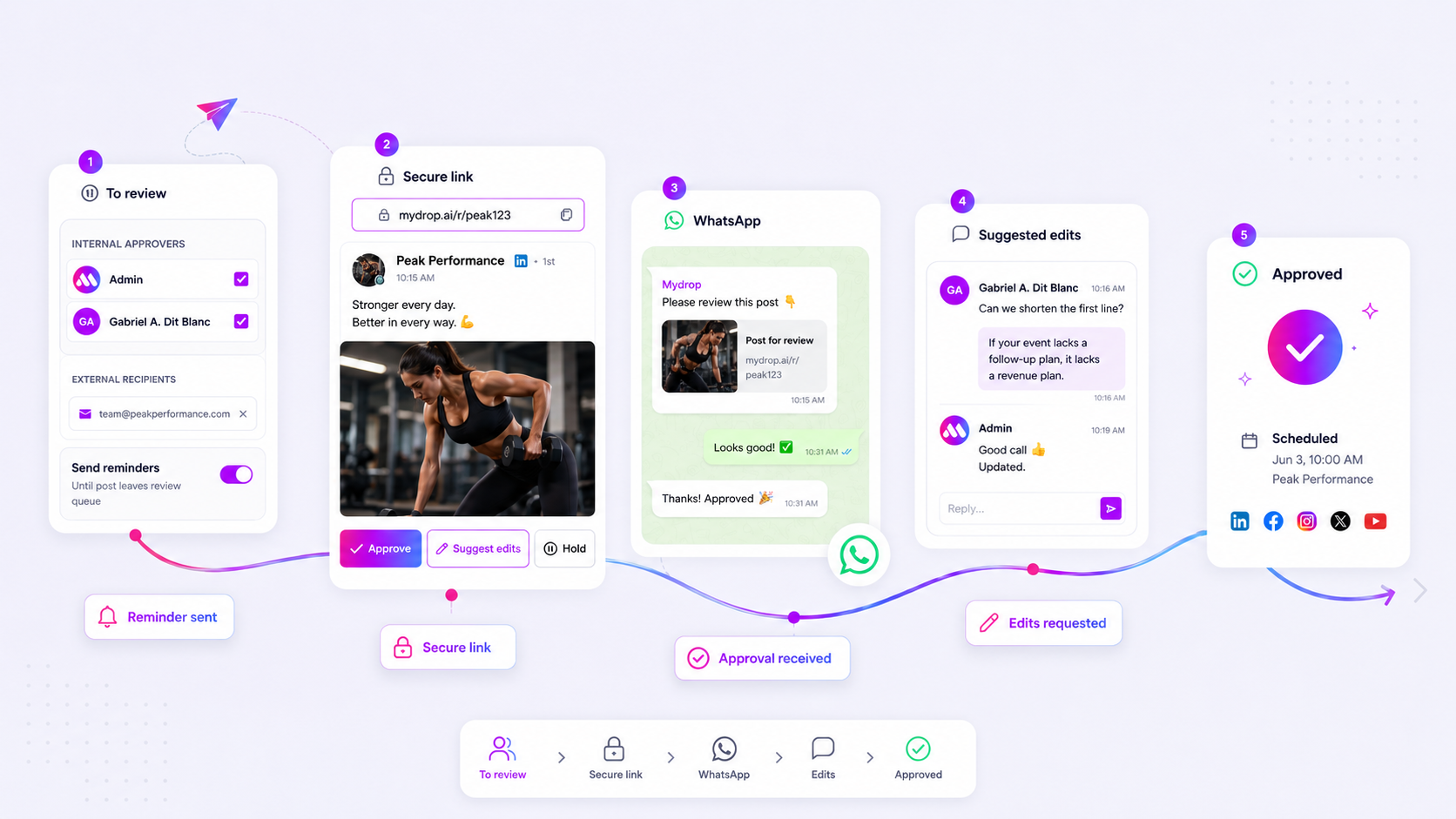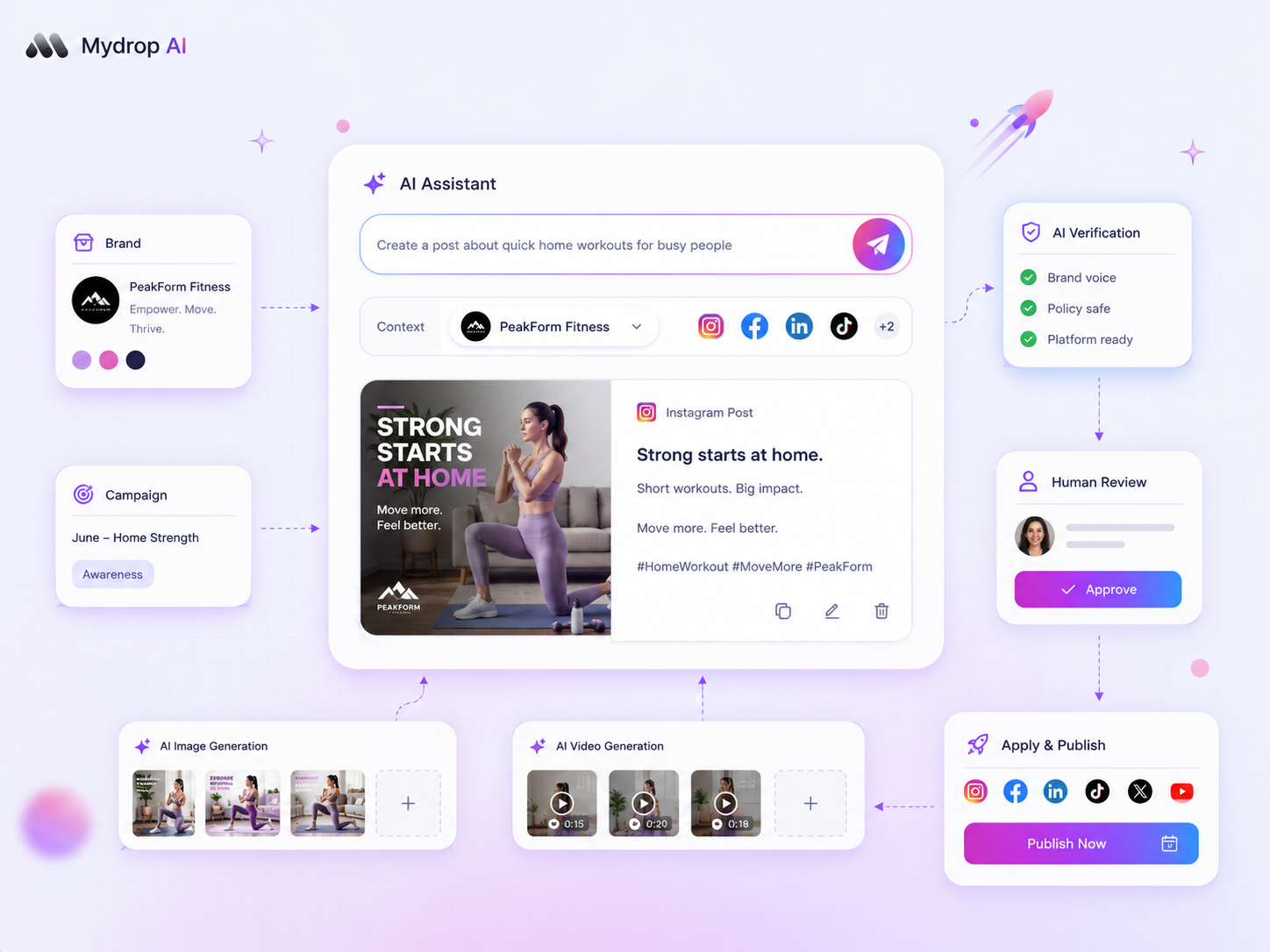
The bottleneck in your social media workflow is rarely the AI’s inability to write; it is the absence of a formal verification layer between "generated output" and "published post." When you treat AI as a junior copywriter who never learns, you stop saving time and start outsourcing your technical work to an algorithm. You can turn your AI assistant into a reliable partner by shifting from a "generate-and-post" habit to a "generate-verify-apply" protocol. This framework forces you to treat AI artifacts as raw material that must be checked against your brand standards before they ever enter your scheduler.
We get it. You are buried in draft requests, and the promise of "AI speed" feels like it should be reclaiming your afternoon. Instead, you are likely spending more time fixing broken formatting and off-brand tone than you would have spent writing the post yourself. It is messy, and when the "magic" shortcut leads directly to a dead-end, the frustration is real. But you are not alone; this is a challenge we see across brands and agencies managing hundreds of profiles. The fix starts by moving decisions closer to the work.
Where the handoff is actually breaking

The trouble usually begins the moment you click "generate." If you are copy-pasting raw text from an AI chat directly into your management dashboard, you are effectively flying blind. You are skipping the critical quality gate that keeps your brand presence consistent.
In our experience, most teams struggle because they lack a consistent verification gate. The AI generates a draft, someone skims it, and it gets pushed into the queue. When the legal team or a brand lead finally sees it three days later, they find issues that force a total rewrite. This is where your approval cycle inflates from minutes into days.
The Blind-Posting Assessment
Take a look at your current process. If you answer "Yes" to two or more of these, you are likely hitting a wall:
| Indicator | Why it signals a break |
|---|---|
| Manual copy-paste | You move text between windows, losing formatting and context metadata. |
| No source check | You don't verify the draft against your current media assets or campaign goals. |
| Feedback loops | Approvers ask for changes that require you to go back to the AI, not just edit the file. |
| Format friction | The AI output consistently ignores platform-specific limits or character counts. |
When you treat AI output as a finished file rather than a structured block, you create a disconnect that ripples through your entire team. The goal is to bring the verification step into the same screen where the draft is generated. By using a workflow that validates the post against your workspace-aware context-such as your actual brand assets, media library, and platform rules-before the "apply" button is ever clicked, you stop the rework before it starts.
This is the difference between hoping the post is right and knowing it is ready. If the agent can provide a verification report alongside the draft, your approvers can focus on strategy rather than chasing typos or checking character limits at 6 p.m. on a Friday.
The coordination debt checklist

If you feel like your team is sprinting on a treadmill, you likely have more than just a busy calendar. We see this pattern across brands managing dozens of channels-where the volume of drafts is high, but the actual output that clears internal standards remains stuck.
You are likely accumulating operational drag if you recognize these symptoms:
| Symptom | What it signals |
|---|---|
| Double-Handling | You generate a draft in an AI chat, then manually copy-paste it into a separate document or email for review. |
| Context Switching | Reviewers need to open three different tabs (brand guidelines, media assets, chat logs) just to verify one caption. |
| Feedback Latency | The gap between "AI generates draft" and "Manager approves post" exceeds 24 hours. |
| Version Drift | The final posted version looks nothing like the original strategy because it was modified in a siloed editor. |
When your team spends more time formatting AI text to look like your brand than they would have spent writing the initial concept, your workflow has inverted. The AI is now the one creating work for you, rather than the other way around.
Operator rule: If your review process requires a "manual patch" to fix the tone, formatting, or asset placement for every single post, you are not scaling. You are just manually editing an automated mess.
How to move decisions closer to the work
The most efficient teams stop treating AI output as a finished product. Instead, they treat it as an unverified artifact that needs to be brought into their native workspace environment before anyone clicks publish.
At Mydrop, we see the best results when teams adopt a generate-verify-apply protocol. This moves the decision-making point directly into the workflow where the post is built, rather than keeping it locked in a separate chat thread or email chain.
Follow this verification scorecard for every draft before it touches your live queue:
- Tone Audit: Does the copy align with the specific brand persona stored in your workspace, or is it using generic "AI-speak"?
- Asset Check: Are the media files referenced (images, videos, or link-in-bio assets) pulled directly from your library?
- Platform Specs: Does the character count and format actually match the target channel requirements?
- Strategic Guardrail: Does the post serve one of your primary campaign goals, or is it just filler content?
By using a dedicated verification route, you turn AI output into a structured reviewable object. In our experience, this shift is the difference between a team that is constantly firefighting compliance issues and a team that maintains high output without the stress of manual oversight.
Stop chasing approvals in fragmented tools. When you build a direct line from your AI assistant to your verified workspace objects, the review becomes a simple "approve" or "reject" choice rather than a scavenger hunt for brand consistency. The goal is to make the "right" version of the post the easiest one to publish.
The roles and rules that reduce rework
Stop treating every AI draft as a final submission. Instead, assign clear ownership to the person who actually understands the campaign goals, and give them a defined set of rules to check before anything hits your scheduling queue.
When one person generates a draft and another-who hasn't seen the prompt or the strategy-is tasked with reviewing it, you end up with a game of telephone where the details get warped.
Decision check: The person who prompts the AI owns the initial polish. If they don't have time to verify it against the brand guidelines, the AI output shouldn't be considered a draft at all.
This creates a high-standard handoff. We have seen teams implement a simple Verification Scorecard to standardize this handoff. It stops the "this feels wrong" feedback loop and replaces it with objective criteria.
| Checkpoint | What you are actually looking for |
|---|---|
| Tone Match | Does the voice align with our quarterly brand guidelines? |
| Asset Check | Does the suggested media exist in our library or does it need a new shoot? |
| Platform Fit | Did the AI write a LinkedIn-length hook for an Instagram caption? |
| KPI Link | Does the final CTA actually point to a high-intent landing page? |
If a draft fails any of these, it goes back to the prompt stage or gets manually corrected before it even enters your formal approval flow.
The weekly habit that keeps the system honest
You cannot fix a broken process with a once-a-quarter audit. You need a weekly cadence that forces you to look at the work that actually went live compared to what the AI suggested.
Every Friday, block 30 minutes for a Post-Mortem Review. Look at the top five and bottom five performers from the week. If an AI-assisted draft underperformed, trace it back. Did the AI make an assumption about your audience that you didn't catch? Was the image generated without checking your actual brand aesthetic?
At Mydrop, we often see teams use the Verification Route to save these AI outputs as structured drafts within the workspace. By keeping the draft in the system, you aren't just copy-pasting text; you are building a repository of "validated" styles that the AI can learn from over time. You are effectively training your team’s collective intelligence rather than just churning through prompts.
Conclusion
The goal isn't to get rid of AI; it's to get rid of the messy, manual labor that happens because you are using it like a glorified notepad. You are a professional team with real reputations and complex brand constraints. You deserve a workflow that respects your time and protects your output.
By moving your process from "generate-and-post" to "generate-verify-apply," you transform your social media operation into a predictable, high-output machine. The next time you feel the pressure of a looming deadline, don't just ask for more content. Ask for a verified draft, check it against your brand, and keep your standards exactly where they belong: at the top.