
Stop manually appending UTMs to every post. If your team spends more time reconciling spreadsheet rows than analyzing performance, you are not measuring ROI; you are performing data entry. True measurement starts by moving tracking configuration upstream into the campaign creation phase, ensuring every asset, automation, and post carries the same identity from day one.
We have all been in the "multi-brand shuffle," where every social manager on your team has their own naming convention and your analytics dashboard looks like a mosaic of mismatched data. It is messy, prone to human error, and frankly, the quiet killer of your strategy. When you let teams define their own parameters in the final publishing step, you are not empowering them-you are siloing your own data, and that coordination debt will eventually bury your reporting.
The decision each metric should trigger

Most enterprise social teams suffer from "data obesity." You have access to thousands of data points, but you lack the filter to know which ones actually dictate the next move. When we see teams struggling to report ROI across five or ten brands, it is usually because they are measuring activity rather than impact.
A metric is only useful if it forces a binary decision: double down on this tactic, or kill it immediately.
If a specific campaign metric does not lead to one of these three actions, stop tracking it:
| Decision Rule | Trigger Metric | Next Operational Action |
|---|---|---|
| Kill the tactic | CPC > 2x Target |
Reallocate budget to the top 2 performing channels. |
| Double down | Conversion Rate > 5% |
Increase posting frequency by 20% in the active window. |
| Refine the creative | High Reach / Low Click |
Test a different CTA or asset thumb-stop in the next batch. |
We often see teams obsessed with broad "engagement" numbers. While they look nice in a slide deck, they rarely tell you if a campaign is actually working. Engagement is a vanity signal; campaign-specific conversion is a business signal.
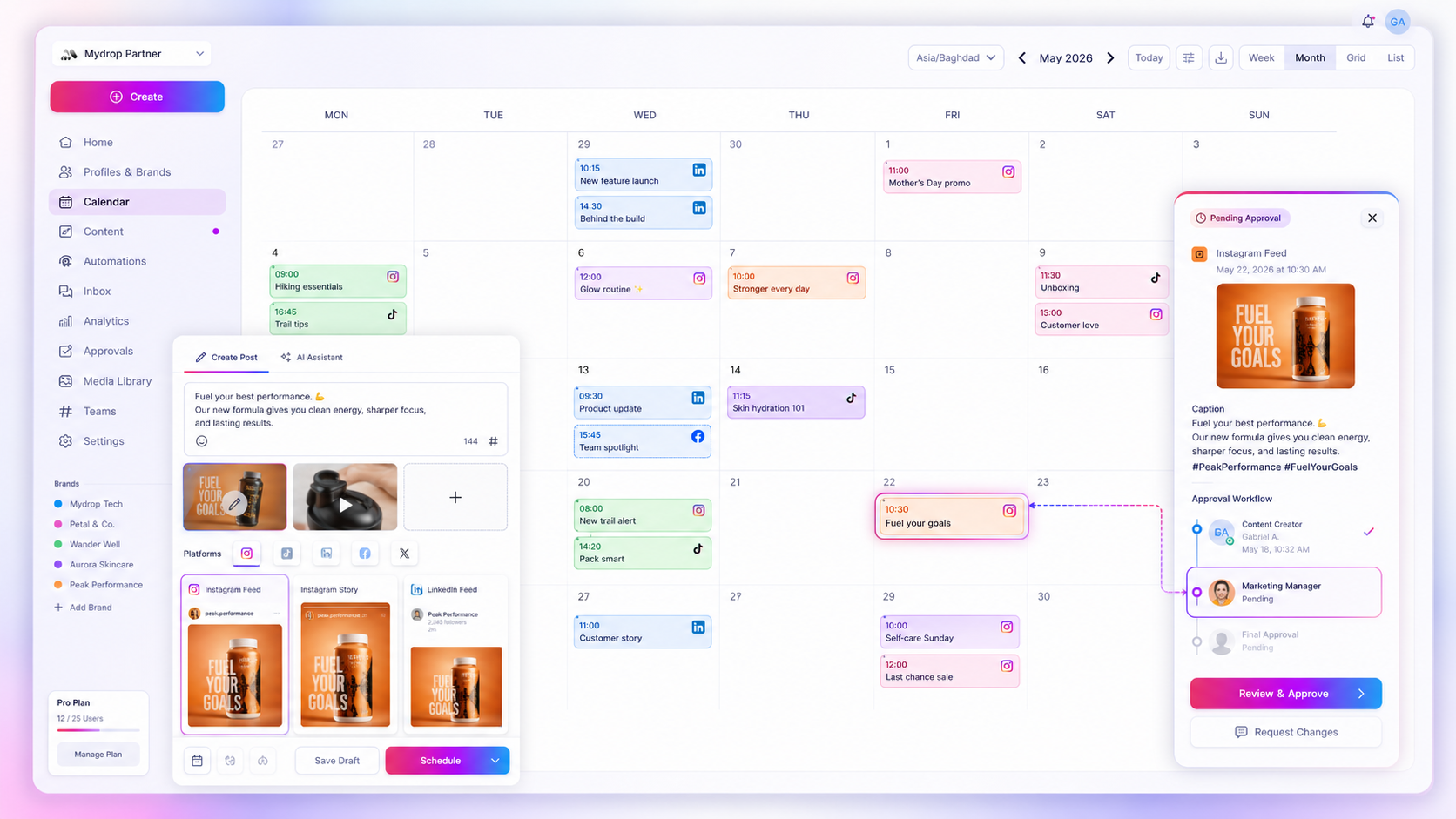
At Mydrop, we see the most successful teams using centralized campaign metadata to enforce this focus. By grouping posts under a defined campaign identity, the platform handles the UTM appending automatically based on the active window. This eliminates the chance that someone mistypes utm_source as social instead of Social or forgets the term entirely.
Operator rule: If you cannot filter your analytics report by a specific launch window or campaign ID in under ten seconds, your data is currently unmanageable.
Before you pull the next month of reports, audit your workflow. If you are still relying on a manual "UTM builder" spreadsheet, you are working harder, not smarter. Standardization is the only way to turn that mountain of noise into a clear signal of revenue drivers.
The scorecard that keeps reporting useful

Stop guessing if your reporting hygiene is up to enterprise standards. If your current workflow relies on someone remembering to manually copy-paste campaign parameters, you have already lost the data integrity war.
We see this across hundreds of brand profiles: the reporting spreadsheet becomes a "crime scene" because different managers interpreted "tracking" in their own unique way. You need a standard.
The Campaign ROI Scorecard
Use this scorecard to audit your team’s current tracking maturity. Score each row from 0 (Non-existent) to 2 (Fully Standardized).
| Capability | 0 - Manual | 1 - Partial | 2 - Standardized |
|---|---|---|---|
| UTM Definition | Ad-hoc per post | Documented in wiki | Forced at creation |
| Link Integrity | Manual entry | Templates | Auto-appended |
| Campaign Window | Indefinite | Estimated end date | Hard lock dates |
| Attribution | Siloed by channel | Shared sheet | Unified metadata |
| Reconciliation | Weekly manual labor | Monthly cleanup | Zero-touch |
Scoring your result:
- 0-3: You are in the danger zone. Your data is likely unreliable, and your team is spending more time on data entry than actual strategy.
- 4-7: You have basic control, but you are still carrying "coordination debt." You are likely missing revenue signals because of human error.
- 8-10: You are operating at enterprise scale. Your systems prevent errors rather than just trying to clean them up after the fact.
At Mydrop, we often see teams jump straight to the "8-10" category by moving the configuration upstream. Instead of asking managers to do the tagging, you define the campaign tracking once-including source, medium, and term-and then lock it into the campaign identity. From that point on, every post, automation output, or bulk job that hits that campaign automatically carries the correct, verified tracking. No memory required. No spreadsheets to reconcile.
What to stop measuring by default
Most dashboards are cluttered with vanity metrics that do not tell you if your campaign is actually working. We have a simple operating principle: If the metric doesn't trigger a "keep," "pivot," or "stop" decision, delete it from your primary view.
Stop treating "Total Engagement" as a North Star. A high engagement count on a post that drives zero traffic is not a success; it is a distraction.
Metrics to ignore vs. metrics to automate
| Metric | Decision Status | Why? |
|---|---|---|
| Total Likes | Ignore | High vanity, zero revenue signal. |
| Follower Growth | Ignore | Too slow to inform campaign pivots. |
| Click-Through-Rate | Automate | Direct intent signal; needs tracking. |
| Conversion Value | Automate | The only signal that justifies the spend. |
| Share Count | Ignore | Great for brand, bad for performance review. |
Decision check: Never report on a metric if you aren't prepared to change your strategy based on the outcome. If a bad week of "likes" doesn't change your creative roadmap, stop spending hours building slides about it.
When you use Mydrop campaigns to isolate your windows, you can filter your analytics to only show the "ongoing" or "finished" period of a specific launch. This is the difference between looking at a muddy, all-time view and seeing exactly which creative assets drove revenue during your active promotion.
When you stop tracking the noise, you start noticing the signals that actually move the needle for your brand portfolio.
How to connect metrics to next actions
Stop treating your analytics dashboard as a historical record. If you are only looking at last month's performance to say "well, that happened," you are wasting the most valuable asset in your stack. Metrics should be decision triggers, not just bar charts.
When your data is correctly categorized through campaign metadata, your next moves become obvious. If a campaign is under-performing while others in the same portfolio soar, you should be able to drill down instantly-not by hunting through folders for original creative, but by filtering your reports for that specific campaign ID.
Workflow check: A metric is only "actionable" if it mandates a specific next step, such as: kill the spend, double the creative budget, or pivot the messaging. If a report doesn't lead to a
Stop,Scale, orIteratedecision, stop tracking it.
When you link your social output to specific Mydrop campaigns, you gain the ability to filter your results by launch windows. You can see, side-by-side, how a "Summer Sale" campaign performed against a "Brand Awareness" push across your entire roster of brands. This isn't just nice to have; it is how you justify your budget to stakeholders who don't care about "likes" but care deeply about efficient revenue drivers.
The review cadence that makes the model stick
Most monthly retrospectives fail because the team spends three hours just cleaning the data before they even discuss the strategy. You need a rhythm that forces the "data entry" into the daily workflow so the "strategy session" can actually be strategic.
We suggest a tiered review cadence to keep your operation clean:
| Cadence | Focus | Primary Goal |
|---|---|---|
| Weekly | Execution Audit | Check that all new posts are correctly assigned to an active Mydrop campaign. |
| Monthly | Performance Trend | Compare campaign ROI across brands; kill what is under-performing. |
| Quarterly | Strategic Pivot | Audit tracking parameters and campaign taxonomy for the next 90 days. |
If you catch a missing campaign assignment during your Weekly Audit, it takes two minutes to fix. If you wait for the Monthly report, you’ve already lost the signal. At Mydrop, we see teams that treat this as a "housekeeping" habit find their rhythm within two cycles. It’s not about policing your team; it’s about making sure their hard work actually shows up in the revenue numbers.
Conclusion
Most social media teams aren't failing because they lack creativity; they are failing because they are buried under the coordination tax of manual, scattered tracking. You can’t optimize what you can’t compare, and you can’t compare what hasn't been standardized.
By shifting your mindset from "publishing posts" to "executing campaigns," you stop being a data janitor and start being a strategist. Move the tracking upstream, automate the UTM assignment, and tighten your review cadence. Your reports will stop being mosaics of mismatched data and start being a clear map of what is actually driving your business forward.
Stop the manual shuffle. Standardize your campaigns, get clear on your signals, and finally spend your time on the work that actually moves the needle.