If your agency’s DNS migration process relies on Slack messages and cross-fingered propagation checks, you are managing a high-stakes guessing game rather than professional infrastructure. A reliable transition requires a shared, objective scorecard that forces consensus on ownership and readiness before a single record is updated. We have all lived through that sudden propagation void: a domain goes dark, the agency channel ignites, and everyone is left frantically trying to remember who held the login credentials last. It is high-stress, entirely avoidable, and usually stems from one root cause: treating technical handoffs as a chore instead of a formal, documented handshake.
By moving your migration steps into a pre-migration scorecard, you transform DNS from a source of anxiety into a routine operational habit. Most teams do not have a technical failure; they have a coordination bottleneck.
Where the handoff is actually breaking

When we look at how agency teams manage domain migrations across hundreds of brand profiles, the breakdown rarely happens at the registrar level. It happens in the "authority vacuum" that opens up between the moment the client hands over a CNAME requirement and the moment the agency confirms the surface is live.
Here is where the wheels usually come off:
- The Credential Shuffle: You are waiting on a client-side IT person to update a record. They are buried in tickets, they do not understand why this specific
CNAMEmatters, and suddenly your launch timeline is blocked by an email chain that moves at the speed of bureaucracy. - The SSL Provisioning Lag: Teams often forget that once DNS is pointed, the world does not instantly secure itself. Waiting for a managed certificate to provision and bind to a domain takes time, and without visibility into the
sslState, teams often panic and think the migration has failed. - Assignment Ambiguity: You have a domain ready, but who is deciding if it points to the new link-in-bio page or the legacy-to-modernized client portal? Without an explicit assignment check, you risk routing traffic to a dead end.
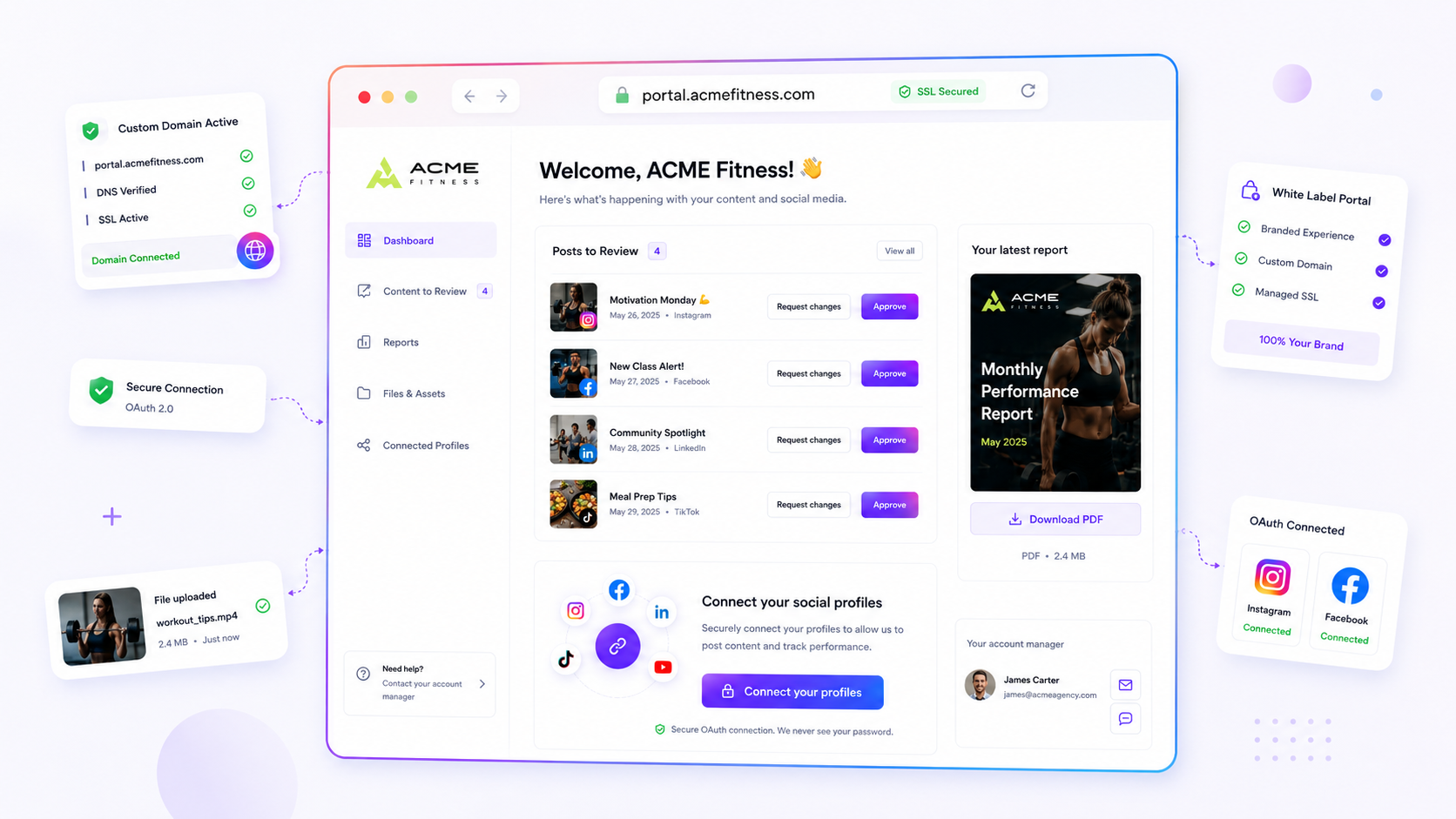
This is what we call Coordination Debt. It accumulates whenever you assume that "having access" is the same as "having alignment." At Mydrop, we see teams bypass this by treating the domain configuration as a product feature. Instead of guessing if a domain is ready, the goal is to create a state where the DNS status and SSL verification are visible to everyone involved, turning a black-box process into an observable, repeatable workflow.
The most successful teams use a simple rule: The 24-Hour Rule. If every stakeholder has not signed off on the readiness of the infrastructure within 24 hours of the planned switch, the migration does not happen. It stops the guessing, preserves your team’s sanity, and keeps the client’s brand presence stable.
The coordination debt checklist
When DNS migrations stall, it is rarely because a record was typed incorrectly. It is because the "handshake" between the person who owns the domain and the person building the landing page was never actually closed. You end up in that classic limbo: the DNS record is updated, but the SSL certificate provisioning is stuck, or the target page isn't ready to receive traffic.
We have found that teams managing dozens of brand profiles avoid this by forcing a status check before the DNS change. If you can't check these four boxes, do not touch the zone file.
| Check Item | Requirement | Why it matters |
|---|---|---|
| Domain Access | Valid login for registrar or DNS provider. | You cannot troubleshoot what you cannot reach. |
| Target Ready | Link-in-bio or portal is configured and saved. | Redirecting traffic to a 404 is an amateur-level incident. |
| SSL Baseline | Certificate provisioning is initialized in your platform. | SSL can take time; you need to see the pending state early. |
| Stakeholder Sync | Written sign-off from the domain owner. | Prevents the "I didn't know we were moving this today" panic. |
Operator rule: If you cannot verify the
sslStateor the routing target in your management dashboard before the DNS change, you are not migrating; you are rolling the dice.
This checklist transforms the migration from a technical "fix-it" task into a project management gate. By treating the domain as a product component-rather than just a string of characters-you shift the work from reactive firefighting to proactive staging.
How to move decisions closer to the work
The most successful agencies we see stop treating DNS like a dark art performed by a single, overwhelmed engineer. Instead, they democratize the process by using a shared source of truth. When the entire team can see that a domain has passed DNS verification but is currently awaiting SSL activation, the guesswork evaporates.
You don't need a massive, cross-functional committee to change a record. You need a dashboard where the "Domain Owner" (the client) and the "Domain Operator" (your team) share the same interface.
In our experience, the friction disappears when you move the decision point closer to the tool. Instead of sending screenshots of DNS settings to a client’s IT lead and waiting for a reply, use the platform's native status signals.
- Intake: The client provides the domain and confirms ownership.
- Setup: You add the domain to your workspace surface, triggering the initial DNS check.
- Visibility: Both sides can see if the configuration is pointing correctly or if there is a conflict.
- Assignment: Once SSL is active and the status is green, you assign the domain to the target (e.g., your new portal).
This loop keeps the "coordination debt" low. You aren't chasing people for updates; you are monitoring a system that tells you exactly when it is safe to proceed. It turns a high-stress, late-night deployment into a non-event. When the domain is finally live, it’s not because the stars aligned-it’s because the scorecard turned green, and the system took care of the heavy lifting.
The roles and rules that reduce rework
The reason domain handovers turn into "fire drills" is almost always a lack of clear agency-client protocol. If the client’s IT lead thinks the agency is handling SSL, and the agency thinks the client’s IT lead has already pointed the CNAME records, you have a classic case of authority vacuum.
You need to clearly separate the two primary roles:
- The Domain Owner (The Agency/Operator): Responsible for the technical configuration inside your management platform, the DNS verification, and the post-migration SSL check.
- The Domain Authority (The Client): Owns the registrar account, holds the MFA keys, and is the only person authorized to make the actual DNS record changes.
Trying to blur these lines to "save time" is how you lose access to a domain at 6 p.m. on a Friday. Instead, establish a simple Domain Handshake:
- Grant Access: The client provides temporary access to the registrar or, ideally, updates the records in your presence.
- Verify & Assign: You use your platform to run a
check DNSagainst the requested host. Only when the status returns as verified do you proceed toassignthe domain to the specific surface. - Confirm Provisioning: The Domain Owner must stay in the loop during the managed SSL lifecycle. If a certificate fails to provision, the Owner acts as the bridge to notify the client IT lead before it becomes a customer-facing 404 error.
Decision check: Never ask a client to "configure the DNS and let us know when it is done." Always provide a direct link to the specific record they need to change and schedule a "verification sync" for 30 minutes after they hit save.
The weekly habit that keeps the system honest
If you manage a portfolio of brand domains, you cannot afford to check SSL status manually. At Mydrop, we see agencies managing hundreds of custom URLs-from bio pages to full client portals-and the ones that never suffer from downtime have one thing in common: they treat domain health as a recurring maintenance task, not a project-based chore.
Build this 15-minute Domain Health Sync into your weekly team cadence:
| Task | Action | Why |
|---|---|---|
| Status Audit | Review the sslState for every active domain document. |
Identifies certificates that failed renewal due to DNS drift. |
| Target Review | Check that domains are still assigned to the correct targetId. |
Prevents a client portal from accidentally routing to a legacy link-in-bio page. |
| Cleanup | Flag domains with sslError or disabled status for immediate manual refresh. |
Stops "silent" outages before they impact traffic. |
When you run this audit, you aren't just looking for broken links; you are looking for configuration drift. It happens when someone on the client side updates their security settings or changes their primary domain structure without telling you. Catching that drift on a Wednesday morning keeps your Friday deployments safe.
Conclusion
DNS migration is rarely a failure of technical skill. It is almost always a failure of process. When you move the responsibility away from "who knows the most about servers" and onto a repeatable, scorecard-driven handshake, you stop playing the guessing game.
Use a pre-migration scorecard to force the hard questions early. Define your roles so that ownership of the registrar isn't confused with ownership of the URL surface. And most importantly, treat your domain infrastructure like a live product that needs weekly monitoring, not a set-it-and-forget-it line item.
You do not need to be a network engineer to run a perfectly smooth migration. You just need to be the person in the room who decides that the "propagation void" is no longer an acceptable part of your agency’s delivery standard. Once you get the handoff right, the rest is just waiting for the propagation to finish-and that is a gap you can finally afford to ignore.