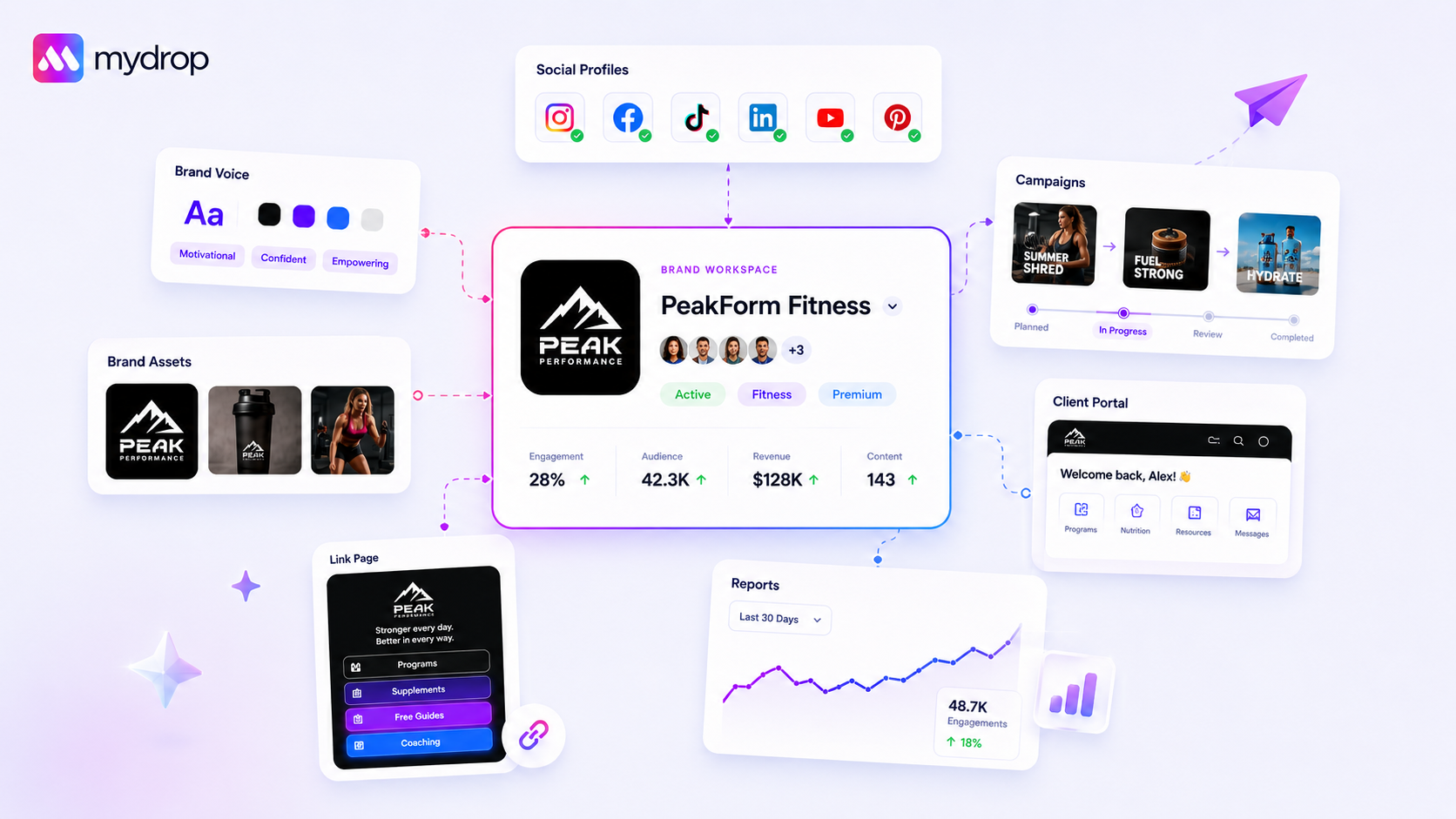
The move to a centralized Media Library becomes non-negotiable the moment your team spends more time searching for the "latest" version of a brand asset than they do creating with it. Centralization isn't about deleting your local folders; it's about decoupling raw storage from your team's access patterns. Once you move from "where the file lives" to "who owns the asset lifecycle," you finally stop the bleeding caused by coordination debt.
We get it. Your desktop is a graveyard of "Final_v3_REAL_final" files, and your team is perpetually one Slack message away from using a low-res logo on a high-stakes campaign. It is messy, it is stressful, and it is costing you billable hours that nobody ever accounts for in the budget. You are not alone-this is the hidden friction that kills velocity across large agencies and multi-brand teams.
The decision teams usually frame too broadly

Most teams view the choice between decentralized folders and a centralized library as an "all or nothing" infrastructure project. They treat it like a massive migration, dreading the manual work of moving thousands of files from local servers or loose drive folders into a single, rigid system. But if you try to put everything in one place, you end up with a digital junk drawer that is just as unnavigable as your old file structure.
The real goal isn't to store every scrap of data in one spot. It is to separate your immutable brand assets from your active work-in-progress.
In our experience, the teams that survive this transition most successfully are the ones that stop obsessing over where files "live" and start focusing on where they are "used." You don't need a pristine archive for the raw, jittery smartphone footage from a shoot last Tuesday. You do need a single, reliable source of truth for your final, approved assets that every designer, social manager, and client stakeholder is legally required to use.
Operator rule: If a file needs to be pulled by five different people across three different departments, it belongs in a centralized library. If it is still being edited, it belongs in a project-specific workspace folder.
Here is how to weigh the transition when your current setup is showing its age:
| Diagnostic Trigger | Folder-Based (Decentralized) | Mydrop Library (Centralized) |
|---|---|---|
| Search Time | Minutes (searching emails/Slack) | Seconds (metadata filter) |
| Version Control | Manual (File renaming) | Automated (Overwrite/Reference) |
| Client Access | Emailing zips/links | Instant shared folder access |
| Compliance Risk | High (outdated assets used) | Low (central asset management) |
When you stop trying to centralize your entire creative history and only focus on the assets that actually touch your production pipeline, the project stops being a massive technical hurdle and starts being a repeatable operating habit.
What should stay manual and what can move faster
The biggest mistake teams make when shifting to a centralized Media Library is trying to shove everything into it. If you force every raw, half-baked, 5GB scratch file into a governed library, you create a new kind of mess: digital clutter that chokes your real assets.
Think of your workspace like a professional kitchen. You need a dedicated, sterile prep station for your core ingredients-the logos, brand-approved hero images, and recurring templates that everyone needs daily. That is your centralized library. But you do not keep the empty produce crates or the potato peels on the prep station. Those belong in the back of the house, in project-specific folders.
Keep your WIP-raw footage, experimental edits, and one-off project files-in local folders. Let your designers and creators do their "messy" work there. Only move the immutable assets to the central library once they are approved and ready for team-wide use. This distinction saves your team from having to sort through three dozen versions of a file just to find the one that is actually ready to publish.
Decision check: If an asset requires a signature or an approval, it is not ready for the library. If an asset is a finished, ready-to-use component, it stays in the library. Never mix the two.
The tradeoff matrix
It is tempting to think that keeping everything in a giant, shared folder structure is "organized enough." But when you scale to dozens of stakeholders and hundreds of assets, that "system" almost always fractures.
Here is how the old way compares to a truly centralized library workflow, mapped by the friction points that actually hurt your team.
| Feature | Folder-Based (Decentralized) | Mydrop Media Library (Centralized) |
|---|---|---|
| Retrieval Speed | High search fatigue (hunting through subfolders) | Instant (tag-based search & filter) |
| Version Safety | Low (easy to overwrite or delete by mistake) | High (governed uploads & reference awareness) |
| Client Transfer | Manual (zipping, emailing, hoping it downloads) | One-click (folder-level zip exports) |
| Metadata | Non-existent (relies on file names like FINAL_V2.png) |
Built-in (descriptions, usage tracking, status) |
| Coordination Debt | High (bottlenecks for every request) | Low (self-service access for approved users) |
If your team is currently spending more than ten minutes a day hunting for a specific file, you have outgrown folder-based storage. That is not a failure of your team; it is a signal that your operating system needs an upgrade.
Most teams do not have a content problem. They have a decision bottleneck. When you centralize, you are not just organizing files; you are choosing to prioritize your team's time over the perceived security of "owning" every raw file in a silo. Move the finished assets to a library that makes them discoverable, and leave the mess for the creators to solve in their own sandbox.
How to pilot the workflow safely
You do not need to drop everything and migrate ten terabytes of creative history over a weekend. That is how you break things, stress out your team, and end up with a folder structure that nobody understands. Instead, treat centralization like a controlled move into a new house. You do not bring the junk from the garage.
Start by testing the transition with a single, high-stakes brand or a single campaign cycle. Use this pilot to see which assets actually need to live in the library and which ones were just taking up space in your local drive.
- Define your core: Identify only the "golden assets"-the approved logos, fonts, brand guidelines, and high-performance templates that everyone uses daily.
- Clean as you go: Do not move the "Final_v3_REAL_final" files. If you cannot identify the source of truth, archive the messy folder offline and start fresh with the source file in Mydrop.
- Assign ownership: Pick one lead who is responsible for the library's health. Their job is not just to upload, but to tag and organize so others can actually find what they need.
- Audit the links: Before deleting local folders, check if your active posts or reports are still pulling from those paths. Mydrop maintains references between your media and your social calendar, so moving files inside the platform is generally safe, but verifying your active campaigns prevents those dreaded broken image icons.
The operating rule to keep
When you finally flip the switch, you need a simple mantra to prevent the "folder-jungle" from regrowing.
Workflow check: If an asset is intended for reuse by more than one person or across more than one campaign, it belongs in the library. If it is a raw working file destined for the trash or a personal experiment, keep it on your local machine.
This distinction is what keeps your team fast. When your designers, copywriters, and social managers know exactly where the "approved" folder starts and the "experimental" workspace ends, you stop wasting time playing detective. The goal is not to police every file; it is to make the right choice the easiest one to make.
Conclusion
At the end of the day, centralizing your media is really about buying back your team's mental bandwidth. You are not just organizing files; you are removing the friction that makes social media management feel like a constant, chaotic scramble.
When you shift from hunting for assets to simply using them, you spend more time on the work that actually moves the needle-strategy, creative, and engagement-rather than administrative maintenance. If your team is currently spending their mornings chasing links and their evenings fixing version errors, the chaos isn't a byproduct of growth. It is a signal that your current operating system has reached its limit.
Stop managing the mess. Clean it up once, set a clear boundary, and give your team a source of truth that actually works. Once the infrastructure is sound, you will be amazed at how much faster your team can move without all that coordination debt dragging them down.