
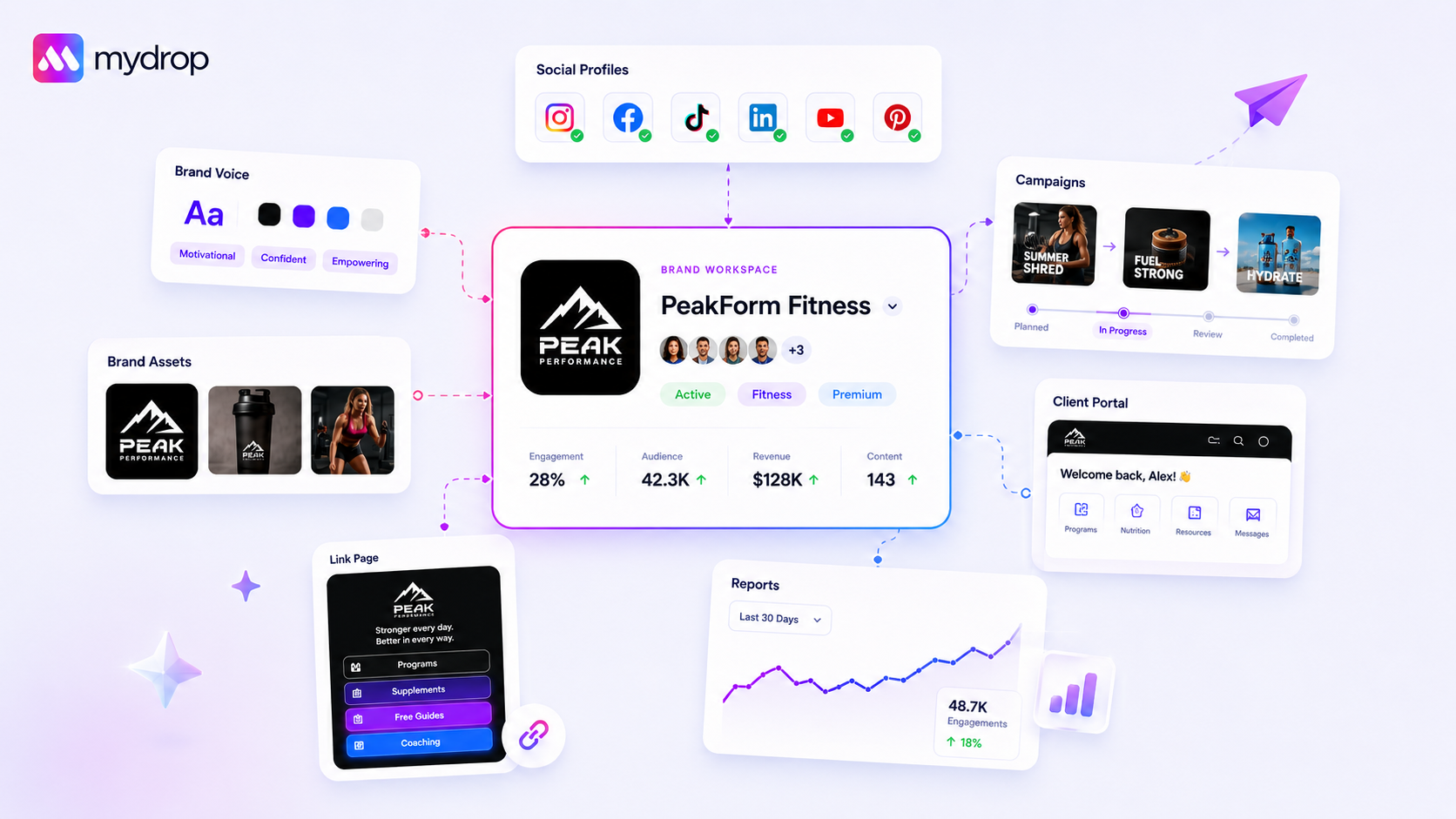
The most secure way to connect client social accounts is to utilize a dedicated brand portal that triggers a native OAuth flow. Instead of collecting credentials, you provide a secure link where the client logs into their own account and approves the permissions directly. This generates a secure API token for your team without a single password ever changing hands or being stored in a spreadsheet. By decoupling authorization from identity, you eliminate the need for 2FA chasing and remove the massive liability of holding onto a client's private login data.
We have all been there: the 8 p.m. text to a busy CMO asking for a "suspicious login" code, or the frantic search through a shared document for a password that was changed three months ago. It is messy, it is unprofessional, and it creates a "coordination tax" that stalls every campaign before it even launches. No one enjoys chasing approvals at the last minute just because a session expired.
The hidden truth is that asking for a password is not just a security risk; it is a sign of a low-maturity operation. High-performing agencies and enterprise teams do not want access to the account; they want the permission to publish. If you are still asking for logins, you are assuming unnecessary liability for every security breach the client might have.
The Friction-to-Flow Comparison
| Step | The Manual Way (Identity-Based) | The Portal Way (Token-Based) |
|---|---|---|
| Request | Ask for username/password via email. | Send a secure portal link. |
| Security | Password stored in a doc/spreadsheet. | No credentials ever shared. |
| Verification | Trigger 2FA; call client for the code. | Client logs in privately. |
| Liability | High: You "own" their identity. | Zero: You only own a token. |
| Session | Frequently breaks; requires re-login. | Tokens are refreshed via OAuth. |
| Outcome | 7 steps; 48-hour coordination debt. | 2 steps; 5-minute handshake. |
The decision teams usually frame too broadly

In our experience, teams usually start by asking the wrong question: "How do we get into the client's account?" This framing assumes you need to be "inside" their private digital space to do your job. It treats social media management like borrow-the-keys house sitting when it should be treated like a professional utility connection.
The right question is: "How do we get a valid publishing token?"
When you focus on the token rather than the identity, the workflow changes completely. You stop worrying about "Mother's Maiden Name" or what happens if the client changes their personal password on a Sunday. At Mydrop, we have seen teams managing hundreds of brand profiles move away from the "identity trap" by using a public brand portal. This allows the client to authorize the connection themselves. They see exactly which permissions they are granting, they click "Approve," and your dashboard is instantly populated with the profiles you need. It turns a high-friction request into a professional technical handshake.
What should stay manual and what can move faster

In high-stakes social operations, we often confuse "collaboration" with "data entry." You want to spend your time with a client discussing the quarterly strategy or the nuance of a high-budget video campaign. You definitely do not want to spend that time asking for the 2FA code that just expired on their phone while they were in a meeting.
The rule is simple: Strategy stays manual; the technical handshake moves fast.
Strategy is where the human value lives. It is the brainstorming session, the brand voice alignment, and the messy work of deciding what actually matters. But the act of connecting an Instagram Business account or a LinkedIn Page is purely mechanical. When you treat the technical connection like a "project milestone" that requires a 30-minute Zoom call, you are essentially charging the client a coordination tax for a task that should take thirty seconds.
At Mydrop, we have seen that teams who decouple these two things have much happier clients. By using a secure brand portal to handle the OAuth flow, you move the "plumbing" to the background. This allows your team to show up to meetings with the profiles already synced, the analytics dashboard already populated, and the focus entirely on the creative.
Operator rule: Don't spend your client's patience on a 2FA code. Save that relational capital for when you need to pitch a bold new creative direction.
The tradeoff matrix
If you are still on the fence about moving away from the "password spreadsheet," it is usually because the manual way feels "easier" in the short term. It feels like less work to just ask for a login than to set up a formal connection workflow. But that is a trap. You are trading long-term security and velocity for a few minutes of perceived convenience.
The real cost of password sharing isn't just the risk of a hack; it is the operational drag. Every time a token expires or a password is changed, your entire production line stops. You have to wait for the client to respond, wait for the login to work, and often deal with "suspicious login" blocks from the platform.
Here is how the two worlds actually compare when you look at the full lifecycle of a client relationship:
| Metric | The Manual Way (Passwords) | The Portal Way (OAuth) |
|---|---|---|
| Steps to Connect | 7+ (Request, wait, 2FA, lockout, reset, login, confirm) | 2 (Send link, client clicks 'Approve') |
| Time to Live | 2 to 48 hours (depending on client availability) | Under 60 seconds |
| Security Profile | High Liability. You hold the "master keys" to their identity. | Zero Liability. You hold a scoped, revocable API token. |
| 2FA Friction | Frequent. Triggers every time you log in from a new IP. | Zero. The client handles 2FA on their own device. |
| Token Health | Brittle. Breaks whenever the client changes their password. | Stable. Tokens remain valid regardless of password changes. |
| Client Perception | "Why is this so hard?" | "This team is professional and secure." |
We get it -- asking for a password feels like a shortcut. But for an enterprise brand or a growing agency, it is a shortcut that leads to a dead end. The Mydrop connection layer is built to turn this "friction point" into a "flow state."
When you send a portal link, you aren't just asking for access; you are showing the client that you respect their security. You are giving them a way to authorize their own profiles without giving your team full app access or exposing their private credentials. It’s a professional handshake that says, "We've got this, and we're doing it right."
Most teams don't have a content problem; they have a connection bottleneck. If your creators are sitting idle because a LinkedIn token expired three days ago, you aren't just losing time -- you're losing the momentum that makes great campaigns work. Moving to a portal-based OAuth flow isn't just a security upgrade; it's a velocity engine for your entire operation.
How to pilot the workflow safely
You do not need to flip the switch for fifty clients on a Monday morning. In fact, we recommend you don't. The best way to move from "password chasing" to a professional OAuth workflow is to start with your most difficult client. We all have one - the brand that takes three days to find a 2FA code or the stakeholder who accidentally locks the whole team out of Instagram once a month.
When you transition a "high-friction" account first, the time savings become undeniable. You aren't just testing a tool; you are proving a new internal standard. Send them a secure link to your Mydrop brand portal and walk them through it once. When they realize they don't have to DM you a sensitive password, and you realize you don't have to nag them, the "old way" will immediately feel like a relic of a messier era.
To ensure a smooth transition, use this three-step pilot framework:
- The Risk Audit: Identify which clients are currently stored in "unsecured" ways - think shared spreadsheets, Slack history, or sticky notes. These are your priority targets for the portal.
- The Connection Handshake: Send the portal link with a simple 30-second loom or a two-sentence instruction. "Click this, log into your brand's Facebook, and hit Approve."
- The Verification Loop: Once they authorize, use the Pending Profile Connections screen in Mydrop to confirm the exact pages and handles you need. This prevents you from accidentally importing a client's personal cat account along with their flagship brand page.
The Zero-Password Onboarding Checklist
Use this checklist to verify you are setting up the "Portal Way" correctly for your first pilot:
- Permission Check: Ensure the "brand portal profiles" permission is enabled in your workspace settings.
- Scope Alignment: Verify that the person clicking the link has "Admin" or "Editor" level access on the native platform (e.g., Facebook Business Manager).
- The One-Link Rule: Generate a unique portal URL for the specific brand group to keep data silos clean.
- The 24-Hour Follow-up: If the connection isn't made within a day, it's usually because the client is overthinking it. A quick "You're just approving the API token, not giving us your login" usually clears the hurdle.
- Token Owner Assignment: Once connected, check that the token is owned by a stable service account or a senior team member to prevent "expired profile" errors if an intern leaves the agency.
The operating rule to keep
If there is one thing we have learned from seeing thousands of workflows, it is this: You need the token, not the identity.
High-performing teams operate on the "Token-First Rule." This means your goal is never to "log in as the client." Your goal is to establish a secure, revocable permission bridge between their social accounts and your publishing engine. When you ask for a password, you are asking for their identity. When you use an OAuth portal, you are asking for a permission.
Decision check: If a workflow requires you to know a client's "Mother's Maiden Name" or the name of their first pet to get past a security challenge, the workflow is fundamentally broken.
This distinction changes the power dynamic in the relationship. Instead of being the "vendor who has our logins," you become the "partner with authorized access." It sounds like a small semantic shift, but it removes a massive amount of liability from your plate. If the client's account ever gets compromised elsewhere, your team is shielded from blame because you never had their credentials in the first place.
At Mydrop, we see agencies use this security-first posture as a selling point. Telling a prospective enterprise client, "We never touch your passwords; we use a secure OAuth handshake," makes you look like a mature operation that understands compliance, not just a group that knows how to post pretty pictures.
Conclusion
The "coordination tax" of chasing 2FA codes and hunting through spreadsheets is a choice, not a requirement of the job. Security in social media management isn't just about preventing hackers; it is about removing the friction that stalls your team's momentum.
By moving to a portal-based connection model, you turn a high-stress "identity" handoff into a seamless "permission" handshake. You protect your clients, you protect your team from unnecessary liability, and you finally stop the 8 p.m. texts for login codes. Start with one client, prove the workflow, and then make the Zero-Password rule your new agency standard. The time you save on logins is time you can finally spend on the strategy that actually moves the needle.