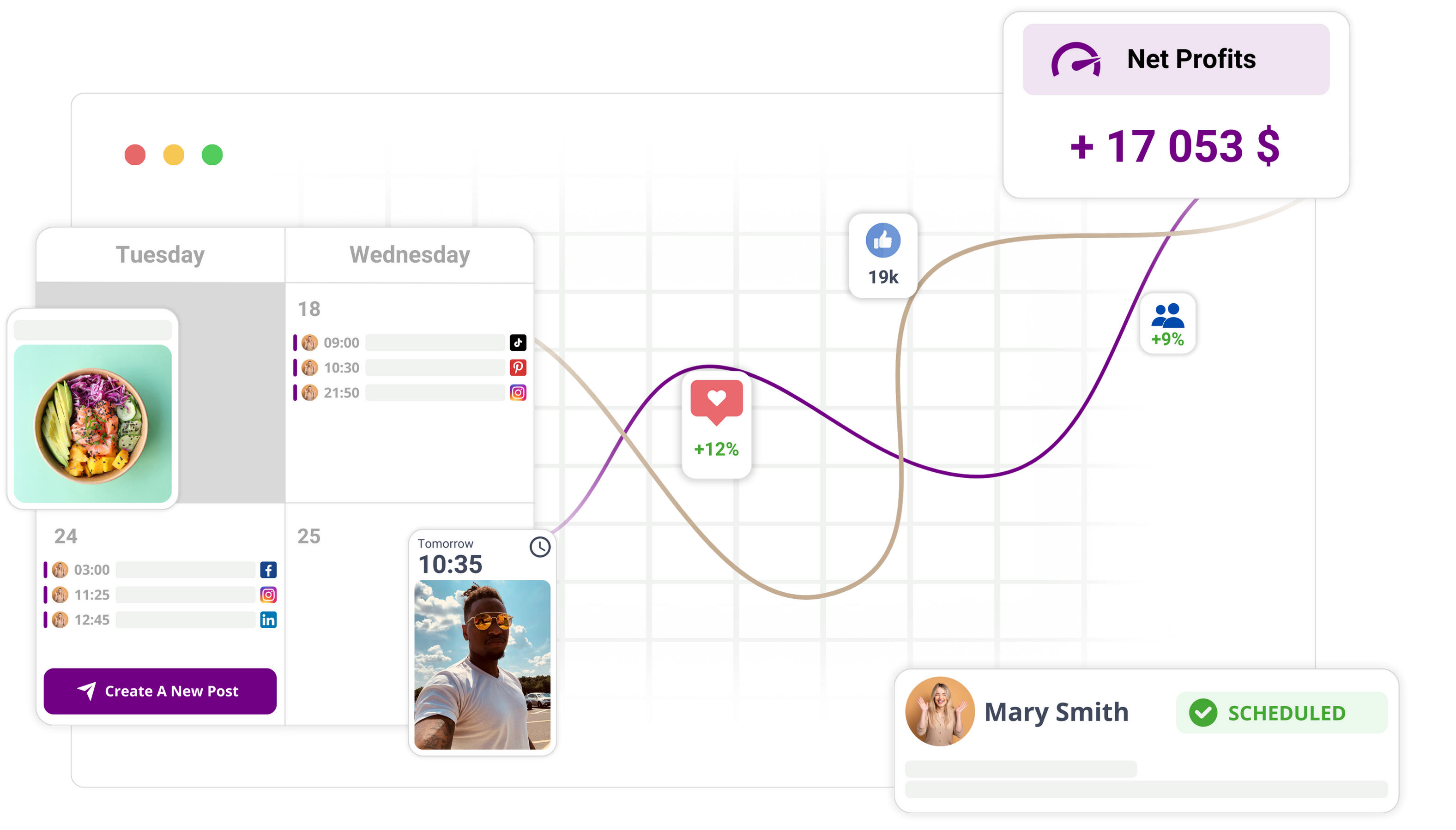

For agencies and enterprise teams, social media management is no longer just about posting; it is about maintaining brand velocity without sacrificing precision. If your team spends more time toggling tabs and verifying timezones than actually crafting content, your tools are working against your scale. Moving to Mydrop is the practical next step when you realize your current platform has become a bottleneck for your multi-brand operations rather than an engine for growth.
That feeling of constant, low-level dread that something is about to go wrong-a mismatched caption, a post hitting the wrong account at 3:00 AM, or an unapproved asset slipping through-is the hallmark of outdated software. You do not need more checklists; you need a platform that understands your brand’s specific rhythm and stops errors before they become public.
TLDR: If you manage 3+ brands or operate across different timezones, switching is likely cheaper than your current manual auditing process.
- Switch if: You spend more than 20 minutes a day managing cross-platform approvals or timezone offsets.
- Stay if: You manage a single brand with a static team and no complex approval hierarchies.
- The Mydrop Shift: We replace manual verification with native, rule-based governance that scales across every workspace you manage.
Why the old tool starts cracking at multi-brand scale

Legacy platforms were built for a simpler time: one brand, one or two managers, and a steady stream of static images. They were never designed to manage the complexity of an enterprise team that needs to coordinate global campaigns across dozens of accounts simultaneously.
The problem is what we call coordination drag. As your team grows, the number of "interface steps"-the clicks required to switch brands, update a region-specific timezone, or re-run a multi-platform validation-increases exponentially. When you hit a certain volume, your team starts relying on spreadsheets, Slack pings, and "gut feeling" to keep things aligned. That is where the professional-grade risk starts to creep in.
The real issue: Legacy tools treat "brands" as siloed folders that rarely talk to one another, forcing you to treat each account like a separate project rather than a unified fleet.
When you manage a global campaign launching simultaneously in New York, London, and Tokyo, a legacy tool expects you to do the heavy lifting of manual calculation. It essentially tells you to grab a calculator, check the local time, and set the post manually. That is not tool-assisted publishing; that is just a digital version of a pen-and-paper desk calendar.
Operator rule: Never trust a tool that forces you to manually calculate timezone offsets for scheduled content. If the software cannot keep the clock synced to the brand's local operating market, you are not using a tool-you are using a distraction.
This creates the "Manual Audit" trap. Because your team knows the tool doesn't handle regional complexity well, they start double-checking every single post. They verify the time, then the account, then the asset, then the caption. This creates a hidden cost: an entire layer of your payroll is dedicated to "doing what the software should have done automatically."
Efficiency is not about working faster; it is about removing the layers that exist between your idea and the audience. When you shift to a workspace-centered architecture, your teams stop fighting the tool and start focusing on the actual content velocity.
The coordination cost nobody budgets for

When you are managing five brands across three time zones, the "cost" of your software isn't just the monthly subscription fee. The real price is the coordination debt-the hours your team spends verifying if a post is going out at 9:00 AM EST or 9:00 AM GMT, double-checking spreadsheet trackers, and manually chasing stakeholders for one last signature.
Legacy tools often require you to build an entire secondary infrastructure-usually a mix of Slack threads, external project management boards, and sprawling spreadsheets-just to keep the social media tool from breaking.
Most teams underestimate: The sheer amount of "context switching tax" incurred by tools that treat every brand as a separate, isolated island. If your social media manager needs to keep six browser tabs open to manage one multi-brand campaign, your tool has already failed the efficiency test.
This operational friction creates a silent crisis. Your team is busy, certainly, but they are busy doing administrative maintenance instead of high-value strategy. When the tool doesn't handle the complexity of your organization, the humans have to fill the gap. That is where mistakes creep in: a forgotten hashtag, a brand-inconsistent image, or a post that goes live at 3:00 AM in the target market.
The Multi-Brand Comparison Matrix
| Capability | Legacy Social Tools | Mydrop |
|---|---|---|
| Workspace Switching | High-click, multi-login | Native, single-click switcher |
| Timezone Precision | Manual calculation required | Automatic, local-aware scheduling |
| Campaign Consistency | Manual copy-paste | Reusable, brand-safe templates |
| Validation Layer | Post-publish audit | Real-time, pre-publish checks |
How Mydrop removes the extra handoffs

Mydrop is built on the premise that if you have to manage a spreadsheet to track your social calendar, you aren't using a management tool-you are using a digital filing cabinet. The goal here is to consolidate your workflow into a single, reliable environment that acts as the source of truth, removing the "handoffs" that cause errors and bottlenecks.
- Intake: Start with centralized campaign briefs.
- Standardization: Apply pre-approved templates for specific content formats.
- Collaboration: Route drafts through a single, workspace-aware approval flow.
- Validation: Run automated pre-publish checks for platform-specific requirements.
- Activation: Schedule with local-time accuracy across all brands.
This is where the shift from "coordination" to "velocity" happens. By building the validation layer directly into the composer, Mydrop catches the missing thumbnails or incorrect media formats before you ever hit schedule. It treats your social operations like an enterprise-grade production line rather than a series of manual, ad-hoc tasks.
Operator rule: Never trust a tool that forces you to manually calculate timezone offsets for your global audience. If you are doing the math, the software is doing the bare minimum.
Instead of fighting the platform to get your work done, you start to see the tool as a force multiplier. Because Mydrop understands the hierarchy of your brands and the specific needs of your distributed teams, the "drag" disappears. The legal reviewer doesn't get buried in a mountain of disconnected links; they see exactly what they need to see in the context of the specific brand and market.
This isn't about working faster in the sense of rushing; it is about working with fewer layers. Every time you remove a manual cross-check or an external sync meeting, you increase the speed at which your brand can respond to the market. When the system handles the heavy lifting of regional accuracy and brand governance, your team is finally free to focus on the content that actually moves the needle.
The "Safe Migration" 5-Point Plan
- Audit your current stack: Identify the exact points where you rely on external spreadsheets or documents to supplement your current tool.
- Define your workspace structure: Map out your brands, regions, and team permissions before importing any content.
- Standardize with templates: Before creating a single new post, save your core brand-safe publishing patterns as templates to ensure instant consistency.
- Run a pilot window: Pick one low-risk brand or market to transition first, validating your full approval and publishing cycle in Mydrop.
- Sunset the crutches: Once the pilot is successful, disable the external tracking systems for those accounts to force the team to adopt the new, cleaner workflow.
At the end of the day, you want to get back to the work you were hired to do. Efficiency isn't about working faster; it is about removing the layers that exist between your idea and the audience. If your tool requires a spreadsheet to manage your publishing calendar, you aren't using a tool-you are using a distraction.
The migration checks that prevent a messy switch

Moving your social operations to a new platform often feels like changing the engine on a plane while it is already cruising at 30,000 feet. The fear is palpable: What if the historical data disappears? What if our posting schedule breaks mid-week? The reality is that your current "coordination drag"-those manual spreadsheets, frantic Slack messages, and double-checking timezones-is already causing more operational damage than a structured move ever could.
A clean migration isn't about moving every single legacy artifact from the last five years. It is about identifying the core structure that keeps your brand alive and mapping it into a system that handles it natively.
Operator rule: Never migrate dead weight. If a campaign or workflow hasn't been active in eighteen months, archive it as a static record rather than forcing it into your new, high-velocity active queue.
Before you flip the switch, perform these five surgical checks to ensure your new environment is ready to handle your volume:
- Regional Authority Mapping: Verify that each of your workspaces in Mydrop is assigned the correct local timezone. This prevents the "early/late post" trap that haunts global teams using legacy tools.
- Template Sanitization: Audit your most frequent post types. In Mydrop, these should be saved as templates, not static drafts. If a post format requires more than two manual tweaks, it belongs in a template.
- Governance Check: Ensure your user permissions match your current approval hierarchy. You want to replace the "who-has-the-spreadsheet" guessing game with automated, role-based workflows.
- Media Integrity Scan: Confirm your primary brand asset libraries are accessible within the Mydrop composer. If your team is still downloading from Google Drive to upload to a browser, you are losing minutes per post that add up to hours per day.
- Validation Protocol: Enable Mydrop’s pre-publish checks on all high-reach channels. This acts as your final, automated firewall against platform-specific sizing errors or missing first-comment requirements.
Common mistake: The "manual audit" trap. Teams often feel they must manually double-check every scheduled post during the first two weeks of a new tool. If you have to do this, your tool isn't actually managing the workflow-it's just hosting the calendar. Trust the validation, verify the process, and let the system do the heavy lifting.
The low-risk pilot that proves the switch

The safest way to prove your team is ready for a faster, more accurate publishing rhythm is to run a "shadow pilot." Rather than migrating your entire enterprise architecture overnight, take one high-visibility brand or a single regional market and run its entire social cycle through Mydrop for 14 days.
This pilot phase isn't just about technical functionality; it is about calibrating the "velocity gain." Measure the time from initial content brief to final approval, and compare it against your legacy tool's benchmarks. You will likely find that the Mydrop workflow-where assets are attached, templates are applied, and validation occurs in a single interface-dramatically reduces the number of times a stakeholder has to log in just to "approve" a post.
Progress check: A successful pilot flow should look like:
Intake -> Asset Attachment -> Template Apply -> Multi-Platform Validation -> Stakeholder Approval -> Scheduled Publish.
If you hit a friction point-like an unclear approval notification or a missing platform-specific field-you can adjust your rules in Mydrop in real-time. It is infinitely easier to pivot a pilot than to retrain an entire agency team.
KPI box: During your pilot, track these three metrics to justify the wider transition to your leadership team:
- Click-Depth Reduction: Number of clicks to create and schedule a cross-platform campaign.
- Error Rate: Number of post rejections or failed publication events caught by pre-publish validation.
- Handoff Latency: Time elapsed between a creative draft being ready and receiving a formal stakeholder approval.
By the end of your two-week trial, the "multi-brand trap" starts to dissolve. When your team realizes they can switch from a US-based campaign to a UK-based announcement with one search query, and that the tool automatically handles the local scheduling rules, the anxiety of the migration vanishes.
The goal isn't just to replace a legacy tool; it is to stop being a tool-administrator and return to being a brand-builder. Efficiency isn't about working faster, it is about removing the layers that exist between your idea and the audience. Once you stop spending your day babysitting the technology, you realize that your team's best work was always there-it was just waiting for a platform that could keep up.
When Mydrop is worth the move

You should consider moving to Mydrop if you have reached the point where your social media management tool has become the primary source of your operational friction. If you find your team spending more time in spreadsheet cross-references to track regional timezones or manually chasing approvals because the platform cannot handle your brand hierarchy, you have outgrown your current setup.
Mydrop isn't a magic button that creates great content, but it is a precision instrument for the team that already has the content and just needs the speed to get it live. It thrives in environments where governance is not optional and where "oops" moments are not just embarrassing, they are enterprise risks. If your current workflow is essentially "move fast and hope nothing breaks," you might be fine where you are. But if your goal is "move fast and verify everything," Mydrop is designed to be your final firewall.
Operator Rule: Never trust a tool that forces you to manually calculate timezone offsets for your global campaigns. If the software doesn't know where your brand lives, it cannot possibly know when your audience is listening.
The decision to migrate is rarely about the monthly cost-it is about the hidden "coordination debt" you pay every single day. When you remove the need for constant, manual oversight and replace it with built-in validation, you aren't just saving minutes on a post; you are buying back hours of strategic focus.
If you are ready to stop fighting your tools, here are three steps you can take this week to test the waters:
- Conduct a "Click-Depth" Audit: Pick a standard multi-brand post and time exactly how many clicks it takes to draft, select the correct workspace, apply the correct brand template, and reach the final validation screen. If it's more than a dozen, you are leaking productivity.
- Run a Two-Week Pilot: Pick one of your smaller brands or a single regional market. Migrate just that workspace into Mydrop. The goal here isn't to be perfect; it is to see if the "coordination drag" disappears when you use native templates and timezone controls.
- Formalize Your Validation Checklist: Take your current "mental checklist" for pre-publish quality and map it into the platform's validation settings. If the software catches the error before your manager does, the migration has already paid for itself.
Framework: The Velocity Cycle
- Standardize: Lock brand-safe patterns into reusable templates.
- Sync: Align workspace schedules to local timezones natively.
- Validate: Use automated checks to catch compliance slips before they reach the queue.
Conclusion
The best social media operations share a quiet, almost boring level of consistency. They aren't held together by heroic late-night manual audits or constant frantic checking of Slack threads; they are held together by systems that make the right path the easiest path.
When your platform understands the structure of your business-your brands, your regions, and your approval chains-you stop being a coordinator of tools and start being a publisher of ideas. If your current stack forces you to build workarounds just to keep your calendar straight, you are doing the job of the software, not the job of a marketer. Social media management at scale is ultimately about removing the layers that exist between your team’s best work and your audience’s screen.