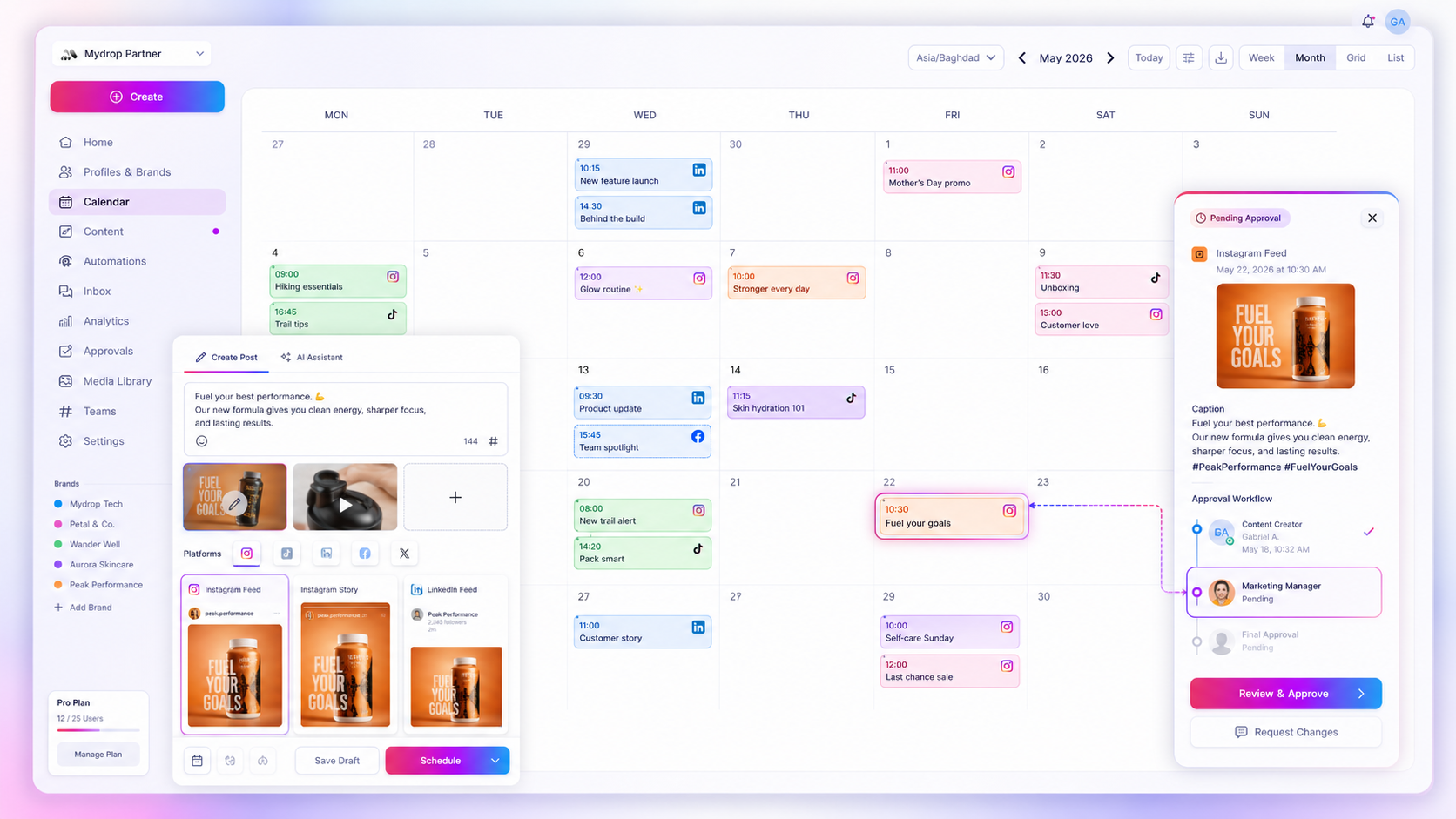
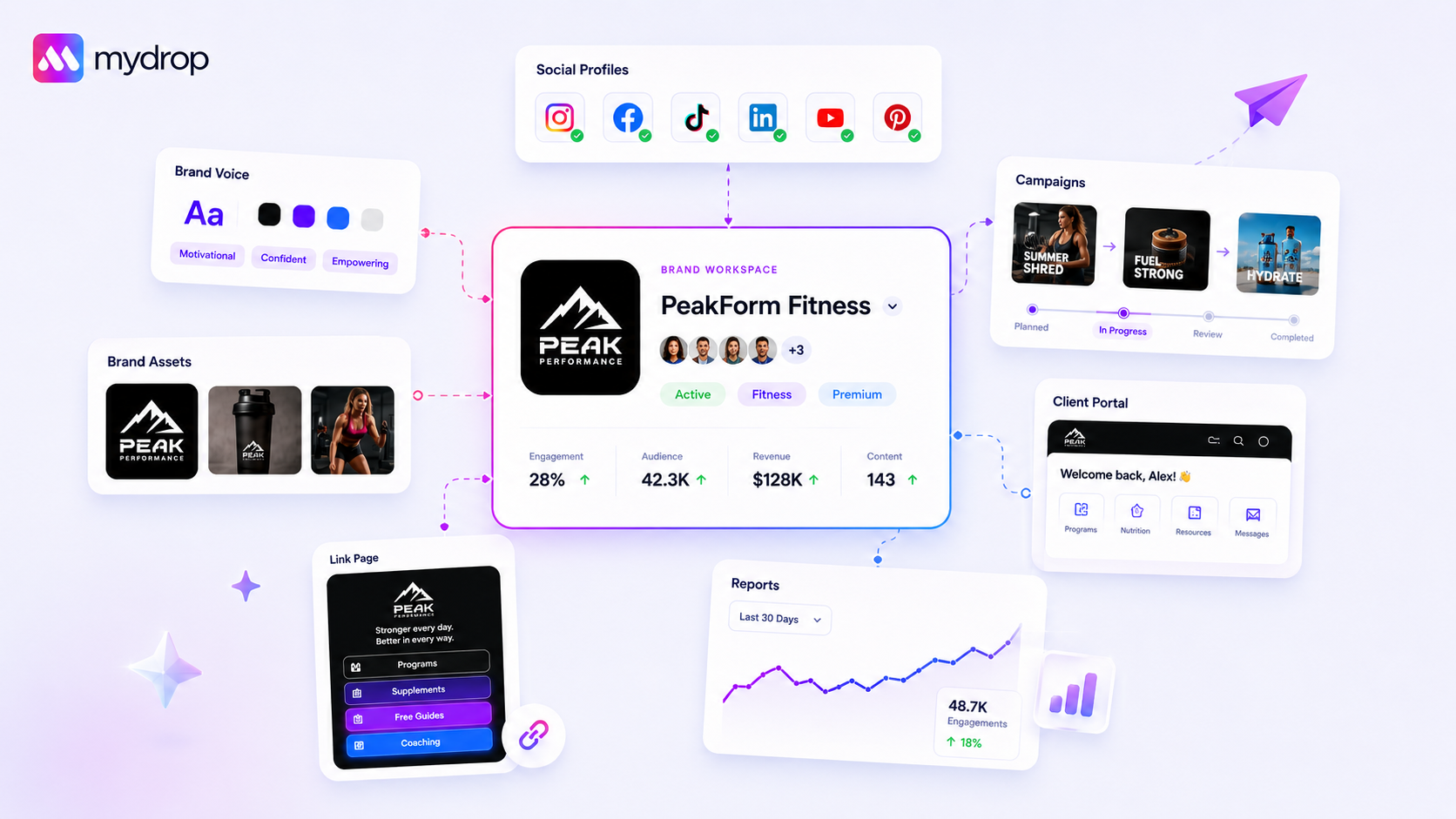
The most effective way to solve the social media handoff struggle is to stop thinking of asset management as a separate stage from publishing. If your team treats ingestion as a distinct task-downloading from a design platform and re-uploading to your scheduling tool-you have already created a bottleneck. The best social media software functions less like a storage locker and more like a native extension of your creative stack. When your tools talk to each other through API-based connections, you eliminate the desktop clutter and versioning nightmares that turn a five-minute task into an hour-long ordeal.
We have all been there: the "final final v2" creative is stuck in a shared drive, the designer is offline, and you are staring at a blank post window. It is frustrating, and frankly, it is the kind of friction that kills creative energy. You are not just moving files; you are managing a living brand, and every manual step is an opportunity for a file to get lost or a deadline to slip.
Operator rule: If an asset requires more than one download-upload event to reach your publishing queue, your process is brittle.
What the best tools need to handle

To get past the manual grind, your platform must do more than just accept file uploads. It needs to reach out into your existing workspace and pull content in on your terms. This is not just about convenience. It is about maintaining control, security, and speed across large teams and complex brand requirements.
When evaluating tools, look for these four non-negotiable capabilities:
| Evaluation Criteria | Why it matters | Enterprise Risk |
|---|---|---|
| Native API-Auth | Bypasses local downloads entirely. | Security flaws via shared creds. |
| Quota Intelligence | Prevents stalled uploads mid-campaign. | Incomplete syncs or blocked publishing. |
| Metadata Integrity | Keeps source data through the transition. | Lost version control/brand tracking. |
| Bulk Selection | Moves entire albums or campaign folders. | Slow, individual-file handoffs. |
Standard platforms often fall short here by offering "browser pickers" that function more like a simple file explorer than an integrated bridge. A true enterprise-grade tool maintains the connection between the source and the destination. In our experience, the difference between a high-performing agency and a struggling one is how they handle this handoff. High-performers build an automated loop where assets flow from the design board to the calendar without the user ever having to touch a "download" button.
At Mydrop, we built our Service Imports specifically to remove these dead ends. By connecting directly to platforms like Canva, Google Photos, and Drive, you can browse your remote assets and pull them into the media library with full status tracking. You are not manually syncing folders; you are establishing a continuous pathway where your creative files are always ready for the next approval, edit, or publish window.
Where basic tools start to break

Most entry-level social platforms treat file ingestion like a simple browser upload. They give you a button, you select a file, and the browser handles the rest. This feels fine when you are posting one photo a week to a single brand handle. But when you are managing hundreds of assets across global regions, that approach is a liability.
Standard tools often lack the back-end handshake required for professional-grade creative flows. They don't track the import status of a 500MB video file, so if your internet hiccups, you have no idea if the transfer finished or corrupted halfway through. They fail to handle service-specific nuances, like how Canva exports different formats or how Google Drive permissions sometimes time out mid-session. When you are under pressure to get a campaign live, these "minor" technical gaps become massive roadblocks.
Common mistake: Relying on tools that don't offer cancellation controls for large file ingestions. If a batch import hangs, you should be able to kill it and retry instantly rather than sitting through a frozen screen or having to refresh your entire workspace.
When you cannot trust the ingestion path, your team resorts to workarounds. Designers end up emailing links, local hard drives become "the real source of truth," and your centralized library becomes a dumping ground for outdated versions.
The buying criteria that matter
If you are evaluating software, ignore the marketing fluff about "seamless integration" and look for the technical mechanics that prove the tool can handle your scale. Use this scorecard to audit your current stack or your next potential purchase.
Asset Ingestion Scorecard
| Criteria | The "Basic" Approach | Enterprise-Grade Standard |
|---|---|---|
| Ingestion Engine | Browser-only, prone to timeout | Native API-integrated with progress tracking |
| Format Handling | Accepts files only | Deep-links Canva designs & native export formats |
| Error Recovery | Total failure on disconnect | Resume-capable or clear cancellation/retry |
| Asset Hygiene | Folder-blind; assets go to a root dump | Automated folder routing at import time |
| Quota Visibility | Hidden until you hit a hard block | Real-time checks before the transfer starts |
This is the point where we see teams fail most often. They look for features-can it post to Instagram? Can it generate a report?-but they ignore the plumbing. If the assets cannot arrive in your workspace reliably, the rest of your tools do not matter.
What to demand in your demo
When you bring this up with a potential vendor, do not ask "Does it connect to Google Drive?" The answer will always be yes. Instead, ask these three specific questions:
- "What happens if I try to import 20 assets at once and the connection drops?" You want to see error handling, not a system that requires a page refresh.
- "How does the tool handle Canva exports?" A professional tool should pull the finished asset directly into your media library, not force a manual download to your desktop first.
- "Where do the files land, and can I define that at the moment of import?" You need the ability to sort assets into folders-like
Campaign-Q3-LaunchorRegional-Assets-EU-before they clutter your main library.
At Mydrop, we built our Service Imports with this specific frustration in mind. We know the reality of agency life is not a tidy desktop; it is a chaotic mix of design revisions, shared folders, and tight deadlines. By connecting directly to services like Canva, Google Photos, and Drive through secure OAuth tokens, we remove the need for those extra, risky steps. It ensures that the assets your designers create land exactly where your content team needs them, ready for your approval loops and publishing calendar.
When you optimize for a clean handoff, you stop losing hours to file chasing. You end the cycle of "where is the latest file," and you start focusing on the actual quality of your output. In our experience, the teams that win are not the ones with the most tools, but the ones with the fewest friction points between a design and a post.
How Mydrop supports this workflow
At Mydrop, we watched teams burn countless hours playing "digital courier" between design suites and their social dashboards. We decided to build a direct, OAuth-backed ingestion method that plugs those gaps. Instead of forcing your team to download assets, re-upload them, and lose track of the version history, you can treat your external storage and design platforms as live extensions of your library.
Our approach focuses on three core mechanics that keep your team moving:
- Native OAuth Bridge: You connect your design or storage accounts once. Mydrop handles the secure token management so you aren't constantly authenticating or managing individual file permissions.
- Direct-to-Folder Ingestion: You don't just dump files into a generic bin. When you pull designs from Canva or assets from Google Drive, you route them directly into specific gallery folders. This maintains your organizational structure without extra manual tagging later.
- Progress and Quota Awareness: We know enterprise teams deal with massive, high-res files. The import modal tracks progress in real-time and runs a quick quota check before starting, so you don't hit a wall halfway through a bulk upload.
In our experience, teams managing hundreds of brand profiles often see their efficiency spike the moment they stop "managing" files and start "syncing" them. If a campaign shifts, a designer updates the master file in Canva, and your team refreshes the view. That is the kind of fluidity required to keep up with current social demands.
A simple shortlist checklist
Before you commit to a platform, run this five-point audit against your current setup. If you cannot check all of these, your creative handoff is likely leaking time.
| Criteria | The Goal | Why it matters |
|---|---|---|
| Authentication | Native OAuth support | Avoids manual file-sharing links and expired permission tokens. |
| Selection | Bulk/Album ingestion | Allows teams to move entire campaign batches in one move. |
| Integrity | Format preservation | Ensures design quality remains intact, especially for video and high-res exports. |
| Governance | Quota validation | Prevents stalled uploads due to storage limits during critical launches. |
| Continuity | In-tool cleanup | Simplifies maintenance by allowing you to remove services you no longer use. |
Watch out: Teams often prioritize the "publishing" feature list while treating "getting the file into the system" as a solved problem. It is rarely solved-it is usually just ignored.
Conclusion
The bottleneck in your creative process rarely happens during the actual design work. It happens in the space between the finished file and the scheduled post. When you remove that friction, you aren't just saving minutes on every task; you are reclaiming the headspace your team needs to actually focus on strategy.
Stop asking your team to act as manual file-transfer agents. Look for platforms that treat external asset ingestion as a first-class feature, demand secure API-backed connectivity, and prioritize your folder structure. Your publishing velocity depends less on how fast you can hit "post" and more on how fast your team can move an idea from the drawing board to the feed.