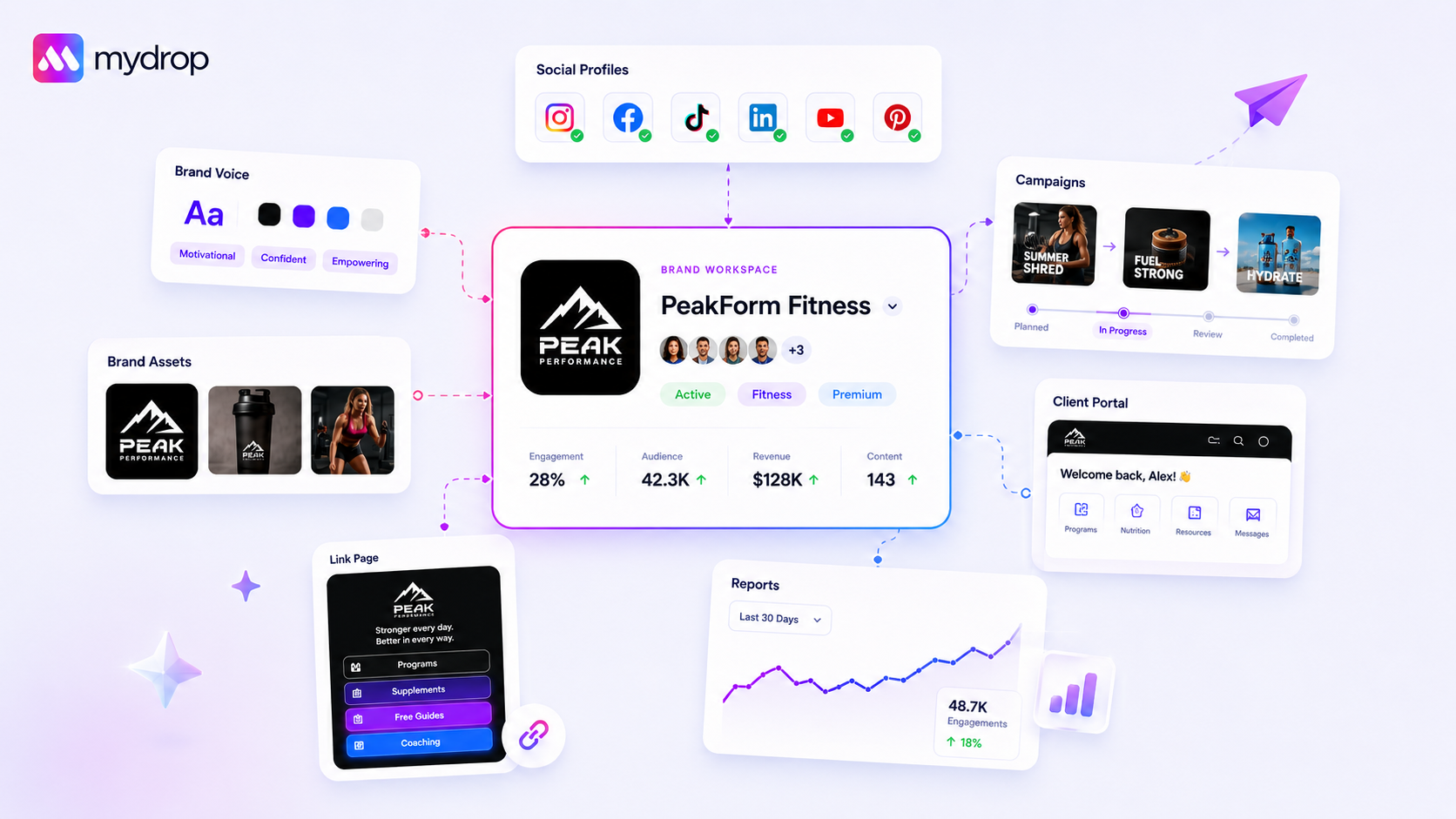
The best media library tool for agencies isn't just a place to store files-it’s a central nervous system for your creative assets. When your team spends more time hunting for logos, videos, or graphics across scattered folders than actually building posts, you’ve hit a classic scale wall. Stop treating storage as a passive file bucket and start managing it as an integrated asset ecosystem.
We’ve all lived through that 6:00 p.m. scramble, hunting down assets before a campaign goes live. It is not just frustrating; it is a direct hit to your team’s margin. Most teams do not have a content problem; they have a decision bottleneck. If your storage tool doesn't actively help you find, edit, and safely deploy assets across brands, it is part of the problem. You need maturity, not just space.
What the best tools need to handle

An enterprise-grade media library needs to do more than simply house bits. It must enforce folder-level governance that respects client boundaries, preventing cross-contamination between brands. If you cannot assign specific access to a brand folder, you are one wrong click away from a compliance issue.
Next, look for context-aware intelligence. A tool that lacks reference awareness will let you delete an image that is currently live in a scheduled report, a form, or an AI-generated artifact. You need a system that flags these dependencies before the deletion happens, acting as a safeguard for your live content.
Creative velocity is the final hurdle. The "download-edit-reupload" loop is a massive productivity killer. The best systems allow your designers and managers to perform essential tasks-like cropping, flipping, or adding branded overlays-directly within the browser.
Operator rule: If your team has to leave the library to resize or edit an image before using it, you have an inefficient workflow.
Here is a quick diagnostic table to check if your current system is working for you:
| Capability | Generic Storage (1-2) | Integrated Library (4-5) |
|---|---|---|
| Folder Access | Open access for all | Granular, brand-level controls |
| Editing | Offline edit/re-upload | In-browser crop/adjust |
| Deletion | Blind/Dangerous | Reference-aware safety checks |
| Search | Filename-only | Metadata & usage-based |
At Mydrop, we see teams struggle most when they treat their media as static files rather than living assets. When you integrate your storage with your post composer, brand assets, and report builder, you stop hunting for files and start shipping work.
Where basic tools start to break

When your team grows, your storage doesn't just get full; it gets dangerous. You start with a few folders on a generic drive, and suddenly you have fifty people dropping files into a black hole where "Final_v2_APPROVED_REAL_FINAL.png" is the only way to track progress.
The real problem isn't the gigabytes; it’s the lack of context. Generic cloud storage assumes all files are equal, but in an agency, your assets live in specific relationships. A logo belongs to a brand; a video draft belongs to a campaign; a PDF report belongs to a client. When your tool doesn't understand these relationships, you end up with massive inefficiencies. You’re constantly downloading files to check if they are the latest version, then re-uploading them to a post composer, then crossing your fingers that you didn't accidentally delete something that was still live in a client report.
Common mistake: Treating storage capacity as the primary KPI. If your team is hunting for the right asset for more than 60 seconds, your storage is failing you, regardless of how much space you have left.
The buying criteria that matter
Before you sign up for another generic service, ask yourself if it actually solves the mess. You need a system that acts as a central nervous system for your creative, not just a digital attic.
Asset Management Decision Matrix
Use this to audit whether a candidate tool will support your growth or just add to the clutter.
| Capability | Why it matters | What to look for |
|---|---|---|
| Granular Permissions | Protecting client data from leaks | Role-based folder access, not just shared links. |
| Reference Awareness | Preventing broken links in live reports | Warnings before deletion if the file is in use. |
| Integrated Editing | Maintaining creative velocity | In-browser cropping, flipping, and drawing tools. |
| Metadata Strategy | Finding assets instantly | Tags, descriptions, and searchable metadata fields. |
When we built Mydrop, we centered the media library around these exact pain points. We saw too many teams managing hundreds of brand profiles only to lose hours a week searching for the right source file. By integrating the library directly with the post composer and reporting tools, we ensure that when you move or update a file, the rest of your workspace stays consistent. It's about letting your designers edit directly within the platform and giving account managers a clear view of exactly which assets are active.
The best tools also handle the "lifecycle" of an asset. They don't just store files; they track usage. If you are debating a tool, ask: "If I delete this file, what breaks?" If the answer is "I don't know," you are still using a basic storage drive, not an asset management system.
Ultimately, you are looking for a system that reduces the steps between "I need this asset" and "The campaign is live." If the tool you choose requires you to constantly move, rename, or re-download files, you haven't actually solved the bottleneck-you’ve just moved it somewhere else. Choose a system that handles the organization for you, so your team can focus on the creative work that actually drives results.
How Mydrop supports this workflow
We built Mydrop because we saw the same bottleneck across hundreds of agencies: teams were treating their media library like a digital attic instead of a core piece of their creative stack. When you have dozens of stakeholders and hundreds of brand profiles, your library needs to act less like a hard drive and more like a nervous system.
At Mydrop, we organize media by what actually matters to your operations: the brand, the campaign, and the specific folder structure you already use for client approvals.
- Brand-Level Governance: You aren't just storing files; you are partitioning them. By using brand-specific folders, you ensure the right team accesses the right assets, preventing the "oops, wrong logo" incidents that make clients nervous.
- Stop the Download-Edit-Upload Loop: We added an integrated, in-browser editor because watching a creative spend fifteen minutes downloading, cropping, and re-uploading a simple product image is a waste of talent. You can crop, flip, rotate, or add essential brand markers without ever leaving the tool.
- The "Will This Break?" Safeguard: This is the feature teams tell us saves their sanity. Because our system tracks where media is actually being used-in posts, reports, or active campaigns-it provides a clear warning if you try to delete an asset that is still "in the wild." You never have to guess if that folder cleaning project will suddenly turn your analytics reports into 404 errors.
By integrating the storage layer directly into the composer, you turn your assets from static files into live, ready-to-deploy components.
A simple shortlist checklist
Before you invest in your next media management platform, run your current system through this three-question test. If the answer is "no" to any of these, you are losing more billable time than you think.
- Does the system inherently understand brand ownership?
- Can you restrict access to a folder based on a user’s role, or is it an "all or nothing" file dump?
- Can we edit, crop, or resize without leaving the platform?
- If your team has to leave the tool to prep an image, your creative velocity is hitting an artificial ceiling every single time.
- Does the system warn us before we delete in-use assets?
- If you delete a folder and the system doesn't instantly notify you about which live posts or reports will break, you are operating with blindfolds on.
Most agencies don't have a content problem; they have a coordination problem. The assets you need are almost always already sitting somewhere on your servers. They aren't missing; they are just trapped behind bad search, lack of context, or the fear that moving or editing them might inadvertently take down a live campaign.
Stop settling for storage that merely holds your files. Start demanding a library that actually manages the complexity of your creative work. When you remove the friction of the "asset hunt," you give your team exactly what they need most: the ability to focus on the creative decisions that actually move the needle for your clients.