The most effective metric for auditing your brand library is cross-platform usage frequency, specifically tracking the last-referenced-date across your active posts, reports, and campaigns. If you rely on file creation dates, you are just looking at the age of the paint rather than if the house is occupied.
We have all been there. You set up a pristine folder structure on day one. Six months later, your library is a digital archaeological dig filled with duplicates, rejected drafts, and obsolete content. It is messy, it slows down your team, and it creates persistent anxiety every time someone has to find the actual logo.
What the best tools need to handle

Your media library is the heartbeat of your creative operations. If it is clogged with dead weight, your creative velocity suffers. When evaluating tools, you need more than a place to dump files. You need an active partner in your governance.
Here is what truly matters:
- Reference Awareness: The ability to see exactly where an asset is used before you even think about deleting it. If you have to manually check every post, form, or report to see if an image is "safe" to remove, you have already lost the battle.
- Contextual Organization: Folders that map to your brand architecture, not just a flat list of files. This allows teams to isolate brand assets by market or campaign without risking accidental cross-contamination.
- Dynamic Metadata: Data that updates when assets move, ensuring your team is not hunting for a file that was "reorganized" by someone two weeks ago.
At Mydrop, we built reference awareness precisely so you do not have to guess if a file is safe to delete. The system knows if a file is living inside a post, brand, or report, and it protects those links automatically. That is the difference between a simple storage bucket and a functional asset library that keeps your team moving fast.
Here is where teams usually get stuck: they choose "easy" storage solutions that are completely decoupled from their post-composition workflow. When your library exists in a vacuum, every upload creates a potential "orphan" file. You end up with five versions of the same product shot, and no one is sure which one is compliant for the current quarter. A functional library should feel like an extension of your content engine. It should make it easier to find the right asset than to upload a new one. When your tools force you to choose between speed and organization, organization almost always loses. That is the exact moment coordination debt begins to accumulate.
Where basic tools start to break

The moment your creative team moves beyond a handful of assets, generic file storage turns into a liability. Basic cloud storage folders are just that: folders. They know nothing about your brand structure, your upcoming campaign calendar, or the fact that an image is already live on three different social platforms.
When you rely on these tools, the manual cost of maintenance skyrockets. Every time a designer needs to swap an asset, they have to hunt through folders, guess which version is actually final, and hope that deleting an old version does not break a link in a scheduled report. At Mydrop, we see teams lose hours a week just checking if an asset is safe to use.
Basic tools lack reference awareness. Without this, deletion becomes a game of Russian Roulette. You might delete what looks like a duplicate file, only to realize later that it was the master image for your entire Q3 campaign. You are not just losing a file; you are losing time and inviting compliance risk.
The buying criteria that matter
If you are ready to move from storage to a managed library, you need more than just space. You need a system that understands the relationship between your creative assets and your actual work.
When evaluating your next tool, use this scorecard to ensure you are buying a library, not just a bucket.
Asset Management Scorecard
| Audit Criteria | Basic Cloud Storage | Mydrop-Style Library |
|---|---|---|
| Reference Awareness | Manual (Risk of broken links) | Automated (Impact analysis) |
| Metadata Strategy | Static (Tags require manual entry) | Active (Context-aware, automated) |
| Folder Structure | Rigid (Storage-based) | Elastic (Brand- and project-based) |
| Creative Workflow | Detached (Upload, download, edit) | Native (Edit in-modal, direct attach) |
| Deletion Risk | High (Destructive) | Low (Reference-checked) |
What to demand from your vendor:
- Direct Integration with Composition: If your library is a separate tab that you have to copy-paste from, you are adding friction. The library should be inside your composer, your reports, and your brand settings.
- Edit-in-Context: Designers should not need to leave the platform to crop, flip, or filter an asset for a specific platform format. That editing should be tied to the asset, saving you from creating five different versions of the same logo.
- Active Lifecycle Management: You need tools that warn you if a file is currently in use before you archive it. Reference awareness is the industry term here, but practically, it just means you do not have to guess if a file is safe to prune.
Operator rule: If your team has to open a spreadsheet to track which assets belong to which brand or campaign, your library has already failed.
The reality is that social media scale fails from coordination debt, not a lack of creative ideas. You need a library that acts as a single, verified source of truth that keeps your team moving at the speed of the feed.
How Mydrop supports this workflow
At Mydrop, we built reference awareness precisely so you don’t have to guess if a file is safe to delete. The biggest fear in auditing a library is breaking a live post, a campaign form, or an active report-and frankly, that fear is usually what stops teams from cleaning up.
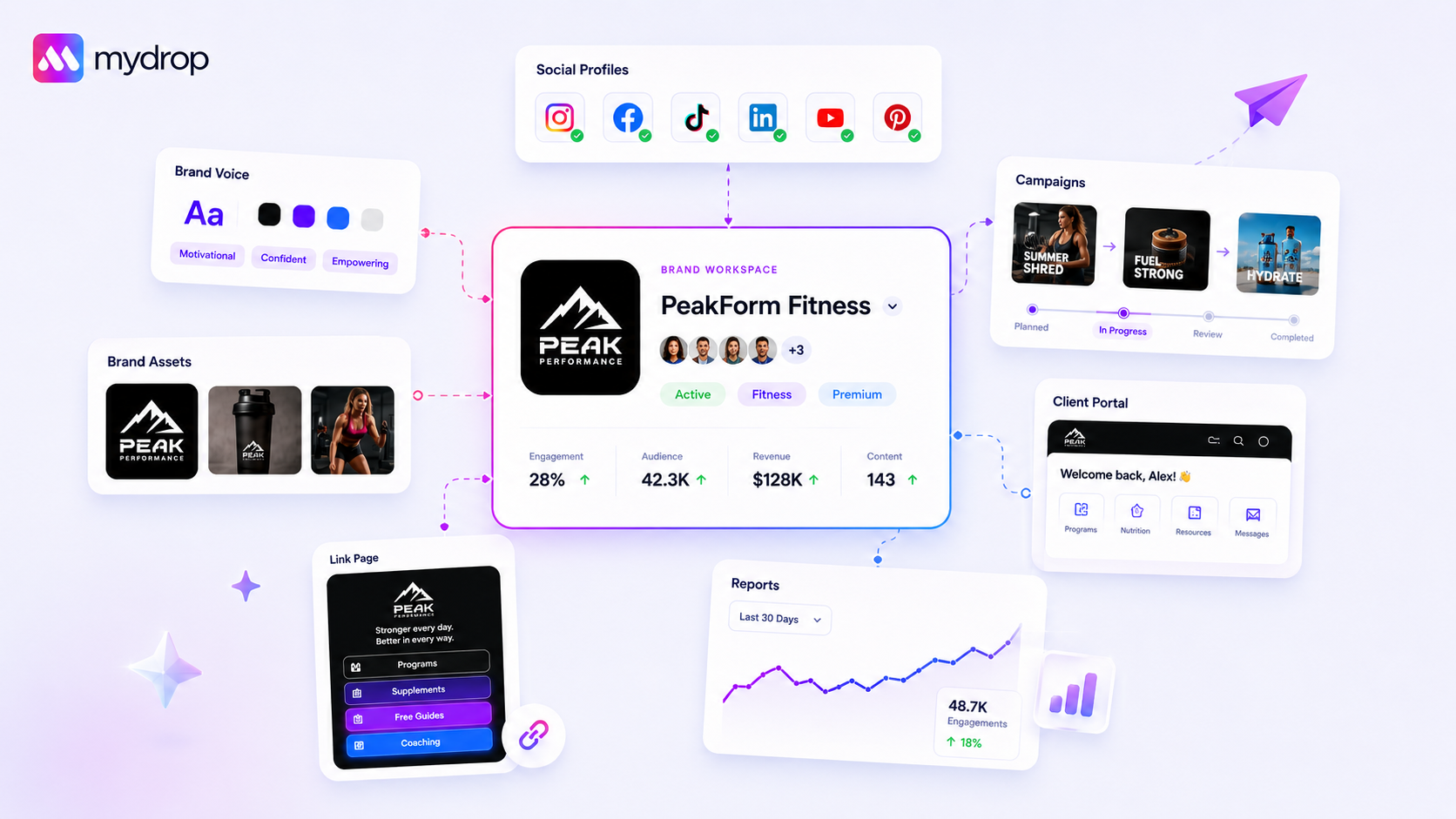
When you look at an asset inside our Media Library, you aren't just looking at a file. You are looking at a living document that understands its own relationships. Because our library tracks usage references across posts, brand asset groups, reports, and AI artifacts, you can see instantly if a file is part of an active workflow or if it is genuinely stale.
This takes the guesswork out of the audit. You can confidently identify assets that haven't been touched in 90 days and, because we know where they are, we can help you move them to an archive folder or purge them entirely without the heart-stopping panic of wondering what might break in production.
A simple shortlist checklist
If you are planning to run your first library audit this week, keep it simple. Do not try to clean the entire repository in one afternoon. Instead, focus on these five steps to start building momentum without overwhelming your team.
| Step | Action | Objective |
|---|---|---|
| 1 | Filter by Date | Identify all assets not used in the last 90 days. |
| 2 | Check References | Validate if the asset is tied to any active brand or report. |
| 3 | Stakeholder Check | Ask: "Do we need this for a recurring campaign?" |
| 4 | Move or Purge | Archive to a 'Legacy' folder or delete immediately. |
| 5 | Celebrate Velocity | Track how much 'noise' was removed from the search view. |
Start with a small, manageable folder. Maybe focus on 'Social Media Collateral 2023' first rather than your 'Brand Core' folder. Once you see the time saved by your designers during the next upload process, the value of the audit becomes clear to everyone.
A library is not a museum
The best creative teams treat their asset library like a professional kitchen, not an attic. Everything has a purpose, everything has a place, and if something isn't being used to drive engagement or clarify brand messaging, it shouldn't be taking up space.
Coordination debt is real, and it almost always compounds when you let your library get out of control. When your team has to fight through three versions of a logo, four outdated campaign headers, and a dozen "draft-final" images just to schedule a single tweet, you aren't just losing time. You are losing focus.
The goal of this entire process isn't just to save on storage costs-it is to give your team the gift of clarity. When they know that the assets in the library are current, compliant, and ready to use, they move faster. And in the world of high-velocity social media, speed isn't just an advantage; it’s the requirement for survival.
If you are tired of playing "where is the real asset" and want a library that works as hard as your team, let us show you how Mydrop handles reference-aware media management at scale.