Missing UTM data isn't a technical failure; it is a coordination problem. If your team relies on manual entry, your tracking will fail at scale. The only reliable fix is moving from manual tagging to centralized enforcement where tracking parameters are inherited from a campaign object at the moment of publishing.
We get it. You are balancing rapid-fire social launches across brands. That "messy middle" of manually appending UTM parameters to every caption is where data goes to die. It is exhausting, error-prone, and leaves your expensive campaigns invisible. Most teams feel like they are constantly patching holes in their analytics instead of actually analyzing results.
What the best tools need to handle

The goal is not better training for your team. The goal is removing the human decision point entirely from the publishing workflow. A serious campaign tracking tool must bridge the gap between your content plan and your analytics dashboard through structural automation.
Look for these three core capabilities:
- Centralized Campaign Identity: Tracking shouldn't be defined per post. It must live in a campaign object that contains the
utm_source,utm_medium, andutm_campaigndefaults. When you select a campaign for a post, those parameters should be locked in. - Active-Window Enforcement: UTMs should only apply when they should apply. Your tool must recognize if a campaign is active, upcoming, or finished, and automatically start or stop appending tracking based on those dates.
- Inheritance over Intervention: Data should flow automatically from the campaign settings to the post caption link. Your team should never be manually typing
?utm_source=into a composer.
Operator rule: If your team can edit the UTM parameters inside the post composer, you have already lost. The tool should treat these as read-only, inherited fields.
Here is a quick way to evaluate if your current setup is built for scale:
| Feature | Why it matters | Enterprise standard |
|---|---|---|
| Campaign Object | Single source of truth for UTMs | Mandatory |
| Period Awareness | Prevents data leakage post-campaign | Mandatory |
| Auto-Append | Removes manual human error | Mandatory |
| Manual Override | Flexibility for ad-hoc changes | Discouraged |
When you force your team to think about UTMs, you are inviting inconsistency. The best tools handle this in the background, treating tracking as a structural requirement rather than a finishing touch. This is exactly how we designed the campaigns feature in Mydrop, by ensuring that once a post is attached to a campaign, the UTM metadata is baked in, period-aware, and invisible to the person hitting publish.
Where basic tools start to break

Basic scheduling tools usually fail at the "last mile" of campaign execution because they treat links as dumb strings of text rather than dynamic components of a campaign. When your tool doesn't understand that a specific post belongs to a global product launch, it assumes the link you pasted is the link you want.
This forces your team to manually manipulate every single URL. You might have a smart spreadsheet tracker, but as soon as a creator or social manager forgets to paste that ?utm_source=... string into the composer at 4:55 PM on a Friday, the data dies.
Common mistake: Relying on team memory or manual checklists to append UTMs at the publishing stage. If it requires a human to "remember" to do it, it is already broken.
This creates coordination debt. You are paying for the lack of a centralized system with lost time spent cleaning up analytics data, frustrated analysts who cannot trace ROI, and stakeholders who lose confidence in your reporting. The "spreadsheet-first" approach isn't just inefficient; it is actively corrupting your source of truth.
The buying criteria that matter
If you are evaluating tools to solve this, stop looking for "scheduling features" and start looking for campaign governance. A tool should not just post content; it should enforce your strategy. You need a platform that treats a campaign as a first-class object, not a folder or a tag.
We have found that enterprise teams need to evaluate potential tools against these four non-negotiables:
| Criteria | Why it matters | Decision rule |
|---|---|---|
| Centralized Identity | Ensures one definition of "Q3 Launch" across 50+ profiles. | Can I edit UTMs once and have it reflect everywhere? |
| Automated Enforcement | Removes human intervention from the publishing flow. | Does the tool append tracking at the moment of publishing? |
| Active Period Logic | Prevents tracking data from "leaking" into evergreen posts. | Can I define start/end dates so UTMs turn off automatically? |
| Cross-Feature Hook | Allows tracking to flow into automations and bulk jobs. | Does the campaign selector appear in all creation workflows? |
When you look at this through the lens of Inheritance over Intervention, the choice becomes clear. Your team shouldn't be "intervening" in the link generation process. Instead, they should be "inheriting" the tracking configuration from the campaign object itself.
If the tool asks your user to manually copy/paste parameters, it's not an enterprise-grade campaign tool-it's just a glorified calendar. The best platforms handle the logic in the background, so your team can focus on the content, not the plumbing.
An effective campaign tracking tool should be invisible to the user at the moment of posting, while being perfectly visible to your reporting systems afterwards. If you have to ask, "Did we remember to tag that?" you are using the wrong tool.
How Mydrop supports this workflow
At Mydrop, we usually see teams drown in coordination debt because their publishing tools treat tracking links like mere text. You spend hours meticulously crafting UTM strings in a master spreadsheet, only to have a team member copy-paste the wrong version into the composer.
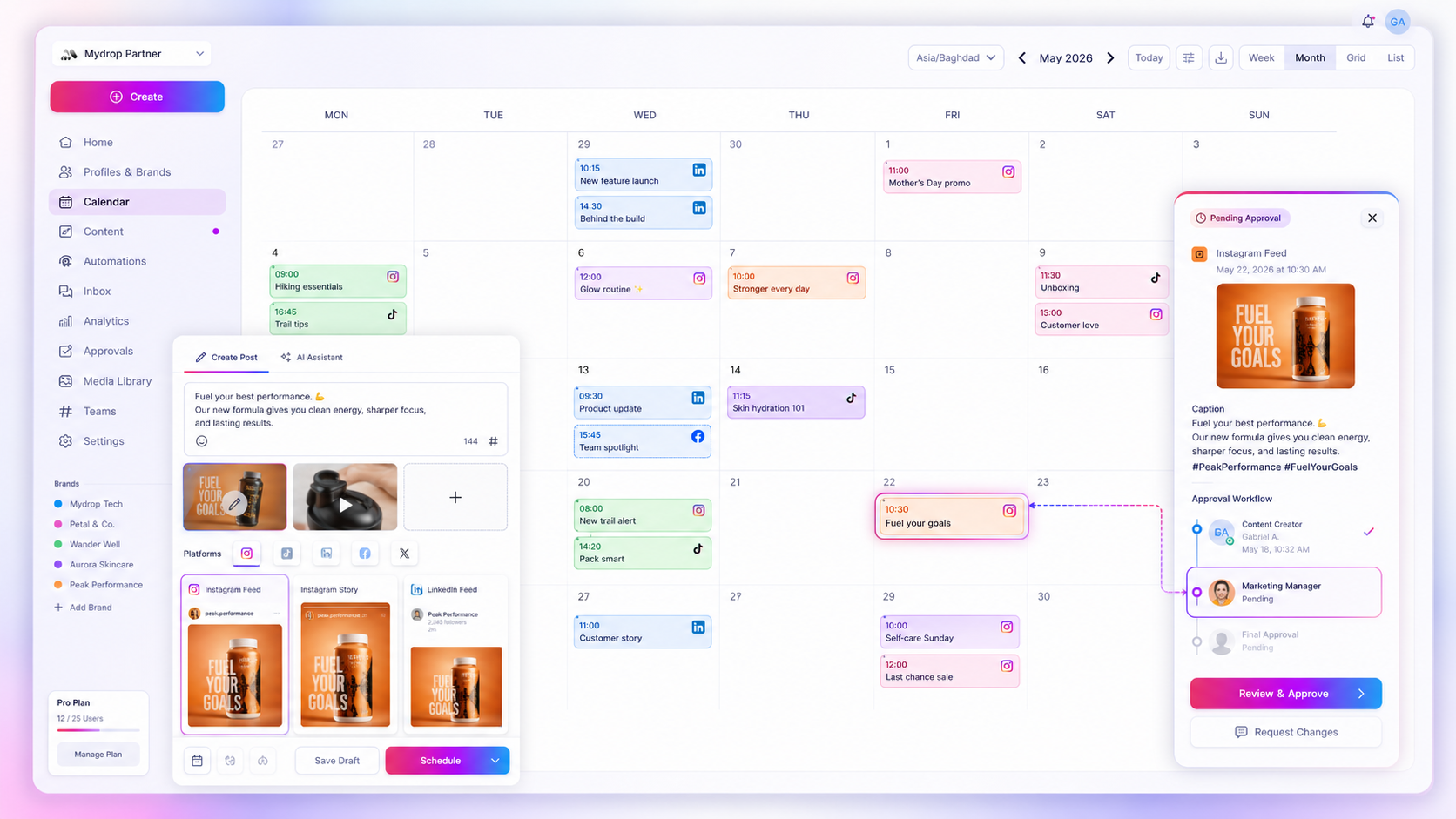
We designed our Campaigns feature to treat tracking as a fundamental property of the campaign itself, not an afterthought for individual posts. When you create a campaign, you define your utm_source, utm_medium, and custom parameters right alongside your campaign assets and active dates.
Once that campaign is set, it becomes the "single source of truth." You can assign any post-whether it’s a one-off update, part of an automation, or a bulk-scheduled launch-to that specific campaign. When the post hits the publish button, Mydrop automatically appends the correct UTM parameters to your links based on the campaign’s configuration.
This means your team doesn't need to touch a URL builder. The parameters are inherited from the campaign object, ensuring that every post in the launch is perfectly tagged, every time, without human intervention.
Decision check: Tracking data should be inherited from the campaign object, not manually intervened upon in the post.
A simple shortlist checklist
If you’re deciding whether your current tooling is holding you back, run through this scorecard. If you check more than two boxes in the "Needs Improvement" column, your tracking is likely failing at scale.
| Feature | Solid Foundation | Needs Improvement |
|---|---|---|
| UTM Management | Centralized in campaign metadata | Manual entry per post |
| Enforcement | Automatic at publishing | Relies on human copy-paste |
| Campaign Logic | Understands active dates/periods | No concept of campaign lifecycle |
| Visibility | Cross-feature (analytics, reports) | Isolated from analytics |
Conclusion
Missing UTM data isn't just a technical glitch; it's a symptom of a process that relies on manual effort instead of structural enforcement. When you stop treating tracking as a spreadsheet task and start treating it as a core component of your campaign metadata, your data becomes consistent and actionable.
The goal isn't to work harder at tagging links-it's to design a workflow where the right data happens naturally. If your team is still spending time cleaning up UTM typos, you don't have a data problem, you have a process bottleneck. Fix the workflow, and the analytics will follow.