Agency operational health lives and dies by how quickly a new team member or a new AI prompt can adopt a client’s voice. If your team is spending more time hunting for the latest logo or debating whether a tone shift is "on-brand" than they are actually creating, you aren’t just losing time-you’re losing profitability. We’ve seen this across hundreds of brand profiles; the hidden cost isn’t just wasted hours, it’s the erosion of client trust when your output doesn’t match the established identity.
We get it. The agency "messy middle" is real-spreadsheets of hex codes, Google Drive folders named "Final_v2_REAL," and a constant, low-level anxiety that someone is using an outdated asset or the wrong voice for a client post. It’s a tedious, manual tax on your creativity. The good news is that you don’t need more storage; you need an operational engine that makes brand identity the default, not an afterthought.
What the best tools need to handle

The biggest mistake agencies make is buying asset storage when they actually need asset intelligence. Simple cloud folders are static. They wait for you to find them. In contrast, an operational brand management tool acts as a cohesive record that integrates directly into your daily workflow.
To stop the churn of lost time and brand drift, you must move beyond simple file repositories. Here is what an effective system needs to handle to keep your agency scaling:
- Native Intelligence: Brand identity data-including your established tone, target audience, marketing goals, and approved hashtags-should be immediately accessible to your AI content generation and publishing tools. If your AI doesn't know the client’s voice without a copy-paste prompt, the tool is a liability.
- Asset Accessibility: Logos, fonts, and color palettes must be locked and instantly available within the composition window. If a designer has to ask for a color code, that's a broken workflow.
- Dynamic Membership: You need the ability to add or remove social profiles from a brand group without having to disconnect, reconnect, or re-authenticate those profiles. Your brand record should be independent of the technical connections.
- Automated Setup: The tool should be able to scan a client’s website to extract brand colors, logos, and mission statements automatically, turning a one-hour manual setup into a five-minute review.
When identity is a static file, it becomes "coordination debt"-the cost of managing the chaos grows faster than your team's output. When identity is actionable context, your team spends 100% of their energy on execution, because the foundation is already built for them.
Where basic tools start to break

Most teams don't have a content volume problem. They have a coordination debt.
We have seen agencies treat brand management like a glorified file cabinet. You dump a logo in a folder, slap a hex code in a Slack message, and hope for the best. When you're managing three clients, this works. When you're managing thirty, the system inevitably crumbles.
The breakage usually manifests in three distinct, painful ways:
- Version Drift: The "final_v2_FINAL" syndrome. Your design team updates a logo, but the social manager is still pulling from a cached version on their desktop. You are perpetually one click away from a public brand error.
- Context Fragmentation: Your brand guidelines live in a PDF that no one reads, your voice and tone are trapped in a separate slide deck, and your media assets are scattered across three different cloud drives.
- Manual Tax: Every time you add a channel or a market, your team has to re-gather assets and manually re-configure profiles. It is a tedious, repetitive chore that drains the energy out of your best people.
Basic storage tools cannot bridge the gap between "having an asset" and "using an asset." If your publishing tool doesn't understand the client’s tone, or if your AI assistant creates content that sounds like a generic robot because it lacks specific brand context, you are effectively paying your team to manually fix their own tools.
Common mistake: Treating a shared folder as a single source of truth. A folder is just a graveyard for files; it doesn't provide intelligence to the applications that actually perform the work.
The buying criteria that matter
Stop looking for more storage; start looking for an operational engine. You need a platform that treats your brand identity not as a static record, but as a dynamic input for every action your team takes-from drafting an AI response to scheduling a campaign.
Use the scorecard below to evaluate whether your current setup is helping you scale or just adding to your management overhead.
Brand Operations Maturity Scorecard
| Metric | What to Look For | Red Flag |
|---|---|---|
| Contextual Integration | Assets, tone, and brand data flow automatically into AI generators and post editors. | You are manually copy-pasting hex codes or tone guidelines into AI prompts. |
| Dynamic Management | Adding or removing a social profile takes one click without re-linking credentials. | You need to disconnect/reconnect profiles just to update group-level brand context. |
| Intelligent Setup | One-click import from a client website to extract colors, logos, and mission context. | You are manually typing website URLs into profiles and uploading logos individually. |
| Governance | Unified brand intelligence shared across AI, reports, and publishing for consistency. | Every team member interprets the brand voice differently based on the specific tool they are using. |
When you audit your current tools, look specifically for where they force manual intervention. If your team is spending more than five minutes configuring a new profile or searching for a current brand asset, that is your coordination debt accumulating.
At Mydrop, we have found that the most successful agencies stop obsessing over where assets are stored and start obsessing over how those assets are activated. When you centralize your brand identity as a core piece of intelligence-not just a database-you free up your team to stop managing files and start managing brand impact. This is the difference between an agency that struggles to keep up and one that scales with the market.
How Mydrop supports this workflow
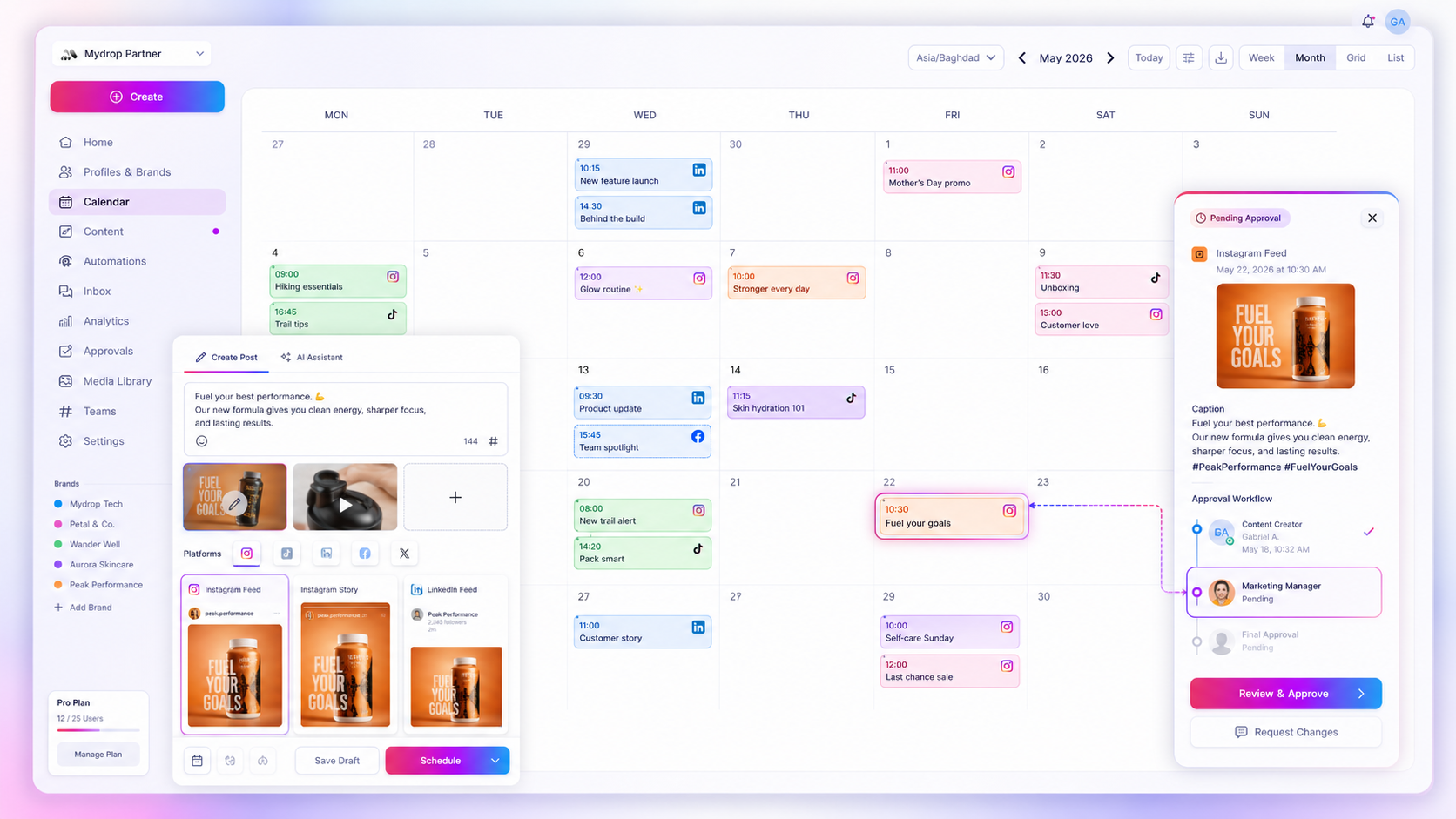
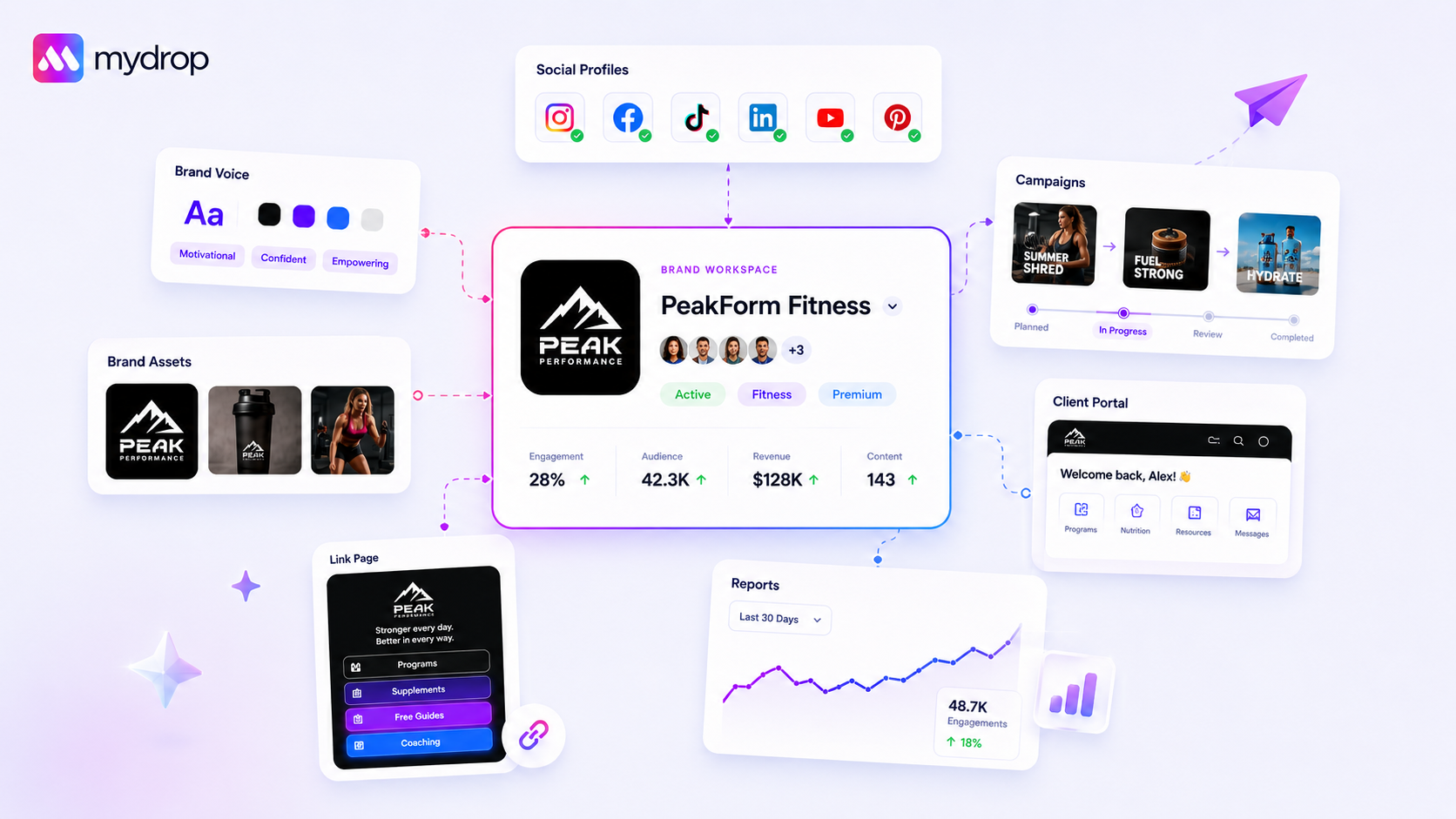
At Mydrop, we approach brand management not as a digital closet, but as the central nervous system for your agency’s output. When we built our Brand Groups, we skipped the "just store it" approach entirely. Instead, we focused on making your brand identity actionable-meaning every color, asset, and tone guideline lives where the work actually happens, from AI content generation to the final publishing dashboard.
When you create a brand in Mydrop, you aren't just creating a folder; you’re creating an operational container. You group profiles together, and instantly, your team has access to the correct logos, fonts, and hex codes without ever leaving the workspace. If you're managing dozens of channels for a single client, you can add or remove profiles in seconds without needing to reconnect a single account.
More importantly, this setup feeds directly into our AI and publishing tools. Because the platform understands the brand context-the tone, the target audience, the specific calls to action-your AI prompts aren't starting from scratch. They are automatically grounded in the client’s identity. It transforms brand management from a manual lookup task into an automated, guardrailed process.
A simple shortlist checklist
Before you commit to a new tool, run it through this quick diagnostic. If a solution can't hit these three operational markers, you’re just buying another place to lose your files.
| Feature Check | Why it matters | Decision Rule |
|---|---|---|
| Direct Asset Flow | Eliminates "download-upload" fatigue and versioning errors. | Yes if assets sync directly into the AI/composer. |
| Dynamic Membership | Allows you to pivot client strategy without massive re-setup. | Yes if you can toggle profiles in/out instantly. |
| Contextual Intelligence | Ensures tone and target audience aren't just text files. | Yes if the tool applies this data to AI and reports. |
Your Action Plan for This Week
- Audit one "High-Complexity" client: Select a brand with at least five social channels and multiple stakeholders.
- Track the "Asset Hunt": For the next week, have one team member log every time they have to stop work to search for a hex code, a logo, or a tone document.
- Compare against the Scorecard: If that total time exceeds 30 minutes for just one client, your current "storage-first" tool is actively leaking agency profitability.
Conclusion
The difference between a frantic agency and a thriving one often comes down to this: do your tools help you create, or do they force you to manage the chaos of creation? We’ve seen teams move from scattered, reactive file management to a proactive "intelligence-first" model, and the results are almost always immediate-happier stakeholders, less burnout, and a team that spends their time crafting strategy rather than hunting for file names. Stop settling for a place to put your brand assets. Build an environment that applies them for you.