
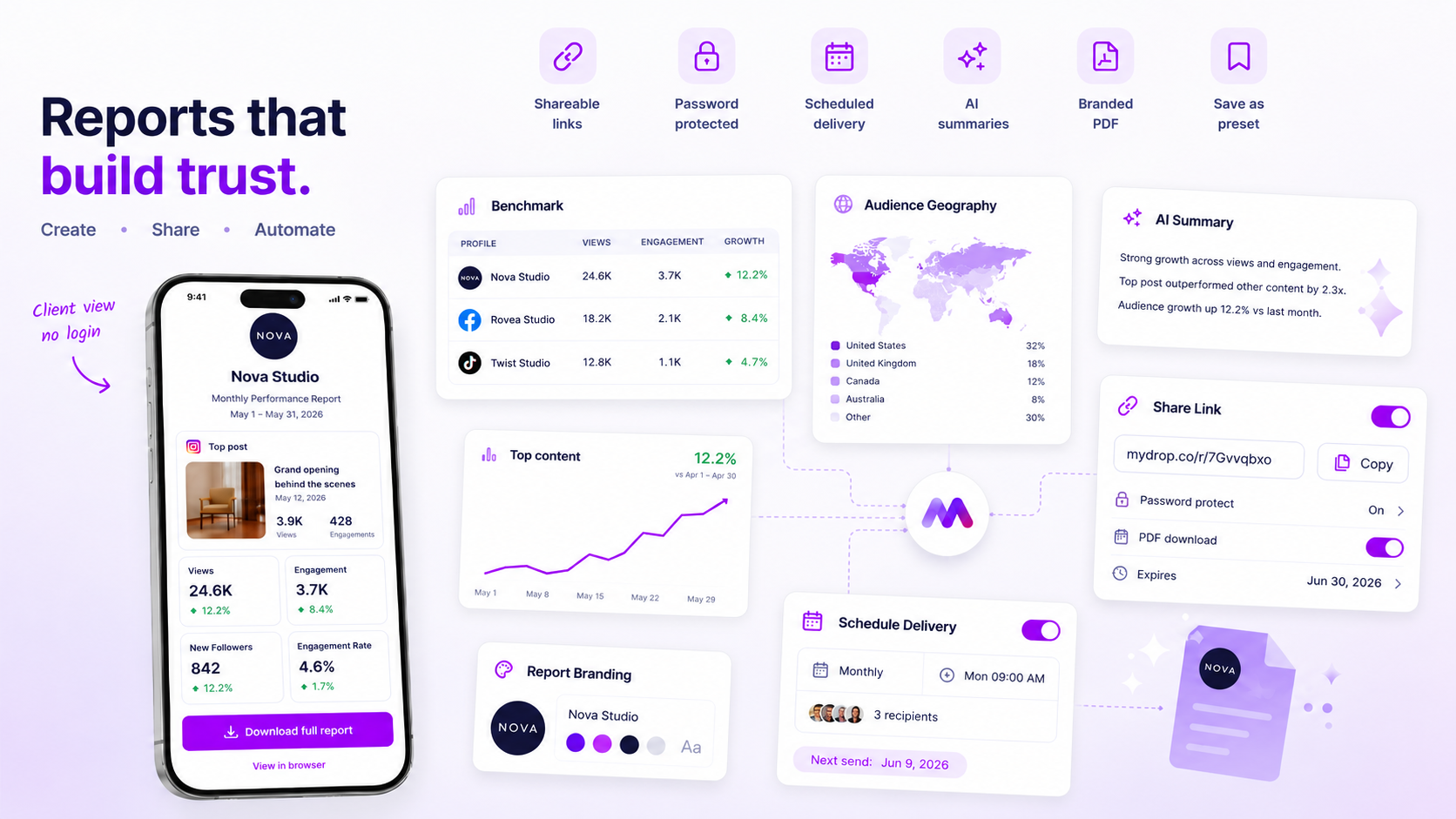
Your client didn't receive the report because the "Share" settings you configured last month are likely locking the door today. When automated email delivery is tied to a share token, a single change to expiration dates, password requirements, or PDF access permissions can break the delivery pipeline without triggering an obvious error in your dashboard. You aren't losing the data; you are losing the handshake between your report and the client's inbox.
We know the "report-client-feedback" loop is the heartbeat of your agency’s value. It is infuriating to spend hours crafting high-impact insights only to have them die in the void of a spam filter or a broken access link. This work is messy, and we have all been on the receiving end of the "I cannot see the numbers" email at 6 p.m. on a Friday.
The most common point of failure isn't the platform; it is the human assumption that a "share link" is static. We treat reports like "set it and forget it" mail, when in reality, they are live, permission-gated portals. To stop the cycle of chasing access requests, you need to treat every shared report as a living dependency that requires a quick health check before the "Send" button is clicked.
What changed before the numbers moved
In our experience at Mydrop, most delivery failures stem from "configuration drift." You build a perfect report, enable a share token with a 30-day expiration, and attach it to a recurring email schedule. Everything works perfectly for a month. Then, you decide to tighten security for a high-profile client by adding a password, or you update the report structure and inadvertently toggle off the "Allow PDF Download" flag.
Suddenly, your automated email schedule is trying to deliver a payload that no longer matches the client's original access pattern. The report exists, the data is fresh, but the access token is now asking for a password that the automated email body doesn't contain, or the link has quietly expired while you weren't looking.
Here is where teams usually get stuck:
- The Expiry Trap: Share tokens are often set with fixed expiration dates. If your recurring schedule outlives that date, the link simply dies.
- The Permission Gap: You might update the report to be "internal only" for a quick review, forgetting that the automated email is still firing to the client.
- The PDF Paradox: If you disable PDF downloads to save bandwidth, but your client has automated tools that look for those files, the "Report" effectively disappears from their workflow.
Operator rule: Treat report configuration changes like code deployments. If you touch the
Sharesettings in the Report Share Modal, you must re-verify the delivery schedule immediately.
At the enterprise level, where you are managing dozens of stakeholders, this isn't just a technical glitch; it is a coordination debt. You are essentially moving the goalposts on your client every time you adjust security settings without resyncing the delivery method. The goal isn't just to send the report; it is to ensure the entire access package-link, password, and permissions-arrives as a functional unit.
The failure patterns to check first

When your automation pipeline goes silent, the urge is to blame the network or the software. In our experience, it is almost always a configuration disconnect. You have an automated trigger waiting to fire, but the Report Share Modal is holding the gate shut.
Before you re-run the entire job, walk through this quick audit.
| Checkpoint | What to look for | Why it kills delivery |
|---|---|---|
| Share Link State | Disabled | The system cannot generate a link if the toggle is off. |
| Expiry Date | Past date | Expired tokens return a "generic unavailable" signal to the client. |
| Password Requirement | Active | If the recipient doesn't have the password, the link is dead to them. |
| Recipient List | Empty/Stale | No recipient, no email; if the user was removed from your workspace, the notification fails. |
Common mistake: We often see teams update the report content but leave the share settings untouched. If that link was set to expire a month ago, it is already dead, even if your new data is pristine.
The proof that separates signal from noise
The fastest way to diagnose the issue is to bypass the email entirely and test the share token directly. If you cannot open the report link in an incognito window, your client definitely cannot open it in their inbox.
Use this "sanity check" workflow to identify the gap:
- Extract the public link: Grab the direct URL from your report sharing configuration.
- Go Incognito: Open that link in a private browser session to simulate exactly what your client sees.
- Evaluate the response:
- If you see an "Unavailable" page: The link is disabled, expired, or the token is malformed. This is your culprit.
- If you are prompted for a password: You have a password protection layer that the automated email may not be handling correctly for this specific recipient.
- If the report loads but the PDF download button is greyed out: Check your
allowPdfDownloadsetting. Your client is likely stuck at the "read-only" stage when they need a hard copy for their own internal reporting.
The cold reality: If the report doesn't load in a clean browser session, no amount of re-sending the email will fix the problem. Your automated delivery is only as reliable as the public access rules you define in the dashboard.
Decision check: Never assume a share link is live just because the report exists. If you change any security parameter-password, expiry, or PDF access-consider the existing delivery pipeline effectively "reset" and re-verify the link immediately.
This simple ritual moves the burden from "guessing why the email failed" to "seeing exactly what the client sees." It transforms a frustrating tech support chore into a three-minute check that saves you from the "I didn't get your report" panic later in the week.
What to fix this week
If you are currently chasing ghosts in your inbox, stop treating your report links as static assets. The most effective move right now is to standardize how your team handles the "Share" lifecycle. You don't need a massive policy change to see immediate relief; you just need a repeatable ritual that bridges the gap between your dashboard and the client's inbox.
Adopt this Verify-Before-Send ritual to turn a recurring headache into a 30-second task:
- Status Check: Before triggering any email delivery, open the Report Share Modal and confirm the status is
Enabled. If the toggle is off, your automation isn't broken; it's simply paused. - Access Audit: Look at the
ExpiryandPasswordsettings. If you recently tightened security on a report, remember that existing links might now be invalid. If you are unsure, hitClear Passwordand set a fresh one to ensure you know exactly what the client needs to open. - The "Live Link" Test: Never rely on the automated email as your only test. Copy the public report URL and try opening it in an Incognito/Private window. If you see the report details, the link is sound. If you hit a gate, that is exactly what your client is seeing.
Workflow check: A report link should be treated as a temporary key, not a permanent address. If the report needs to stay accessible for more than 30 days, set an expiration that aligns with your next review cycle to prevent "link rot" for your clients.
When to stop diagnosing and change the workflow
Sometimes, the issue isn't a specific setting-it is the process itself. If your team is spending more than an hour a week manually troubleshooting individual email shares for dozens of stakeholders, you have outgrown the "one report, one link" model. You are suffering from coordination debt, where the time required to manage the access rights outweighs the value of the report itself.
When you hit this ceiling, move your operations from email-based delivery to a centralized hub.
| Delivery Model | Best For | Tradeoff |
|---|---|---|
| Direct Email Share | High-touch, executive, or single-client reporting. | Requires manual re-validation if report settings change. |
| Brand Portal | Multi-brand teams, agencies, or ongoing client retainers. | Higher upfront setup time; requires client onboarding. |
If you find yourself frequently disabling and re-enabling links, or managing password spreadsheets for your team, stop. At Mydrop, we see the most successful teams transition to a Brand Portal once they reach a threshold of five or more active clients. Instead of pushing content out to 50 individual inboxes, you provide a single, professional home where clients can self-serve the latest data. This eliminates the "I can't see the numbers" email entirely, because the client owns their own access.
Conclusion
The goal of your reporting isn't just to generate numbers; it’s to build trust. When an automated email fails, that trust takes a hit, not because the data is wrong, but because the access is unreliable. By treating your share links as active, gated portals rather than static messages, you stop playing IT support and start acting like the strategic partner your clients hired.
Fix your configuration, standardize your verification, and if the volume gets too high, move the conversation from an inbox to a portal. Your clients will appreciate the consistency, and your team will finally get those Friday afternoons back.