The fastest way to break the design handoff loop is to stop treating your media library as a graveyard for downloaded files and start treating it as an active bridge directly connected to your design and storage tools. When you manually export a graphic from a workspace and drag it into a browser, you are doing more than moving a file. You are manually creating a stale copy, disconnected from the source, that becomes obsolete the moment a designer updates a single layer or fixes a typo.
We get it-your desktop is probably littered with "Final_v2_FINAL.png" copies, and you have spent more hours uploading assets than actually shipping content. It is messy, it is mind-numbing, and it is the kind of invisible friction that makes creative teams burn out. You are not alone in this; most teams we work with are not suffering from a lack of creativity, but from a terminal case of manual movement.
Where the handoff is actually breaking
The "download tax" happens because your publication platform and your design tools are effectively strangers. Every time someone on your team performs a manual export, they introduce a point of failure. The metadata stays behind, the version history breaks, and visibility into what is actually "final" vanishes.
Here is what that manual cycle usually looks like in an enterprise environment:
| Stage | Manual Workflow | Mydrop Service Import |
|---|---|---|
| Ingestion | Export, download, locate file | Connect source, select files |
| Tracking | Rename manually, track versioning | Auto-sync metadata |
| Visibility | Email/Slack file links to team | Direct folder access |
| Integrity | High (risk of wrong version) | Guaranteed (direct sync) |
When your team relies on this manual shuffle, you are creating a hidden backlog of work. Every campaign launch or last-minute creative swap requires someone to stop their real work to perform manual file management. This is where most teams get stuck: they confuse activity (moving files) with productivity (getting assets ready for the brand).
Common mistake: Treating local storage as the middleman for your content. If you are still downloading files to your desktop just to move them to your social dashboard, you are building a wall between your designers and your audience.
The operational reality is that high-volume publishing requires a direct flow. By connecting tools like Canva, Google Photos, or Drive directly to your media library, you remove the "file-shifter" role entirely. You no longer chase the latest version because the version you import via a direct service connection is the source of truth, not a local copy that was forgotten on a hard drive. If you want to scale without losing your mind, the goal is to make the asset movement invisible.
The coordination debt checklist
If your team is managing more than a few brand profiles, the friction of moving assets manually is likely costing you hours every week. This is what we call organizational drag. It starts with a simple download and quickly turns into a versioning nightmare that nobody has time to manage.
To see if you are operating in the danger zone, run this quick audit of your current creative handoff. If you check three or more of these boxes, your workflow is actively leaking time:
| Audit Item | Why it matters |
|---|---|
| Duplicate file versions exist on local machines for the same project. | You cannot guarantee which file is the final approved version. |
| "Waiting for assets" is a recurring delay in your publishing schedule. | Creative teams are bottlenecked by manual file transfers. |
| Renaming files is a routine part of your upload process. | You are manually patching metadata gaps instead of automating them. |
| Designer to manager handoffs require email, Slack, or separate file links. | Every transfer is an opportunity for communication to break down. |
| Brand compliance is verified by manual spot-checking files. | You have no automated way to ensure the right assets are being used. |
When you find yourself hunting for a file that a designer finished three hours ago, you are not just losing time; you are creating a point of failure. Every extra step between a finished design and a social-ready asset is a chance for a typo, a wrong version, or a missed deadline.
How to move decisions closer to the work
The most effective way to eliminate this friction is to stop shifting files between disconnected islands. You need a bridge that lets your source design tools feed directly into your media library.
Instead of the standard download-upload loop, we recommend connecting your creative tools like Canva directly to your publishing environment. This allows your team to skip the staging folder entirely.
Operator rule: If a file has to touch your local desktop to get to your social platform, it is already a legacy asset.
When you use a direct service ingestion, you change the workflow from a manual chore to a simple selection process:
- Authorize the connection: Link your design tool to your management platform once.
- Access the library: Open your media import modal directly within your workspace.
- Select and ingest: Pick your finalized designs or folder assets and bring them into your media library in one go.
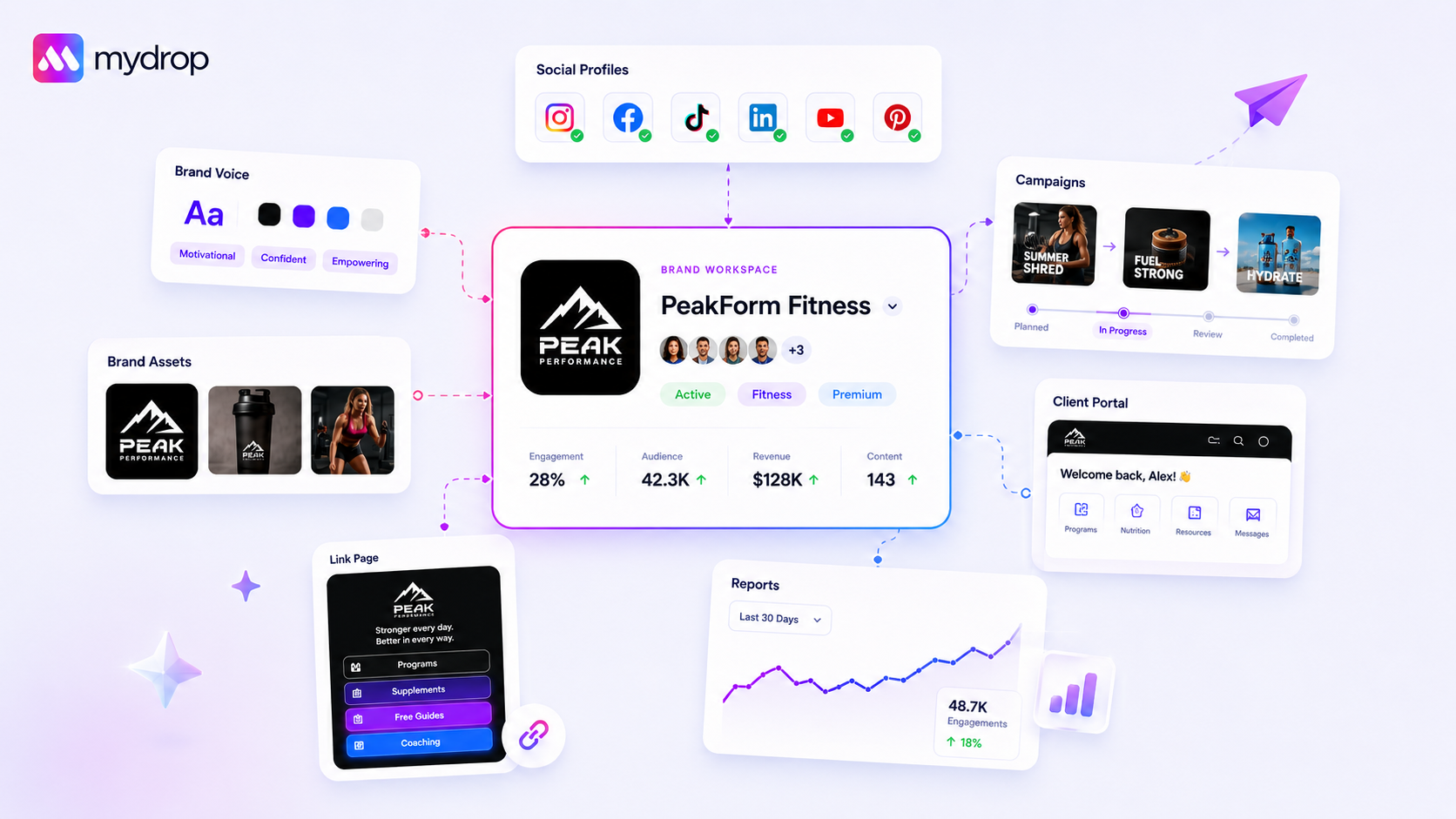
At Mydrop, we designed the Service Import capability specifically to kill this manual labor. By connecting Canva or Google Drive as a service, your creative assets flow directly into the folders where your publishing, reporting, and AI workflows already live.
This is the shift from "moving files" to "managing creative." Once the connection is live, your designers can drop a finished asset into a shared Canva project, and your social leads can pull it directly into the library without ever opening a browser download folder. It cuts out the manual renaming, the version confusion, and the constant back-and-forth messages asking if you have the "real" final file.
This isn't about making the process slightly faster; it is about changing the baseline of what it takes to launch a campaign. When the creative team and the social team share a single, live view of the assets, the "waiting for file" bottleneck disappears.
The roles and rules that reduce rework
The best way to stop the "wait for the file" dance is to assign clear ownership for how assets enter your shared library. When everyone is responsible for file movement, no one actually manages it, which is why your shared folders end up as chaotic graveyards of duplicate exports.
At Mydrop, we see the most successful teams designate a Creative Gatekeeper for every campaign. This person is the only one authorized to pull finished designs from Canva or source files from Drive into the shared workspace. By centralizing this, you eliminate the "which file is final" confusion that plagues larger marketing teams.
Decision check: If a design lives in Canva, it does not exist for the social team until it has been imported into the central gallery folder. No local downloads allowed.
Once you establish this rule, you shift the team's focus from tracking files to tracking campaign status. It stops the frantic pinging on Slack asking for a link and replaces it with a simple, standardized import. You can set up your Service Import to map Canva exports directly into your project-specific media folders. This ensures that when a designer tweaks a color or adjusts a typo, the update is a single-click sync rather than a re-upload cycle.
The weekly habit that keeps the system honest
High-volume content operations fail when they become reactive. Even the best setup will drift into disorder if you do not perform a routine reset.
We recommend a 15-minute "Archive and Audit" session every Friday afternoon. This isn't about deep cleaning; it’s about making sure your digital front door is actually clean for the Monday rush.
| Activity | Frequency | Objective |
|---|---|---|
| Folder Sweep | Weekly | Move stale or temporary campaign files to deep archive. |
| Quota Check | Weekly | Ensure your active storage usage remains under platform thresholds. |
| Service Sync | Weekly | Remove old service connections (like last season's freelancer Canva account). |
| Naming Audit | Monthly | Ensure assets follow your team's established naming convention. |
By treating your media library like a workspace rather than a storage locker, you stay ahead of the technical clutter that typically forces teams to abandon their systems. When you know exactly where the latest assets sit, you can move from a state of constant file management to actually executing on your brand strategy.
Conclusion
The bottleneck is rarely the creative software itself. It is the manual friction we build around moving files from one place to another. Every time a team member stops to download, rename, and re-upload an asset, they are sacrificing focus and risking version errors.
Stop treating## The roles and rules that reduce rework
The best way to stop the bleed of lost hours is to move from a culture of "sending files" to a culture of "granting access." When you force every team member to manually manage their own local copies of assets, you essentially guarantee that someone is working off an outdated version.
To break this, you need clear operational boundaries. Assign one person to be the "Library Custodian" for a specific brand or campaign. Their job isn't to be a gatekeeper but to ensure that the primary repository-like the folder connected to Mydrop-is the only place team members go to grab creative assets. If a designer changes a graphic in Canva, they don't email an update; they update the design, and the import tool handles the rest. By centralizing the ingestion point, you remove the need for anyone to ask "is this the right version?"
Workflow check: If a file exists on a local desktop or in a chat thread, it is already a legacy version. Default to the shared library to ensure you are looking at the current, approved asset.
Establish a firm rule for your design-to-publishing handoff: No asset is "ready" until it has been imported into the central gallery folder. This creates a clear signal for the team. If the folder is empty, the creative work is still in progress. This removes the ambiguity that leads to half-finished assets making their way into social queues.
The weekly habit that keeps the system honest
You can build the perfect architecture, but it will drift into chaos without a weekly reset. We have seen teams manage hundreds of brand profiles only to find their media libraries clogged with abandoned test files, blurry thumbnails, and duplicate exports from three months ago.
Treat your library like a workspace, not a digital attic. Every Friday, take fifteen minutes to run a "clean-up sprint." Use this simple cadence to keep your team’s focus sharp:
| Step | Action | Objective |
|---|---|---|
| 1. Audit | Review the Imported folder for the week. |
Ensure all recent creative matches the approved brief. |
| 2. Archive | Move finished campaign assets to permanent storage. | Keep the active library clutter-free and searchable. |
| 3. Purge | Delete un-used test exports or failed imports. | Stop the accumulation of dead files that slow down search. |
| 4. Sync | Check service connections (Canva/Drive). | Verify that tokens are fresh and ready for next week. |
This isn't about being a neat freak. It is about speed. When your team knows they only have to search through a curated, active library of current assets, they stop wasting twenty minutes hunting for the right file. They find it, pull it, and get back to work.
Conclusion
The bottleneck of manual asset movement is rarely about the tools themselves; it is about the friction we tolerate in our daily habits. By connecting your creative sources directly to your publishing environment, you move from a reactive state of tracking files to an active state of managing content.
Start by auditing how much time your team spends downloading and re-uploading assets. If that number is more than an hour a week, you are paying a heavy tax for a problem that is entirely avoidable. Connect your services, enforce the folder-first rule, and reclaim that time for the creative work that actually moves the needle for your brand. The goal is to reach a point where your media library is a living, breathing extension of your design team, not just a holding pen for static files.