
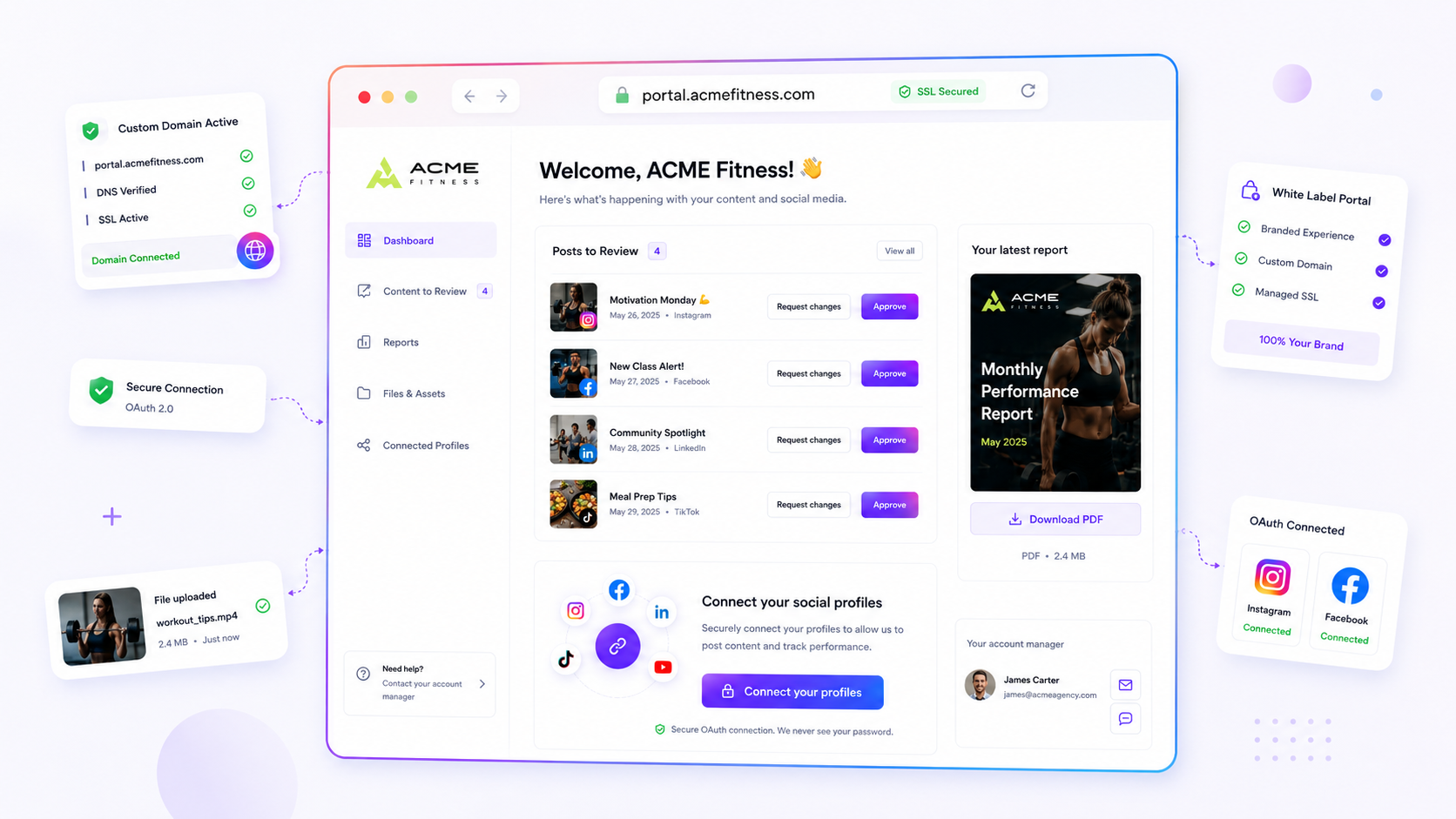
The fastest way to shrink your campaign approval cycle is not to ask clients to approve faster, but to remove the friction of hunting through email threads to find which feedback applies to which specific asset.
We get it. You are stuck in the loop of doom: emailing versions, chasing approvals, and constantly worrying if a client missed an attachment or is looking at the wrong version. It is messy, draining, and kills your creative momentum. The hidden cost isn't just the delay, it is the coordination debt. Every fragmented email exchange is a chance for intent to be misinterpreted, versioning to break, and stakeholders to feel disconnected from the creative process.
This guide will help you audit your approval workflow to identify exactly where you are losing time and how to fix it by shifting from email-based feedback to a centralized, source-of-truth portal.
What changed before the numbers moved
In the early days of social media, simple email threads worked because the stakes were low and the stakeholders were few. Today, enterprise teams and agencies are juggling hundreds of brand profiles across multiple markets. When you rely on email, you are essentially asking your client to treat their inbox like a project management tool. It fails for the same reason a spreadsheet becomes a crime scene: it lacks a single, immutable version of the truth.
Most teams assume they have a "slow client" problem when, in reality, they have a "fragmented context" problem. If a legal reviewer has to dig through a chain of ten emails to find the latest PDF, they are not reviewing content; they are hunting for it.
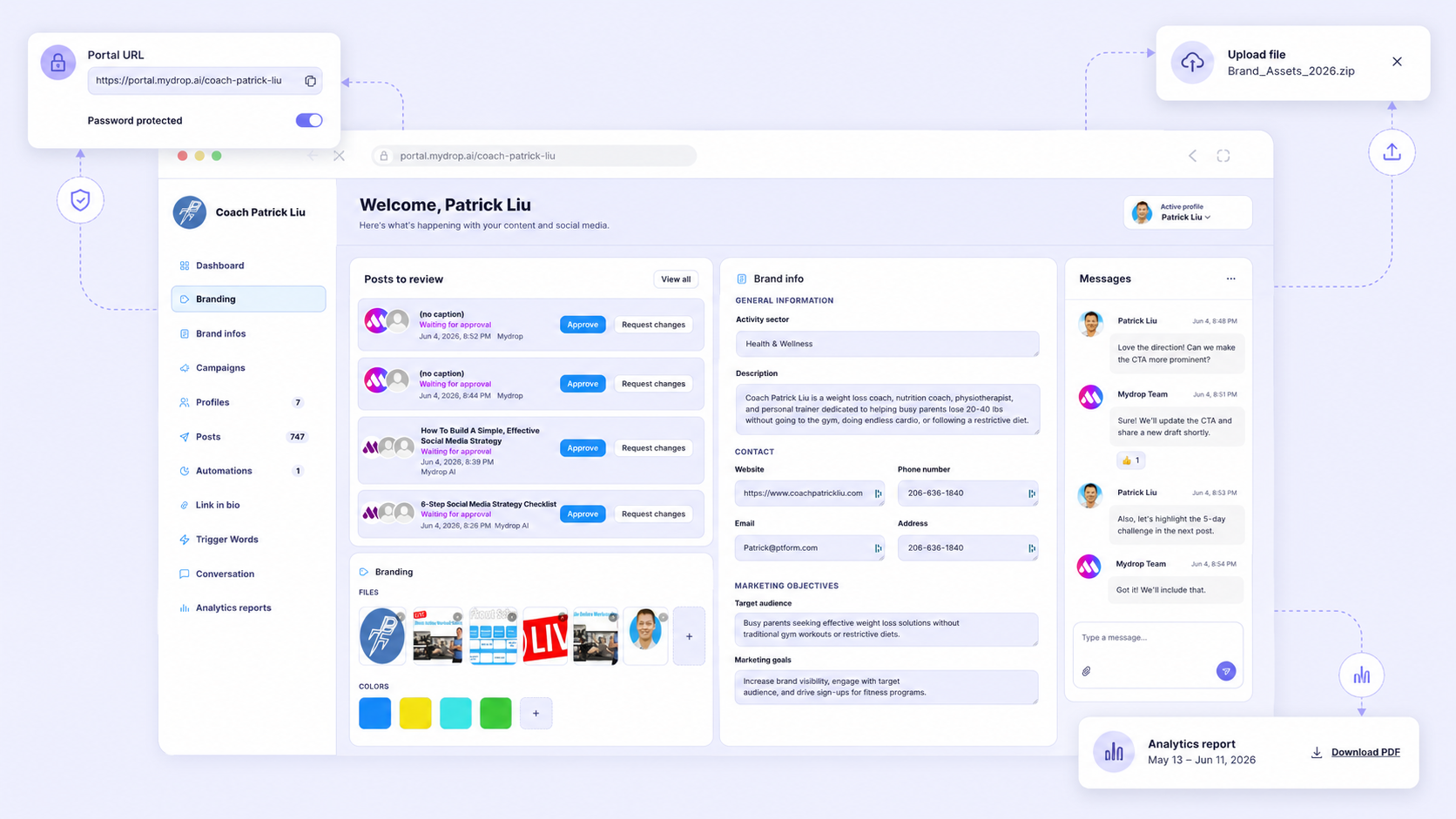
We see this pattern across thousands of accounts. Teams move from slow to fast not by working harder, but by changing how information is presented. At Mydrop, we built the Brand Portal specifically to end the email-chasing cycle because we know creative velocity should not be held hostage by a missed notification. By consolidating files, post previews, and feedback into one password-protected space, you stop treating your client as a message recipient and start treating them as a partner in the workflow.
Here is how the latency actually breaks down when you switch the delivery mechanism:
| Workflow Model | Average Approval Latency | Primary Friction Point |
|---|---|---|
| Manual Email Chain | 3 to 5 business days | Manual version tracking, lost context, multi-channel feedback |
| Centralized Portal Review | 4 to 6 business hours | None (all stakeholders align on a single source of truth) |
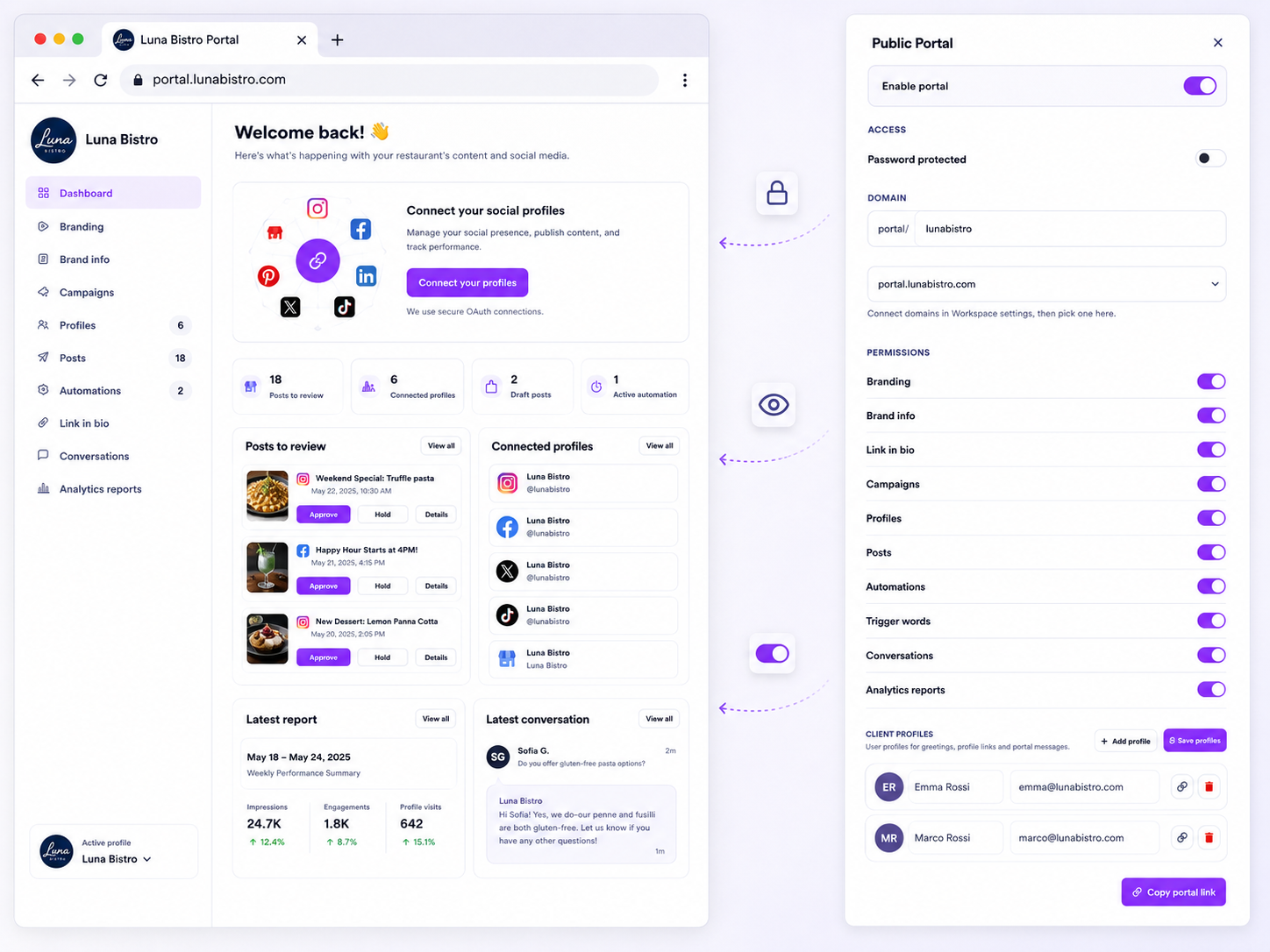
Note: The latency reduction assumes the portal is configured with permission-gated access, allowing specific stakeholders to sign off without needing a full platform account.
The transition is less about the technology and more about the shift in ownership. When you move to a portal, you aren't just changing a link; you are changing the expectation that the client can self-serve the information they need to say "yes."
The failure patterns to check first
When we audit workflows for agencies managing dozens of brands, we almost always find the same three cracks in the foundation. It is rarely a lack of talent on the team; it is a structural failure where the tools themselves are actively working against your speed.
Here is the Feedback Leak checklist. If you are doing these, you are bleeding time.
- The Attachment Shuffle: You are sending files via email or chat. Once a file is sent, the version you sent is already dead. If the client makes a change, you now have
Final_v2_edit.pngliving in an inbox somewhere, disconnected from the original post metadata. - The Reply-All Bloat: You are CCing four people on an approval thread, but only one person has the authority to actually say "go." The other three are just noise, and the decision-maker is buried under a mountain of "Looks good to me" emails that provide zero actual value.
- The Context Gap: Your client has to look at a calendar in one tab, a file in their email, and a strategy doc in a shared drive. Every time they have to switch context, their focus breaks, and your approval gets pushed to tomorrow.
Common mistake: Treating email as a database. Email is a communication tool, not a project management system. When you force a communication tool to store assets, versions, and feedback histories, you end up with a spreadsheet that has become a crime scene.
The proof that separates signal from noise
We have seen this across thousands of posts. When you strip away the manual friction and move to a centralized review space, the math changes instantly. We call this the Approval Latency Scorecard.
| Metric | Manual Email Chain | Centralized Portal Review |
|---|---|---|
| Version Tracking | Manual (search by timestamp) | Automated (linked to live post) |
| Feedback Loop | 24-48 hours per cycle | 2-4 hours per cycle |
| Stakeholder Visibility | Fragmented (hidden in threads) | Transparent (centralized activity) |
| Deliverable Access | Request via email | Self-serve download/report |
| Result | High coordination debt | High creative velocity |
Note: Latency estimates are illustrative averages based on common agency workflows. Manual chains assume three touchpoints with external stakeholders; portal review assumes single-source, in-context approval.
The shift from email to a Brand Portal is not just about making things look professional. It is about removing the "hunt and peck" work that consumes your team's energy. At Mydrop, we built our portal because we know that creative velocity should not be held hostage by a missed notification or a broken link.
When your client has a single, secure URL where they can see the post, approve it, and grab the final report, you stop chasing them for status updates. You start acting like a partner. The goal is to move from being an email-triage center back to being a creative team. If your client can't approve it in thirty seconds, you have a design flaw in your process, not a "busy client" problem.
What to fix this week
If you are currently chasing approvals via email, you have a coordination debt problem that will not solve itself. You do not need a three-month migration project; you need a hard reset on how your team and your clients interact with assets. Start by picking one high-volume, low-risk brand and moving their review process entirely out of your inbox.
Use this simple Approval Readiness Checklist to gauge if your current process is leaking time:
- Can a client view the asset without downloading it? (If they have to open an attachment, you have lost control of the version.)
- Is there a single, persistent link for this brand? (If you are sending new URLs every week, you are creating search friction for the client.)
- Can the client provide feedback without starting a new email thread? (If they are typing "See attached" in a new email, your context is already fragmenting.)
- Does the client know exactly who needs to sign off, or are they waiting for you to tell them? (Clarity is the fastest route to a "Yes.")
If you checked "No" to more than two of these, your bottleneck is structural. At Mydrop, we often see teams try to solve this by adding more email reminders. That rarely works. Instead, set up a Brand Portal for that one test brand. It gives the client a dedicated space to view posts, chat, and provide feedback in one place. You get a single source of truth, and they get a dashboard that actually makes their day easier, rather than just filling it with more notifications.
When to stop diagnosing and change the workflow
There is a moment in every campaign lifecycle where "just one more email" turns into a catastrophe. You have hit this threshold when you find yourself manually cross-referencing a client email from Monday with a Slack message from Tuesday, all while trying to remember which version of a graphic is actually the final one.
Stop diagnosing when:
- You are spending more than 15 minutes per campaign just hunting for the "latest" version of a document or asset.
- A client has asked, "Wait, what did we decide on that last post?" more than once in a week.
- You are manually creating status reports for clients because they cannot see the progress themselves.
At this point, you are no longer managing a social media campaign; you are managing a file-retrieval service. That is an expensive, low-value use of your team's time. The shift here is moving from asynchronous, un-trackable email to synchronous, portal-based review.
When you move to a portal, you aren't just changing a tool; you are changing the power dynamic. You move from being an "email-chaser" to a partner who provides a clear, transparent workspace. Clients stop asking "What's the status?" because they can see it. They stop emailing feedback because they can comment in-context.
Conclusion
The messy middle of campaign management isn't a lack of creativity; it is a lack of coordination. You have the talented team, the great assets, and the strategy. If those are being held back by a slow approval cycle, it is time to stop blaming the client's response time and start looking at the pipeline.
One link, one version, one thread. When you centralize your workflow, you strip away the noise. You stop trading emails and start trading approvals. It is a small operational pivot, but it is the difference between constant firefighting and a campaign engine that actually hums.
Your creative velocity is too important to be kept in an inbox. Move the work to a portal, clear the path, and get back to the work your team was hired to do.