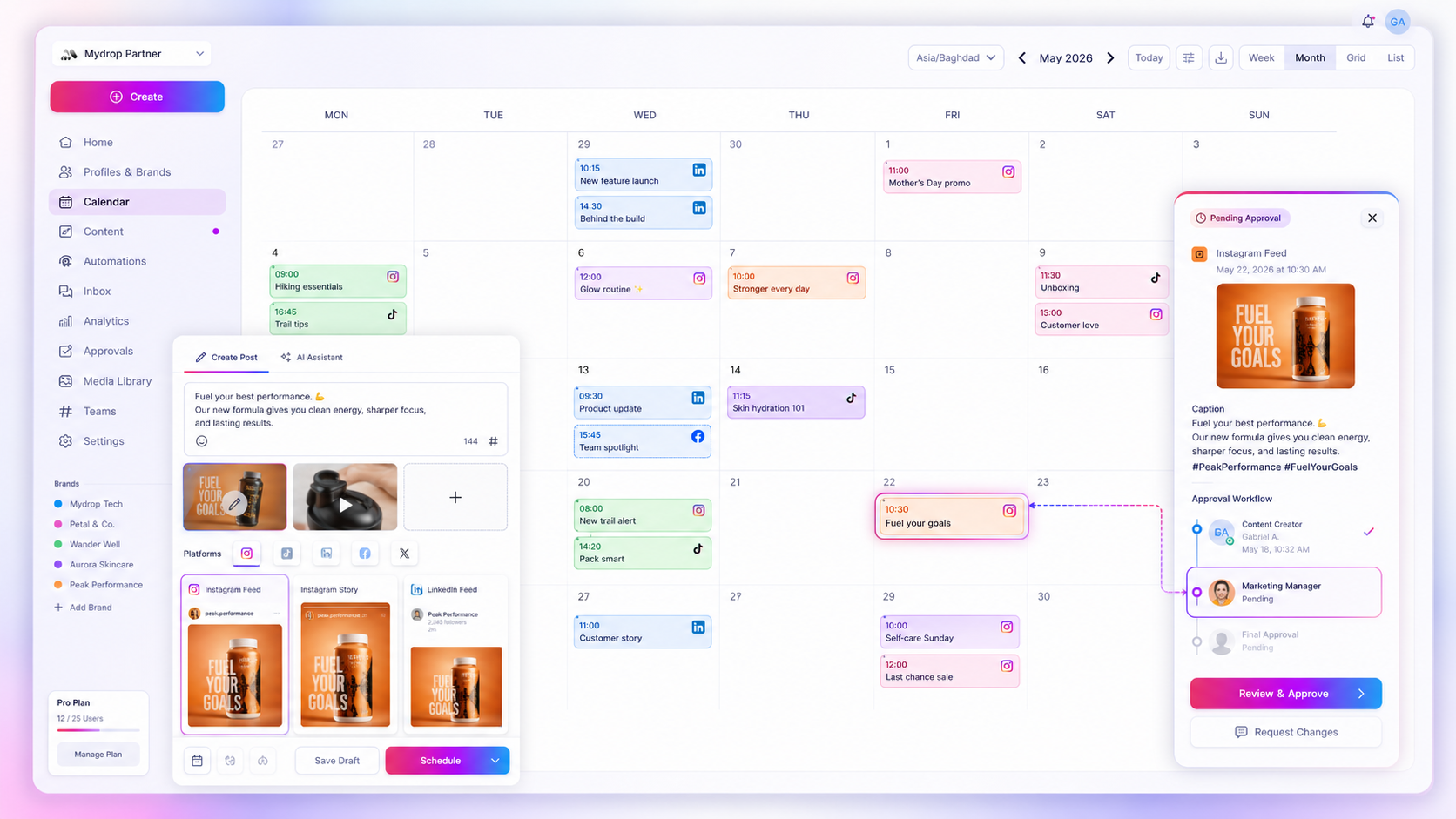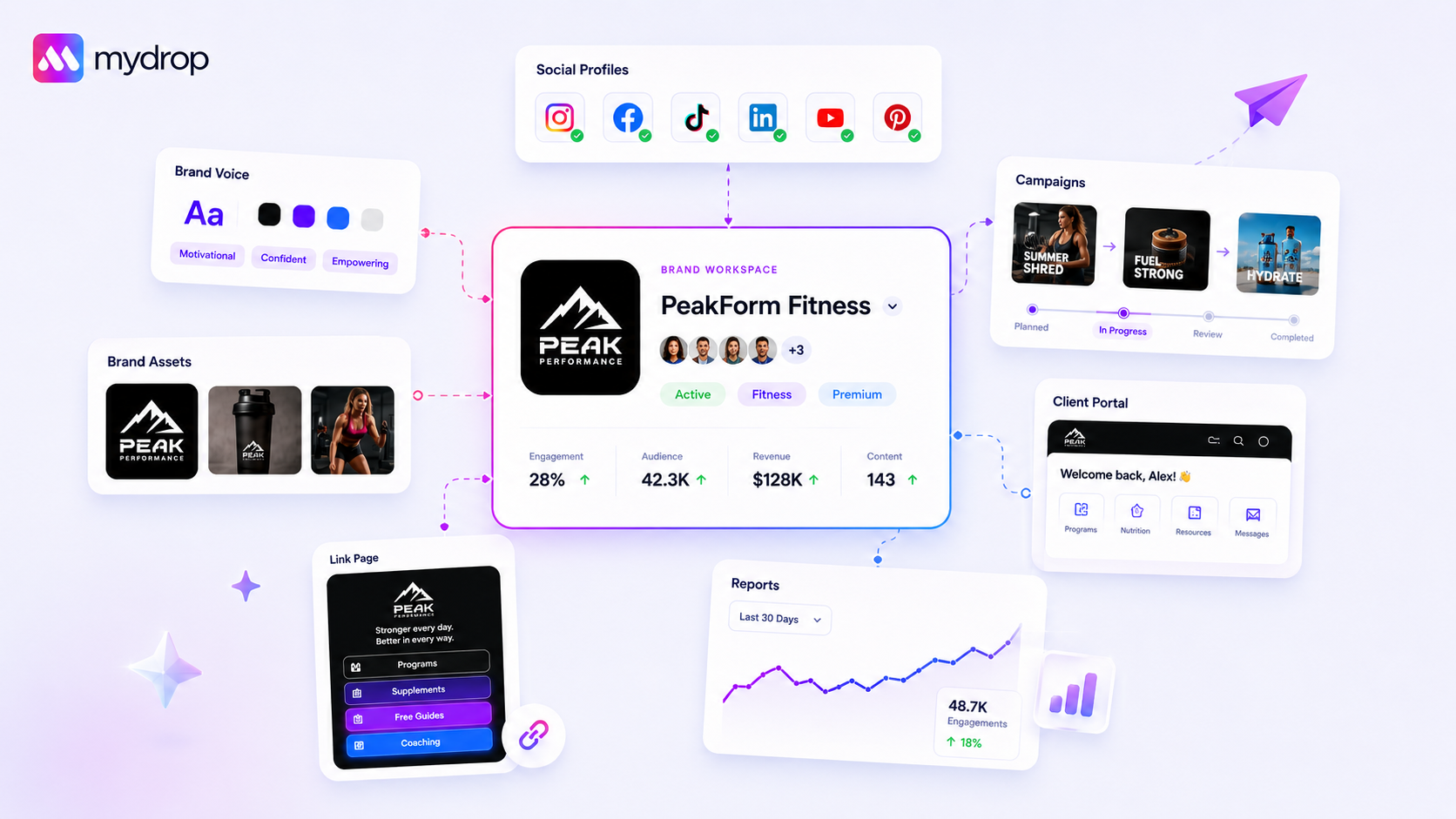
Stop treating your media library like a digital attic where you store everything "just in case" it becomes relevant again. The decision to purge a file should never be based on file size or how long it has been sitting in a folder, but on its reference footprint. If an asset has zero linkages to your current brand folders, open campaigns, or active reports, it is not an archive-it is just noise that slows down your team’s creative search and clutters your workspace.
We have all been there: staring at a folder of two thousand assets, terrified that deleting a single PNG will break an important report or make a future campaign impossible to piece together. This creates a hidden form of coordination debt. When your team spends more time scrolling through irrelevant visual debris than actually designing, you are paying a "hoarding tax" on every single campaign.
The decision each metric should trigger

At Mydrop, we have seen teams managing hundreds of brand profiles spiral into this exact trap. The solution is to stop guessing and start auditing based on usage. You need to transition from a "save-everything" mentality to a reference-aware lifecycle. When you rely on metadata-like specific brand IDs or campaign linkages-rather than visual memory, the decision to hit delete becomes a purely objective checklist.
Here is the 3-tier scorecard to help you differentiate between assets that are working for your brand and those that are simply blocking your path.
| Status | Definition | Recommended Action |
|---|---|---|
| Active | Linked to current campaigns or active brands | Keep, tag, and verify usage |
| Stale | No current links, last touched > 6 months ago | Archive to an "Offline" folder |
| Legacy | No links, zero usage, duplicate variants | Purge (Export to ZIP first) |
Operator rule: If you cannot find a reference path back to an active campaign or brand asset, the file is dead weight.
When you move an asset to "Legacy" status, use your platform's archive feature to download the folder as a ZIP. This is your safety net. It allows you to clear the clutter from your daily search results while keeping a hard copy on a local drive, just in case a stakeholder suddenly asks for a creative asset from two years ago.
This isn't about being minimalist for the sake of aesthetics; it is about protecting your campaign velocity. A clean, reference-checked library ensures your designers find exactly what they need in seconds, not minutes. Most teams do not have a content generation problem; they have a search-time problem caused by a lack of library hygiene.
The scorecard that keeps reporting useful

You have likely seen the aftermath of a "storage-is-cheap" mindset: a library folder named Final_v2_REAL containing three hundred versions of the same graphic, only twelve of which were ever actually posted. This is how creative search dies. When your team searches for an asset to reuse in a report or a new campaign, they should not have to navigate a labyrinth of legacy noise.
To fix this, you need to stop viewing your library as a warehouse and start treating it as a live index of intent. Use this scorecard to audit your folders on a quarterly basis.
| Asset Category | Usage Marker | Decision Rule | Recommended Workflow |
|---|---|---|---|
| Active Campaign | Linked in active post-composer sessions |
Hold | Add to brand-folders for quick access. |
| Historical Asset | Last used in a report > 6 months ago | Archive | Move to Archive/YYYY/Qx to clear main search results. |
| Ghost Files | No reference in any campaign, report, or form | Purge | Download as ZIP, then delete permanently. |
| Derivative Clutter | Multiple crops/edits of one master file | Consolidate | Keep the master, purge the 10+ intermediate "test" crops. |
Decision check: If you cannot link an asset to a specific brand or campaign objective within 10 seconds, it is effectively invisible to your team. Delete it or move it to a cold-storage archive.
What to stop measuring by default
The most common trap we see in enterprise marketing teams is measuring library health by total storage size. Unless you are hitting a hard infrastructure cap, your team does not care about gigabytes. They care about search-time latency.
Stop tracking the size of your uploads and start measuring Time to Asset. If a designer takes longer to find a high-resolution logo in your library than it takes to download it from your website, your library structure has failed.
Here is what you should stop focusing on immediately:
- Total File Count: A high number of files is not inherently bad. A high number of unlabeled, unlinked files is the real cost.
- Storage Cost: In modern SaaS environments, the cost of storing a few extra images is negligible compared to the salary cost of a social media manager scrolling through thousands of dead assets.
- Manual Deletion Logs: Do not force teams to justify every deletion. If the asset has no link to a campaign or brand folder, it should be fair game for a mass-purge.
Focusing on these vanity metrics distracts from the core problem: coordination debt. When your team treats their library like an attic, they are effectively choosing to make every future campaign launch harder than it needs to be. At Mydrop, we see the most successful teams prioritize "folder-first" organization, where assets are moved to a brand-specific context immediately upon upload. It turns the library into a utility rather than a junk drawer.
If your team is currently spending their time digging for assets, you are not failing at creative storage; you are failing at the simple habit of cleaning up after the previous campaign. Start small. Pick one folder-just one-and apply the scorecard above this Friday. The relief your team feels when they can actually find their assets will be the only incentive you need to make it a quarterly ritual.
How to connect metrics to next actions
The data in your dashboard is useless if you treat it like a museum display. Once you have identified a file as Stale or Legacy using the scorecard, you need a move-fast, break-nothing workflow to get it out of the way. We see too many teams pause for days, debating whether a social graphic from three years ago might magically become relevant again.
Here is the operational reality: If you aren't sure, export it.
At Mydrop, we suggest a simple 3-step cleanup routine that keeps your creative search results clean without inducing heart palpitations among your designers:
- Filter by folder/date: Isolate assets that haven't been touched in the last six months.
- Download as ZIP: If you feel that lingering "what if" anxiety, download the folder selection to a local archive. You now have a safety net.
- Purge the reference: Delete the item from the library. Because your library is reference-aware, Mydrop will warn you if that asset is still linked to an active campaign, a brand folder, or a pending report.
Workflow check: If the system flags an active reference during your purge, stop. Do not force the deletion. That link is there for a reason, and manually breaking it creates the kind of coordination debt that ruins your next campaign launch.
The review cadence that makes the model stick
Most library hygiene projects die because they are treated as one-time "spring cleaning" events. That is the wrong approach. You are managing a living, breathing content ecosystem, not a storage locker. You need a ritual that fits into your existing team meeting structure.
We recommend a Quarterly Library Audit. It is short, focused, and gets you out of the weeds before your coffee goes cold.
- Week 1 (Review): Export the "Legacy" and "Stale" counts from your media metadata report.
- Week 2 (Action): The Creative Lead performs the "Safety Export" of stale folders.
- Week 3 (Purge): Delete the confirmed dead weight.
- Week 4 (Tagging): Ensure the remaining "Active" assets have clear descriptions and are correctly filed in brand-specific folders.
This cycle prevents the massive, painful "we have to spend three days cleaning the drive" crunch that happens right before a major product launch or rebrand.
Conclusion
A clean media library isn't just about saving storage space; it is about respecting your team’s cognitive load. Every time a designer has to click past ten versions of an irrelevant placeholder image, you are losing speed.
Stop hoarding "just-in-case" assets that turn your workspace into a digital attic. Start managing your library based on what is actually moving the needle for your campaigns today. Your future self-and your creative team-will thank you the next time you need to find an asset in under five seconds.
The goal isn't to have a small library. The goal is to have a useful one.