
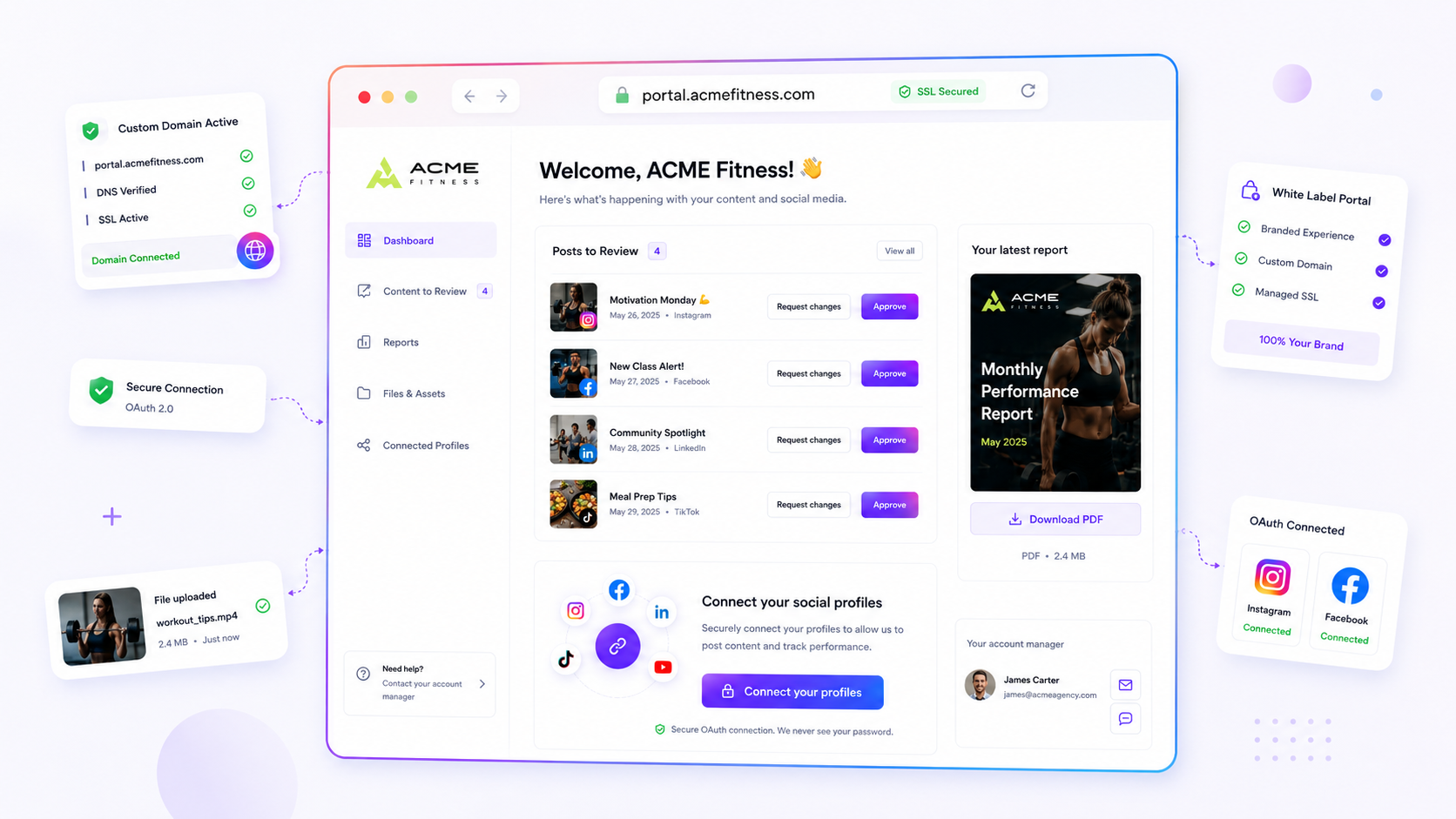
Your custom domain is live, but your clients are seeing a mydrop.bio fallback URL instead of their own brand. You haven't been hacked, and your DNS likely isn't wrong-you are likely stuck in a "provisioning gap" where the surface target and the SSL state have fallen out of sync.
We know the frustration of promising a client a fully white-labeled portal only to see the platform's public branding appear at the worst possible moment. Managing multi-brand infrastructure is messy, and when routing breaks, it feels like you have lost control of the client experience.
The good news is that these inconsistencies are rarely "broken" systems. Instead, they are lifecycle mismatches where DNS propagation, SSL provisioning state, and stale target assignments conflict. You can resolve them by auditing the state of your domain document rather than guessing at DNS records.
What changed before the numbers moved

Routing errors usually surface when someone touches the domain settings after the initial setup. Because Mydrop manages white-label domain infrastructure through an asynchronous lifecycle-verifying DNS, provisioning certificates, and dispatching hosts-a single missed step in a manual update can leave a domain "orphaned."
Before diving into logs or support tickets, reconstruct the recent history of the domain. In our experience, routing drift almost always tracks back to one of these three administrative pivot points:
- The Target Swap: You moved a domain from a Link-in-Bio page to a Brand Portal. If the assignment was interrupted, the system may still be holding the old target ID in cache, leading to a 404 or a fallback to the wrong surface type.
- The SSL Refresh: You manually triggered a certificate refresh because of a warning. If the domain document hasn't polled the new status yet, the host dispatcher may treat the domain as "inactive" and trigger a safety fallback to the public URL.
- The DNS Tweak: Your team updated a CNAME record to point to a new regional load balancer. Even if the change feels minor, the system needs a fresh
Check DNSaction to update the domain document’s internal state.
The most common mistake teams make is assuming that because the domain worked "last week," the current routing error must be a platform bug. In reality, the platform's host dispatcher is simply following its safety logic: if the certificate isn't 100% active or the target ID is unassigned, it will prioritize the public mydrop.bio URL over a broken or unsecure custom experience.
Operator rule: Treat the
Domain UIstatus as the single source of truth for routing. If the UI shows "SSL Error" or "Pending," the dispatch logic will ignore your custom domain entirely, regardless of what your DNS provider claims.
To help you audit these states, use this diagnostic map to identify exactly where the connection is dropping.
| Symptom | Primary Cause | Mydrop Action Required |
|---|---|---|
| Redirects to public URL | SSL Provisioning incomplete | Refresh SSL / Wait for active state |
| 404 on custom host | Stale or missing Target ID | Re-assign domain to active target |
| "SSL Error" warning | DNS record drift | Run "Check DNS" to re-verify |
| Domain listed as "Disabled" | Security flag / Duplicate host | Contact admin to restore workspace access |
Always start your investigation here before changing your DNS records. Most of the time, the infrastructure is healthy; it just needs a nudge to recognize the new configuration.
The failure patterns to check first

When your routing feels erratic, your first instinct is often to scramble through your DNS provider's interface, but that is usually where the rabbit hole starts. We see teams spend hours tweaking TXT records only to realize the issue was sitting right in the platform's domain settings page the whole time.
Instead of guessing, open your domain configuration and look for these three specific markers of a stalled lifecycle:
- The SSL Error Flag: If your domain status shows an error, your certificate provisioning is likely stuck. This often happens if the DNS validation was "too fresh" when the system first polled it. A simple manual trigger to refresh the SSL state usually kicks the process back into gear.
- The Assignment Mismatch: Just because a domain is "Active" does not mean it is pointing to the right place. We have seen instances where a domain was correctly configured for a Link-in-Bio page, but a team member later toggled the target to a new Brand Portal without confirming the update. The domain becomes effectively orphaned, defaulting back to public hosting.
- The Stale Target ID: If you recently deleted a target (like an old campaign portal) and replaced it with a new one, the domain record might still be holding onto a dead reference. You need to explicitly re-assign the domain to the new, live target ID to resolve the routing conflict.
The proof that separates signal from noise
Routing inconsistencies aren't "broken" systems; they are lifecycle mismatches where DNS propagation, SSL provisioning, and target assignments conflict. When you suspect a routing issue, stop troubleshooting the network and start auditing the documentation status.
We use this simple scorecard to determine exactly which part of the infrastructure is holding us back.
| Status Indicator | Likely Root Cause | Required Action |
|---|---|---|
SSL: Pending |
DNS propagation is still catching up | Wait 30 minutes, then trigger Refresh SSL |
SSL: Error |
Invalid DNS entry or CNAME mismatch | Verify CNAME/A-Record and re-run Check DNS |
Status: Active |
Target mapping is outdated or missing | Re-assign domain to the intended active target |
Status: Disabled |
Manual override or security flag | Contact support if no internal change was made |
Decision check: Never assume a domain is healthy just because it resolved correctly in the past; if it displays a public URL, verify the Target Assignment against your current workspace assets before touching your DNS provider.
This is the part most teams underestimate: the platform-side state is the only true source of truth. At Mydrop, we have found that 90% of "broken" domains are simply experiencing a drift between what the DNS says and what the routing engine is currently told to do. If you find yourself staring at a 404 or a public URL, stop chasing the DNS records. Refresh your platform-level state, re-verify your target assignment, and ensure the SSL lifecycle is fully green. Coordination debt in your domain registry is just as real as it is in your content calendar.
What to fix this week
If you are currently staring at a broken redirect, stop refreshing your browser. It is tempting to think that one more DNS update or a cache clear will finally kick the site into gear, but when you are dealing with enterprise-grade infrastructure, manual persistence rarely solves a propagation lag or a configuration mismatch.
Spend fifteen minutes this week running a Domain Health Check across your portfolio. We suggest looking at your active surfaces with this simple protocol to determine if your issue is a simple technical oversight or a deeper coordination failure.
| Symptom | Primary Checkpoint | Action |
|---|---|---|
| Fallback to Public URL | Check sslState in UI |
Refresh SSL certificate |
| 404 on Request | Verify targetId match |
Re-assign surface target |
| Redirect Loop | Audit host dispatch | Check reserved host flags |
| Intermittent Success | Inspect DNS TTL settings | Lower TTL to 300s |
Workflow check: Never assume a custom domain is "live" just because the DNS records are saved; if the SSL provisioning is still pending in the platform dashboard, your traffic will reliably default to the public fallback path.
When to stop diagnosing and change the workflow
There is a point in every troubleshooting session where you are no longer fixing a bug, but instead, you are fighting a process. If your team is manually managing DNS records for every new regional campaign or product launch, you are essentially asking for these routing conflicts.
The most resilient teams move away from "one-off" domain configuration toward a Lifecycle-Based Management model. Instead of treating a domain as a static asset you set once and forget, start treating it as a dynamic part of your campaign launch.
- Pre-Flight: Assign the domain in Mydrop at least 48 hours before the campaign launch to allow for asynchronous SSL provisioning.
- Surface Check: Confirm the target assignment (Bio vs. Portal) is updated before the DNS flips to the production target.
- Validation: Use an external tool to confirm headers are returning the expected status codes, not just a successful page load.
- Cleanup: Remove old certificates and domain entries immediately after a seasonal campaign ends to prevent ghost configurations from stealing traffic from future launches.
When you have hundreds of brand profiles, the risk isn't technical incompetence; it is coordination debt. If your routing is breaking, it is almost always because the domain setup was an afterthought rather than a primary step in your deployment pipeline.
Conclusion
Routing inconsistencies feel like a failure of technology, but they are usually a failure of visibility. You are not fighting code; you are fighting the lag between a DNS change and an SSL handshake. By focusing on the status of your domain documents rather than the record types in your registrar, you cut the time spent troubleshooting from hours to minutes.
Most teams do not have a custom domain problem. They have a configuration tracking problem. Once you treat the domain and the surface target as a single unit of work-one that requires its own mini-deployment window-these errors stop being "broken" and start being predictable, manageable, and easily avoided. Stop guessing at your DNS, verify your provisioning state, and get back to shipping.