You can instantly clear your most persistent creative backlog by connecting your design software directly to your publishing library. If your team is still downloading exports to a desktop folder and manually re-uploading them, you are effectively creating a digital graveyard of assets that are disconnected from your metadata, your strategy, and your actual publishing workflow.
We get it. You are deep in a high-stakes campaign, the design team just sent the final files, and the pressure to get them live is mounting. It feels safer to have a physical copy on your laptop, but that manual handoff is exactly where your momentum goes to die. When every single piece of content has to take a detour through your local machine, you lose track of versions, clutter your workspace, and create hours of unnecessary busywork every week.
At Mydrop, we see this constantly across teams managing hundreds of brand profiles. You do not need more storage; you need a direct, high-speed bridge between your design tools and your publishing environment.
Where the handoff is actually breaking

The "download and upload" routine seems harmless until you scale. When one person handles three social accounts, it is a minor annoyance. When a team manages dozens of markets with constant design updates, it becomes a systemic failure. The issue is that your local machine was never intended to be a version control system for enterprise marketing assets.
Here is how the legacy handoff creates friction:
- Version Drift: When you save a file to a desktop folder, the link to the original project intent is severed. If the design needs a minor tweak, you end up with
final_v2_updated_final.pngburied in your downloads, and no one knows which file is the source of truth. - The Black Hole Effect: Downloads folders are rarely audited or organized. When assets vanish into these folders, they become inaccessible for your wider team, meaning no one can repurpose that content for an ad, a report, or an AI-driven recap.
- Metadata Mismatch: Manual uploads often strip away the context attached to a design. You lose the original creative brief, the intended channel, or the specific campaign date because the file is just a "blob" of data moving from one tab to another.
Common mistake: Treating your local machine as the primary staging area for final creative.
This isn't just about lost minutes. It is about coordination failure. When your design tool and your publishing tool cannot talk to each other, you are forced to spend your best creative energy acting as a file courier. To fix this, you have to treat your creative tools as integrated extensions of your publishing workflow rather than isolated silos.
By pulling designs directly into a managed gallery through a service import, you keep the asset in its original state, maintain a clear audit trail, and ensure that when a design is ready, it is immediately available to everyone who needs it-without ever touching your desktop.
The coordination debt checklist
If you are wondering whether your team has hit a wall, do a quick audit of your last three campaign launches. If you find yourself nodding at more than two of these, you are likely operating with a high level of hidden overhead that slows down your entire publishing cycle.
| Friction Signal | Operational Symptom | Hidden Cost |
|---|---|---|
| The desktop graveyard | Dozens of final_v2_edit.png files cluttering local folders |
Lost hours hunting for the right version |
| Format mismatch | Re-exporting Canva designs to meet specific social dimensions | Inconsistent creative quality and branding |
| Manual handoff | Dragging files from email/Slack to a platform library | Broken file paths and missing metadata |
| Versioning chaos | Stakeholders looking at an outdated mock in a public link | Re-do work for the entire design team |
| Quota anxiety | Blocking uploads because you hit your local storage limit | Stalled publishing while clearing space |
Think of this as a tax on your creativity. Every time a team member has to download, rename, and hunt for an asset, they lose their focus. By the time that asset reaches your library, the momentum has cooled, and the risk of uploading the wrong version has tripled. At Mydrop, we see teams managing hundreds of brand profiles lose an average of six hours per week per person just navigating this file-shuffling fatigue. It is not just "part of the job"-it is a process design flaw that is eating your capacity.
How to move decisions closer to the work
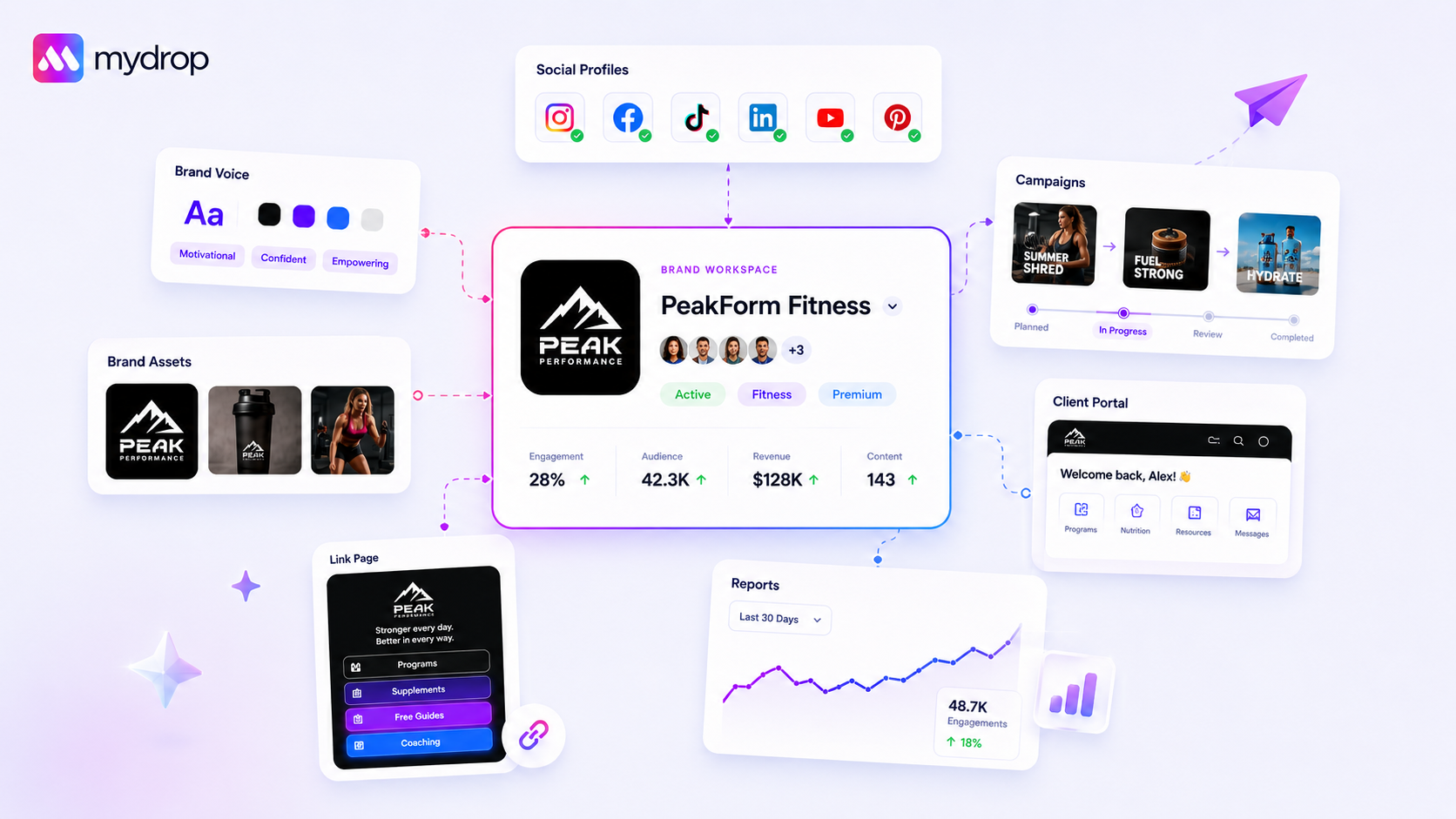
The most effective way to break this cycle is to stop treating your design tool as a silo. Instead, bridge the gap by connecting your creative suite-like Canva or Google Drive-directly into your media library. This transforms your publishing platform from a passive container into a central, source-aware hub.
When you use an integrated import bridge, you are not just copying files. You are pulling the design metadata into a controlled environment where you can organize assets by campaign, region, or brand before they ever touch your desktop. This means your designers stay in their creative flow, and your social team pulls finished, high-fidelity exports directly into the correct gallery folder.
Operator rule: If a file touches your desktop, you have already lost. Aim for direct ingestion so every asset is tagged and assigned to a folder at the moment it arrives.
This approach forces a shift in how you structure your folders. Instead of a single "Media" folder, we suggest creating dedicated import buckets for each major campaign or service connection. When you pull designs through a service import, use the following logic to keep the library clean:
- Categorize by intent: Do not dump everything into "Recent." Map service imports to specific campaign folders immediately.
- Standardize your formats: If your team uses specific Canva export formats like MP4 or high-res PNG, keep them consistent during the import process to avoid later re-processing.
- Audit the service connection: Regularly clear out old services in your profile settings to ensure your API tokens stay fresh and secure.
This is where the real efficiency gains happen. By keeping your assets connected to their origin, you reduce the risk of version errors. If a design needs a tweak, the connection is already there. You are not searching for the original Canva link; you are already in the environment where the asset lives. You spend less time managing files and more time managing the strategy that actually drives your engagement.
The roles and rules that reduce rework
Once you stop manually shuffling files, you have to ensure your digital workspace stays tidy. Without a few guardrails, even an automated import process can become a digital junk drawer. We have seen teams move from a chaotic desktop mess to a streamlined setup by simply assigning ownership to folders.
Think of your Mydrop media gallery as a shared office space. If everyone throws their files into one giant bucket, nothing stays findable. Instead, treat your imported folders as specific project containers.
Decision check: If an asset doesn't have a designated folder by the end of the day, it gets archived or deleted.
Assign one person on your team the role of "Library Curator." They do not need to create every design, but they do need to sign off on where files land. This small layer of governance prevents the "which file is final?" panic that hits right before a major launch. Keep your folder structure simple-maybe organized by brand, campaign, or fiscal quarter-and keep it consistent across every team member.
The weekly habit that keeps the system honest
Most teams treat file management as an emergency cleanup task performed right before a post goes live. That is exactly when things break. Move this to a low-stress, recurring cadence instead. We recommend a Friday afternoon "Gallery Review" that takes no more than twenty minutes.
During this time, your curator should:
- Validate: Check that assets imported from Canva through the service-import bridge are correctly categorized.
- Clean: Purge any unused test imports or duplicate versions that didn't make the final cut.
- Sync: Ensure that upcoming campaign assets are already sitting in their respective gallery folders, ready for the social media manager to pick them up.
This isn't about bureaucracy; it is about building a runway. When your team walks in on Monday morning, the assets are already waiting in the right spot. They don't have to hunt through email threads or Slack channels. They just open the gallery, pull the asset, and start scheduling.
The Weekly Gallery Maintenance Scorecard
| Task | Frequency | Success Threshold |
|---|---|---|
| Import Audit | Weekly | 0% of active assets left in "Uncategorized" |
| Version Cleanup | Weekly | Only the "Final" or "Approved" version remains |
| Folder Alignment | Bi-Weekly | 100% of campaign assets match the project roadmap |
When you treat your digital library as a live, evolving asset rather than a static storage bin, you stop fighting against your own tools.
Conclusion
Your design workflow should support your content strategy, not compete with it. By bridging your creative tools directly into your publishing workspace, you reclaim hours previously lost to mindless file handling. This shift changes the conversation from "where is that file?" to "what are we publishing next?" Start by connecting one service, test the import flow with a single campaign, and watch how quickly the friction disappears. You will find that when the process is quiet and invisible, the work itself gets much louder.