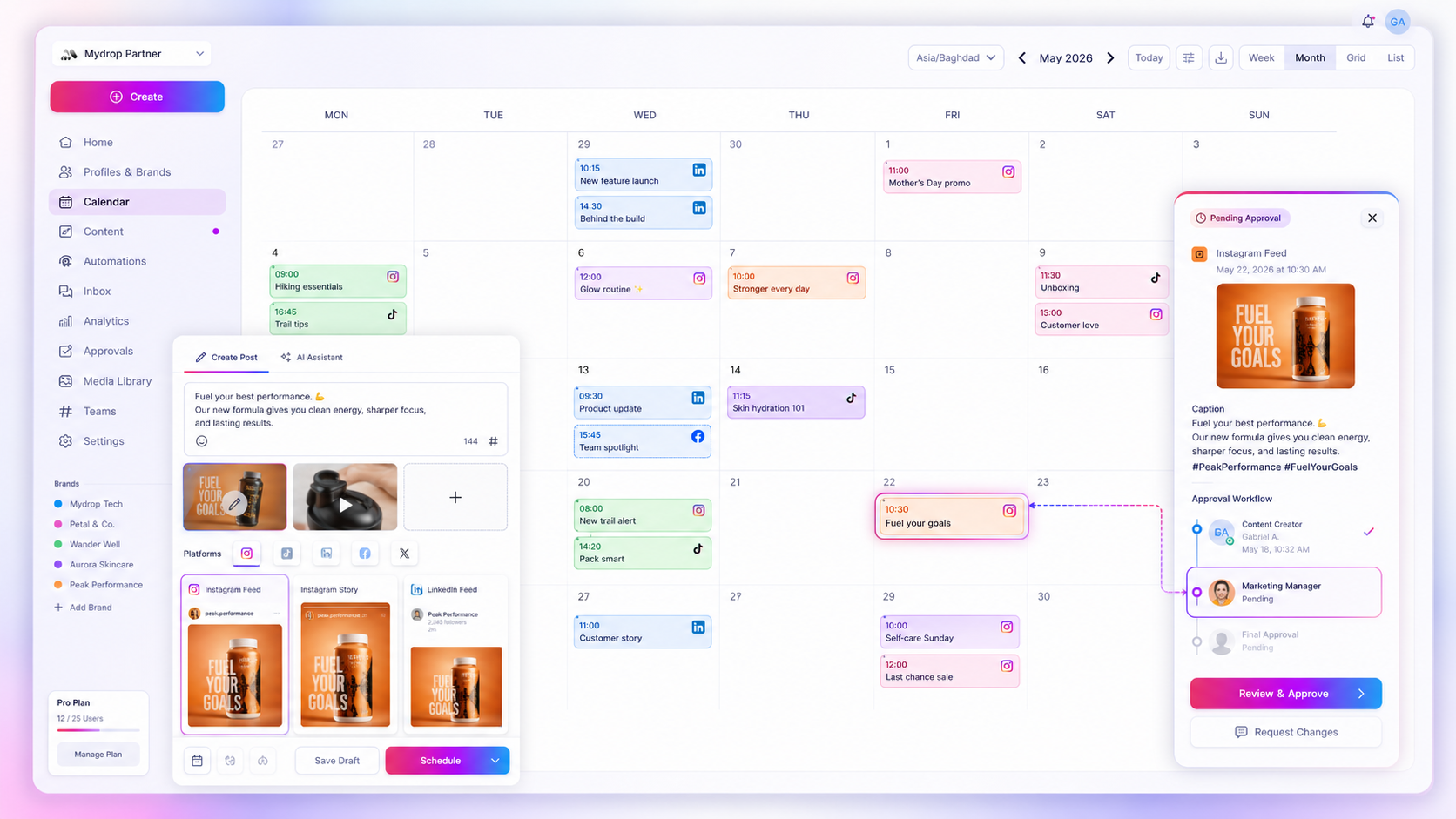
You can measure the true ROI of calendar sync by tracking the reduction in coordination latency-the time elapsed between a content plan update in your dashboard and the corresponding team response in shared operational channels. If you are still manually chasing approvals, copy-pasting dates into spreadsheets, or verifying status updates via email, you are paying a hidden tax on every post.
We get it. The space between your social media tool and the rest of the team’s daily workflow often feels like a black hole. You spend hours planning, only to spend even more time manually syncing calendars and reminding stakeholders about upcoming content. Coordination debt is the silent killer of content velocity. When your scheduling tool is an island, you aren't actually working; you are just circulating status updates.
At Mydrop, we see this across teams managing hundreds of profiles. The most successful operators treat their shared team calendar as a binding contract. If a post doesn't exist in the calendar tools where your legal, brand, and regional stakeholders live, it effectively does not exist.
The decision each metric should trigger

Metrics are only as valuable as the decisions they force. Use this diagnostic approach to determine whether your calendar sync is a technical bottleneck, a process failure, or a sign that your team simply needs a clearer "Single Source of Truth."
| Metric | Threshold for Action | Decision Trigger |
|---|---|---|
| Sync Accuracy | > 2 manual status interventions per week | Audit technical health: Verify your Google Calendar service tokens and check if webhooks are firing correctly. |
| Task Completion Velocity | > 24 hours between reminder and mark-as-done | Re-train process: Your team is likely treating calendar tasks as suggestions rather than actionable work. |
| Comm. Volume | High Slack/Email noise about "is this scheduled?" | Consolidate: Move planning into the calendar-native view to stop the status-chase loop. |
Operator rule: If your team is asking "What is the status of this post?" more than once a day, your calendar sync is currently serving as a glorified notification service rather than an operational backbone.
If your Sync Accuracy is low, do not blame the team. This is usually a sign of stale service tokens or expired watch channels. When Mydrop’s calendar-native planning sync is healthy, the calendar acts as a real-time reflection of your dashboard. If that connection breaks, the dashboard becomes a silo, and the team reverts to spreadsheets to regain visibility.
When Task Completion Velocity lags, you have a behavioral issue. Teams often struggle to adopt calendar-native workflows because they treat the calendar as a "view-only" display. To fix this, you must treat every calendar event as a signal that work is ready to move. Use forced sync to ensure the calendar is always the freshest source of truth, and stop relying on external chat tools for routine status updates. If the work is in the calendar, it should be moving.
The scorecard that keeps reporting useful

You need a way to turn those nebulous "we feel busy" updates into something you can actually point to. The goal here isn't to create more paperwork; it's to kill the manual status-checking loop that eats your team's afternoon. When you treat your shared team calendar as the single source of truth-where the content plan actually lives and breathes-you stop being a relay station for information.
Here is a simple scorecard to keep that reality check productive without adding extra meeting bloat.
| Metric | Measurement Method | Target Threshold | Action if Missed |
|---|---|---|---|
| Sync Accuracy | Ratio of manual "Is this scheduled?" Slack messages vs. automated calendar events found. | < 5% noise | Re-check service tokens or webhook health. |
| Task Velocity | Time elapsed between a calendar-synced reminder creation and the 'Done' state. | < 24 hours | Tighten accountability or re-train owners. |
| Context Switching | Number of platform-native dashboard logins required for routine status validation. | Target = 0 | Invest in broader shared-calendar visibility. |
Decision check: If your team has to leave their primary calendar to verify if a post is on track, the tool is doing the work, not you.
If you find your Sync Accuracy slipping, look at the technical connection first. At Mydrop, we often see teams blame "process" when the real issue is just a stale service token or an expired webhook connection. A quick forced-sync action can usually clear the air, but if you’re seeing persistent divergence, you have a broken planning bridge. Treat these events like binding contracts. If it isn't on the calendar, it doesn't exist for the rest of the business.
What to stop measuring by default
Stop tracking vanity metrics that look busy but don't move the needle on your production speed. Counting "calendar clicks" or "number of events exported" tells you absolutely nothing about whether your team is actually operating faster or just pressing more buttons.
Avoid these traps:
- Total Events Created: This is just a volume metric. A high count could mean you’re busy, or it could mean you have a cluttered, disorganized calendar that nobody trusts.
- Unique Users Viewing the Calendar: Unless you are managing a global team across fifty time zones, who is clicking the link matters less than whether the right people-the ones responsible for the next stage of the workflow-are actually acting on the data.
- Average Calendar Sync Latency (in milliseconds): This is purely technical. If the sync happens fast enough for your team to avoid manual checking, it is fast enough. Don't waste cycles here.
Focus your energy on Operational Edits. Track how often someone has to go back into the source dashboard to update a date or a detail that was already supposed to be synced. Every one of those manual overrides is a piece of coordination debt that costs you time, introduces a risk of human error, and proves your planning bridge is leaking.
Most teams don't have a content problem; they have a decision bottleneck. When you move to calendar-native planning, your scorecard should show that bottleneck shrinking. If the metrics don't improve, don't blame the tools. It means your team is still clinging to the old way of working, manual check-ins and all.
How to connect metrics to next actions
Once your team starts tracking the scorecard, the data will likely point to one of three common failure modes. If you see high noise in your communication channels-people constantly asking "is this scheduled yet?"-you are likely dealing with Sync Latency. This is a technical issue. Check if your Google Calendar service tokens have expired or if your webhooks are failing to push updates from Mydrop to your calendar. A quick force-sync or re-authentication often clears this up immediately.
If your sync accuracy is high, but task completion velocity remains sluggish, you aren't fighting a technical problem; you are fighting a process bottleneck. This usually means your team is treating calendar events as suggestions rather than binding operational tasks.
Workflow check: If a calendar event for a post or reminder doesn't contain an active link back to the source task or dashboard for context, the calendar is just a glorified post-it note, not an operational tool.
Here is how to route your findings to specific interventions:
- High latency, high noise: Prioritize technical infrastructure. Refresh your service connections and ensure webhooks are active.
- Low latency, high noise: This is a communication failure. Standardize your team’s naming conventions for calendar events so stakeholders can identify status without clicking through.
- Low latency, low velocity: This is a culture issue. Your team lacks a "single source of truth" mandate.
The review cadence that makes the model stick
Operational models fail when they become quarterly "make-work" exercises rather than part of the weekly rhythm. You should not be doing a deep dive on your sync metrics every day, but you should have a formal audit at least once a quarter to ensure your "planning bridge" is still holding the weight of your operations.
Use this simple Calendar Sync Audit checklist to keep things tight without adding overhead:
- Service Check: Are all primary Google Calendar tokens for your brands valid and active?
- Token Refresh: Have you verified that your webhook watch channels are active, or do you need to perform a system-triggered refresh?
- Scope Audit: Are you still syncing the right profiles, or have your team's priorities shifted to different markets?
- Workflow Reality Check: Does the team still use the calendar to check status, or have they drifted back to email threads for updates?
If you notice that the team is relying on your calendar tools for basic status updates, you have successfully built a bridge. If they are still manually exporting data or checking the source platform to verify a schedule, the bridge is out.
Conclusion
Measuring your calendar sync isn't just about ensuring your events appear in a grid. It is about proving that your operational tools are actually reducing the friction of your daily work. When you move content planning from a closed dashboard into a shared calendar, you are doing more than just visualizing a schedule; you are creating a shared reality for your entire team.
If you are managing complex social operations and find that your team's biggest challenge is simply keeping everyone on the same page, start there. Stop chasing status updates, and start holding the calendar accountable. Once you have a reliable, calendar-native planning workflow, you will find that your team spends less time talking about the work, and significantly more time doing it.