The most effective way to centralize your agency's creative assets is to stop treating cloud storage folders as final destinations and start using them as temporary staging areas that feed directly into your management platform. If your team still relies on the ritual of downloading a finished graphic from Canva or Google Drive only to re-upload it hours later into your publishing tool, you are paying a heavy tax on your creative velocity. This manual handoff is more than a time sink. This is a compounding risk to brand consistency; local files are detached from project context. We see this across hundreds of brands. The moment an asset touches a local desktop, it stops being a tracked piece of work and becomes another orphan file in a messy folder, waiting for someone to manually rename, tag, and upload it again. You are not managing creative assets; you are managing file transfers. The fix is to automate the connection so that your creation tools talk directly to your distribution center.
What the best tools need to handle
When you are evaluating software to solve this, do not get distracted by storage capacity or flashy UI. Focus on the mechanics of ingestion. A platform that claims to centralize assets but requires you to move files manually is just another storage silo with a better coat of paint.
To actually scale, look for these three capabilities in any ingestion tool:
- Direct-to-Gallery Mapping: The system must import files directly into the correct gallery folders. If an asset lands in a generic "Unsorted" bucket, your team will still spend hours manually organizing them. The tool should understand your directory taxonomy before the import even begins.
- Intelligent Progress Tracking: For large creative batches-like when a designer exports fifty assets at once-you need visibility into what is happening. Can you see which files have successfully moved, which are pending, and which failed? If an import stalls, can you cancel it without corrupting the rest of the batch?
- Quota and Integrity Awareness: The tool should warn you before an import starts if you are approaching storage limits. It should also handle file metadata intelligently. When you import a design, you want the asset's original naming or structure preserved where possible, not flattened into a generic string.
Operator rule: If your team has to rename a file after it lands in your management platform, the ingestion workflow is broken. The system should be able to map remote file structures to your internal folders automatically.
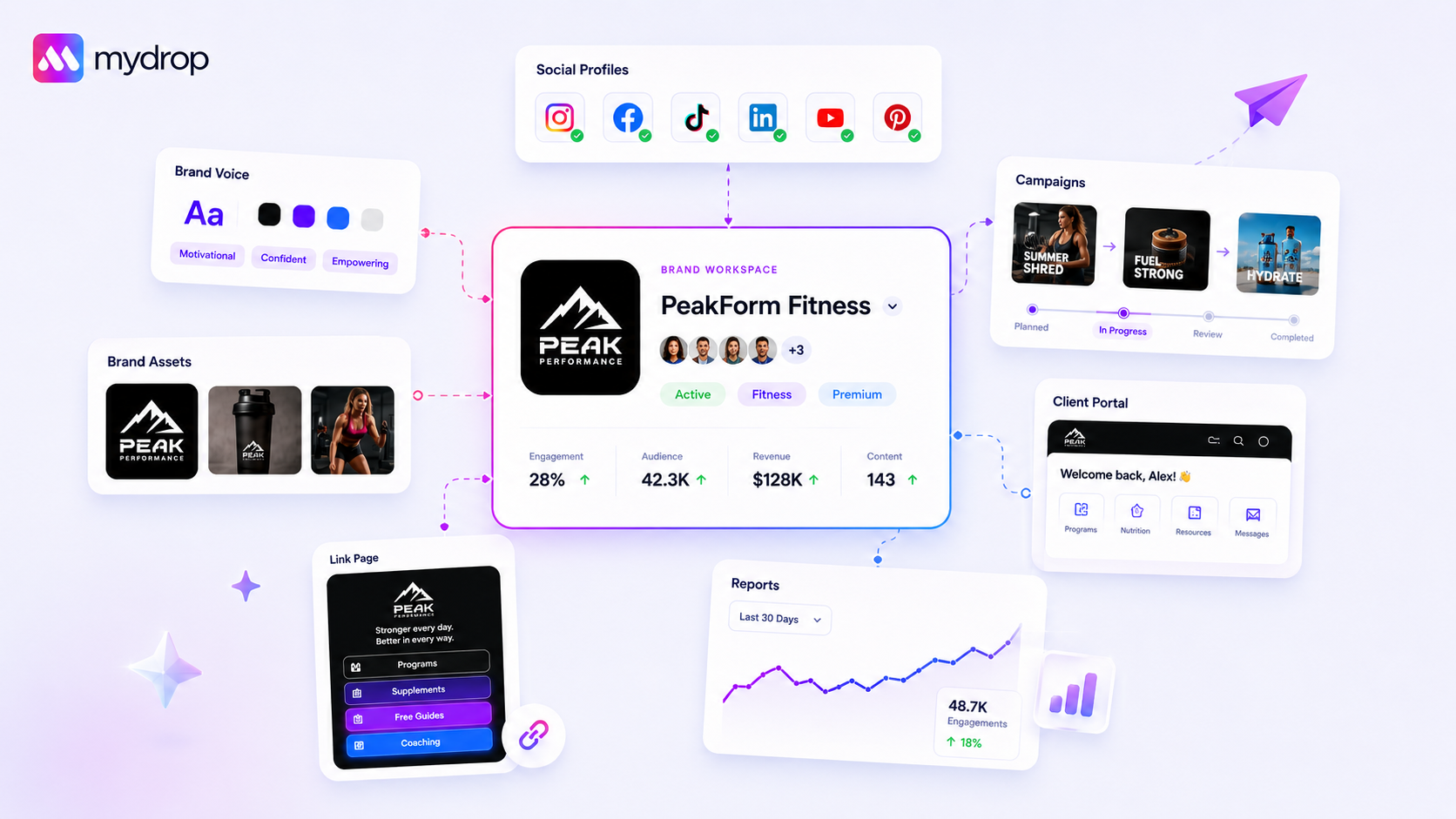
In our experience at Mydrop, we designed Service Imports to address these specific bottlenecks. We realized that forcing creators to switch between the browser, a storage drive, and the publishing dashboard wasn't just tedious-it was creating huge gaps in team communication. By connecting tools like Canva, Google Photos, or Drive directly to the gallery, we allow creators to push work into the workspace in the background while they move on to the next task.
If a tool does not provide granular control over where assets land and how they are tracked, you are merely shifting the mess, not solving it. Your goal is to eliminate the download-re-upload tax entirely.
Where basic tools start to break

The most dangerous part of your creative process is often the final transfer. If your team relies on the classic download-then-re-upload cycle, they are inviting chaos.
When you manually move files from a design app or cloud storage into your publishing interface, you are not just losing time. You are stripping away metadata, creating duplicate file versions, and introducing human error with every manual rename.
Here is the awkward truth: if an asset lives in a personal folder, it does not exist for the team.
We have seen this across dozens of brands. The folder structure in Google Drive is immaculate, but the actual published content is two weeks behind because the assets are stuck in a bottleneck. Stakeholders cannot find the latest version, legal teams lose track of approved creative, and designers end up emailing links that expire.
Decision check: If your team spends more than ten percent of their time moving files, you have a process failure, not a creative one.
When you remove this manual step, you stop acting like a glorified file clerk and start acting like a content engine.
The buying criteria that matter
If you are ready to fix this, look for software that treats asset ingestion as a first-class feature, not a third-party afterthought. The goal is to create a seamless link between where you build and where you publish.
Before you sign a contract, put the following capabilities at the top of your review list.
Asset Governance Scorecard
| Criterion | Why it matters | Red Flag |
|---|---|---|
| Native OAuth | Allows direct, secure service connection. | Expecting users to handle manual API keys. |
| Progress Tracking | Lets you see the status of large batches. | The UI freezes or leaves you guessing. |
| Batch Cancellation | Crucial for correcting mistakes in real-time. | No way to stop an import once initiated. |
| Folder Mapping | Keeps your taxonomy clean upon arrival. | Dumps everything into a single root folder. |
| Metadata Retention | Preserves original dates and naming conventions. | Strips all context from the file. |
When we built Service Imports at Mydrop, we focused on these exact pain points. The goal was to eliminate the friction of shifting creative assets between apps.
You should be able to connect Canva, Google Photos, or Google Drive once, and then pull finished designs directly into your gallery folders without leaving the platform. This is not just about convenience. It is about governance. By pulling assets directly into the folders you use for publishing and AI workflows, you ensure that the files your team uses are the ones you actually intended to publish.
The best tools enforce structure. If a tool allows you to import files without choosing a folder, it is merely delaying the mess, not solving it.
Ask about cancellation. Large creative imports often happen when a deadline is looming. If you realize you have selected the wrong folder or the wrong files, you need a way to stop that process immediately without the platform breaking or corrupting your database.
Finally, keep it simple. If the setup process requires a week of engineering support, you have picked the wrong tool. Good software should feel like a natural extension of your existing creative workflow, not a new administrative burden.
How Mydrop supports this workflow
At Mydrop, we designed Service Imports to bypass the manual download-and-transfer tax entirely. Instead of fighting with file browsers, our platform acts as a direct bridge to the tools where your creatives actually work. When you connect your Canva, Google Drive, or Google Photos accounts, you're not just linking storage-you're creating a permanent, reliable path for assets to land exactly where they belong in your media library.
The magic happens in the Service Import modal. You can browse your remote albums or folders directly within our interface, select exactly what needs to move, and choose the target gallery folder. Since we validate storage quotas and track progress in real-time, you never have to guess if a high-res design file actually arrived. If you're managing dozens of brand profiles, this means the legal reviewer, the community manager, and the designer are all looking at the same source-of-truth asset, not a local copy that someone forgot to sync.
When you connect Canva, for example, our platform understands the exported formats you need-PNG, JPG, or even MP4. You select the designs, and they appear in your Mydrop library with all the necessary metadata, ready for publishing or AI analysis. This approach eliminates the "I thought you had the latest version" conflict that kills momentum. By centralizing the ingestion process, you make brand compliance a default, not a policy that everyone has to remember to follow. We see this across hundreds of brand profiles; the teams that stop chasing files are the ones that finally have time to focus on creative strategy.
A simple shortlist checklist
If you’re evaluating whether your current setup is ready to scale or at risk of becoming a bottleneck, use this quick scorecard. We’ve found that agencies struggle when more than one of these points is a "No."
The Agency Asset Governance Audit
| Criteria | Evaluation Rule |
|---|---|
| Direct Ingestion | Can creative partners pull final assets directly into the CMS? |
| Status Visibility | Does the team know if an import failed without checking local logs? |
| Structural Rigor | Are assets automatically mapped to standardized gallery folders? |
| Quota Awareness | Does the system warn users before an import hits storage limits? |
| Revocability | Can you remove an external service connection without breaking existing media? |
If you answered "No" to more than two, you’re likely burning hours on manual administrative tasks that don't actually move the work forward. To fix this, prioritize tools that offer:
- Direct-to-gallery import modals with progress indicators.
- Folder-based taxonomy that mirrors your campaign structure.
- Secure OAuth connections that don't require shared credentials.
Conclusion
Stop treating file management as a secondary chore. When your creative assets aren't organized the moment they enter your ecosystem, you're essentially creating a debt that your team will have to pay back during the worst possible time-like when you're three minutes away from a critical campaign launch.
Most teams don't actually have a creative problem; they have a coordination problem. The assets exist, the talent is there, but the connection between creation and distribution is fragmented. By automating the ingestion phase, you don't just save time-you reclaim the mental space your team needs to focus on the work that actually matters. The goal isn't just to store files faster; it's to ensure that when your team is ready to publish, the right asset is already in the right place, approved, and waiting. That’s the difference between a team that’s constantly scrambling and a team that’s actually shipping.