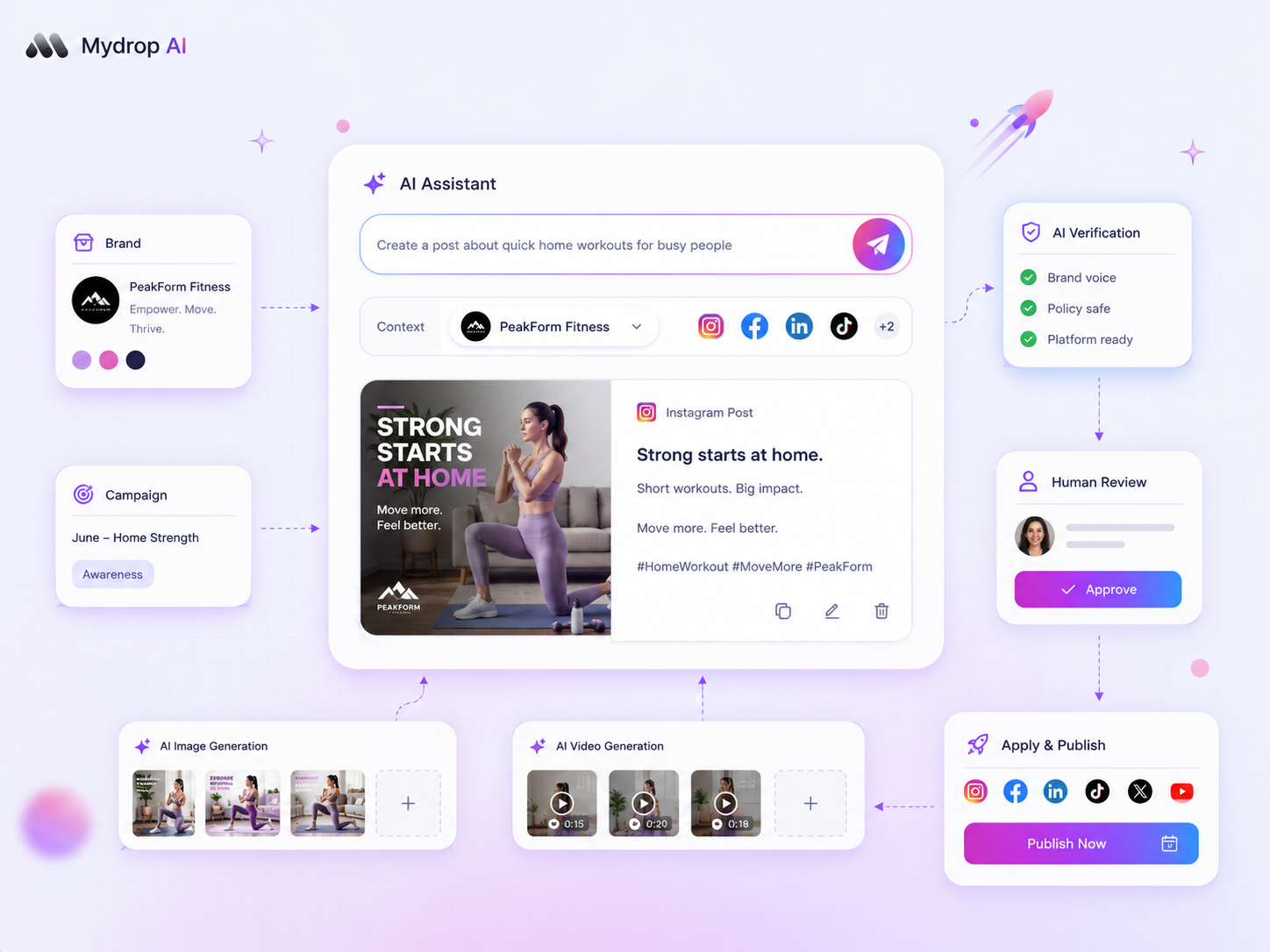
The best social media virality score tool for agencies is not a post-mortem report that explains why your campaign failed three days ago. It is a predictive gate built directly into your composer that stops a bad post before it ever hits the feed. For agencies managing dozens of brands, the shift from reactive analytics to predictive scoring is the only way to protect client margins and creative morale. You need a system that evaluates drafts against brand-specific history and platform-native triggers while you are still writing the hook.
We get it-the "post and pray" cycle is exhausting. You pitch a high-energy concept, the client signs off after three rounds of edits, and then you spend forty-eight hours refreshing the notifications only to see the engagement flatlining. It makes your best creators feel like they are guessing and your strategists look like they are making excuses. At Mydrop, we have seen this across thousands of posts: most agencies are running "vibe-based" creative departments, burning billable hours on content that a basic scoring model could have told you was dead on arrival. This guide defines the Pre-Flight Protocol for agency content: a way to grade every draft so your team only publishes content with a statistical right to win.
What the best tools need to handle

The industry is moving from post-mortems to pre-mortems. To scale, your team needs to move away from generic "best time to post" advice and toward a workflow that grades every draft based on its specific "Floor of Success." The best tools must handle a Predictive Pivot Loop, allowing your team to iterate within the writing window rather than waiting for a weekly reporting call to find out what went wrong.
- Draft: Input raw creative and captions into the composer.
- Score: Run a virality check against the brand's unique history and platform trends.
- Pivot: Adjust hooks, media length, or call-to-action based on specific recommendations.
- Publish: Deploy only when the score hits your internal quality threshold.
The Agency Virality Scorecard
Use this rubric to evaluate whether your current tech stack is actually predicting performance or just narrating your mistakes.
| Capability | Vibe-Check Workflow | Predictive Protocol (Mydrop) | Decision Rule |
|---|---|---|---|
| Context Source | Generic platform trends | Brand-specific historical memory | Score must use this brand's data. |
| Timing | 48 hours after publishing | Real-time during the draft phase | Stop the post if score is < 70/100. |
| Feedback Type | "Reach was down 20%" | "Shorten hook; move CTA to line 2" | Recommendations must be actionable. |
| Scale | Manual review by senior lead | Automated scoring for all drafts | 100% of posts must be scored. |
| Margin Impact | High waste on "DOA" content | Protected billable hours | Shift time from "Guessing" to "Editing". |
Moving to this model removes the awkward "why didn't this go viral?" conversation from your client meetings. Instead, you are presenting a methodology. You are showing them that every post was graded, optimized, and published because it met a specific performance threshold. Most teams do not have a content problem; they have a decision bottleneck where they lack the data to say "no" to a weak idea before it costs them money.
Where basic tools start to break

The problem with most virality score tools is that they are trained on the generic internet rather than your specific client. We have all seen the "vibe-check" tools that give a 98/100 score to a post simply because it uses a trending keyword or five emojis. Then you publish it for a Fortune 500 healthcare brand, and the engagement is a flat line because the tool didn't realize that audience values clinical authority over Gen-Z slang.
Basic tools fail agencies because they lack Brand Memory. They treat every draft like a blank slate. If you are managing twelve different brands, you can't afford a tool that suggests a "wacky" hook for a luxury watchmaker. You need a system that understands the delta between what works for a B2B SaaS startup and what works for a national retail chain.
We also see tools break down during the 6 p.m. approval scramble. If a scoring tool lives in a separate browser tab, your team will eventually stop using it. Creative friction is the silent killer of agency margins. When a strategist has to copy-paste a draft into a third-party site, wait for a report, and then manually bring those edits back to the composer, they aren't "optimizing"-they are just doing data entry.
Operator rule: A virality score that arrives after the post is scheduled is just a digital autopsy. You need a tool that acts as a predictive gate, not a post-mortem report.
The buying criteria that matter
When you are evaluating a tool to protect your client's reach, don't just look at the "Virality Number." Anyone can generate a random score between 1 and 100. The best tools for high-volume teams focus on contextual accuracy and workflow velocity. You want a tool that makes your junior writers sound like senior strategists by giving them the "why" behind the score.
At Mydrop, we have seen that the most effective agency workflows prioritize tools that can ingest specific brand files, previous top-performing media, and even "forbidden" voice guidelines. If the tool doesn't know what your audience hates, it can't tell you what they will love.
Here is how to grade a potential virality scoring engine before you sign the contract:
The Agency Virality Tool Scorecard
| Criterion | The "Toy" Level | Agency Grade | Decision Rule |
|---|---|---|---|
| Contextual Input | Only reads the text of the draft. | Uses brand colors, past performance, and attachments. | Score > 80 requires brand-specific context match. |
| Workflow Fit | Requires a separate login or tab. | Built directly into the Post Composer. | If it takes > 3 clicks to score, adoption will fail. |
| Actionable Intel | Says "Be more engaging." | Suggests specific hook changes or media crops. | Must provide at least 3 specific "Pivot" instructions. |
| Platform Logic | Scores every platform the same. | Adjusts for Reels vs. LinkedIn vs. X. | Penalize scores that ignore platform-native formatting. |
| Speed to Result | Takes 30+ seconds to analyze. | Real-time scoring as you type or edit. | Analysis must complete in < 5 seconds to maintain flow. |
In our experience, the "Best Tool" is often the one that helps you say "no" to a mediocre idea. It isn't just about chasing the 1% chance of a global viral hit; it's about raising the Floor of Success for every single post your team touches. When you move the average engagement rate of a hundred posts by just 10%, you aren't just getting "lucky"-you are building a predictable growth engine for your clients.
The ultimate goal for any agency leader is to remove the "guess-and-check" anxiety from the creative department. You want your team to hit "Publish" with the confidence that the data has already vetted the hook, the format, and the timing.
Predictive scoring is the bridge between creative intuition and enterprise-grade performance. It turns the chaotic "vibe check" into a repeatable, billable, and scalable protocol.
How Mydrop supports this workflow
We built the virality scoring engine inside the Mydrop composer because we realized that giving a strategist a report on Friday about a post that failed on Tuesday is basically just documentation of a tragedy. You need the warning while your fingers are still on the keyboard.
The process is designed to be a quick "Pre-Flight" check rather than a deep research project. When you are in the Composer AI Panel, you can hit the virality score button to get an immediate grade. But a number by itself is just another KPI to stress about. The real value is in the recommendations that follow.
Decision check: A high score is a green light, but a low score is a diagnostic tool. Don't just delete a "40/100" post. Use the feedback to see if the hook is too long, the media is the wrong format for the platform, or if you have ignored your client's specific "Brand Memory."
In our experience, the biggest lift comes from the "Pivot Loop." If the AI tells you that your Instagram Reel hook is too slow, you can use the AI suggestions to generate three faster variations, swap them in, and rescore. You go from guessing to knowing in about sixty seconds. This is how agencies protect their margins: by spending three minutes in the composer to save three hours of explaining a "low reach" report to a frustrated client later.
The Virality Score Pivot Matrix
Use this matrix when reviewing drafts. It helps your team move from "vibe-checking" to technical optimization.
| Predicted Score | Risk Level | Primary Failure Mode | Immediate Pivot Action |
|---|---|---|---|
| 0 - 45 | High (DOA) | Hook mismatch or poor formatting. | Trim hook to <5 words. Check aspect ratio. |
| 46 - 65 | Medium (Static) | Lacks a "stop-the-scroll" trigger. | Insert a pattern interrupt or controversial lead. |
| 66 - 85 | Low (Safe) | Good quality, low engagement potential. | Add a specific "saveable" tip or call-to-action. |
| 86 - 100 | Optimal | Brand-aligned and platform-native. | Schedule for peak brand activity window. |
A simple shortlist checklist
If you are evaluating tools or setting up a new workflow for your SMM team, use this checklist. It ensures you are buying a predictive engine, not just a fancy graph.
- Does it use brand-specific context? A generic tool might say "use emojis." A great tool knows that this specific brand gets 20% more engagement when it avoids them.
- Is the scoring accessible in the writing window? If your team has to copy-paste text into a separate website to get a score, they will stop doing it by Thursday.
- Does it provide actionable "why" feedback? "Your post is bad" is an insult. "Your hook is 40% too long for LinkedIn" is a task.
- Can it handle media context? Virality is 70% visual. The tool needs to understand that a static image of a spreadsheet performs differently than a high-energy video.
- Is there a "Brand Memory" integration? The tool should learn from your client's past winners so it doesn't keep suggesting things that have already flopped.
Conclusion
The "post and pray" era of agency life is officially over. We have all lived through the stress of a big campaign launch where the engagement stays at zero while the client is watching the clock. It is a terrible feeling, and honestly, it is an avoidable one.
Virality is rarely a lightning strike that you can't control. Most of the time, it is simply the result of refusing to publish content that drops below a certain "floor of quality." When you give your team a predictive scoring tool, you aren't just giving them AI; you are giving them a safety net.
At Mydrop, we see this transition happen all the time. The teams that stop chasing "vibes" and start using a "Pre-Flight Protocol" are the ones that stop making excuses and start delivering predictable growth. It makes the creators feel more confident, the clients feel more secure, and the strategists sleep a lot better on Tuesday nights.
The best tool isn't the one that tells you what happened. It is the one that tells you what is about to happen.