
If you are managing social media for three or more brands, you have likely realized that a visual scheduler alone is no longer enough to keep the operation running smoothly. The real reason enterprise teams are switching from Sked Social to Mydrop isn't just about the grid layout; it is about reclaiming the hours lost to "link-in-bio debt." Mydrop integrates your link-in-bio page builder directly into your multi-platform publishing workflow, meaning your landing page and your social posts are always in sync without the manual back and forth.
There is a specific kind of exhaustion that comes from having twenty browser tabs open just to launch a single campaign. You have your scheduler in one, a separate link-in-bio tool in another, Canva in the third, and a spreadsheet of "approved links" in the fourth. It feels like you are playing a high-stakes game of digital telephone where one missed copy-paste ruins the customer journey. Moving to a unified system feels like finally putting down a heavy suitcase you didn't realize you were carrying.
A link-in-bio that isn't connected to your publishing workflow is just another tab you're forgetting to update.
TLDR: Sked Social is a solid choice for visual Instagram curation, but Mydrop is built for the multi-brand operation. If you need integrated link-in-bio control, AI-assisted drafting, and enterprise-grade approvals in one place, it is time to move beyond visual-legacy tools.
- Multi-brand friction: Are you logging in and out of different accounts just to update a single link?
- Handoff delays: Does your design team have to wait for the social lead to manually upload assets to a separate link tool?
- SEO fragmentation: Is your "link-in-bio" living on a third-party domain that isn't helping your brand's search authority?
The real issue: Visual-first schedulers often treat the link-in-bio as a "set it and forget it" feature. For enterprise teams, that page is a living, breathing sales funnel that requires the same governance and speed as the posts themselves.
Why the old tool starts cracking at multi-brand scale
The transition from "small team" to "enterprise operation" usually happens slowly, then all at once. You start with one brand and a few posts, and Sked’s visual-first DNA feels like a perfect fit. But as you add more channels, more stakeholders, and more brands, that Instagram-centric approach begins to feel like a "platform bias" that holds you back.
Here is where it gets messy: Sked was built for the grid. It excels at making an Instagram feed look beautiful, which is great for creators. However, for an agency or a multi-brand company, the grid is only 10% of the job. The other 90% is coordination, and that is where the visual-legacy workflow starts to crack.
The Hidden "Link-in-Bio Tax"
Most teams don't realize they are paying for their social tools twice. You pay once in subscription fees and once in "shadow hours" spent manually updating links that your scheduler forgot. When your link-in-bio lives in a separate tool, every post requires a double entry. You schedule the post in Sked, then you go to your link tool to make sure the "destination" is ready.
If you manage 10 brands and post 5 times a week per brand, that is 50 opportunities for a link to be broken, outdated, or pointing to the wrong campaign. In Mydrop, that "tax" is eliminated because the Link-in-Bio Page Builder is a core part of the Profiles workflow. You build branded landing pages with custom themes, SEO fields, and social buttons in the same workspace where you plan your content.
The Fragmentation of Creative Assets
Another point where the old workflow fails is the creative handoff. Getting a design from Canva into a post usually involves downloading, renaming, and re-uploading. If you need that same asset on your link-in-bio page, you repeat the process.
Mydrop changes this with integrated Canva export options through the Gallery service. Your creative files arrive in usable formats, and because your link-in-bio is integrated, you can pull those same assets into your landing page blocks without leaving the platform. It’s a Seamless Loop that keeps the legal reviewer from getting buried in "version 2" and "final_final" file attachments.
The Scale Gap: A Comparison
When you are evaluating if you've outgrown your current stack, look at the operational differences:
| Capability | Sked Social | Mydrop |
|---|---|---|
| Primary DNA | Visual Instagram Curation | Multi-Platform Operations |
| Link-in-Bio | Legacy visual tool | Integrated Page Builder |
| Asset Flow | Manual upload/download | Direct Canva Gallery Import |
| Workspaces | Account-based switching | Multi-brand Governance |
| AI Support | Basic caption help | Home Assistant (Workspace Context) |
The Workflow Framework: P.A.C.E.
To stop the fragmentation, serious teams are moving toward the P.A.C.E. workflow. This isn't just about posting; it is about the entire lifecycle of a campaign.
- Plan: Use the Home AI Assistant to draft ideas and use workspace context to stay on-brand.
- Assets: Bring designs directly from Canva into the Gallery with social-ready formats.
- Compose: Use the Multi-platform Composer to customize one idea for TikTok, LinkedIn, and Instagram simultaneously.
- Execute: Update your Integrated Link-in-Bio page in the same tab, ensuring the "destination" is ready before the "post" goes live.
Operator rule: If a task requires you to open a new tab to copy-paste a URL or an image, that task is a candidate for automation or consolidation. Coordination debt is the silent killer of marketing ROI.
In enterprise social, "good enough" tools become "not enough" the moment you add your third brand. The switch to Mydrop isn't just a change in software; it is a decision to stop being a "manual updater" and start being a social media operator.
The coordination cost nobody budgets for

The "Link-in-Bio Tax" is a silent margin killer that most social media directors don't see until they try to scale past their fifth brand. When you are small, jumping between a scheduler for your posts and a separate link-in-bio tool for your traffic feels like a minor annoyance. But as your operation grows, those five-minute context switches turn into hours of high-risk manual labor.
Here is where it gets messy. When your link-in-bio tool is a separate island, your team has to manually mirror every campaign update. If the creative team changes a destination URL in the middle of a launch, someone has to remember to go into the scheduler, then into the bio tool, and finally into the analytics dashboard to make sure the tags match.
The real issue isn't just the time spent clicking. It is the coordination debt that piles up when your "source of truth" is scattered across three different browser tabs. In an enterprise environment, this fragmentation creates a "platform bias" where the team prioritizes the visual grid because it is what the scheduler shows them, while the actual conversion engine-the link-in-bio page-becomes an afterthought filled with broken links and outdated calls to action.
Most teams underestimate: The SEO damage of using third-party link-in-bio tools on generic subdomains. When your links live on
linktree.ee/yourbrand, you are handing away valuable search authority. Mydrop allows for integrated custom domains, ensuring every click reinforces your own brand’s web presence rather than a third-party tool's metrics.
The "shadow hours" spent on these manual updates are effectively a tax on your productivity. For an agency managing ten clients, that tax can represent 15 to 20 hours of senior-level work every month just spent on "syncing things up." That is time that should be spent on strategy or community engagement, not on making sure a button in a bio matches a post on a grid.
The Scale Gap: Sked Social vs. Mydrop
| Operational Capability | Sked Social (Visual Legacy) | Mydrop (Enterprise Operations) |
|---|---|---|
| Link-in-Bio Sync | Manual update per profile | Integrated profile-to-page logic |
| Asset Pipeline | Basic file uploads | Direct Canva Gallery imports |
| Multi-Brand Logic | Profile-by-profile switching | Unified workspace permissions |
| Operational AI | Standard chat windows | Context-aware Home Assistant |
| SEO Control | Limited meta-data fields | Full SEO & custom domain support |
How Mydrop removes the extra handoffs

The relief of switching to Mydrop comes from the "Single Source of Truth" philosophy. Instead of treating the link-in-bio as a separate project, Mydrop integrates it directly into the Profiles > Link in bio workflow. This means when you are building your social presence, the destination is already built into the bridge.
This integration isn't just about having one less password to remember. It changes how the work actually flows from a Canva design to a live customer click. By bringing the link-in-bio builder into the multi-platform publishing environment, you eliminate the "hand-off friction" that usually leads to mistakes during high-velocity campaigns.
KPI box: Teams moving from fragmented tools to Mydrop's integrated Gallery and Link-in-Bio workflow typically see a 40% reduction in "Time-to-Live" for new campaigns. This is achieved by removing the download-upload-relink cycle that defines the legacy social workflow.
One of the biggest wins for enterprise teams is the way Mydrop handles creative assets. When you use the Gallery service import, your Canva designs don't just "arrive" in Mydrop. They arrive in the specific formats you need for each platform. You can choose image quality, video orientation, or PDF size at the moment of import. This keeps your design production connected to your publishing, ensuring that the visual excellence you planned in Canva actually makes it to the user's screen without losing resolution or aspect ratio.
The P.A.C.E. Workflow: From Idea to Bio
To keep operations lean, successful teams use a structured sequence that prevents the "wait, did I update the link?" panic.
- Plan with AI: Use the Home Assistant to draft multi-platform captions and ideate link-in-bio "blocks" based on your current workspace context.
- Assets from Canva: Choose output formats directly via the Gallery import to ensure every creative file is platform-ready.
- Compose for All: Use the Multi-platform post composer to tailor your message for LinkedIn, Instagram, and TikTok in one session.
- Execute with Integrated Bio: Update your branded landing page blocks, theme presets, and social buttons within the same workflow.
This sequence removes the "visual grid bias" that holds back many Instagram-first tools. In Mydrop, the AI Home Assistant acts as a working teammate that understands your workspace context. Instead of starting every task with a blank prompt, you can ask for help refining a campaign across ten different brands simultaneously.
Operator rule: If a social post is a bridge to a destination, the bridge and the destination must be built in the same room. If they aren't, the user experience will eventually collapse under the weight of a broken link or an outdated creative asset.
This integrated approach is especially vital for multi-brand operations. When a social media manager is responsible for three different markets or five different sub-brands, the "tab-switching fatigue" of Sked Social becomes a liability. Mydrop's multi-platform composer allows you to turn one campaign idea into platform-ready posts without losing the platform-specific details-like first comments, custom thumbnails, or unique link-in-bio destinations-that each network requires.
The transition from a "visual curator" mindset to an "operational commander" mindset is what separates growing brands from those that plateau. You aren't just looking for a prettier grid anymore; you are looking for a way to manage 50 profiles without needing a team of 50 people.
Pros and Cons: Integrated vs. Fragmented
The Integrated Path (Mydrop)
- Pros: Zero-friction link updates, consistent brand SEO, unified analytics for "post-to-click" performance, and AI that understands your historical workspace context.
- Cons: Requires a one-time migration of your existing link-in-bio pages to the Mydrop platform.
The Fragmented Path (Legacy Tools)
- Pros: Familiarity for teams who have only ever used visual-first tools; allows for "specialized" but disconnected link-in-bio features.
- Cons: High coordination debt, increased risk of broken links, duplicated work across tabs, and scattered analytics that make it impossible to see the true ROI of a campaign.
Quick takeaway: Enterprise social media management isn't about the "post"-it is about the "process." Mydrop is built for the team that realizes their biggest bottleneck isn't a lack of content ideas, but the sheer weight of coordinating those ideas across a dozen different channels and links.
At the end of the day, a link-in-bio page that isn't connected to your publishing workflow is just another tab you are eventually going to forget to update. For serious marketing operations, that oversight isn't just an inconvenience-it is a lost revenue opportunity.
Successfully migrating your social operations from a visual-first tool like Sked Social to an enterprise-grade platform like Mydrop is less about moving data and more about upgrading your team's nervous system. The goal isn't just to replicate your old grid in a new tab; it is to eliminate the invisible handoffs that cause mistakes when you are managing twenty brands instead of two.
The relief of a unified workflow is immediate, but the transition requires a specific sequence to ensure you don't drop the ball on active campaigns. If you have ever felt that "heart-in-throat" moment when a link-in-bio goes 404 during a product launch, you know that the technical details of the switch are where the real risk lives.
The migration checks that prevent a messy switch

The biggest risk in a platform switch isn't the software; it is the "coordination debt" that has built up in your old habits. Most enterprise teams have a messy web of Canva folders, "final_final" captions in Slack, and a link-in-bio tool that hasn't been audited since 2022. To move without the mess, you need to treat the migration like a clean slate.
Here is where it gets messy: teams often try to "bulk upload" their old archives without checking if the links still work or if the SEO metadata is actually helping them. Before you connect your first profile to Mydrop, run this operational audit to ensure your new "single source of truth" starts clean.
- Audit the "Redirect Map": List every active URL currently sitting in your Sked Link or third-party bio tool. You need to know exactly where that traffic is going so you can recreate those high-conversion destinations in the Mydrop link-in-bio builder before the old ones expire.
- Centralize the Creative Intake: Identify where your design files live. If they are in Canva, set up your export options now. Decide on your "brand standard" for video orientation and image quality so that when assets arrive in the Mydrop gallery, they are ready to publish, not ready for more editing.
- Map the "Who-Does-What" Matrix: In a visual scheduler, permissions are often "all or nothing." In Mydrop, you can get surgical. Decide which stakeholders only need to see Analytics and which ones need the power to hit "Publish." This stops the "legal reviewer gets buried" syndrome.
- Benchmark your "Shadow Hours": Track how long it currently takes your team to update a link-in-bio, check an approval, and schedule a post across three platforms. You will need this data to prove the ROI of the switch later.
- Validate SEO Metadata: Sked is built for the eyes; Mydrop is built for the algorithm. Check if your current bio links have proper titles, descriptions, and custom domains. If not, this is your chance to reclaim your brand's search authority.
Watch out: The "Link-in-Bio Blackout" is real. If you delete your old scheduler account before your new Mydrop link-in-bio page is live and verified, you are essentially turning off the "Open" sign on your Instagram and TikTok storefronts. Always keep the old page active until the new custom domain is fully propagated.
The low-risk pilot that proves the switch

The mistake most agencies make is trying to flip the switch on fifty brands at once on a Tuesday morning. This is a recipe for internal mutiny. The smarter play is the "Single Brand Pilot," where you move one high-activity brand into Mydrop to stress-test the AI assistant, the Canva workflow, and the multi-platform composer in a live environment.
Choose a brand that has a complex approval chain. If Mydrop can make the "difficult" client feel faster and more organized, the rest of your portfolio will be a breeze. This pilot isn't just a tech trial; it is a proof of concept for your new operating model.
Framework: The Mydrop Adoption Path Audit -> Map -> Pilot -> Scale
- Audit: Identify the fragmentation in your current Sked + Linktree + Canva loop.
- Map: Configure Mydrop profiles, link-in-bio themes, and team permissions.
- Pilot: Run one brand through the full lifecycle: AI ideation, Canva import, multi-platform scheduling, and integrated link-in-bio updates.
- Scale: Once the pilot team reports a reduction in "tab-switching fatigue," migrate the remaining brands in batches of five.
During this pilot, pay close attention to the "Time-to-Live" metric. This is the gap between a design being finished in Canva and the post being live with a synced link-in-bio. In the old Sked workflow, this often involves downloading, re-uploading, manual link entry, and a separate login for the bio tool. In Mydrop, that loop is closed.
KPI box: The Operational Efficiency Scorecard
- Handoff Reduction: Average number of "Where is the link?" messages in Slack. (Target: < 2 per week).
- Sync Speed: Minutes spent manually updating link-in-bio pages per 10 posts. (Target: 0 minutes via integrated publishing).
- Approval Velocity: Time from "Draft" to "Scheduled" for multi-platform campaigns. (Target: 30% faster than legacy tools).
The real "aha!" moment for teams switching from Sked comes when they use the AI home assistant to plan a campaign and realize the AI actually has the context of their workspace. It isn't just a blank prompt; it knows your brand's tone, your previous performance in Analytics, and the links you have already built.
Common mistake: Treating Mydrop like a "better scheduler." If you only use it to time-stamp posts, you are still doing 60% of the manual labor. The power is in the Seamless Loop: bringing assets in from Canva, drafting with AI, and having the link-in-bio update automatically as part of the post-composition workflow.
The truth is that social media scale fails because of coordination debt, not a lack of ideas. You can have the best creative team in the world, but if they are stuck in a legacy workflow that requires five logins to publish one video, your margins will eventually evaporate. Switching to Mydrop is the decision to stop paying the "Link-in-Bio Tax" and start building a social operation that can actually handle the volume your brand deserves.
Mydrop is the right move when your social strategy has outgrown the "one-grid-at-a-time" mindset and requires a system that treats link-in-bio management as a core publishing function rather than a separate, manual chore. If you are still managing a single Instagram account for a boutique brand, the visual-first legacy of Sked Social might feel comfortable. But the moment you find yourself managing three, five, or fifty brands, that comfort turns into a high-friction bottleneck.
The relief of switching comes when you realize you no longer have to "sync" your links because they are already part of the post. You stop worrying about whether the Canva design got exported in the right format because the Gallery service handles the conversion during the import. You stop jumping between tabs to check if a link is live because the link-in-bio builder is baked directly into your profile settings.
TLDR: Sked Social is built for visual curators who live and die by the Instagram grid. Mydrop is built for multi-platform operators who need to control link-in-bio SEO, automate asset workflows, and manage high-volume approvals across entire brand portfolios without losing their minds.
When Mydrop is worth the move

The decision to switch usually happens when the "shadow hours"-those invisible blocks of time spent on manual data entry and link checking-start to eat your team's creative margin. You know it is time to move when your "link-in-bio" is the thing holding up a campaign launch.
In the enterprise world, the "good enough" tools of yesterday become the "not enough" tools of today. Here is how to tell if your current setup is reaching its breaking point:
The Scale Readiness Scorecard
Pain Point The "Visual Tool" Experience The Mydrop Experience Multi-Brand Links Separate logins or fragmented link-tree tools. Centralized Link-in-Bio pages per profile. Asset Handoff Manual downloads from Canva and re-uploads. Direct Gallery imports with format control. AI Strategy Generic prompts in a separate chat window. Context-aware AI assistant on the Home screen. Cross-Platform Instagram-first, others as an afterthought. Unified composer for 10+ social networks. Governance Loose permissions; hard to track who edited what. Enterprise-grade approvals and workspace roles.
If your team is spending more time on "logistics" than on "logic," you are hitting the ceiling. Mydrop is designed to lower that coordination debt by bringing the destination (the link) and the bridge (the post) into the same workspace. When you use the Multi-platform post composer, you aren't just scheduling a caption; you are updating the customer's journey from their feed to your landing page in one motion.
Operator rule: A link-in-bio that isn't connected to your publishing workflow is just another tab you're forgetting to update. In enterprise social, "manual" is just another word for "broken at scale."
Here is where the shift feels most impactful for agencies. Instead of asking a client for their Linktree login or manually updating a visual grid, you use the Profiles > Link in bio builder to create branded, SEO-optimized landing pages. You can set custom domains, apply theme presets, and manage social buttons without ever leaving the platform. It turns a "task" into a "setting."
Quick win: Run a "Link Audit" this week. Count how many clicks it takes to get a new campaign link from your creative brief to your live social profiles. If it’s more than three, you are paying a "fragmentation tax" that Mydrop can eliminate.
Plan -> Import -> Compose -> Sync -> Analyze
If you are ready to stop the manual churn, here is a simple three-step workflow to transition your team this week:
- Inventory the Links: Use the Mydrop Home assistant to draft a list of your top-performing landing pages and evergreen links for each brand.
- Pilot the Page: Build one Link-in-bio page for your most complex brand using the theme presets and custom styling. See how it feels to have your SEO fields and social buttons in the same place as your analytics.
- Standardize the Handoff: Use the Gallery service to bring in your latest Canva designs. Set your output formats (video orientation or image quality) once, so your team doesn't have to guess during the publishing phase.
Conclusion
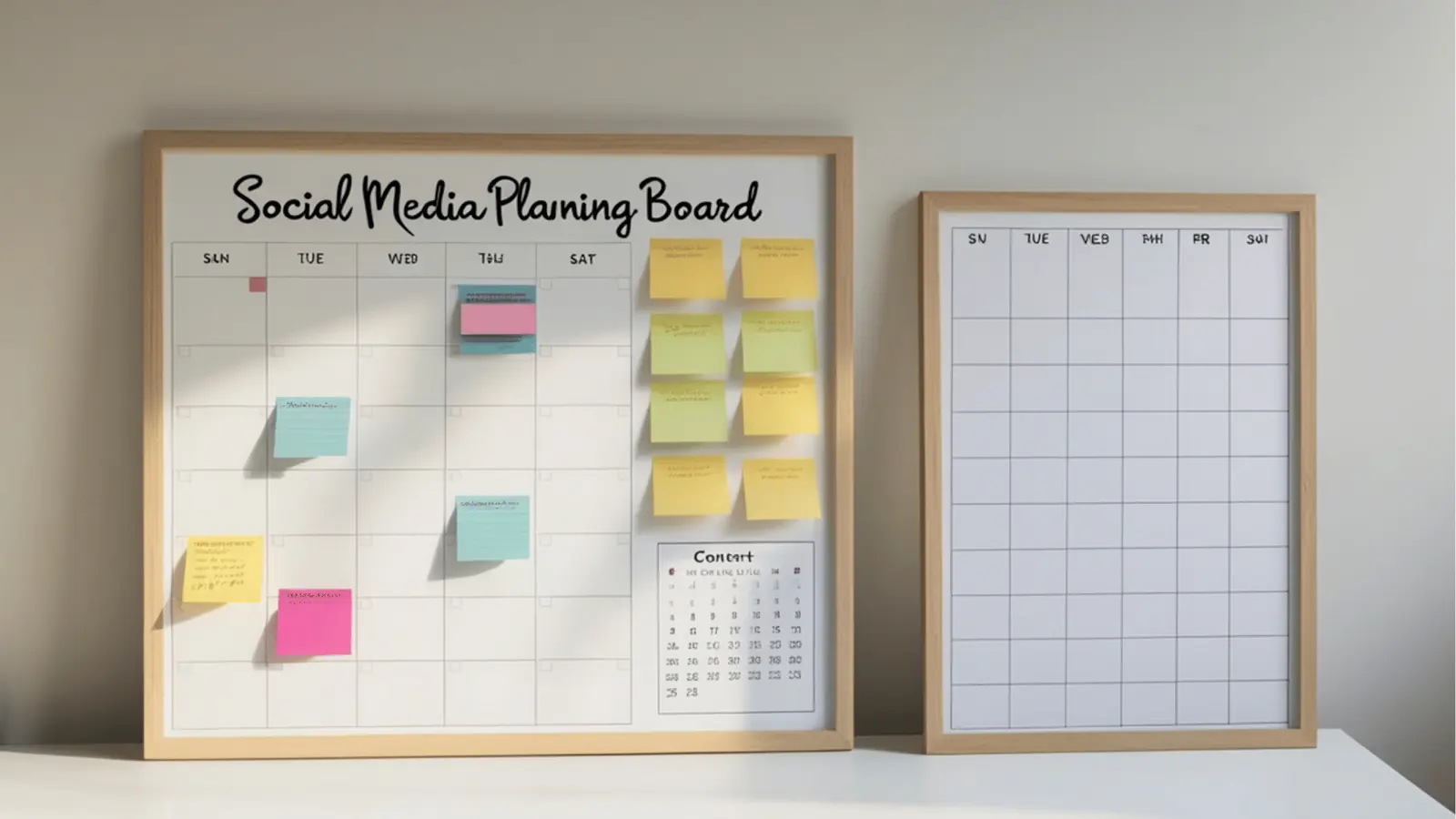
The evolution of social media management has moved past simple scheduling. We are no longer just "posting content"; we are managing complex digital ecosystems where every image, caption, and link must work in perfect synchronization across multiple platforms and markets.
The real issue isn't that tools like Sked Social are bad; it's that they are built for a simpler era of social media. Modern teams don't just need a grid; they need a command center. They need a place where the AI assistant helps with the heavy lifting of ideation, the composer handles the nuances of ten different social networks, and the link-in-bio page ensures that the traffic they work so hard to earn actually converts.
Operational excellence in social media is rarely about the "big idea." It is about the hundreds of small handoffs that happen every day. When those handoffs are automated and integrated, the team stops being a group of "posters" and starts being a group of "strategists."
The ultimate operational truth is this: your social media scale will always be capped by your coordination debt. If you spend your day fighting your tools, you will never have the time to grow your brand. Switching to Mydrop isn't just about getting a better link-in-bio builder-it’s about reclaiming the time you need to actually lead your market.