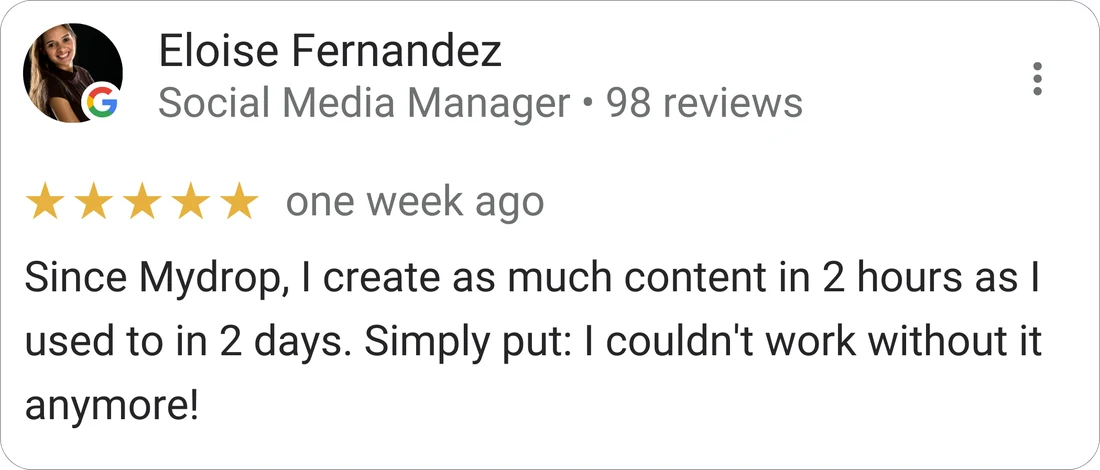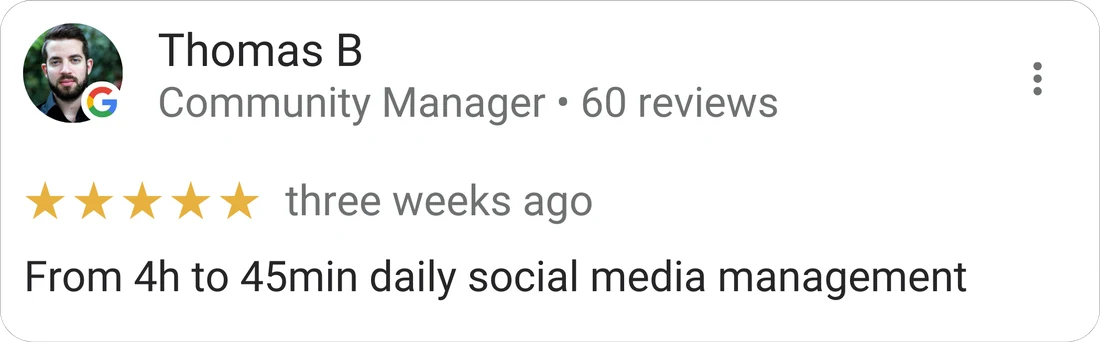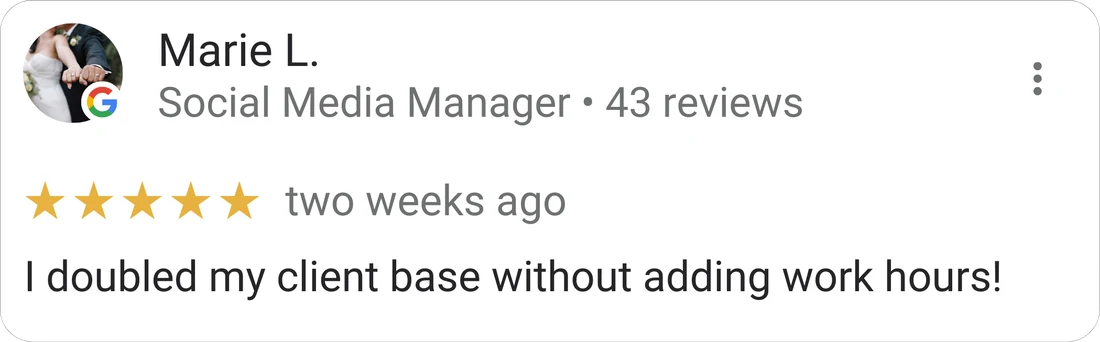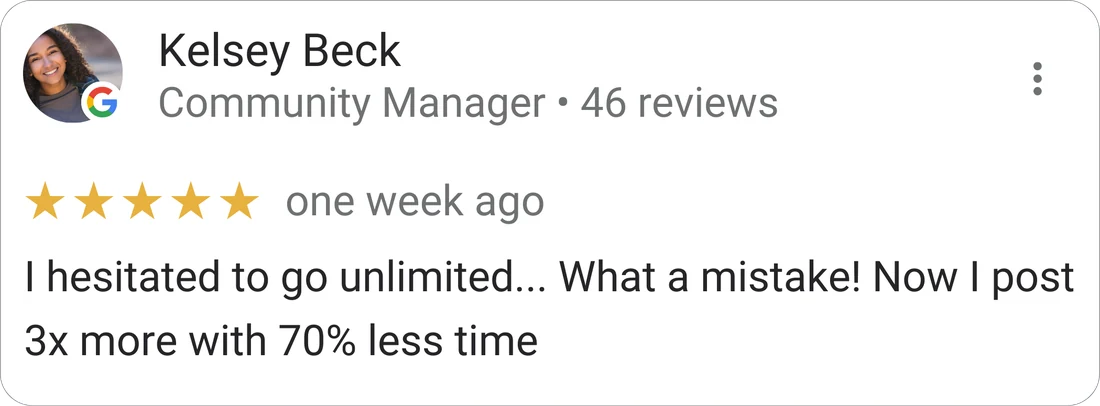

Mydrop is built for teams that outgrow the one-size scheduler and need a control room for real social operations. If your calendar is starting to look like a sticky-note collage, approvals are disappearing into DMs, or every campaign requires a manual download from Drive and a re-export from Canva, you feel the drag. Mydrop replaces those repetitive handoffs with a validated multi-platform composer, Drive and Canva imports, templates, automations, and an AI Home assistant so publishing is faster, fewer posts fail, and approvals stay attached to the content they review.
This article is for the person who owns the calendar and the mess. By the end you will know where a Crowdfire-style workflow still works, where it breaks for growing teams, which real operational problems Mydrop fixes across compose, approvals, automation, and analytics, and a small checklist of what to decide first when evaluating a migration. Think of this as a short operations playbook: Validate, Compose, Approve, Automate, Analyze - the five controls of the Social Operations Control Room.
Why teams start looking for a switch

Most teams start hunting for a change when the number of profiles, brands, or platforms crosses an invisible threshold. One profile for each team member quickly becomes a dozen client profiles, regional variants, and a couple of emergent channels like YouTube or TikTok. At that scale the simple scheduling workflow that worked for a solo manager turns into a brittle process: assets live in Drive, designers work in Canva, captions are copy-pasted into multiple rows, and someone has to remember platform-specific fields like alt text, thumbnails, or native post types. Here is where teams usually get stuck: a campaign that should take a few hours balloons into a day of downloads, edits, re-uploads, and last-minute asks to legal.
Crowdfire and similar tools earn loyalty for a reason: they make multi-account posting straightforward and they get the basics right for small teams. If you run a single brand, rarely post videos, and have a handful of profiles, the ease of scheduling and a predictable interface are real productivity wins. For many small teams that simplicity is the most important tradeoff. But this is the part people underestimate - what happens when you add more profiles, tighter compliance, or a need for platform-native features? The single-compose, single-approval flow becomes a source of repeated friction, not a time-saver.
The transition decision often comes down to three practical choices the team must make first:
- Which brand or workspace will run the pilot and which profiles must be connected first.
- What approval model to keep - who are the approvers, what are SLAs, and which posts need legal review.
- Which content sources are required upstream - Drive, Canva, or shared folders that need direct import.
Those choices expose the failure modes fast. Agencies managing 12 client brands find that duplicated captions and missing thumbnails create client escalations. An enterprise launching a product discovers that the YouTube thumbnail that looked fine in a basic scheduler fails at publish time because the platform required a specific size and format. Meanwhile, the legal reviewer gets buried in chat threads and loses context because approvals are not attached to the post draft. Each missed requirement can mean a quick repost, a compliance flag, or a damaged brand moment.
Stakeholder tension is real and predictable. Creative teams want speed and flexibility - they like Canva exports, varied aspect ratios, and the ability to tweak captions for markets. Compliance and account owners want governance: a clear approval trail, templates that enforce brand voice, and fewer surprises at publish. Operations wants to standardize without slowing creative, and IT wants connections that respect SSO and audit trails. Crowdfire-style tools cover the speed side and basic multi-account convenience, but they typically leave the governance, asset fidelity, and pre-publish validation gaps for teams to bridge with processes or extra tools. That gap becomes an operational tax: more manual checks, more back-and-forth, and more chance of a post failing at the moment it matters.
When teams reach for a replacement, they are mostly solving three practical problems at once: remove manual asset moves, guarantee platform-specific completeness, and keep approvals attached and auditable. Fixing any one helps, but fixing all three dramatically reduces risk and turns publishing into a repeatable operation rather than a series of heroic last-minute saves. Mydrop tackles these directly: Drive and Canva imports remove the download-upload loop, the multi-platform composer and pre-publish checks catch format and metadata issues before scheduling, and approval workflows keep reviewers inside the same draft so decisions do not vanish into chat. Those features do not erase tradeoffs - you will pay more for deeper platform fidelity and governance than for a basic scheduler - but they trade manual labor and recurring errors for predictable processes and fewer emergencies.
Where the old workflow starts to break

Here is where teams usually get stuck: a small scheduling tool covers the basics well, but once you add multiple brands, regional variants, and platform quirks the cracks show fast. The typical failure modes are painfully predictable. Creative sits in Drive or Canva, someone downloads and re-uploads it, captions are copied and edited in a spreadsheet, and thumbnails or first-comment posts get lost in the copy-paste shuffle. On launch days the legal reviewer gets buried in Slack threads, an Instagram post goes up without alt text, a TikTok video is the wrong orientation, and nobody notices until the campaign has already shipped. For solo users those steps are tolerable. For an agency juggling 12 client brands with three approvers per post, they are a recurring operational cost that eats both time and trust.
These breakpoints create real stakeholder tension. Creative leads want fidelity to the original Canva exports; regional managers need local text and links; compliance wants a clear audit trail. A Crowdfire-style scheduler handles posting and basic multi-account convenience, but it rarely enforces the platform-specific inputs that prevent failures. The tradeoff is speed for safety: teams can schedule faster, but the more you rely on manual handoffs, the more mistakes compound. This is the part people underestimate. A single missing thumbnail or expired media link can cascade into multiple re-do rounds, lost impressions, and a burned-out reviewer team trying to untangle what happened.
Concrete symptoms to watch for are simple and measurable: post failure rates, time spent chasing assets, approval turnaround time, and rework cycles after publishing. If your social ops team repeatedly salvages posts after publish, or your product launches require last-minute manual fixes to thumbnails and captions, the workflow has outgrown a one-size scheduler. Those are the exact moments teams start searching for a Crowdfire alternative and asking for something that treats publishing like a controlled operation rather than ad hoc scheduling.
How Mydrop solves the daily bottlenecks

Think of Mydrop as the Social Operations Control Room and run it through the same five-step principle teams already follow: Validate, Compose, Approve, Automate, Analyze. Each stage removes the manual stepping stones that create errors and delays. Validate starts with pre-publish checks inside the Calendar composer: profile selection, caption length, media format, thumbnail rules, and platform-specific fields are validated before a post can be scheduled. That single gate prevents a surprising number of failed posts and last-minute scrambles. Compose is the multi-platform composer itself: one campaign idea becomes platform-ready posts with per-network customizations preserved, so captions, first comments, and post types live next to each other instead of scattered across spreadsheets.
Approve and Automate are where governance and scale stop being friction. Approval workflows attach reviewers, comments, and statuses directly to the post rather than letting decisions evaporate in chat threads. For the agency managing 12 brands, that means the legal reviewer sees every version and every comment in context; approvals don't get lost, and audit trails are automatic. Automations take recurring tasks off the team's plate: set a trigger, pick profiles or groups, attach templates, and let Mydrop run repeatable campaigns while keeping status and permissions visible. That prevents the midnight replay of manual scheduling and reduces the "who moved the asset" blame game.
A few practical examples make the difference tangible. Enterprise product launch: designers finish in Canva, export directly into the Mydrop gallery with the orientation, quality, and thumbnails preserved; marketing drafts platform-specific captions in the Home AI assistant so writers don't start from a blank prompt; the campaign is scheduled with pre-publish checks and sent to regional approvers through the built-in approval flow. An agency handling evergreen repurposing uses templates plus automations to standardize post structure across brands, freeing content strategists from repetitive setup. Community teams use Inbox and Rules to route high-priority messages to the right owner instead of relying on manual tagging and spreadsheets.
Checklist - quick mapping questions for your team
- Who owns final creative exports? (Design or social ops)
- Which approver roles are mandatory per brand? (Legal, brand, client)
- Which platforms require unique inputs per post? (YouTube thumbnails, Pinterest boards, Instagram alt text)
- What recurring post types should be templated or automated? (Evergreen promos, weekly roundups, product updates)
- What baseline analytics need to appear in a single report? (Engagement by profile, top posts, followers delta)
This is the part people underestimate: connecting assets, approvals, and automation. Mydrop plugs Drive and Canva directly into the gallery so approved creative doesn't need downloading and re-uploading; that quiet change alone saves hours per campaign and preserves export fidelity. The Home AI assistant reduces cognitive load for writers by keeping workspace context and ongoing drafts in one place - not a new AI prompt every time someone starts a caption. Combine that with templates and pre-publish validation and you get a workflow where fewer things break, approvals are traceable, and team velocity scales without adding headcount.
Finally, there are tradeoffs to call out. Moving from a lightweight scheduler to a control room model means more setup up front: profiles, brands, templates, and Automations should be configured thoughtfully. That investment pays back quickly in fewer production errors and faster approval cycles, but it does change how teams approach operations. The low-risk path is a staged pilot: connect one brand, import a rolling week of posts, apply a template, run approvals in parallel for 2-4 weeks, and then flip calendar cutover. That sequence preserves current operations while giving teams the breathing room to validate processes in the new control room.
What to compare before you migrate
When teams get serious about scale, the checklist goes beyond "can it post?" and into "will it keep us out of trouble?" Start by acknowledging the basics that made small schedulers useful: simple setup, low cost, and a clean UI for one or two people. That said, the questions that matter for a 12‑brand agency or a global product launch are operational. Does the tool validate platform specifics so you do not send a bad asset at 11:59? Can it bring approved creative from Google Drive or final exports from Canva without manual downloads? Will it keep approvals attached to the exact post, not split across email threads and Slack channels? Those are the practical filters that separate a toy from a control room.
Use a focused comparison checklist and test each item with a real workflow, not a demo script. The shortlist below captures the signals that predict success or pain when you switch. Run each check with one real campaign, not synthetic examples.
- Platform fidelity: confirm post types, thumbnail controls, first comment, alt text, and video duration rules for each relevant channel.
- Pre-publish validation: schedule a post intentionally missing one required field and see whether the tool blocks scheduling with a clear error.
- Asset fidelity and imports: import a Canva export and a Drive folder with nested versions; validate metadata, formats, and editability in the gallery.
- Approvals and audit trail: create a post, send it to two approvers, get comments, require edits, and then approve; make sure the approval history stays with the post.
- Automation and templates: implement a recurring campaign template, run it once, pause it, and inspect logs and ownership.
Comparisons need to include tradeoffs and failure modes. For example, a lightweight scheduler may be faster to adopt but will surface hidden costs: manual downloads, spreadsheet caption copies, and approval workarounds that create operational debt. Conversely, a full-featured platform like Mydrop brings more admin during onboarding: mapping roles, connecting dozens of profiles, and defining templates takes time up front. Expect initial configuration work and treat it as investment, not friction. Also test edge cases: what happens when a social API rate limits you, or when a profile token expires? How does the vendor surface those failures and help you recover? The answer to these operational questions is what truly defines ROI during a migration.
Finally, measure the right metrics during your pilot. Track approval cycle time, percentage of posts blocked by pre-publish checks, average time spent moving assets from Drive/Canva into a post, and number of failed publishes. Use those numbers to compare the current workflow to your pilot. A simple rule helps: if the pilot reduces manual file moving or approval back-and-forth by half, it is worth scaling the change. If a vendor gives you an "admin sandbox" or trial workspace, use it to stress test the V-CAPP flow: Validate, Compose, Approve, Automate, Analyze.
How to move without disrupting the team

This is the part people underestimate: migrations are a people problem wrapped in a tech project. The safe, low-risk approach is a staged cutover that keeps the old calendar alive until your new control room proves itself. The canonical five steps work well: pilot workspace, connect profiles and import recent posts, build templates and automations, run approvals in parallel for 2 to 4 weeks, then flip the calendar cutover. Each step should have an owner and a rollback plan. For example, assign a publishing lead who can pause an automation, reassign a profile token, or re-route an approval within 10 minutes if something goes sideways on launch day.
Start the pilot with one brand and one business-critical campaign, like a product launch. Connect the profiles, import a rolling week of posts from the legacy tool, and recreate two templates that the brand uses frequently. Use Mydrop Home sessions to onboard writers and planners by running prompt sessions that produce caption variants and post drafts, then save those outputs as templates. Keep approvals running in the legacy tool while you practice approvals inside Mydrop. That parallel runway is crucial: it lets legal and product teams get familiar with approval attachments, comments, and version history without pressure. Expect the first few weeks to be slower. That is normal. What matters is that approval cycle time tightens and manual asset moves disappear after the initial setup.
Change management details win or lose migrations. Communicate three clear handoff rules and measurement signals to the team, then enforce them for the pilot. For example: 1) All creative must live in the connected Drive folder and be imported to Mydrop Gallery; 2) Every post scheduled in Mydrop must attach an approval or be marked as draft; 3) Measure and report failed publishes, approval response time, and time spent on media handoffs weekly. Keep a short operations playbook with screenshots for the common tasks and a single Slack channel for migration questions. Finally, plan the flip: pick a low-risk weekend, disable new scheduling in the legacy tool, sync the last 7 days of posts into Mydrop, and route the on-call person to check publish logs for the first 48 hours. If anything requires rollback, enable the legacy calendar and follow the documented rollback steps. After the cutover, hold a short retrospective at week two to capture quick fixes for automations, templates, and permission tweaks.
Migrations are also an opportunity to tighten governance and reduce future firefighting. Use templates to standardize captions and compliance copy, use Automations to reduce repetitive manual tasks, and use pre-publish validation to prevent format errors on high-value channels. Encourage teams to save useful Home AI prompts as shared assets so ideation and drafting start from consistent context. That way the platform is not just a new UI, it becomes a repeatable operating rhythm. For teams managing many brands, the result is cleaner handoffs, fewer last-minute reworks, and a calendar everyone trusts.
When Mydrop is the better fit

Mydrop becomes the better fit when social operations move from "one person can handle it" to "this requires a control room." If your operation has multiple brands, region-specific variants, or a chain of approvers that routinely stalls launches, the simple scheduler pattern that worked early on stops being an asset and becomes a risk. That is the real trigger: teams that need predictable, repeatable publishing and cannot accept last-minute failed uploads, missing thumbnails, or creative that lives in Drive but never makes it cleanly into the post. For solo users or micro teams, a Crowdfire-style tool covers basics well. For an agency running 12 client brands with three approvers per post, or an enterprise doing a global product launch with assets living in Drive and Canva, Mydrop starts to pay for itself in fewer mistakes and fewer firefights.
Translate that to the V-CAPP control room and the differences are practical, not theoretical. Validate - Mydrop runs pre-publish checks against platform rules so you catch the missing alt text, wrong video orientation, or an absent thumbnail before scheduling. Compose - the multi-platform composer keeps one campaign idea as the single source of truth while letting teams customize captions, set first comments, and choose platform-specific options for Instagram, YouTube, LinkedIn, TikTok, X, Threads, and more. Approve - built-in approval flows attach reviewers to the post, preserve context, and keep legal or client comments threaded next to the draft instead of trapped in DMs. Automate - Automations and templates mean repeatable campaigns get the same setup every time, and Drive and Canva imports remove error-prone manual downloads. Analyze - the combined Analytics and Posts views let teams see what worked across brands and pivot without running ten separate reports. Put simply: where a Crowdfire-style workflow leaves handoffs, Mydrop maps them into steps you can audit and assign.
There are tradeoffs to acknowledge. A feature-rich publishing platform adds integration and governance work that small teams can avoid. Mydrop requires workspace setup, profile organization, and initial template creation, and that means a small upfront investment in configuration and training. Stakeholder tensions will surface during rollout - legal will want stricter approval gates, regional teams will want localized cadences, and creative will want flexible media handling. These are normal and manageable. The practical failure modes to watch for are not technical but procedural: overcomplicate templates so creators avoid them, or set automations too broadly so a paused campaign is still firing. The fix is simple governance: use conservative templates at first, run automations in a "dry run" mode, and make Home AI sessions part of content planning so writers and reviewers see the value early.
A simple rule helps: pilot like you would a product launch. Start with one brand and one high-value workflow - for example, a product launch that uses Canva for hero creative and Drive for approved assets. Connect the profiles, import a week of scheduled posts to Mydrop so the calendar has real context, create one template for the launch cadence, and send two live posts through the approval flow. That gives legal, creative, and the account team a low-risk window to see validation, composer customization, Drive/Canva fidelity, and approvals in action. If that pilot surfaces friction, it usually points to governance or permissions, not platform capability.
Three very practical next steps
- Pick one brand and one campaign that has recently caused pain - e.g., a regional launch or a sponsored post that needed last-minute legal signoff. Connect the relevant profiles and import the last 7 days of posts to the Mydrop calendar.
- Save a post template for that campaign pattern and enable pre-publish validation. Send a test post through approval with the actual approvers to confirm notifications and context remain attached.
- Run the same campaign once using an automation in paused mode, review the audit trail, then flip it live for a single day. Use Analytics > Posts after 72 hours to compare performance and operational savings.
Conclusion

For teams that need scale without chaos, Mydrop is not a feature list; it is an operations pattern. The difference versus a Crowdfire-style scheduler shows up in daily friction: fewer manual downloads from Drive, fewer re-exports from Canva, no last-minute missing fields, and approvals that do not vanish into chat. Those fixes translate to measurable wins on launch days, reduced legal churn, and more predictable publishing for multi-brand calendars. If your priority is quick setup and low cost for a single user, a simple scheduler still fits. If your priority is repeatable, auditable social operations across brands and markets, the control room approach wins.
Start small, instrument the change, and keep people in the loop. Run the three-step pilot above, measure operational failures avoided and approval time saved, then expand templates, automations, and Home AI sessions as confidence grows. That path keeps current workflows running while proving Mydrop's value on the items that matter most to enterprise teams: speed, fewer mistakes, clearer handoffs, and a predictable way to publish across every platform your brand needs.