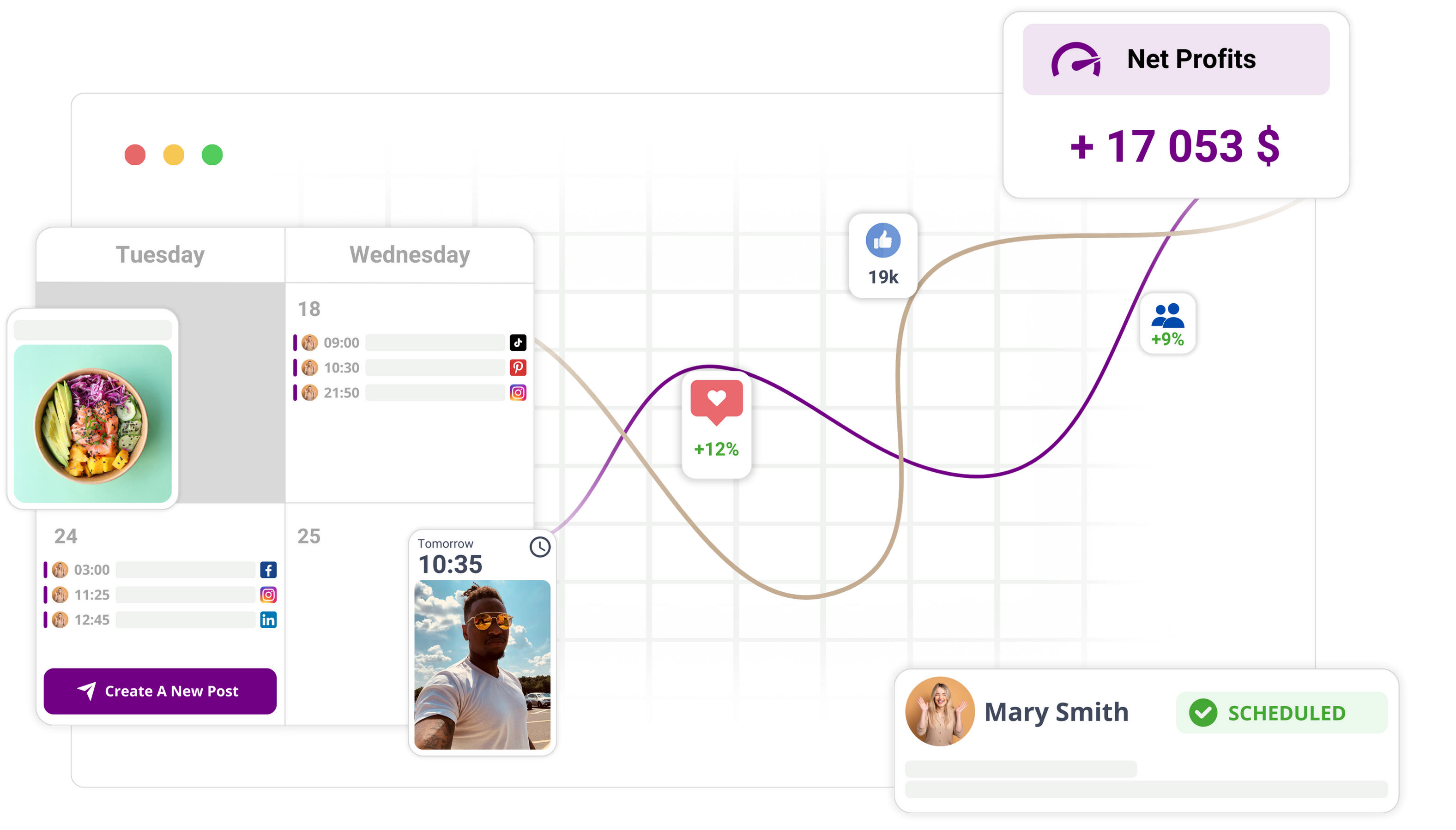

Stop treating your best-performing posts like one-hit wonders. Every high-engagement thread, deep-dive article, or successful video is actually a modular asset-a blueprint for a month of high-ROI social presence that is currently being left on the table. If you only publish an idea once, you have not actually finished your work.
TLDR: Stop the daily scramble to invent new content. Instead, take your top-performing post from last month and atomize it into 10 new pieces of content: a thread, three quote graphics, a short-form video script, two poll questions, a newsletter blurb, and a LinkedIn long-form summary.
You are likely exhausted from the content treadmill, feeling like you are shouting into the void only to watch your best work vanish after 24 hours. Imagine the relief of having a repeatable system that turns one great idea into a sustained campaign, turning your frantic daily creation into calm, intentional distribution. This shift is not just about saving time; it is about giving your winning ideas the runway they deserve to actually reach your audience.
- Identify: Look at your analytics to find one post with 2x your average engagement.
- Decide: Commit to creating at least five "Satellite" assets from that "Core" post within 72 hours.
- Scale: Use your Scale-Ready Workflow to ensure every derivative maintains the original brand voice and quality standards.
The real problem hiding under the surface

The hidden cost of high-volume social media is not just time; it is the "Creative Tax." This is the repeated, wasted effort of reinventing the wheel every morning because your team lacks an architectural way to repurpose success.
The real issue: Most teams manage content through a chaotic web of spreadsheets, disconnected cloud folders, and Slack threads. When you try to atomize a post in this environment, version control breaks, stakeholders lose visibility on the current status of assets, and compliance risks balloon. The "Creative Tax" is what you pay in lost efficiency and diluted brand consistency when your team works in silos.
When you treat social media like a series of isolated events, you are essentially asking your team to be in a constant state of frantic, manual creation. The moment you start treating your content library as raw material for a "Core-and-Satellite" model, everything changes.
In this model, your high-performing post acts as the "Core"-the definitive source of truth for a specific message. Every derivative you create-whether it is a snippet for a thread, a slide for a carousel, or a script for a video-becomes a "Satellite" orbiting that central message. This isn't just about repetition; it is about hitting different learning styles and platform native preferences with the same proven message.
Here is where teams usually get stuck: they worry that repeating a message will annoy their followers. The truth is almost the opposite. Because of how social algorithms work and the way people consume information, most of your audience will miss the original post entirely. By atomizing your best work, you are not spamming your followers; you are actually ensuring that your most valuable insights have a fighting chance to be seen by the people who need them. Efficiency is not doing more work; it is giving your best ideas more runway.
Why the old way breaks once volume rises

Scaling social content without an architecture is like trying to build a skyscraper with a box of toothpicks. At first, you manage. You copy-paste text from a Google Doc into a channel, grab a link from a drive folder, and hope the image resolution is correct for the specific platform. When you have two accounts, it feels manageable. When you have twenty, it becomes a structural disaster.
The Creative Tax hits hard here. You are effectively paying for the same creative work four different times because no one knows where the original master file lives, or which version of the copy was approved for LinkedIn versus X.
Most teams underestimate: The hidden coordination debt of manual content reuse. It is not just about the time spent pasting; it is the mental exhaustion of tracking version history across three different apps and a spreadsheet that nobody updated since Tuesday.
| Feature | The Manual Way (Old Way) | The Mydrop Way (Modern Scale) |
|---|---|---|
| Asset Reuse | Search folders, hope to find it | Pull from centralized Gallery |
| Formatting | Resize/Recrop manually | Use automated export presets |
| Coordination | Email threads, Slack pings | Contextual workspace conversations |
| Governance | "Trust me, it's correct" | Template-driven safety rails |
Here is where teams usually get stuck: they confuse duplication with repurposing. Dumping the same text and image into every channel is not a strategy; it is a signal to your audience that you do not care about their platform experience. True atomization requires intentional transformation, but doing that manually for ten formats across five brands is a recipe for missed deadlines and compliance headaches.
The simpler operating model

If you only publish an idea once, you have not actually finished your work. You are just leaving the most valuable version of your asset to die in a feed algorithm. Shift your thinking to the Core-and-Satellite model.
Your high-performing post is the Core. Every other format-the thread, the poll, the short-form video script, the newsletter snippet-is a Satellite orbiting that central message.
Operator rule: Don't start a new post from a blank screen. Look at your top-performing content from the last 30 days and treat it as the only input you need for tomorrow's entire publishing schedule.
This move from "frantic creation" to "intentional distribution" requires a workflow that doesn't break under pressure. You need a system that keeps the creative energy close to the publishing reality.
- Curate: Use data to identify which core topic actually landed.
- Transform: Apply saved post templates that already hold your brand's preferred structure and tone.
- Distribute: Move content into an automated workflow, ensuring that status and approvals are visible to the entire team.
This is the point where people worry about losing the "human touch." In reality, the opposite happens. When you use post templates to handle the repetitive structural work-like where the CTA goes or how the first line is formatted-your team stops stressing over assembly and starts spending their time on what matters: refining the hook, tailoring the nuance for specific markets, and engaging in the comments.
Quick takeaway: Efficiency is not doing more work; it is giving your best ideas more runway.
When you bring design assets into a gallery workflow using smart export options, you remove the guesswork of dimensions and quality. When you keep your conversations directly inside the post preview instead of moving back to email, you cut the time spent on "where is the latest version" by half. Coordination debt vanishes when the context is pinned to the work itself, not floating in a disconnected chat app.
By building around a repeatable, template-driven core, you aren't just publishing more; you are building a predictable engine that handles volume without demanding more of your team's limited attention.
Where AI and automation actually help

Most teams burn their most talented people on the tedious, mechanical side of repurposing content. You have a great article, and your social lead spends two hours manually stripping out quotes, resizing graphics, and copying text into a half-dozen platform-specific drafts. That is not creative work. That is just administrative overhead.
AI does not replace your strategy, but it completely removes the creative tax of execution. When your team uses a system like the Mydrop Home assistant, you stop starting from a blank prompt. You feed it your "Core" asset, and it can instantly generate a thread, a newsletter blurb, or a video script tailored to your specific brand voice.
Operator rule: AI should handle the mechanical "translation" of your core idea, while your humans handle the strategic "curation" of what goes out the door.
The bottleneck usually isn't generating the text; it is the coordination required to move that draft through your internal machine. If your approval process lives in one tool and your publishing calendar lives in another, your team will spend more time chasing status updates than actually refining the work. When you unify your conversations and assets in one place, you stop losing context. You can keep those feedback threads, approved assets, and final copy versions tethered directly to the post, so everyone knows exactly why a specific change was made.
Common mistake: Treating automation as a "set and forget" button. If you automate your content without a human-in-the-loop review, you will inevitably end up with generic, brand-diluting noise. Use automation to build the scaffolding, then use your human team to add the soul.
To keep this from becoming a mess, use standardized workflows for every piece of content you atomize. Instead of relying on tribal knowledge, build templates for your recurring formats. If you have a high-performing video that you want to turn into a carousel, a thread, and a short, your setup should look like this:
- Intake (Upload core asset to the gallery)
- Standardize (Apply pre-configured format templates)
- Collaborate (Threaded discussions for stakeholders)
- Distribute (Automated push to target channels)
The metrics that prove the system is working

If you cannot measure the efficiency of your content factory, you are just guessing. Most teams look at vanity metrics-likes, shares, or clicks-but they ignore the internal "Cost of Creation." To justify this shift, you need to track how well your atomization strategy is actually performing.
The goal isn't just to publish more; it is to get more yield out of every hour spent by your team. You want to see your "Cost Per Asset" drop as your "Lifecycle Per Idea" increases.
KPI box:
- Repurposed Reach: Total impressions from derivative assets vs. the original core post.
- Creation Velocity: Time elapsed from "Core" publication to the launch of the final "Satellite" derivative.
- Creative Overhead: Number of man-hours spent on non-strategic tasks (formatting, manual resizing, status chasing) per campaign.
A simple scorecard helps your leadership understand that this isn't just "more content"-it's optimized asset utilization.
| Metric | The Old Way | The Systemized Way |
|---|---|---|
| Creation Effort | 4 hours per asset | 30 minutes via templates |
| Cross-Team Visibility | Scattered docs/emails | Unified workspace/context |
| Compliance Risk | High (manual errors) | Low (governed templates) |
| Asset Lifespan | 24-48 hours | 2-4 weeks (sustained) |
Before you dive back into the daily grind, perform a quick audit of your last three winning posts. If they haven't been touched since they were published, you are effectively leaving high-performing equity sitting in a dark vault.
- Identify one "Core" asset from the last 30 days that exceeded engagement benchmarks.
- List at least three formats you can extract (e.g., thread, short video, infographic).
- Select one teammate to own the atomization for this specific campaign.
- Set up a template for this format group so you don't have to build it from scratch next time.
- Review the performance data one week after the "Satellite" assets go live to calculate your total campaign yield.
Efficiency isn't doing more work; it is giving your best ideas more runway. Stop chasing the next hit and start mining the gold you already have.
The operating habit that makes the change stick

The most common reason these atomization efforts fail isn't a lack of creativity; it is the absence of a shared ritual. You can have the best strategy in the world, but if your team treats it as an occasional "if we have time" task, it will inevitably revert to the same old, frantic single-post cycle.
You need to build the process of repurposing into the moment of publishing.
When your social lead hits the "Publish" button on a primary asset, the next three steps should already be waiting in the queue as a part of your standard campaign template. Treat atomization not as an afterthought, but as a mandatory stage in your editorial workflow.
Framework: The 3-Step Atomization Loop
- Curate: Identify the top 5 percent of high-performing assets from your quarterly reports.
- Transform: Use saved post templates to instantly map that core message to your satellite formats.
- Distribute: Schedule the series as a unified campaign to maintain momentum without manual daily re-entry.
Here is how you can start this habit this week:
- Audit your last thirty days: Find one post that outperformed your baseline by at least 20 percent and list its three strongest points.
- Standardize the satellite: Create one re-usable post template in your workspace that captures that message as a short-form video script or a carousel outline.
- Assign the handoff: During your next planning meeting, assign a specific teammate to transform the next "winner" using that template before it even goes live.
Best for scaling teams
When you shift from "making a post" to "managing an asset," the entire dynamic of your social operation changes. You stop asking "What do we post today?" and start asking "How do we get more value from our best work today?"
Conclusion

Repurposing is not about gaming the algorithm. It is about respecting your audience enough to meet them in the format they prefer, at the time they are listening. When you force yourself to break a singular idea into ten different shapes, you inevitably sharpen the idea itself. You find the gaps in your own logic, the parts that were too jargon-heavy, and the insights that actually resonate with your stakeholders.
The "Creative Tax" you pay every morning is optional. It is a choice to keep working in silos, copying text from spreadsheets, and letting version control drift into chaos. Scaling a social program isn't about adding more heads to the team; it is about building an architecture that lets your best ideas do the heavy lifting for you.
Success on social media is rarely about being first; it is about being consistent enough to be remembered.
When you have a central hub like Mydrop where your team can collaborate on conversations, save repeatable templates, and build automated workflows, you finally stop fighting your tools and start focusing on the actual content. A high-performing asset is not a finish line. It is just the beginning of the campaign.