You turn one idea into 10 social posts by adopting a source-first architecture that treats your core message as a master asset, rather than trying to manufacture a dozen distinct creative crises every morning. You aren't burned out because you have too many ideas; you are burned out because you are manually re-inventing the wheel for every single platform, every single day. When every post feels like a fresh emergency, you are not building a brand-you are simply managing a fire.
The relentless treadmill of social content is exhausting your best people. It is a slow-motion drain on morale that happens whenever a team treats platform adaptation as an afterthought rather than a structural requirement. True operational relief arrives when you stop chasing the algorithm and start mastering the mechanics of your output.
TLDR: Stop "copy-pasting" to your channels. Instead, build one Source-to-Satellite master asset, then adapt it using a template-driven workflow that maps core content to platform-specific needs (e.g., long-form LinkedIn insights vs. high-energy TikTok hooks) in a single session.
The real problem hiding under the surface

The awkward truth is that most agencies and enterprise teams believe the "hard work" is in the creative phase. In reality, the true bottleneck is the conversion: the tedious, repetitive friction of reformatting, re-tagging, and re-checking that kills both morale and output quality. When your workspace is fragmented, you suffer from a hidden "coordination tax" that compounds with every new platform or stakeholder you add to the mix.
The real issue: The "Fragmented Workspace" tax. Every time your team switches between native apps, email threads, and loose spreadsheets to adapt one idea, they lose context. If it lives in an email thread or a static document, it is already losing momentum.
Most teams underestimate the total time cost of this context switching. It is not just the five minutes spent copying a caption; it is the ten minutes spent tracking down the latest version of the graphic, another five checking if the legal team signed off on that specific crop, and the inevitable panic when you realize you used the wrong link for the Instagram bio. When you manage your identity across channels as disjointed tasks, you are not scaling-you are just multiplying your chaos.
To fix this, you need to stop thinking about "posting" and start thinking about "architecting." A simple approach helps stabilize the production line:
- Audit your "Source" quality: Is your core asset robust enough to survive translation? (If not, don't start the 1-to-10 process).
- Centralize the asset library: Ensure everyone is pulling from one approved source, not local downloads.
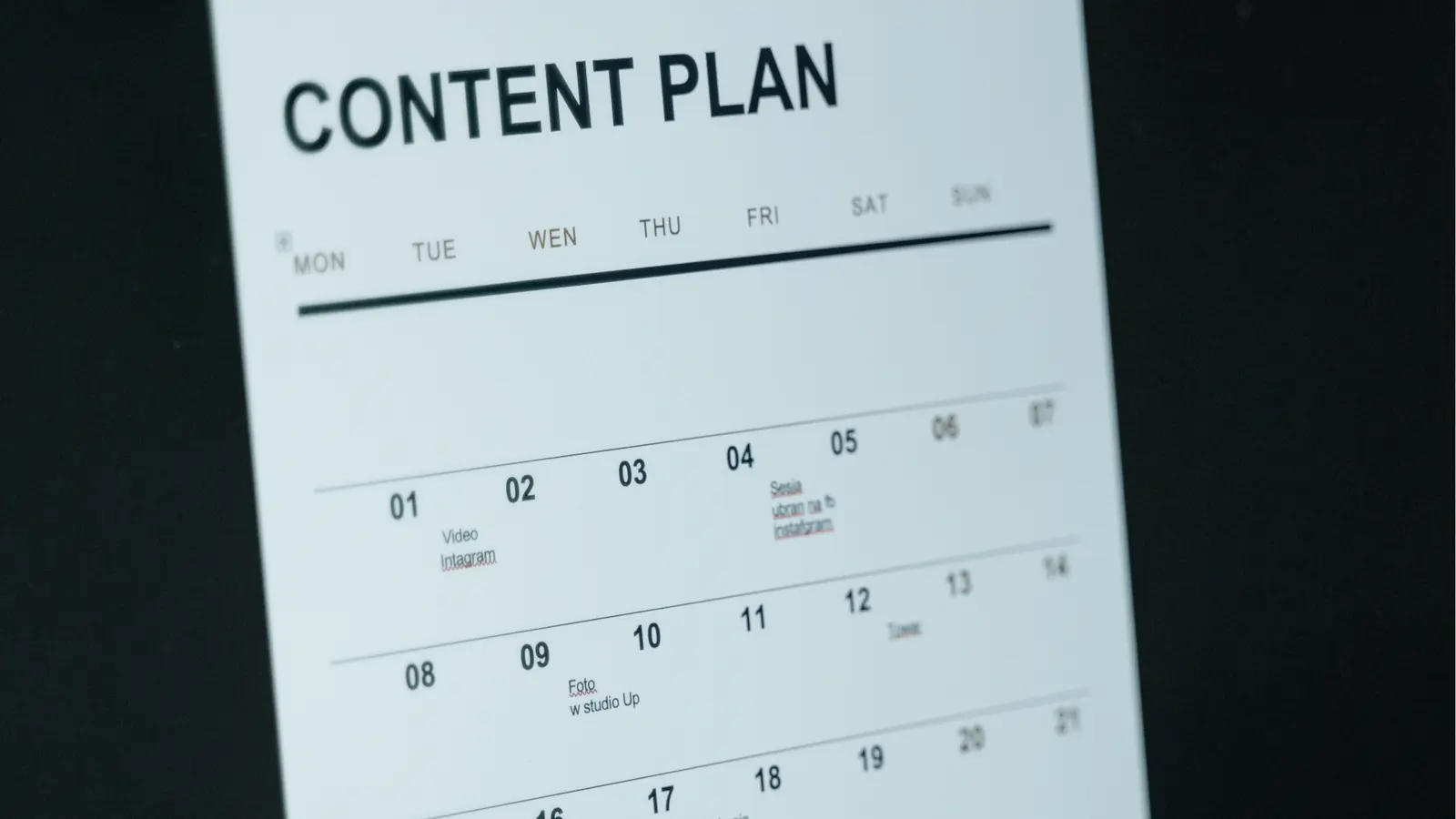
- Gate-keep the process: Use clear, visible milestones (like calendar reminders for filming and review) to ensure nobody skips the adaptation step.
Operator rule: Never build a "satellite" post from scratch. If you find yourself writing a caption for LinkedIn and then starting from a blank cursor for X, you have failed the architecture test.
This is the part people underestimate: scaling your team size without fixing this underlying architecture will only accelerate the burnout. You end up with five people fighting the same messy process instead of one. The goal is to move your team from "content machines" that burn fuel to "content architects" who build modular, reusable systems.
Once you treat your central idea as a source and your platforms as satellites, the daily anxiety of "what do we post today" dissolves. It is replaced by a predictable cadence where the actual labor is shifted into the initial planning phase, allowing your team to reclaim hours that were previously lost to administrative churn. When the foundation is sound, the output is simply a matter of execution.
Why the old way breaks once volume rises

Scaling social content isn't just a math problem where you hire more people to do more work. It is a coordination problem, and most teams try to solve it with more spreadsheets and browser tabs. That is the quickest way to turn a high-performing creative team into a group of exhausted email-forwards and file-renamers. When you rely on native apps, shared folders, and manual copy-pasting, you aren't just losing time-you are inviting "coordination debt" that compounds every time you add a new brand or channel.
Most teams underestimate: The hidden time cost of "context switching" between native apps. Every time your social manager jumps from a LinkedIn draft to a TikTok editor, then back to a shared Google Sheet to track compliance, they lose focus. Over a week, that friction eats more hours than the actual creative work.
The system breaks because it forces your team to treat every post as a standalone project rather than a modular piece of a larger puzzle. If your process relies on someone "knowing" which version of a graphic belongs to which brand, or manual checks to ensure a link is updated for a specific campaign, you have already lost.
| Feature | The Old Way (Manual/Fragmented) | The Mydrop Way (Integrated) |
|---|---|---|
| Asset Storage | Scattered in Drive/Dropbox folders | Centralized in one workspace |
| Captioning | Copy/paste across native apps | Multi-platform composer with custom tweaks |
| Approvals | Long email chains or Slack pings | Built-in workflow status |
| Link Management | Manual link swaps per post | Dynamic link-in-bio updates |
| Compliance | Human memory and guesswork | Standardized brand templates |
When volume rises, the cracks widen. The legal reviewer gets buried in notifications, the analytics team waits for manual reports, and your best creatives spend 40 percent of their week doing data entry. It is a recipe for missed deadlines and burnout.
The simpler operating model

True operational relief arrives when you stop chasing the algorithm and start mastering the architecture of your output. We call this the Source-to-Satellite model. Instead of treating your LinkedIn post as an island, you define one "Source" asset-your primary message or campaign concept-and treat your social channels as "Satellites" that orbit that core idea. You never build a satellite from scratch.
This is where integrating your workflow into a unified space like Mydrop changes the game. By bringing your profiles, publishing history, and analytics into one hub, you stop managing channels and start managing messages.
The transformation looks like this:
- Source Creation: Develop your core campaign asset once.
- Satellite Adaptation: Use a centralized composer to adapt that core asset for each platform's unique requirements-thumbnail, caption, first comment, and timing.
- Synchronization: Align your publishing schedule with actual business goals using a shared calendar.
- Maintenance: Keep your brand presence consistent by linking traffic to a unified landing page.
Operator rule: If it lives in an email thread or a spreadsheet, it is already losing. The moment your content workflow requires a "manual update" to stay accurate, you have created a point of failure.
By moving your team into a single environment, you eliminate the "where is the latest file?" conversation. When the whole process-from brainstorming to scheduling and link-in-bio management-happens in the same place your analytics are tracked, the "friction tax" drops to near zero. You aren't just producing more; you are producing with intentionality, knowing that every asset you create is already optimized for its destination before you even hit send.
The goal isn't to be a content machine; it is to be a content architect. When the foundation is solid, the scale takes care of itself.
Where AI and automation actually help

Automation is not about letting software replace your creative judgment; it is about offloading the cognitive tax of repetitive coordination. Most teams treat AI as a content-writing shortcut, but the real power lies in the logistics of the "Satellite" distribution. When you use a platform like Mydrop to manage your Source-to-Satellite workflow, the automation kicks in precisely where humans start to lose track. It is the difference between manually resizing a master asset for four different networks and having a system that syncs your changes across the entire content lifecycle.
Common mistake: Relying on AI to generate your "voice" while ignoring the structural backend. If your approval process is still happening in fragmented email threads or disconnected spreadsheets, no amount of generative AI will save your team from burnout. You are just creating content faster, not better or more sustainably.
True operational relief comes from automating the "boring" parts of the chain: tagging, formatting, and the endless back-and-forth of status updates. When your source asset is locked into the Mydrop calendar, the automation ensures that every satellite post inherits the correct link-in-bio destination and tracking parameters. You stop wasting time on the "re-do" loop.
Use this checklist to identify where your team is still leaking time on manual tasks that should be automated:
- Does your team have to manually check if a post is approved before it goes live?
- Are you re-entering the same tracking links or UTM parameters for every channel?
- Do you struggle to find the "final" version of an asset because it is lost in a Slack DM?
- Is someone manually checking that your thumbnails display correctly on both mobile and desktop?
- Can you see the full history of a campaign across all channels without switching between native app tabs?
If you answered yes to more than two of these, your "coordination debt" is the primary source of your team's fatigue.
The metrics that prove the system is working

Data in social media is often noisy, focusing on vanity metrics like "likes" or "reach" that don't tell you anything about your team's health. To see if your Source-to-Satellite system is actually working, you need to track your internal operational efficiency. If you are spending less time "managing the chaos" and more time "crafting the strategy," your numbers will reflect it.
KPI box:
Metric The "Crisis" State The "Architect" State Time-to-Publish 45-60 mins/post < 10 mins/post Revision Rate 3+ rounds 1 round Platform Parity Low (missing details) High (fully optimized) Tool Swaps 5+ apps 1 workspace
Focus on your Capacity Multiplier. This is the ratio of output (total posts across all channels) versus the total hours spent in the dashboard. When you stop chasing the algorithm and start mastering the architecture, that number climbs steadily. It is a simple, brutal way to measure if your team is functioning as a unit or a collection of frantic individuals.
The "Architect" state is not about speed for the sake of speed. It is about bandwidth recovery. When you move your social operations into a unified workspace, you create a "single source of truth" that eliminates the need for status meetings, frantic "did you post this yet?" emails, and the constant fear that you missed a channel.
Framework: The Source-to-Satellite Flow
Core Concept -> Asset Creation -> Mydrop Calendar -> Platform-Specific Adaptation -> Stakeholder Approval -> Automated Sync
Don't be a content machine; be a content architect. When you treat your output as a system, you stop managing fires and start building a brand that can scale without breaking your people. Volume without a system is just noise, and your team deserves better than a permanent state of emergency.
The operating habit that makes the change stick
The biggest shift you can make is moving from "content publishing" to "asset lifecycle management." If you treat a social post as a disposable piece of media that dies after 24 hours, your team will always be in a rush. If you treat that same post as a reusable unit of intelligence, you suddenly find yourself with a growing library of modular assets.
Most teams get stuck because they rely on memory and sheer willpower to keep track of what’s been done. To make this stick, you need to institutionalize a simple cadence for your "Source-to-Satellite" conversion.
Framework: The 3-Step Weekly Audit
- Identify the Core Source: Which single campaign or educational angle delivered the most value this week?
- Map to Satellites: For the top three platforms, identify one missed format (e.g., did you only post a link when a native video clip would have performed better?).
- Close the Loop: Update your central calendar to include the re-purposed asset, ensuring it’s not just a duplicate but a platform-specific adaptation.
You don't need a massive software overhaul to start, but you do need to stop treating every platform as a siloed island. If your team is currently toggling between five browser tabs to cross-post, you aren't fighting the algorithm; you are fighting your own workflow. Centralizing your operations-where you can see the calendar, the assets, and the cross-platform variations side-by-side-is what actually frees up those hours you’ve been losing to manual busywork.
Conclusion

Scaling social production is rarely about working harder or hiring faster. It is about removing the friction of coordination. When you stop treating every social request as a fresh project and start treating your content like a modular architecture, you move from being a reactive content machine to a proactive brand lead.
The goal isn't to post more; the goal is to make every piece of content travel further with less human intervention. By standardizing the way you adapt, approve, and deploy your assets, you eliminate the "creative crisis" and replace it with a predictable, scalable rhythm. Tools like Mydrop exist specifically to handle the heavy lifting of these multi-platform workflows, keeping your team focused on strategy and brand voice while the platform-specific formatting and sync tasks happen in the background. True operational relief arrives when you stop managing individual posts and start managing the system that produces them.