You stop the late-night panic by moving validation, communication, and approval into the production flow itself, making the "publish" button the final, boring step of a process that was already verified and signed off.
That sinking feeling when a teammate pings you at 11:45 PM-not to congratulate you, but to point out that the high-stakes campaign image is cropped wrong and the link leads to a 404 page-is a silent performance killer. It is not just a technical glitch. It is a failure of process that costs brands credibility, ad spend, and team morale. When the "publish" button is the first moment of truth rather than the last administrative click, you are essentially gambling with your brand reputation every time you post.
TLDR: True operational scale is not about posting faster. It is about eliminating the "last-minute scramble" by:
- Shifting validation from human review to automated pre-publish checks.
- Keeping all feedback inside the specific post workspace.
- Hard-coding approvals into the publishing flow before scheduling.
The goal is to move from a culture of reactive firefighting to one of proactive, calm confidence. Here is a simple framework for that shift:
- Intake & Brief
- Contextual Collaboration
- Automated Validation
- Formal Approval
- Scheduled Launch
Speed without structure is just a faster way to break your brand.
The real problem hiding under the surface

Most teams believe they have a "process" because they have a checklist. But when you look closely at how that checklist is executed-or ignored-in the heat of a campaign, you find it is almost entirely disconnected from the actual tools used to publish.
Here is where teams usually get stuck. They manage assets in one cloud folder, write captions in a shared document, discuss feedback in a Slack channel, and eventually copy-paste the final version into a publishing tool. Each transition point is a High-risk handoff. Every time you copy a caption or move a file, you introduce the possibility of error. Worse, the context-the "why" behind an edit, or the legal sign-off from a manager-gets left behind in a buried chat thread.
Common mistake: The "Review-by-Slack-Thread" disaster. Relying on chat for approvals is the single largest source of compliance and quality risk. When an approval exists only in a message, it is invisible to everyone else, impossible to audit, and easily missed by the person responsible for clicking "publish."
When you try to manage three brands across four timezones using this fragmented model, the operational debt becomes unsustainable. You are not managing social media; you are managing a complex, manual, and fragile synchronization task.
Consider the difference in these two approaches:
| Feature | Manual Checklists | Embedded Validation |
|---|---|---|
| Source of Truth | Spreadsheet/Chat | Centralized Post Workspace |
| Verification | Human Memory | Automated System Checks |
| Approvals | External Links/Threads | Integrated Workflow |
| Visibility | Fragmented/Hidden | Real-time/Accessible |
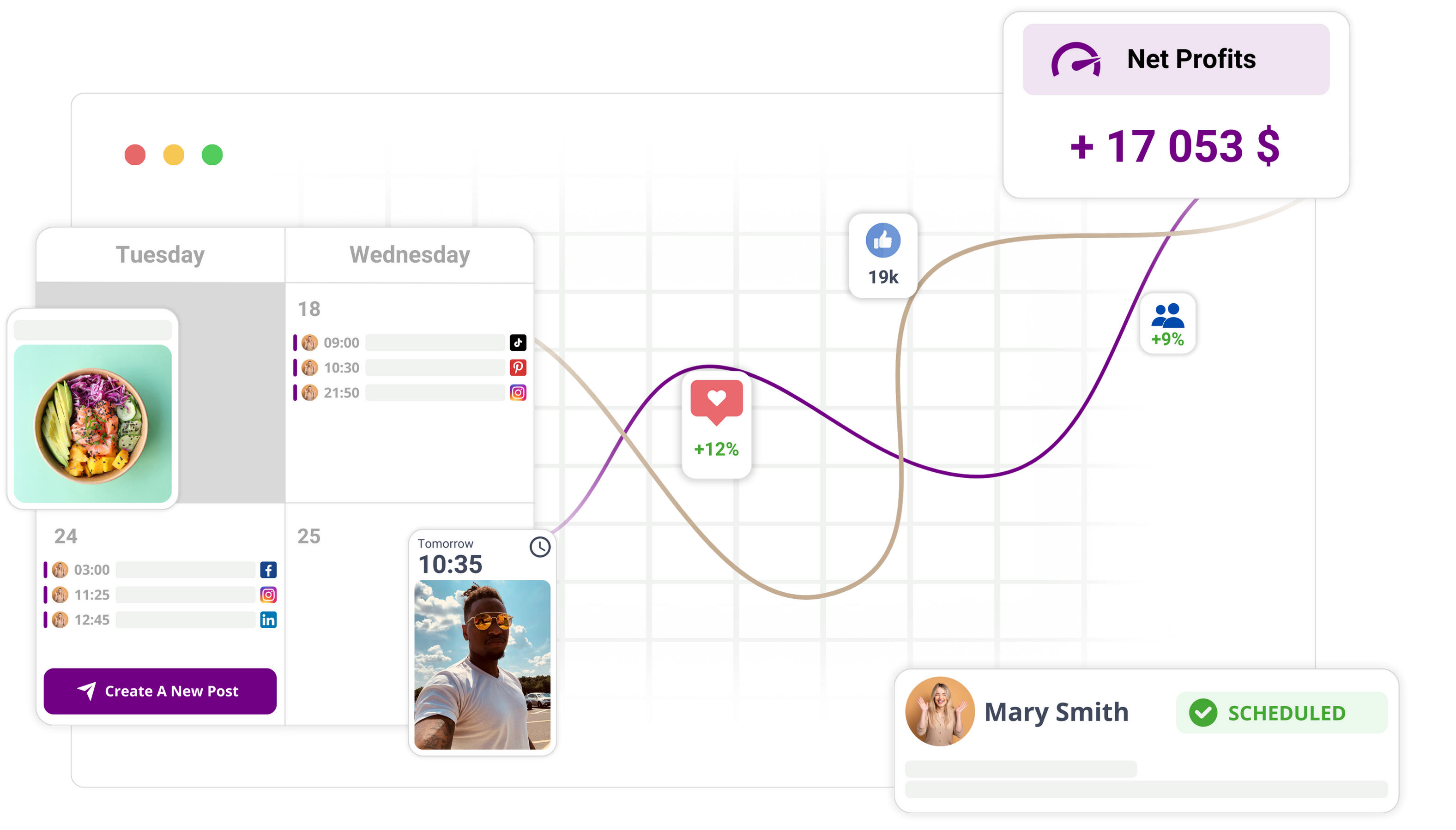
The old way breaks once volume rises because it relies on the hope that someone remembers to look at the right spreadsheet before they hit schedule. If you are using Mydrop, you avoid this by using pre-publish validation. Before a post is ever scheduled, the platform checks your profile selection, media format, size, and thumbnails against platform-specific requirements. It catches the broken links and wrong aspect ratios while you are still editing, not after your followers have already spotted them.
This changes your role. Instead of being the person who double-checks everything, you become the designer of a system that makes it impossible to make mistakes. You stop firefighting because the fire is extinguished before it has a chance to start.
Operator rule: Never let an approval live in a message thread. If the sign-off is not attached to the content itself within your publishing system, it essentially does not exist.
Why the old way breaks once volume rises

Scaling social media isn't just about posting more; it is about managing an exponential increase in points of failure. When you manage a single brand, a shared spreadsheet and a Slack channel for approvals might feel like enough. But once you start handling multiple brands across different regions, timezones, and product lines, those manual "hacks" transform into major liabilities.
Most teams underestimate: The sheer amount of invisible tax paid just to coordinate. Every time a team member switches from a calendar tool to a chat app to check an asset status, they lose momentum and risk missing a crucial update buried in a thread.
The breaking point usually happens when the "who is watching what" gets blurry. If you have three different brand managers across four timezones, your spreadsheet becomes a graveyard of stale data. The team ends up spending more time managing the communication about the posts than actually refining the content itself.
| Feature | Manual Checklists (Sheets/Slack) | Embedded Validation (Mydrop) |
|---|---|---|
| Visibility | Fragmented across threads | Centralized in one dashboard |
| Asset Checks | Subjective, human-error prone | Automated system constraints |
| Approvals | Buried in chat history | Attached to the content flow |
| Global Sync | High risk of timezone errors | Native timezone controls |
When volume spikes, your reliance on tribal knowledge-knowing "who to ask" about a specific post-becomes the primary bottleneck. If the person who knows the answer is off-shift, the entire publishing timeline grinds to a halt. You are not building a system; you are managing a series of high-stakes relay races where the baton is constantly being dropped.
The simpler operating model

The secret to moving away from this chaotic cycle is to stop treating validation as a final "check" and start treating it as a baked-in part of the creative lifecycle. True scale requires a system that enforces its own rules, meaning you don't have to rely on your team's memory to avoid a broken link or a low-resolution image.
This is where shifting toward a centralized, validation-first flow changes everything. By moving your conversations, feedback loops, and technical specs directly into the publishing tool, you eliminate the "context-switching tax" that kills productivity.
The Pre-Flight Trio is the framework for this shift:
- Validate Specs: Automation should handle the boring technical details. Is the video duration correct for the platform? Does the image meet the aspect ratio requirements? Mydrop does this automatically, catching format errors before they even reach the scheduling phase.
- Contextualize Collaboration: Keep the "why" and the "how" near the content. If a manager needs to suggest a caption tweak, it happens directly on the post preview. No more digging through Slack logs to see if a change was requested.
- Approve for Compliance: Approvals shouldn't disappear into chat threads. When you designate specific approvers for a post, that sign-off remains a permanent, traceable part of the record, ensuring that everyone from legal to the brand lead is on the same page.
Operator rule: Never let an approval live in a message thread. If the sign-off isn't tethered to the content itself, it technically doesn't exist.
This model treats the "Publish" button as the final, boring step of a process that was already verified and signed off. It replaces the anxiety of the "last-minute scramble" with the quiet confidence of a workflow that functions even when you aren't looking. You aren't just saving time; you are protecting your brand from the cumulative cost of small, preventable mistakes. When your system does the heavy lifting of governance, your team is free to focus on what actually moves the needle: the content itself.
Where AI and automation actually help

Most teams treat automation as a way to replace human creativity, but that is a mistake. The real value is using it to replace human drudgery. You want your creative leads focused on the campaign narrative, not double-checking if a file is 1080x1080 pixels or if the aspect ratio will break on a specific platform.
Automation works best when it acts as a silent, invisible safety net.
Operator rule: If a computer can check it, a human should not be spending billable hours on it.
When you shift validation to the start of the process, you turn "oops" moments into non-events. Instead of catching a broken link after it has been live for twenty minutes, you catch it at the scheduling stage.
- Automated Format Checks: Automatically reject media files that fail platform-specific requirements (e.g., aspect ratios, file sizes, or max durations).
- Governance Guardrails: Flag posts that use off-brand colors or missing disclaimers before they ever touch a live feed.
- Cross-Platform Sync: Ensure that if you change a caption in your central workspace, the update reflects across all scheduled platforms instantly.
- Approval Routing: Automatically notify the correct stakeholder based on the brand or market, removing the "wait, who is supposed to approve this?" delay.
This isn't about being robotic. It is about clearing the table of technical clutter so your team has the space to actually be creative.
Common mistake: Relying on a "manual review" process that lives in email or private messages. As soon as you step outside of the production environment, you lose the audit trail, the context, and the accountability.
The metrics that prove the system is working

If you cannot measure the health of your publishing process, you are just guessing. Enterprise teams often obsess over vanity metrics like reach or likes while ignoring the operational metrics that actually impact the bottom line. You need to know how many fires you are putting out compared to how many you are preventing.
KPI box:
Metric What it tells you Pre-Publish Rejection Rate How many errors your validation rules caught before they went live. Approval Latency Time between a post being sent for review and being signed off. Emergency Post-Mortems Number of times you had to delete and re-upload a live post. Platform Violation Count Instances of format errors that slipped through to the public feed.
The ultimate goal is to drive that last metric to zero.
When you track Approval Latency, you quickly spot where your process bottlenecks are. If legal usually takes 48 hours to respond, you can adjust your planning calendar to accommodate that reality. You stop fighting the process and start managing it.
The most successful teams view their publishing process as a product itself. They iterate on it, fix the friction points, and measure the results.
Pull quote: Speed without structure is just a faster way to break your brand.
When you move from reactive firefighting to proactive validation, you stop just "getting posts out the door" and start hitting your strategic targets with consistent, error-free execution. That is how you scale without losing control.
The operating habit that makes the change stick

The biggest hurdle to a cleaner publishing flow is not a lack of software, but the habit of treating chat apps as an informal storage locker for high-stakes decisions. When a brand manager approves a campaign via a thumbs-up emoji in a busy channel, that approval exists in a vacuum. It is invisible to the person who actually pushes the button, and it is impossible to audit three months later when a compliance check occurs. To move past this, you must adopt a rule of Centralized Authority. If it is not recorded inside your management platform, it did not happen.
The most effective teams treat their publishing calendar as the single source of truth for all metadata. By shifting the conversation-the "what should we change" and the "is this ready"-into the same workspace where the post lives, you remove the guesswork. You stop asking "Who signed off on this?" because the record of the conversation, the edits made, and the final green light are anchored to the asset itself.
Operator rule: If a campaign or post requires review, the feedback loop must live inside the publishing tool. If the feedback happens elsewhere, the approval process is essentially broken.
Here is how you can pivot your team's behavior starting this week:
- Audit your current handoff: Identify the exact moment a post moves from "creative" to "live." Map how many manual checks occur in that window and how many different tools are used to facilitate them.
- Standardize the validation list: Create a rigid, non-negotiable checklist for every post type. Force your team to tick these off before the post is marked for review.
- Consolidate the conversation: In your next campaign, force all feedback into the post-level threads of your management platform. If someone uses Slack, refuse to acknowledge the feedback until it is moved to the platform.
This is uncomfortable for a week or two. People will push back because it is easier to fire off a quick message than to log in, find the right post, and type a detailed comment. But that friction is the point. That extra ten seconds of effort is exactly what prevents the midnight panic of a broken link or a misaligned image.
Conclusion

The "last-minute scramble" is a choice, not an inevitable consequence of working in social media. By choosing to front-load your diligence-verifying specs early, keeping collaboration tethered to the work, and demanding clear, documented approvals-you reclaim the mental space needed to actually be creative. You stop managing crises and start managing outcomes.
When you remove the noise of fragmented coordination, you can finally see what is working. You can rely on your analytics because you know the content you are measuring is exactly what was intended to go out. The goal of a serious operation is to make the "publish" button the most boring, predictable part of your entire week.
At the end of the day, scale does not break teams; the lack of a shared, validated foundation does. Whether you are running a single brand or coordinating a global network of markets, the path to calm, consistent performance starts by ensuring your tools work as hard as your people. Mydrop was built specifically to bridge this gap, ensuring that every asset, conversation, and approval sits in one place, ready to go, long before the deadline hits.